
Translated material
In the city of Dreams ...
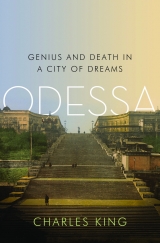
Charles King writes that when Mark Twain visited Odessa in 1867, the most famous writer was struck by cosmopolitanism and multiculturalism. It was a bizarre mixture of nationalities and religions: Russians, Jews, Ukrainians, Greeks, Turks, Tatars, Germans, Italians peacefully lived side by side. In his book, traveling essays "simpleton abroad" Twain called Odessa America in miniature.
Professor King, in turn, writes that if Peter I cut through the northern window to Europe, having built Petersburg, then Catherine II, commanding to create a port for the export of Russian wheat on the Black Sea, cut through the southern window not only to Europe (from Odessa to Vienna closer than to Moscow or St. Petersburg), but also to Asia. Explaining the subtitle of his books - “Genius and Death in the City of Dreams” - Charles King, notes that the words “genius and death” emphasize the paradoxical coexistence in the city of creative atmosphere and monstrous violence, and the words “city of dreams”, according to its plan, hint that the emergence of Odessa, like St. Petersburg, was the implementation of a purely speculative project.
The author calls the main creators of the modern myth of Odessa Sergey Eisenstein with his film "Bainstoor" Potemkin and Isaac Babel with his "Odessa stories." The originality and intensity of the cultural life of the city, its creative atmosphere, gave rise to the galaxy of outstanding writers, scientists, artists, artists. According to Charles King , the opinion of Charles, Odessa was the cultural capital of the South of Russia.
- When studying the history of Odessa, I was most amazed at how the cosmopolitan nature and heritage of this city turned out to be so vulnerable and fragile. Odessaites are always proud of their multiculturalism. They often said: "My nationality is Odessa." These were patriots. At the same time, when life in Odessa was at risk, this multiculturalism evaporated very quickly. An amazing thing: in the last years of the Russian Empire, Odessa often became a place where undisguised violence reigned. Jewish pogroms in the 70s and 80s of the XIX century and the monstrous pogroms of 1905 were the most cruel anti-Semitic actions in Russian history. In the history of the city, this tension was always present between cosmopolitanism, on the one hand, and xenophobia and social violence, on the other.I perceive the story of Odessa as a kind of mirror that modern Russians could look in to find a more comfortable and more tolerant life

Charles King devotes a significant place in his book to the fate of the Odessa Jewish community, which, in his opinion, played an outstanding role in the cultural and public life of the city. The author of the book calls its destruction during the Romanian occupation one of the greatest tragedies of World War II. If in 1941, King writes, the Jewish population of Odessa exceeded 200 thousand people, then in 1944 it was reduced to 48 people. This predetermined the subsequent cultural decline of the city, the author of "Odessa" believes:
- Yiddish influenced Russian in Odessa. There were many Jewish words in Odessa’s speech, and the very intonation of their dialect resembled Jewish. This is evidence of what role was assigned to the Jewish community in Odessa. One of the tragedies of World War II is almost its destruction. Of course, and now Jews live in Odessa, many of them returned after 1945, but the dynamic and creative community that existed before the war was no longer revived. After the war, the Jewish population of Odessa did not exceed 12 percent. Before the war, it was more than 30 percent.
For modern Russia and Ukraine, writes Professor King, the history of pre -war Odessa can become a model of political and social development, an example to follow, a model for the formation of modern national identity:
- For a long time, Odessa has not been like other cities of Russia. The cultural, social and political life of the city reflected not so much official imperial ideas and ideals as alternative, marginal and unofficial cultural realities and practices. I perceive the story of Odessa as a kind of mirror that modern Russians could look in to find a more comfortable and more tolerant life. Odessa usually rejected people who arrogantly imagined themselves and better than others. Odessans did not like all these high -parity declarations of imperial greatness and power; They wanted to remain themselves. This is their own version of Russian identity. And modern Russia could learn from their perception of life.