
Translated material
Hackers against Runet
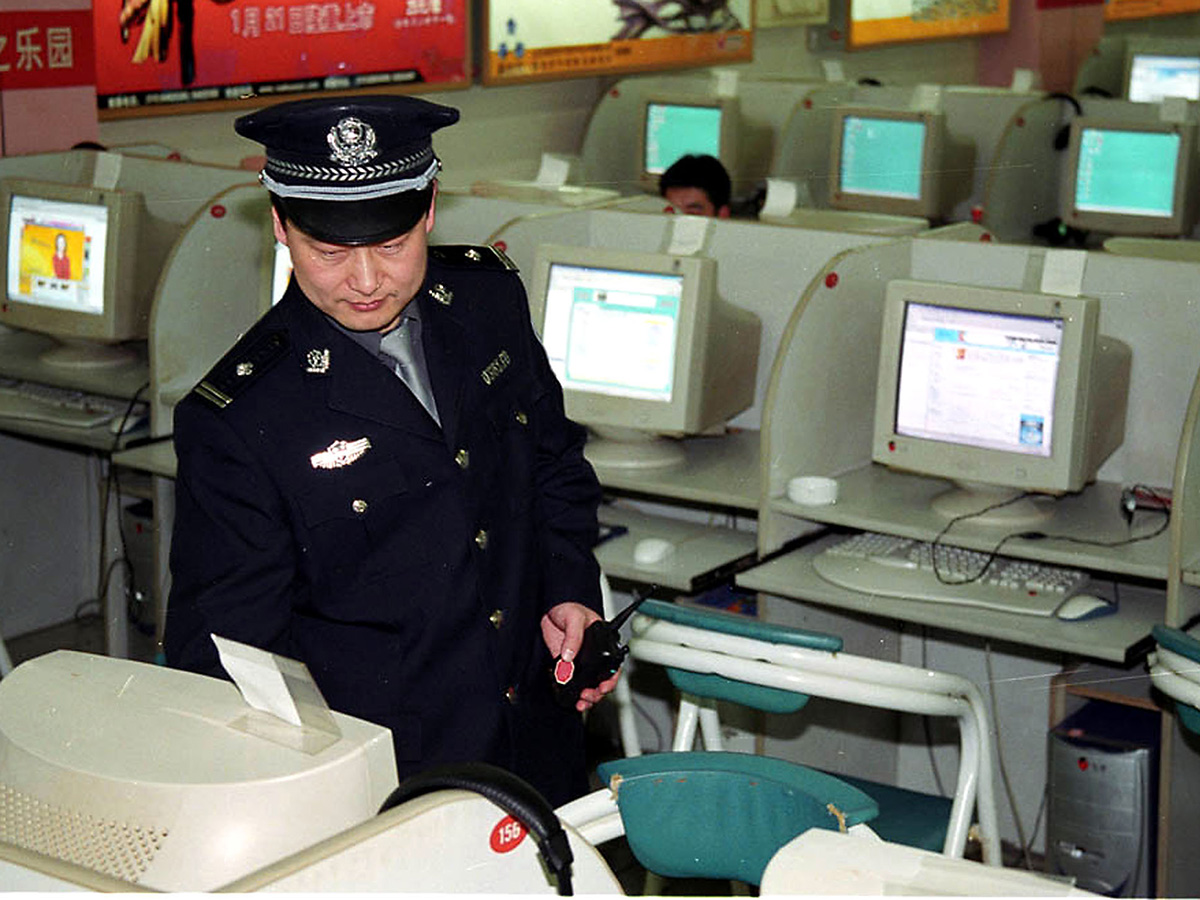
How to ensure the information security of mass events, protect personal data, protect the personal computer and mobile phone from infection with malicious programs? These are only some of the series of issues that the participants in the info -Forman managed to consider.
Together with the growth of the number of hacker attacks on the sites of state structures, such concepts as “information war” and “information opposition” were firmly included in everyday life. According to the Deputy Minister of the Russian Federation for Civil Defense, Emergency Situations and the Elimination of the Consequences of Natural Disasters, Vladimir Puchkov , Russian experts and scientists will have serious work in this area, including ensuring the Cybernetic Security of the Sochi Olympics of 2014.
Speaking at the Infoforum, Vladimir Puchkov spoke in detail about the activities of the National Center for Crisis Situations:
- To solve the tasks set in the center, a large list of various objects is included. These are information centers of various levels, these are terminal complexes, these are the points of street informing of the population - in places of mass stay of people. I would like to draw your attention to the most important subsystems - this is a system of constant observation and collection of information in places, a subsystem of chemical and radiation monitoring, which is carried out in real time, as well as the information security system and the solution of the problem of authorized access. This segment is already operating in 33 cities of the Russian Federation, including Moscow, Petersburg, Kazan, Ufa, Rostov-on-Don and other major cities of the Russian Federation. It allows in real time to provide information to 40 million people, as well as reduce 1.6 times the terms for bringing the necessary information. And, of course, reduce costs.
Cyber dexstation became the main problem of Runet last year: it was recorded by more than 10 thousand such cases, while in 2008 there were 2 times less

According to the statistics of the Bureau of Special Technical Events of the Ministry of Internal Affairs, which was presented by Colonel Boris Miroshnikov at the forum, the cyber abdominal became the main problem of Runet last year: it was recorded by more than 10 thousand similar cases, while in 2008 there were 2 times less. The other day, Russia just overtook the next blow of the computer epidemic Trojan.winlock. This cargo virus blocks the operation of the Windows operating system and requires the owner of a personal computer to send a paid SMS message in exchange for unlocking code. After sending such a message, the cost of which sometimes reaches 1000 rubles, the attackers do not send any code.
According to Boris Miroshnikov, the activities of Russian cybercriminals have long gone beyond the scope of children's pranks, which means that it was time to tighten responsibility for crimes in the field of information technology:
- The main scourge is an ongoing anonymity in our information networks. A huge number of criminals, turning their pockets, laid out cell phones, not one of them was decorated on its owner. Registration of a user on the Internet - when several hundred domain names are registered in one name. But the name is linden. As long as it continues, it is encouraging crimes.
This point of view is adhere to an antivirus protection specialist Yevgeny Kaspersky , who has been calling for the "Internet passion" for a year. He confirmed that it was the Russian craftsmen who put on the stream the creation of fraudulent SMS services with the proposals "find out the location of a person through GSM", "read private correspondence on social networks", "collect information", etc. The "pseudoantiviruses" have also gained particular popularity. Their task is to convince the user in the presence of threats (actually non -existent) on his computer and force him to pay money for the activation of the antivirus product:
- I do not exclude that the idea of certification of antiviruses of computer systems is the idea very sound. That is, the spread of non -state antivirus programs should be a criminal offense, and this will protect us all from false antiviruses.
In 2010, analysts predict an increase in the number of hacker attacks not only to sites of state structures, but also to computers of ordinary users who resort to the services of free file exchange networks.