
Translated material
5 - 12 September
On September 6, 1610, Moscow boyars signed an agreement with the hetman Zholkevsky on the calling of the son of the Polish king Sigismund III Korolevich Vladislav to the Russian throne. The boyars were ready to swear to the Korolevich - provided that he would accept Orthodoxy. In the Time of Troubles, after the overthrow of Tsar Vasily Shuisky, the power was awarded to the Duma, consisting of seven boyars - "Semiboyarshchina". The boyars were advocated for a foreigner - besides, a protege of the then -pole enemies - just to not have the king of one of their own. However, King Sigismund himself wanted to occupy the Moscow throne, and the venture with the king failed. Nevertheless, the Polish garrison, designed to defend the boyars, arrived in Moscow. Since the boyars lost real power, this meant the occupation of the capital by Polish troops.
On September 7, 1892 , the first world boxing champion in gloves was the 26-year-old American James Corbett. At the championship in New Orleans, Corbett knocked out his main opponent - John Sullivan. Having won the championship, Corbett carefully protecting his title, avoiding risky matches. This athlete brought many new products to the methodology of boxing training: he invented a “pear”, introduced jumps with a rope, began to use other sports, in particular, athletics to prepare for battle. Corbett opposed the use of alcohol and tobacco athletes, without which a rare boxer cost at that time.
On September 8, 1831, the coronation of the King of Great Britain, Ireland and Hanover Wilhelm IV took place. The representative of the Hanover dynasty, he took the throne at 65 and ruled 7 years before his death. Wilhelm was called a Moryak king. He began the naval career at the age of 13, and a year before the entry into the throne of Wilhelm was appointed chief admiral of the British naval forces. The quick -tempered character of Wilhelm and the conflict with the government of the Duke of Wellington led the cabinet to an ambulance. During his reign in the country, a political struggle, performances of employees and farmers were activated, however - contrary to expectations - Wilhelm IV managed to show extraordinary common sense.
On September 10, 1959, the chairman of the Communist Party of China Mao Zedong uttered the sadly famous words: "War does not need to be afraid ... The atomic bomb is no worse than the paper tiger. If half of humanity perishes, it does not matter. It is not terrible, if one third remains. But the imperialism will be estimated, socialism will be reigned everywhere. After fifty years, humanity will grow again more than more than more than more than more than more than more than more than more than more half.
On September 11, 1965, the KGB officers conducted searches with the Moscow pensioner Teusha and his friend Zilberg: the archive of Alexander Solzhenitsyn was removed from them. The novel “In the Circle of the First” fell into the hands of the authorities, such things as “Feast of Winners”, “Republic of Labor”, and camp poems. In addition, the KGB had a recording of the eavesdropping device installed in the apartment of Solzhenitsyn's acquaintances. For the writer, this was a blow that crossed out years of forced cooperation with official literature. “I was shot,” he recalled. Solzhenitsyn saved from the arrest that the authorities became aware of the transfer of these works abroad and the disposal to print them in the event of death or arrest. Solzhenitsyn was forced to go to these tricks in order to be able to complete the "Gulag Archipelago".
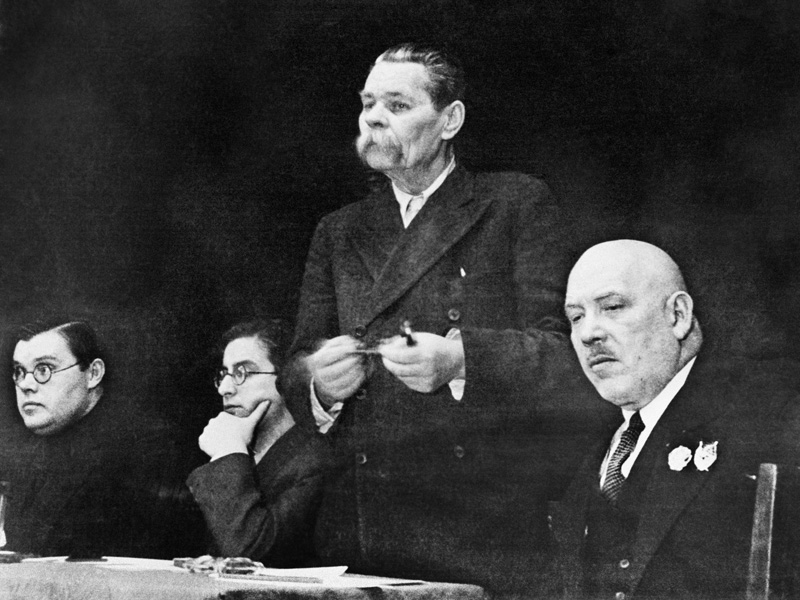
On September 12, 1892, the story “Makar Chudra”, signed by the pseudonym, Maxim Gorky, was the first publication of the famous writer in the Caucasus newspaper. In Tbilisi, Gorky came together with the political exile of Kalyuzhnaya. The wonderful gift of the narrator made a strong impression on Gorky's friends, and Kalyuzhny advised a new acquaintance to write down a gypsy legend. The literary formation of Gorky was helped by Vladimir Korolenko. Believing in the giftedness of the author, he ruled his first manuscripts.