
Translated material
Universities fell under the cleaning
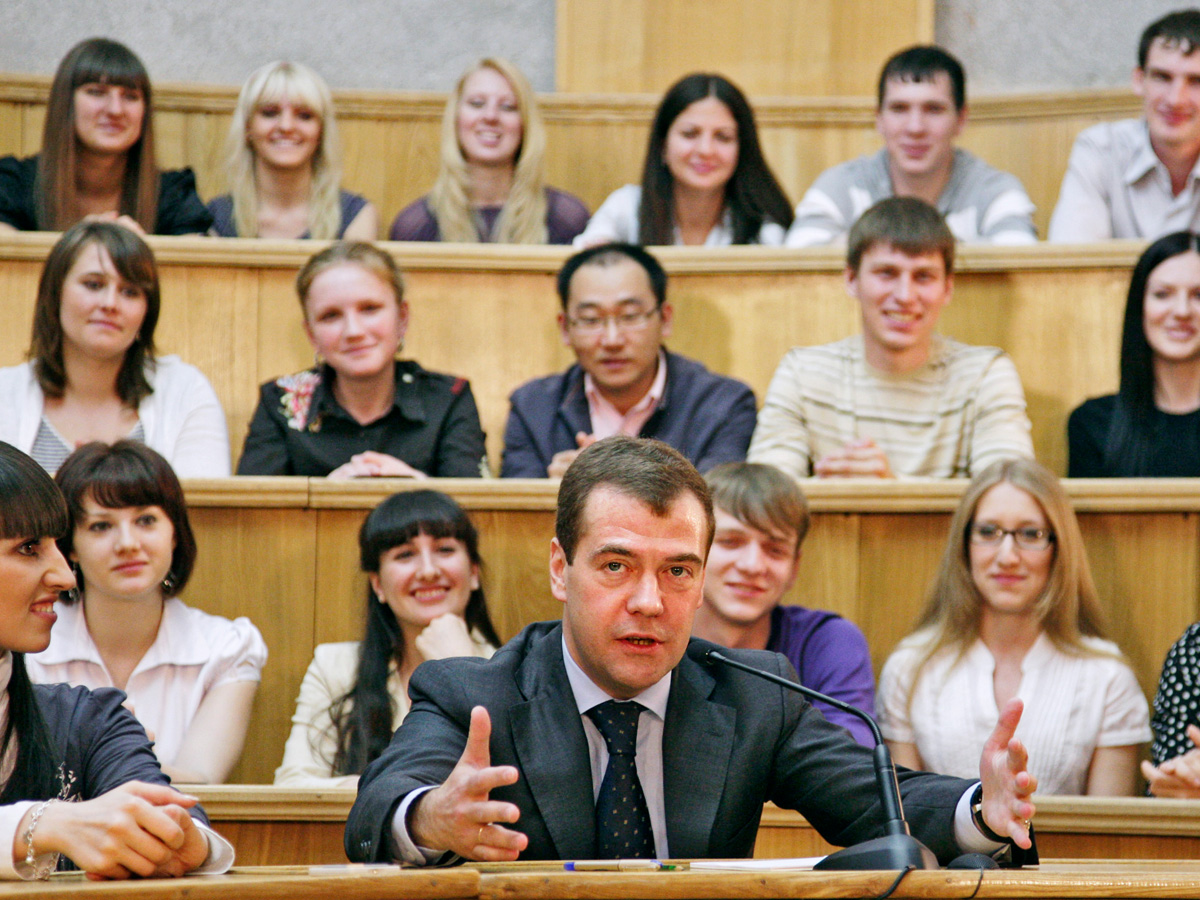
Deputy Head of Rosobrazia, Yevgeny Butko, at a meeting of the Board in the Ministry of Education and Science of the Russian Federation, said that the department is preparing to close up to 200 branches of higher educational institutions, and the head of the Rosobrnadzor Lyubov Glebov called some areas of future changes related to the procedure for accreditation of universities.
The upcoming changes are commented by Sergey Komko V, the president of the All -Russian Education Fund and a member of the Expert Council under the Committee on Education of the State Duma:
The whole trouble in Russia is that even with a simplified accreditation system, a corruption scheme will operate. The official will always find a clue

- The need to change the accreditation procedure for both state and non -state universities has been brewing for a long time. The fact is that the system of state accreditation in Russia is unique: we have introduced a huge number of indicators. One of the main requirements for accreditation, for example, was the presence of an appropriate number of square meters per student. Among other requirements - the need for the corresponding percentage of qualified specialists for training at a university, their own library; Be sure to have your own recreation area, a sports hall, some kind of food point and so on. On the one hand, it seems to be correct - but, on the other hand, it is almost impossible to fulfill all these requirements, even state universities ...
The whole trouble in Russia is that even with a simplified accreditation system, a corruption scheme will operate. The official will always find the clue so as not to issue the corresponding document on state accreditation or not to issue an appropriate license.
- Rosobortion plans to close up to 200 branches of higher educational institutions, which the deputy said. Head of the Department Evgeny Butko. This is due to a real assessment of activities, including accreditation?
- I think that this is just a clearly planned action, and this has nothing to do with the accreditation or certification of educational institutions. The political task is simply set. Perhaps this is the fruit of some kind of competition between the leaders of educational institutions, especially non-state. Or maybe this is the fruit of the fantasy of the Minister of Education Fursenko, who suddenly got into the head that there should not be more than 15 universities in Russia, but in general - there should not be more than one and a half to two hundred universities in general.
* * *
In Russia today, about two thousand seven hundred universities and branches - but does this mean that there are too many of them? And will new accreditation conditions help increase higher education? It is still known, according to the head of Rosobrnadzor, which is proposed to exclude the qualifications of the faculty from accrediting indicators, change the criteria for evaluating scientific and technical activities and testing graduates.
The scientific editor of the Polit.ru website Boris Dolgin believes: no one can say anything more easily or heavier - “until the exact list of criteria is published and there will be no commentary on this list, how exactly all this will take place. Very often the university check is to verify compliance with a number of formal requirements, some of which are not fundamentally necessary - because they are not related the real state of affairs at the university. "
“This, of course, is true: when funds are allocated for some kind of scientific and technical activity, it is necessary to assess not only by the amount of money being mastered,” emphasizes Boris Dolgin. - This is still a Soviet tradition. But it is clear that most of the funds allocated to universities - except for the presence of certain publications, developments and so on - cannot have. Therefore, this kind of assessment also has some narrow orientation. Testing graduates is a completely understandable thing. But the question is who will test them and how. Testing the quality of cramming (what the state examination often turns into) is strange; This is rather a meaningless form. But the quality of publications and research is undoubtedly one of the most important criteria for evaluating universities. In a real situation, universities most likely have a danger of being evaluated not by how high -quality education is given, how high -quality research is conducted, but by some administrative weight, in the lobbying capabilities of university leaders.