
Translated material
Chekhov. Android version
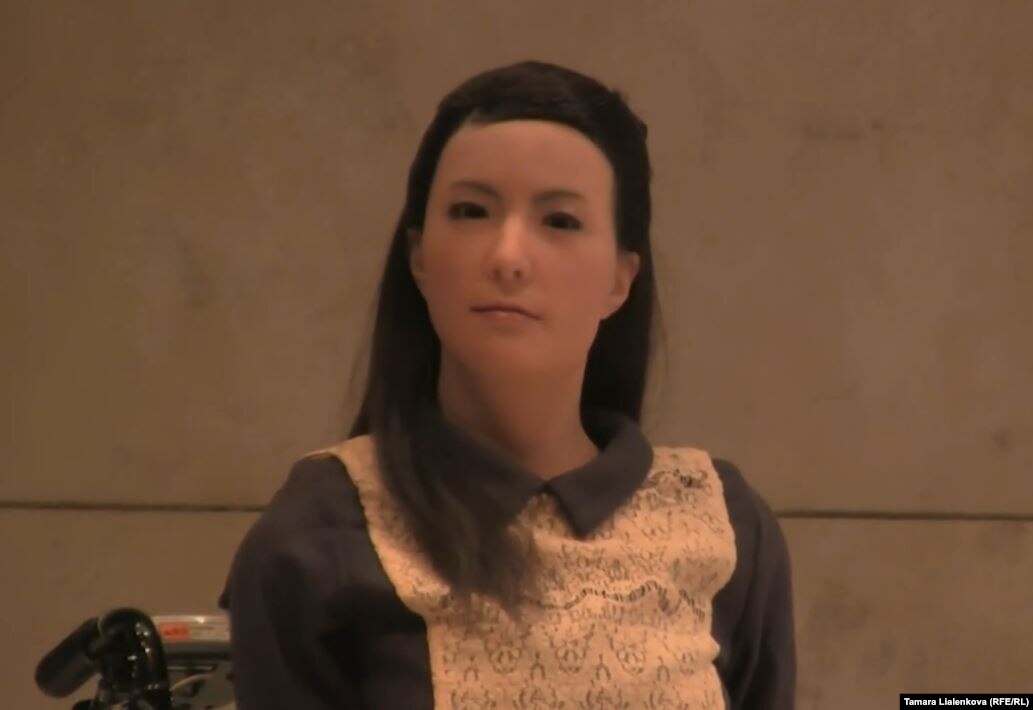
The Russian viewer watch Chekhov in the production of a Japanese director is difficult, but exciting. Of course, a line of translation, which must be read, is interfering, since Oriz Hirat is a supporter of the “conversational theater”, and it is in this space that the main action takes place - in any case, for those who are familiar with the text of the original.

Width PX Height PX
The url has been copied to your clipboard
No Media Source Currently Available
0:00 0:06:42 Download the media fileThe only hint is the names of the three sisters, Marie, Risako and Ikumi. When Vershinin appears, it is difficult to recognize him not even because in the Orizi Hirata version he is not a battery commander, but a professor at the Department of Robotics, but for the reason that his wife is a young beauty, and no crazy. Yes, and Vershinin-Mariamam, as it turns out later, is a sort of Japanese Humbert Humbert, from whose harassment Irina-Ikumi suffered in young years. So, at least, android claims her. And what, in Moscow, Vershinin in the family was known in the family, but preferred to forget, is it not that Chekhov?
And there are a lot of similar shifts in the production, just have time to track. If Masha changes his husband in the original source, then here Kulygin-Takagi enjoys each convenient occasion to escape "to the side". The explanation of Andrei Natasha hidden in the window niche is first transformed into public humiliation of the future bride, and then into an equally loud marriage proposal. (I leave the external dissimilarity of the characters with Chekhov heroes by brackets). The restrained Olga turns into a cordial mistress of the house, the unfortunate Masha - into a stupid chatterbox, cheerful Irina - into the recluse and android. Nevertheless, the Chekhovsky drawing, the same transparency, love and hopelessness inherent in small towns, clearly appear on the stage.
However, Oriz Hirat added, as it seemed to me, two fundamentally new aspects, which Chekhov did not have at all. Firstly, he extended time. The heroes seem to be in the past - the town not only lost large production (the regiment left the provincial city), suffered greatly from the fire, and the most important thing that could happen to the sisters - love, marriage, work - all this has already happened irreparably, but still, regarding the audience they are in the future. An obsolete home robot is Anfisa’s nanny eighty years, with the same degree of kindness and immediacy, his own Android is as an ideal companion for a person retired. That is, in the future everything will change, but nothing will happen. And only eternal hope: when the robots will decide for us what to do (in the version of Orizi Hirata - do we need to work).
Work is the question that is very concerned about the Japanese director and who at one time tormented Anton Pavlovich. The Chekhov young ladies who dreamed of meaningful work turn out to be tasted in the routine of daily duties, from which they can not get out. And against this background - an attempt by their brother Akira, the opposite of leaving the idle character, to become a worker, to engage in primitive physical labor. That is, to get rid of the Arcana, who imposes education and who was prepared in advance by the brilliant father and loving sisters. Work is what pushes a person to move, to treason, to loneliness. Three sisters think about how their life could have developed, if the father agreed to leave for New York, and the young scientist Hitoshi Nakano, indeed, is about to leave for Singapore, where, probably, “very hot ...” almost all characters, each in his term, and it begins to seem that he will not leave anywhere. Moreover, his lover Ikumi-Irina, as it turns out, did not die at all, which Hitoshi had to find out, according to the will of her father, only after a few years.
This is another point that is not read out by Chekhov - the will of the deceased father, gravitating over the sisters. It is no accident that the performance begins with the fact that they transfer his grave to another place, as he ordered, three years after the funeral. That is, the sisters live according to the script written by him in their will. And only Akira’s brother, all the time slipping, like Andrei Chekhov, goes against his father’s will - not only refusing to travel to the grave, but also to continue his business. Perhaps in Japanese culture it is better read that in Russian reality they traditionally prefer not to notice.
As for the heminoid F and Robovie R3, who participated in the play of robots, their role, it seems to me, is somewhat exaggerated for advertising purposes. The technical achievements of Dr. Hiroshi Ishiguro from the University of Osaka, of course, are admired and, when the heminoid, the heminoid gives rise to mixed feelings, but these unique characters are not the main artistic value of the performance, the context is important.
And thanks to this context, it turns out that it is the Android that is the most Chekhov character. It is not her prototype, Ikumi, hidden from life and people, like many Japanese, as the director assures, but Alter Ego, android, who is not afraid to extract the truth from the subconscious memory, even risking a disabling, which, however, is not death. As soon as you find the reason for this duality, you immediately get the key to the whole production-output: Japanese actors play Alter Ego of the Chekhov characters, and only Androids, honest and fearless, can be embodyed by Chekhov heroes today. In any case, according to Orizi Hirata.