Date
Author
Дмитрий Волчек; Елена Фанайлова
Source

Preserved copy
Translated material
Ark Bruno Schulz
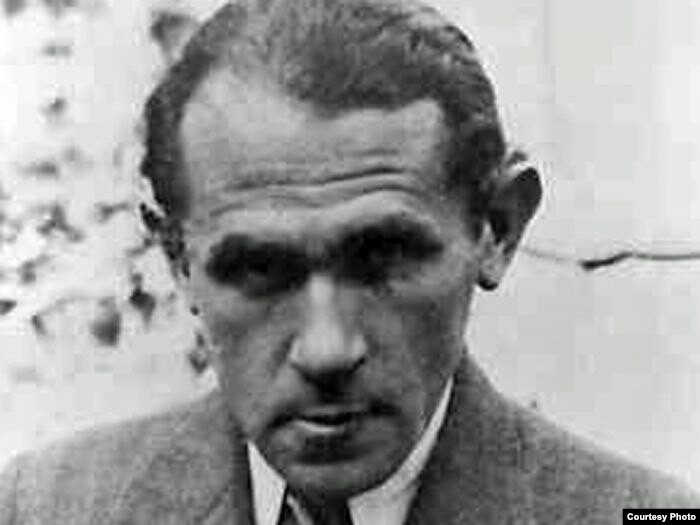
Elena Fanailova: From the literary heritage of a Jew from Drohobych, an artist and a school teacher who wrote in Polish and who died at the hands of the Nazis in the local ghetto, there were only two books left: “Caric shops” and “Sanatorium near Klepsidra”. The novel "Messiah" and the story "Return home" were not preserved. Both books by Schulz were filmed, and by influence on modern Polish literature, he can be compared with Vitold Gombrovich, with whom they were friends-rivals. Academic research and theatrical productions are devoted to Schulz. Schulz graphics are considered the main mass of lost. In 2001, the relations between Israel and Ukraine were clarified: three freschs of Schulz made by him by order of the fascist officer on his villa were taken out of the Drogobych. The Israeli side was sure that it was saving precious work, Ukrainian - that she was deceived. The main theme of Schultz is the mythology of the European province and the household metaphysics of the family, the father, as an intimidating and comic figure, inanimate matter as a living. John Apdike called Schulz a genius. In the Russian translation, Bruno Schulz appeared in the late eighties. One of the first translations in the journal Foreign Literature belong to Asara Eppel, in the magazine "Rodnik" - Igor Klekh and Grigory Komsky. We are talking about the difference in the Polish and Russian version of Schulz and the reasons for his low fame in Russia with the former editor of the Rodnik magazine, now the chief editor of Polit.ru Andrei Levkin.
Andrei Levkin: There is also a clear difference with Polish, when there is a constant network of epithets that do not technically specify the state of things by the author, are simply in the process of determining some place. According to Schulz, Kantor put the “deceased class”: an absolutely open, complex work. In other words, the logic there is completely different than what came to us.
Elena Fanailova: The problem with Schulz is that he is poorly read?
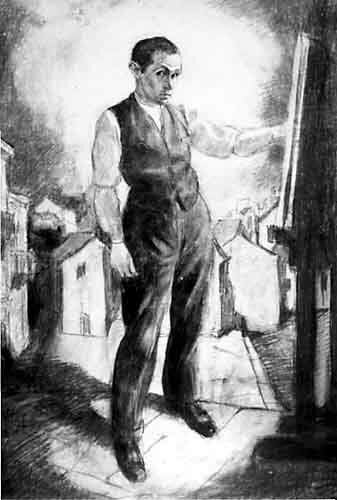
Elena Fanailova: Andrei, it seems to me that on the example of Schulz we are talking about the type of post -Persian literature, I mean the historical situation in which he was geographically, living in Poland, and in Ukraine, and partly in Russia. This is a feeling of the finality of a large imperial body.
Andrei Levkin: Honestly, I doubt that he felt it. This is not a social letter, in the end, other problems are being solved there. He is not the only one, the same Gombrovich absolutely works in this logic. This is some kind of performance that was made there. In the end, the entire Polish art scene or jazz music, it is about the same logic. This is not a purely Western European vanguard, another structure.
Dmitry Volchek: Andrei Levkin published two stories by Bruno Schulz in the printing magazine "Rodnik" in 1989, but before publications appeared in Samizdat. The first line in the Russian bibliography of Bruno Schulz is the story “Loneliness” translated by Olga Abramovich, published in the typewritten “Mitin magazine”, which I edited. No.: 6, November-December 1985. This translation was not reprinted, and for our transfer, Olga Abramovich found it in her archive.
Loneliness
It became much easier for me when I was able to go out into the city. But how long I have not left my room! These were bitter months and years.
It is difficult to explain why I have been living in it for so long - from childhood. This is a room away from the entrance, already in those days, it rarely visited it; completely forgotten, it seemed to have never been intended for housing. I don’t remember how it happened that I went there. It seems to be night, a watery-white moonless night. Clearly, in detail, I distinguished the entire atmosphere of the old monastery. The bed was open, as if she had just left her, I listened in silence, would I catch the breath of the sleeping ones. Who could breathe here? Since then I have settled here. And for many years I have been sitting here and missing. And so that I would not take care of the reserves in time! Ah, you, who still have the opportunity and time - stock up on feed, copy grain, life -giving and sweet, for the great winter will come, thin and hungry years will come, and the earth in Egypt will not urge. Alas, I was not a stored hamster, I was like a frivolous mouse-full, I lived from day to day and did not think about tomorrow, relying on my ability to starve. Like a mouse, I thought to myself: what is hunger? At worst, I can nibble a tree or crumble paper. The most beggar-growing beast-the church mouse-God's creature-she knows how to live with nothing. So I lived in this dead room. Flies had a long time in her. I put my ear to the tree, whether the worm would be scraped there in the depths. The silence of the grave. Only I, an immortal mouse, a lonely last, who is a whisper in this dead room, running back and forth on the table, a bookcase, armchairs. Snoy is like a aunt Tekla, in a long gray skirt to the ground, clever, agile, dragging a rustling tail behind him. Now I am sitting with a white day on the table motionless, like a scarecrow, my eyes, like two beads, got out on the forehead and shine. Only the tip of the face shakes barely noticeably, chewing the usual baby.
Of course, this must be understood as a metaphor. I am a pensioner, and no mouse. What I parasite on metaphors is just a feature of my nature. I easily give myself to captivate the first metaphor, I grab over the edge, and then I can hardly free myself from it, gradually surpassed.
How do I look? Sometimes I see myself in the mirror. An amazing thing, funny and sorrowful! I am ashamed to admit, I never see myself En Face , face in the face. But a little deeper, a little further, I stand there in the depths of the mirrors a little from the side, partly in the profile, I stand thinking and look aside, it seems like behind myself. Our views ceased to meet. When I move - and he moves, but he was getting back, as if he did not know about me that he just went there and could not return. Longing squeezes the heart when I see him, such someone else's and indifferent. After all, it is you, I want to scream, you were my faithful reflection, accompanied me for so many years, and now you will not recognize me! God! A stranger and looking somewhere to the side, you stand there and, it seems, listen to something in the depths, expect some word-from there, from a glass depth, someone else obedient, from other shores awaiting the call.
I sit like that by the table and sorting out the old decayed university lectures - my only reading.
I look at the faded, yellowed curtains, I see how easily they rise from cold breathing from the window. On this cornice, I could engage in gymnastics. A real horizontal bar. How easy it is to tumble on it in a barren, so many times used air. Easy, without difficulty, the elastic somersault-Mortala almost became itself, carelessly, without the participation of something internal, purely speculative. When you stand, supporting the balance on this horizontal bar, on tiptoe, touching the ceiling’s head, you feel that in this height there is something warm, subtle illusion of the lightest aura. Since childhood, I like to look at the room like that, with the gaze of the bird.
I sit and listen to the silence. The room is simply whitened by lime. Sometimes wrinkles of cracks take off on a white surface, sometimes a piece of plaster falls with rustle. Do I know that the room is walled up? How is it? Welded? But how could I get out of it? Truly: for goodwill there is no constipation, a strong desire not to lock. It is only necessary to imagine the doors, good old doors, as in the kitchen of my childhood, with an iron pen and a jaws. There are no rooms that were walled up so that such doors could not swing over there; If only enough strength to inspire their room.
Dmitry Volchek: On the waves of freedom, you listened to the story of Bruno Schulz “Loneliness” translated by Olga Abramovich. The release of the radio journal “on top of the barriers” was recorded in Drohobych at the Festival “Ark of the Imagination of Bruno Schulz”. The interlocutor of Elena Fanailova, a participant in the festival Nikolai Manko, talks about the Drogobych Schulz.
Elena Fanailova: If we talk about the text of Schulz and the architectural text of Drohobych, where they intersect, where there are traces of the Drohobych that Schulz describes?
Nikolai Manko: My adventure with Schulz was different than that of the Poles. Because I grew up in this city, I first absorbed the city and only then learned about Schulz. I began to read it, I was already 19-20 years old, and I suddenly saw: God, this is what I know since childhood, this is what I absorbed into myself and what I felt, what was worried, what I saw, what my grandmother told me. Her friends lived in these villas, in these parks. And this is my feeling of my city, which coincided with the feeling of the city of Schulz, for me so strong that I completely did not notice Schultz-philosopher with its theories, demiurge forms and perversions. For me, Schulz is, first of all, a poet who made a work of art from a very provincial, sleepy town. It is very difficult for me to speak, because for me Schulz is very subjective. I can spend around the city and say: this house, which stands here, both the garden around it and the grass that grows is very Schultsev, for me when I read. But we must come to Drohobych, we must show everything. I don’t know another Schulz, it’s very difficult for me to talk about him differently.
Elena Fanailova: Nikolai, you started talking about the street behind the market. What is it called?
Nikolai Manko: It is called the basement. Once the shafts of the city stood there. Of course, there was no trace left of the shafts, only the name of the basement remains. And Schulz very ironically approached the city. Because the city, which came from the oil business, and the city that wanted to become a city with a high culture, is large. One could go behind the house and see (he called it “the sole of the main square”) a completely provincial, poor life where people are sitting and waiting for the best times that they would wait for this story. I, the more adult, the more I see the city with Shultsev eyes. It seems to me that very little has changed in this regard that these are some kind of things are eternal, universal: perhaps even living in Moscow, although it is a very large city, all this can also be somehow survived in its own way.
Elena Fanailova: You mean a sense of time, the expectation that something will happen, but, nevertheless, is everything that it turns off?
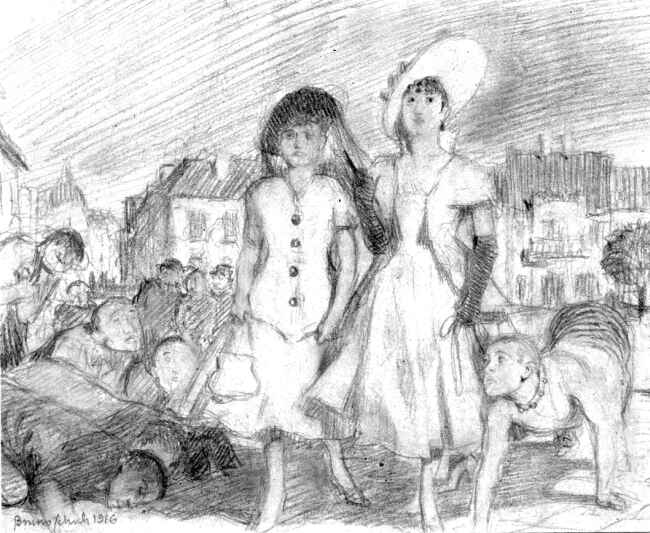
Dmitry Volchek: The Festival “The Ark of the Imagination of Bruno Schulz” was opened by the famous Polish publicist Adam Mikhnik, Israeli prose writer and playwright David Grossman and a writer from Ivano-Frankivsk Taras Prokhako, that is, three sides of Schulz were represented: Polish, Jewish and Ukrainian. "Can Schulz be considered a Ukrainian writer?" Elena Fanailova asks Taras Prokhasko
Taras Prokhasko: There is such a trend after the life of Schulz, when they think about who it belongs more, to whom less. I believe that Ukraine should not be included in this question. This is the cheapest and most false way to think that you can somehow adapt, incorporate Schulz into Ukrainian culture only because it lived here. Indeed, he lived in Ukraine, and Drohobych, no doubt, Ukrainian land. Ukrainians in Drogobych are as represented as the Poles, like Jews. Of course, he could not help but pay attention to what exists. But I believe that since he was in no way with the Ukrainians, he did not associate with Ukraine spiritually, then there is no need to say that he lived here and this nourished him. All these impressions, when he wrote about water, about trees on trees, about various things of the material world, of course, we can say that yes, these were Ukrainian leaves, it was Ukrainian water. But since he did not see this and did not think about it, I prefer not to talk about it either.
Elena Fanailova: What is the writer for you? I, too,, like you, prefer to talk about him as a universal writer, a writer of universal values, and he himself said that mythology is more important for him than reality and material world.
Taras Prokhasko: He is, no doubt, a Polish writer for me. Since I myself am a writer, and I understand that for the writer his definition is the language in which he writes. The writer is manifested in the fact that he writes in some language. Bruno Schulz wrote in Polish. All he thought about, everything he saw, everything that he survived belongs to Polish linguistics, Polish philology. Therefore, I believe, the whole history of his Jewry, the whole story of his residence on Ukrainian or on Galician land, it, of course, matters, but until the writer wrote his works in some particular language. Schulz is a Polish writer for me.
Elena Fanailova: You said that, running away from Jewry, he chose a universal, European, but paradoxically, he was now owed his posthumous glory to his Jewry and that he was a victim of the extermination of Jews during the Second World War.
Taras Prokhasko: I think that, paradoxically and painfully can sound, but precisely due to the attention to the Holocaust, which became one of the spiritual signs of today's world, Schulz as a writer became so famous. Perhaps he would not have even remembered him if not for this tragic life. I always say that a writer is a person who lives his life and leaves a trace. It turned out that the trace of Shulz in this story with Jews in Eastern Europe, a sign, and it is easier to accept through such dramatic, tragic things that so much and seriously talk about. That is, Schulz owes this attention to the Holocaust, because there were also a lot of such writers who were brilliant and passed. Schulz fully responds to such an image that could be undeservedly forgotten.
Elena Fanailova: What is dear to you as a writer in him and did he affect you on your letter, your optics, your perception of peace and reality?
Taras Prokhasko: It so happened that I love Shultz primarily due to the fact that he reminds me of my perception of the world. I speak without any overestimated self-esteem, just a meeting with Schulz was important to me primarily not as a lesson or discovering that there is such a path, there is such a horizon, such a point of view. She was an excuse for me in various doubts, whether I am doing the right thing, not a strange, I am too strange, I need to straighten something or continue to live, as I look at the world. Schulz was such an argument: a normal person, a good writer, and he writes about the same things that interest me. And so I am very grateful to Schults for this reinforcement.
Elena Fanailova: And his manner to describe life in great detail, tasty even, with a large number of epithets, very specifically penetrating the very essence of matter, allowed you to perceive something from him and describe the world in a similar way?
Taras Prokhasko: I always believed that such a thing, as a realistic or accurate description of the world, is very doubtful. Because, looking at the same thing, everyone sees something else. And in Schulz it is expensive that his world cannot be called realistic, but in fact I know that everything is true there, everything is realistic. But this is the realism that interests me too. I am interested in just such elementary things that are inherent in the atomic level to all living and thinking, wherever he is, in whatever historical events he takes part. Even all this tragedy with the Second World War, I do not want to offend anyone, but it seems to me not unique in the life of mankind. And there were already such experiences. People have encountered such terrible things in the past, and I hope that they will still encounter in the sense that they are inseparable from human life. Schulz found these atoms, he talks about something very important, often what they do not remember when they talk about the history, biography of a person, that they are not recorded in an official biography, but without this there would be no person who is written about an official biography.
Elena Fanailova: Your great-grandfather was a writer and lived simultaneously with Schulz, and for some time lived in Drogobych.
Taras Prokhasko: He was a writer completely different than Schulz. Because he was just a shepherd, a priest who wrote a book about his life, about his experience and what he saw, already wrote at old age - this can be called memoirs. His book is in a completely different direction. But when I look at these atomic, as I said, intentions, impulses, motivation, why a person wants to write something and write so that it remains written, and why he believes that he should do this, I see that my great-grandfather and Schulz could talk about it without discussion. That is, these atoms remain initial.
Elena Fanailova: The great -grandfather was a priest of which church?
Taras Prokhasko: Greek Catholic. He in 1910, at a rather mature age, arrived in the United States, where he lived for another 40 years, and was a missionary there.
Elena Fanailova: Do you feel an internal connection with him?
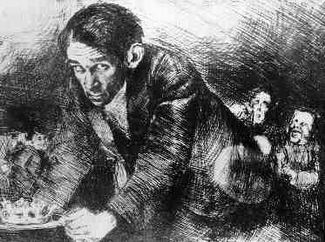
Dmitry Volchek: And another translation from the archives of Samizdat. The story of Bruno Schulz “Another Autumn” from the 1937 collection “Sanatorium near Klepcidra” was first published in Russian in “Mitin magazine”, January 1987. The translation was signed only by the initials of S.N., and I will be grateful to the listeners who will help restore the name of the translator.
Another autumn
Among the many scientific works made by my father in the rare moments of peace and internal balance, between defeats and disasters that this violent and scandalous life was rich in, his closest to his heart was the occupation of comparative meteorology, and especially the specific climate of our province, full of one -of -a -kind features.
It was he, my father, who laid the foundations of a skillful analysis of climatic formations, and his “Essay on the General Systematics of the Autumn” once and for all revealed the essence of this time of the year, which in our provincial climate takes that protracted, ramified, parasitically overgrown form, which, under the name of the “Chinese summer”, extends far into our multi -colored zim. What to say? He was the first to reveal the secondary, derivative nature of this late formation, which is nothing more than a certain kind of climate poisoning by miasms of overripe and degenerate art of baroque, pile in our museums. This museum art decomposed in boredom and oblivion is oversaturated, wandering like an old jam, without a way out, it represents our climate and is the cause of this beautiful malaria fever, these multi -colored nonsense, which is agonized by a prolonged autumn. Because beauty, ”my father taught,“ this is a disease, this is some kind of chill of an unknown infection, a dark omen of decomposition, rising from the depths of splendor and with this splendor welcomed by the sigh of the deepest happiness.
A few significant comments about our provincial museum will serve as a better understanding of the essence of the matter here. Its foundation dates back to the XVIII century and is associated with a worthy surprise by the collector's passion of the fathers of the Basilians, who endowed the city with this parasitic growth, weighing the city budget with excessive and unjustified expenses. For several years, the treasury of the republic, having bought this collection from the impoverished order for nothing, generously went broke on this philanthropy, more suitable for any royal house. But the next generation of the fathers of the city, more practical and not closing their eyes on household needs, after unsuccessful negotiations with the trustees of the Erzduzog collection, which it tried to sell the meeting of the museum - closed it and abolished the state, appointing the last guardian for a lifelong pension. During these negotiations, experts found that the value of the meeting was undoubtedly highly overstated by local patriots. Response Fathers in the fusion acquired a lot of fakes. The museum did not have a single canvas of the primary master, but there were whole collections of the third and four-bit, entire provincial schools known only to specialists- blind streets of the history of art.
An amazing thing: venerable monks had some kind of militaristic inclinations, paintings, for the most part, were battalized. The faded golden gloom was dark on these canvases that have spent from time to time, on which the fleets of galleys and caravels, the old forgotten armada rot in the bays with standing water, and on the raised sails the greatness of the long -disappearing republics fluttered. Under the cracked and darkened varnish loomed barely noticeable outlines of horse hacks. Through the emptiness of the bedrooms, the mixed cavalcades stretched in formidable silence, covered on both sides with placers of artillery fire.
On the canvases of the Neapolitan school, a smoked swarthy afternoon, visible as if through a dark bottle, is endlessly aging. It seems that the darkened sun fades in these lost landscapes, as if in front of a cosmic disaster. And therefore, the smiles and gestures of the fishermen, with the charm of selling comedians, the ligaments of the fish seem insignificant.
The whole world has long been convicted and has long sunk into oblivion. And hence this boundless sweetness of the last gesture, which only lasts one more-distant himself and for himself lost, but still repeated and significant forever. And even further, in the depths of this world, where carelessness reigns - jesters, harlequins, poultry with cells, in this world, where there is no reality and seriousness, small turfs put their honey cakes with soft hands, two youths in non -Apolitan hats carry a complete basket of noisy pigeons, passing under the handle of the basket, which is slightly bent under this bum Winged burden. And even further, on the very edge of the evening, on the last segment of the Earth, where the withering bouquet of acanthus swaying on the border of the muddy goldenness, the card party does not stop, the last person’s bet in front of a huge impending night.
All this jacket of former beauty is distilled under pressure from years full of boredom.
“Can you realize,” my father asked, “the despair of this doomed beauty, her days and night? She constantly breaks to the ghostly auctions, imagines successful sales, noisy and crowded auction, fond of wild excitement, throws the wagging with a gesture, spends his wealth, so that, sobering up that all this is in vain, does not take off the circle of splendor doomed to himself and cannot facilitate painful excess. It is not surprising that this impatience, this helplessness of beauty should finally affect our sky, flare up a glow over our horizon, degenerate into these atmospheric juggles, into this huge and fantastic regional arrangement, which I call our other, our pseudo -axle. This other autumn of our province is nothing more than a sick Fatamorgana, who radiates in an enlarged projection on our sky, the dying, locked art of our museums. This autumn is a huge wandering theater, which is deceiving with poetry, a huge multi -colored peeling bulb, behind each peel of which all new panoramas open. And never get to the point. За каждой кулисой, когда она пожухнет и свернется, покажется новая и освещенная перспектива, правдивая и существующая лишь мгновение, а затем, при угасании, не изменяющая природы бумаги. И все перспективы – нарисованы, и все панорамы – из картона. И только запах настоящий, запах увядающих кулис, запах огромной артистической, полной грима и фимиама. А в сумерки – это огромный беспорядок и путаница кулис, хаос разбросанных костюмов, среди которых можно гулять бесконечно, как среди шелестящих пожухлых листьев. Царит неразбериха, и каждый тянет шнур занавеса, и небо, огромное, осеннее небо висит в лоскутах перспектив, наполненное скрипением блоков. И эта поспешная горячка, этот запыхавшийся и поздний карнавал, эта паника предутренних бальных залов и Вавилонская башня масок, которые не могут найти своих настоящих одежд.
Осень, осень, александрийская эпоха года, собравшая в своих огромных библиотеках бесплодную мудрость 365 дней вращения вокруг солнца. О, эти старческие ранние утра, желтые как пергамен, сладкие от мудрости, как поздние вечера. Эти полдни, хитро усмехающиеся, как мудрые палимпсесты, многослойные, как старые пожелтевшие фолианты! Ах, осенний день, старый плут-библиотекарь, лазающий в полинявшем шлафроке по приставной лестнице и пробующий варенья всех веков и культур. Каждый пейзаж для него – предисловие к старинному роману. Как от души он радуется, выпуская героев давних романов на прогулку под это задымленное и медвяное небо, в эту мутную и печальную, позднюю сладость света! Что еще приключится с Дон-Кихотом в Соплицове? Как сложится жизнь Робинзона после возвращения в родной Болехов?»
В душные, неподвижные вечера, золотые от зарев, отец читал нам извлечения из своей рукописи. Порывистый полет мысли иногда позволял ему забыть о грозном присутствии Адели.
Пришли теплые молдавские ветры. Наступила эта огромная желтая монотонность, это сладкое бесплодное веяние с юга. Осень не хотела кончаться. Как мыльные пузыри, дни становились все более прекрасными и все более эфемерными и каждый был облагорожен до такой степени, что каждая минута казалась чудом, продолжающимся сверх меры и почти болезненным.
В тиши этих глубоких и прекрасных дней незаметно изменялась материя листвы, пока однажды деревья не оказались охвачены дематериализованными листьями, в красе, легкой, как крошки мякины, как полет разноцветных конфетти – прекрасные павлины и фениксы, которым однажды нужно будет только встряхнуть крыльями, чтобы утратить это прекрасное, легче папиросной бумаги, вылинявшее и ненужное оперение.
Дмитрий Волчек: В парке художественного музея Дрогобыча польская художница Анна Кашуба-Дебска представила инсталляцию "Шпильки, или Женщины Шульца ". Анна Кашуба-Дебска собрала истории двенадцати женщин, сыгравших роль в жизни Бруно Шульца. В ротонде из прозрачных панелей с фотографиями героинь на пюпитре лежала огромная книга с историями этих женщин. Художница в белых перчатках перелистывала ее и рассказывала зрителям о каждой даме. А на лужайке были выставлены в странном порядке раскрашенные пары женской обуви с QR-кодами. О своем проекте Анна Кашуба-Дебска рассказала Елене Фанайловой.
Анна Кашуба-Дебска: Я занимаюсь женщинами Бруно Шульца, теми женщинами, которые были важны для него как для писателя и художника. Я нашла 12 женщин, которые были с ним связаны так или иначе и сделала экспозицию в виде книги. Книга начинается со дня смерти Бруно Шульца, и в конце книги мы видим его рождение, и самая важная для него женщина – это его мать Генриетта Шульц. Я искала в различных архивах, где можно было хотя бы найти какие-то следы этих женщин, искала их фотографии, образцы их почерка, письма, любую информацию об этих женщинах.
Елена Фанайлова: Какая женщина на него повлияла больше всего, помимо матери?
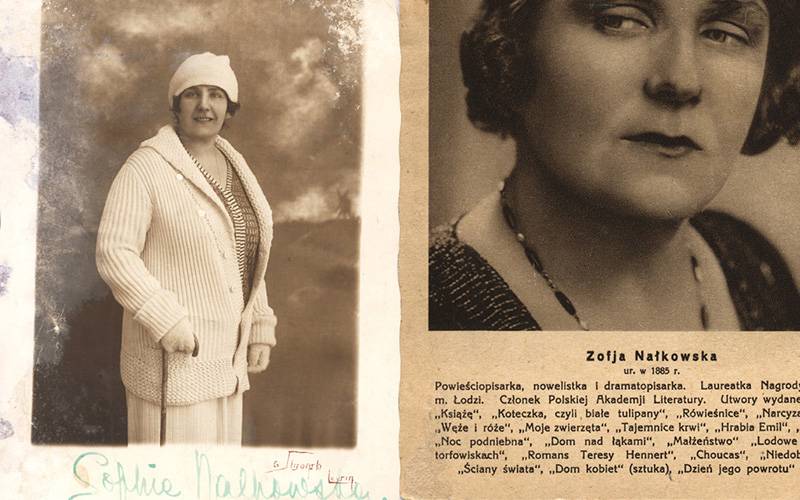
Анна Кашуба-Дебска: Первой самой важной женщиной, конечно, была его мать. Она говорила по-немецки, читала Шульцу Гете в оригинале. Следующей важной женщиной в его жизни стала Софья Налковская, известная польская писательница, которая первая прочитала «Коричные лавки», и благодаря ей книга была опубликована. Еще одна важная женщина в жизни Шульца – это пианистка Мария Хащен, которая давала концерты по всему миру, и она помогала найти Шульцу контакты.
Елена Фанайлова: Среди этих женщин есть ли женщина, которую он любил? Он же никогда не женился, но все-таки романтические отношения у него были?
Анна Кашуба-Дебска: Два раза Шульц пытался жениться. Первой невестой была Дебора Вогель, но свадьбы не произошло из-за того, что семья Деборы была против. Семья была богатой и возражала против их отношений. Вторая и последняя его невеста – Йозефина Шелинская, с ней тоже до свадьбы так и не дошло, потому что Бруно был не в состоянии оформить нужные документы. У него не получилось ничего, соответственно, свадьба не состоялась. Они до конца жизни сохраняли дружеские отношения, писали друг другу письма.
Елена Фанайлова: Она была полька?
Анна Кашуба-Дебска: Обе девушки были польками еврейского происхождения, но при этом они изучали полонистику и имели степень доктора. Дебора Вогель была писательницей и поэтессой, в какой-то момент она начала писать на идише. А Йозефина Шелинская перевела «Процесс» Кафки на польский, причем подписался под этим переводом Бруно Шульц, но потом исследователи выяснили, что все-таки перевод был Йозефины.
Елена Фанайлова: Какого рода проблемы с документами у него были, какие документы нужно было оформить, чтобы жениться?
Анна Кашуба-Дебска: Семья Йозефины Шелинской была католической, и Бруно Шульц даже вышел из еврейской гмины, но, правда, он так и не крестился. Проблемы были связаны с тем, что Йозефина поставила условие, что венчание должно обязательно пройти в католическом костеле, даже пробовали сделать это в Силезии, где были другие законы и где можно было заключить гражданский брак. Но при этом там нужна была прописка, а ее не удалось получить.
Елена Фанайлова: Анна, один из устойчивых мифов о Бруно Шульце, который основывается, я думаю, на его эротических рисунках, что Бруно был мазохистом, что женщины в его творчестве и его жизни – это такие доминирующие особы с хлыстом. Удалось ли вам подтвердить или, наоборот, поколебать это представление, когда вы знакомились с документами, с его перепиской, так или иначе входили в его личную жизнь?
Анна Кашуба-Дебска: На самом деле между женщинами на рисунках Шульца и женщинами, реально окружавшими его в жизни, есть большая разница. Дело в том, что все женщины, которые его окружали, были выдающимися творческими людьми своего времени: писательницы, художницы, которые сделали мировую карьеру, далеко выходящую за рамки Дрогобыча. С одной стороны его окружали эти люди, а в рисунках был тайный мир, который он создавал. На рисунках женщины представлены демоническими существами на больших каблуках и с хлыстами. Но реальные женщины такими не были. Реальные женщины вдохновляли его, заставляли задуматься над миром, заставляли философствовать, но не были такими демоническими.
Елена Фанайлова: Я думаю, самое время нам перейти к другой части проекта. Первое, что видит человек, когда знакомится с вашей выставкой – это десятки пар женской обуви, выкрашенной в разные цвета, расставленные по траве. И возникают, конечно, две ассоциации: во-первых, это ассоциация с Холокостом, с тем, что женщины Шульца умерли. Понятно, что это не только его близкие женщины – это вообще женщины, может быть женщины еврейского мира. Вторая мысль – это красота и оптимизм женского мира, красота этих туфель, вы еще их раскрасили специальным образом. Можете прокомментировать мои впечатления?
Анна Кашуба-Дебска: Когда я задумывала этот проект, я много рассказывала про женщин Шульца своим знакомым, и родилась мысль сделать из этого что-то более развернутое. Я организовала акцию под названием «Шпильки». Я стала собирать обувь у современных женщин и задавать им вопросы, они на эти вопросы отвечали. Ответы скрыты в этих кодах, которыми я снабдила каждую пару. Можно эти туфли читать по-разному, есть несколько вариантов. Шульц в своих рисунках особое внимание уделял именно женским ногам, женской обуви, высоким каблукам, то есть это был его фетиш. Мои туфли – это не фетиш, это жизнь. Я хотела показать, разместив их на газоне, что это жизнь. Кроме фетишизма Шульца есть очень важный момент, связанный с Холокостом. Потому что у поляков, когда они видят большое количество обуви, сразу возникает ассоциация с Освенцимом. Конечно, это я тоже имела в виду в своей экспозиции.
Елена Фанайлова: На этой обуви нарисованы специальные штрих-коды. Что они означают, какая информация в них спрятана и как можно ее прочитать?
Елена Фанайлова: Это обувь собралась со всего мира, насколько я знаю?
Анна Кашуба-Дебска: Акция имела достаточно широкий размах, и у меня есть туфли из Израиля, Вьетнама, Вены, Киева, Львова и Варшавы.
Елена Фанайлова: Аня, у вас есть какая-нибудь самая любимая женщина Шульца из всех, кого вы узнали за время работы над этим проектом?
Анна Кашуба-Дебска: Мне ближе две женщины. Первая – это Анна Плоцкер. Во-первых, потому что она тоже Анна, во-вторых, потому что она, как и я, художница, в-третьих, потому что она тоже окончила академию художеств в Кракове. И еще одна деталь – Анну Плоцкер я обнаружила первой. Вторая женщина, которая мне, наверное, даже ближе – это Дебора Вогель. Я считаю ее женщиной очень мудрой, очень думающей, и она мне внутренне близка. И когда я писала биографическую справку и поставила точку, мне стало очень жалко, что я с ней должна расстаться.
Елена Фанайлова: Это первый показ этого проекта или вы его показывали где-то еще? Собираетесь ли вы его показывать где-нибудь дальше?
Анна Кашуба-Дебска: Этот проект я вначале создавала именно для Дрогобыча. В этом году двойная годовщина – 120 лет со дня рождения Бруно Шульца и 70 лет со дня его гибели. И так как люди приносят цветы, я решила сделать композицию из туфель и цветов на газоне. Но дальше проект будет путешествовать по Америке, будет в Чикаго, будет в Нью-Йорке. Там тоже можно будет придти и отсканировать мобильными телефонами всю эту информацию. В больших польских городах этот проект будет транслироваться на биллбордах. И еще я создала сайт, куда приглашаю всех зайти, там можно рассматривать туфли, можно их переставлять, можно как-то ими играть и участвовать в проекте.
Дмитрий Волчек: В предпоследний день фестиваля «Ковчег воображения Бруно Шульца» знаменитый писатель Юрий Андрухович с польской группой Karbido представлял альбом "Абсент", заключительную часть трилогии триптиха «Самогон. Цинамон. Absinthe".
Юрий Андрухович: Здесь к Шульцу отношение только на уровне отдаленной символики. Потому что сугубо шульцевский проект – это второй наш диск «Цинамон». «Абсент» – это завершение трилогии. Это связано с моим романом «Перверсия». Там в одной из последних глав есть такой эпизод, где герой в конце концов начал рассказывать о себе, о своей жизни, о своей любимой. То есть у них даже не было времени на то, чтобы поговорить друг о друге. Он постоянно заказывает абсент. Этот напиток таким образом действует на его подкорку, что он начинает изъясняться все более и более чудно. Есть такое украинское слово «химерно», то есть по-чудачески. Конечно, это слово, которое куда-то уводит во времена раннего модернизма, Франция, Рембо и другие. И мы решили, что для нашей трилогии это такое оптимальное название, потому что появляется игра с английским словом «absent», то есть отсутствующий. Отсутствие, допустим, героя, который исчезает в Венеции, неизвестно, покончил он с собой или остался живым и просто обманул весь свет. И кроме того, это такая попытка создать программу якобы по несуществующему, неснятому фильму. Наша версия, что был снят фильм по мотивам этого романа, он, как и все в этом романе, исчез, но сохранились музыкальные кусочки, сохранился саундтрек из этого фильма.
Елена Фанайлова: Пожалуй, для меня одна из композиций, которая связана с Шульцем или с контекстом Шульца – это «Зима в Баварии». Можете ли рассказать об истории этой песни, вообще об этом тексте, об этой музыке?
Юрий Андрухович: Я опять должен возвратиться к роману своему. Это стихотворение из романа, стихотворение, найденное в записной книжке Станислава Перфецкого, героя. То есть он по дороге в Венецию некоторое время живет недалеко от Мюнхена и постоянно томится своим одиночеством. С одной стороны он это одиночество искал, и он очень его хотел, а с другой стороны он ужасно несчастен. И в ситуации такого сплина родилось у него такое стихотворение. На самом деле, еще до музыки, просто как литературный текст, оно оставляет впечатление иронической игры словами, шуточек несколько, не более того. Музыканты прочли его таким образом, что получилась очень драматичная вещь, чуть ли не трагическая. И это то, что я более всего ценю в своих музыкальных проектах, когда в моем собственном тексте вдруг открывается что-то совершенно даже для меня самого неожиданное.