
Translated material
Cross
- Before the elections. Let's make sure it goes well. If necessary, we will stand after the elections.
The guys, dressed in camouflage, are 22 years old, a carpenter and an auto repair shop worker from the Ivano-Frankivsk region. They have been on the Maidan for four months. One was fired from work, the second is on leave without pay. They say that they were not afraid either during the Berkut attacks or during the work of the snipers; It’s scary when a person is alone, but when together there’s only anger and adrenaline.
Parents, of course, call home and are worried, but the guys ask them to be patient. Local residents bring food and money and take them home to wash and do laundry. They ask you to tell Russian listeners and readers to quickly dump Putin; then Ukrainians and Russians will be friends again. There are about 15 of these guys in the army tent, the oldest one looks about 35 years old. There are about thirty of these khaki-colored tents on Khreshchatyk up to the intersection with Bogdan Khmelnitsky Street, and there are about the same number on Independence Square itself.
On the square, the tent city forms a complex conglomerate, a city within a city, in a couple of places there are warning signs that passage is prohibited, but even without them it is clear that this is a male paramilitary nomadic world, where civilians are not very welcome. There they cook, drink tea (they still don’t drink anything stronger on the Maidan), mend, draw, repair, solder, and, of course, argue about the fate of their homeland. One team created a small garden of three beds, where onions, radishes and parsley grew over the last warm days. This is not difficult: the cobblestone, the weapon of the proletariat, has been pulled down to the ground; It stands in stacks along the edges of the Maidan. “Maidan has become homeless,” one of its enthusiasts winces, “you haven’t caught him doing real work.”
In the center of the tent city is the “Yolka”, a cone-shaped structure with the flag of Ukraine on top and the inscriptions “We love Russians, we despise Putin”, “Let us help the Russians - we will save Ukraine!”But for me, the seriousness of the plan can be judged by the design, which is still observed with different emotions by various visitors and local onlookers, taking pictures with the guys from the Maidan self-defense. This is a type of family weekend leisure. Onlookers are offered goods on trays: gold loaves (magnets for refrigerators), foot mats with a stenciled portrait of Yanukovych, souvenirs with national symbols. If you look at the Maidan from above, then it, this majestic installation by an unknown artist, this city within a city, should look like a cross, the vertical of which is Khreshchatyk, and the horizontal is the square and Institutskaya Street extending from it to the right.
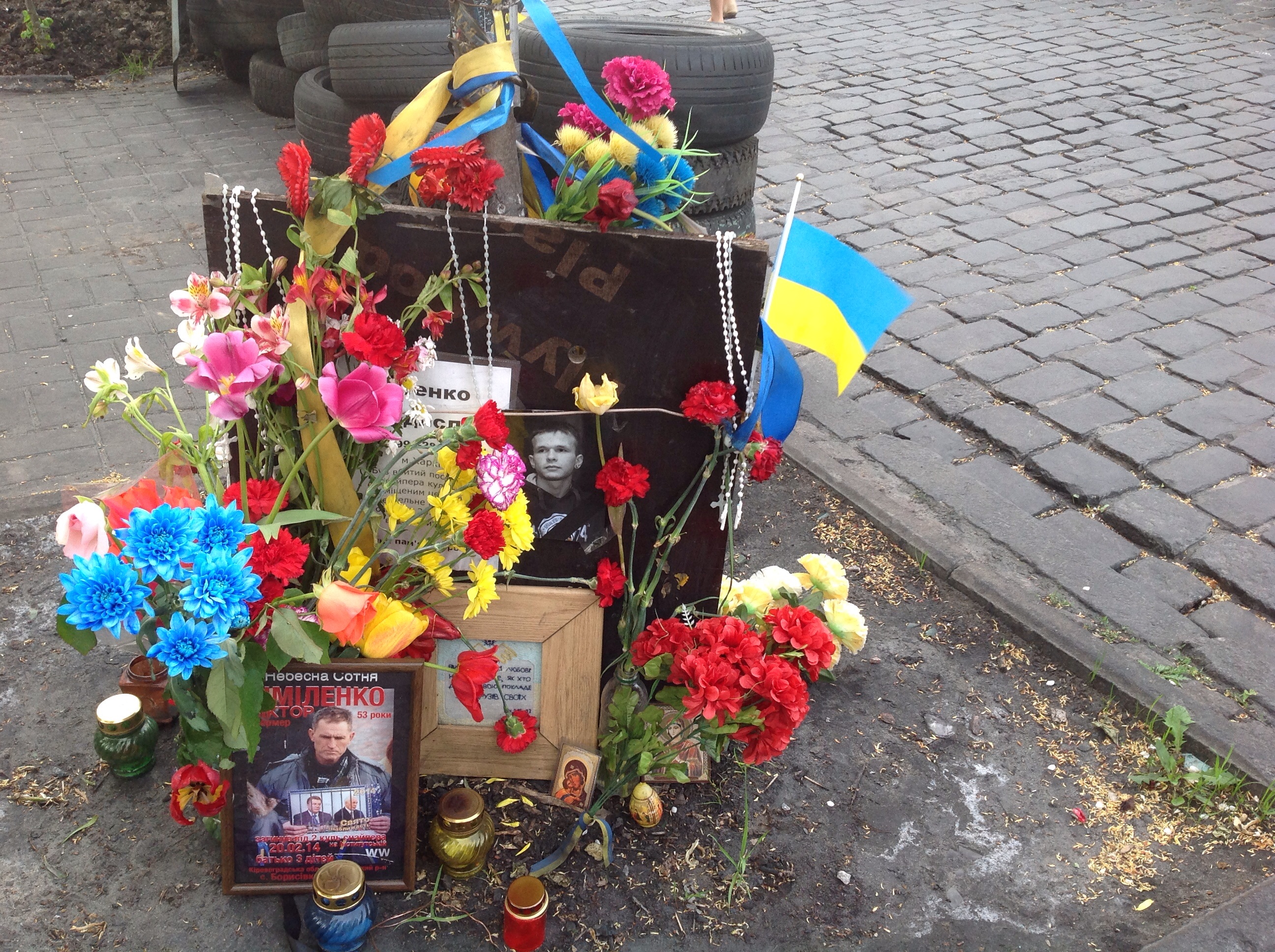
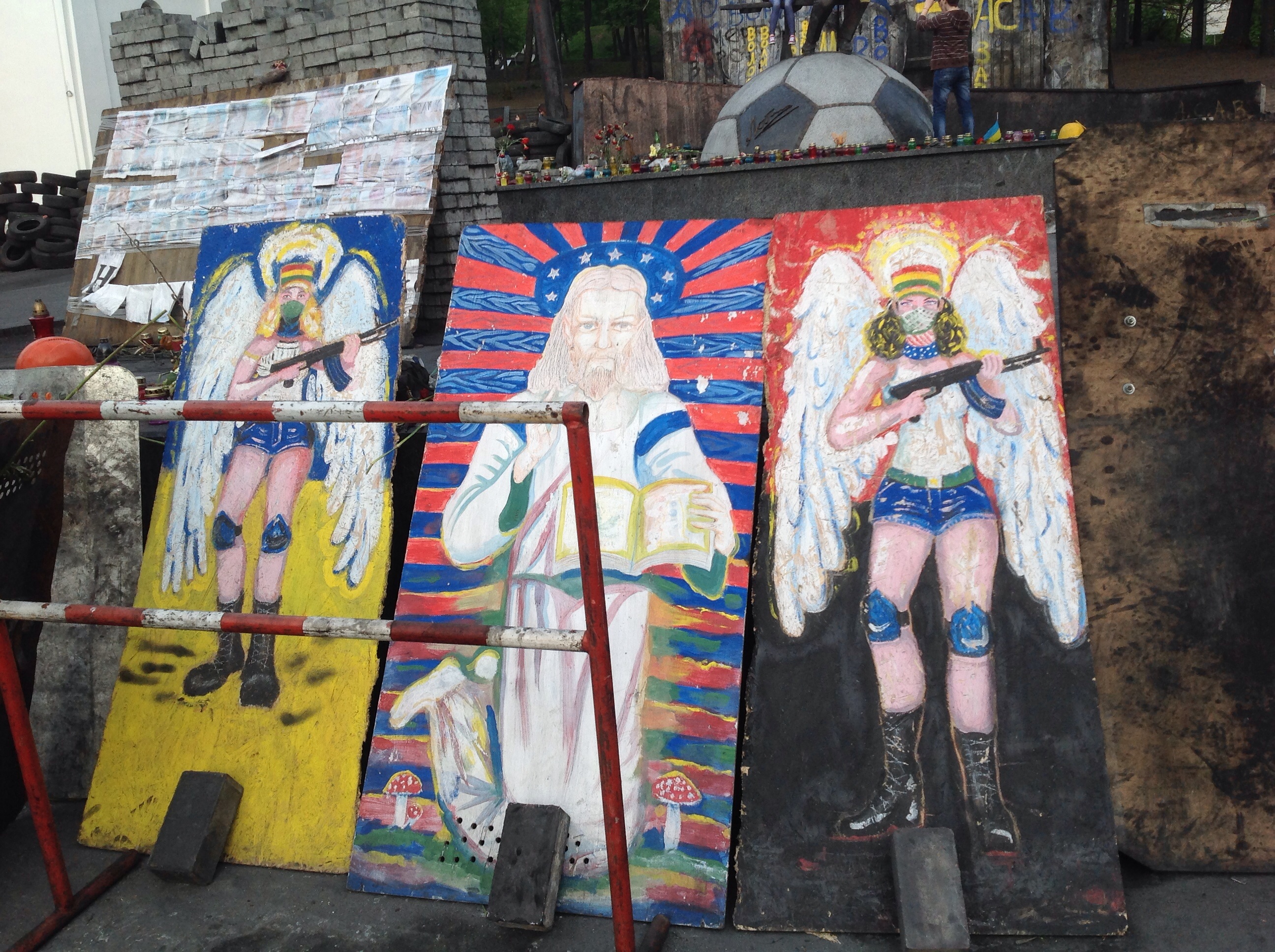
In the center of the tent city in the city is the famous “Yolka” (Yolka), a cone-shaped structure with the flag of Ukraine on top and the inscriptions “We love Russians, we despise Putin”, “Let us help the Russians - we will save Ukraine!”, “Eternal glory to the heroes”. In general, judging by the number of graffiti and street slogans, they think about Vladimir Putin no less than about Jesus Christ, Stepan Bandera and Taras Shevchenko, only horns are painted on Putin’s images and curses are attributed. And one more thing: Cream is ours, the graffiti artists write.
The structures are filled with decorative elements. Primary colors are red, black, yellow and blue. Colors of the flag of Ukraine and colors of mourning. All the corners of the tent camp, all the unassembled and painted blue-yellow tires, all the space near the stage, at the “Christmas tree”, at the Column of Independence are filled (crowded, littered) with photographs of the “Heavenly Hundred”, colored glass lamps, fresh carnations and artificial flowers, embroidered towels, small icons, white crosses and rosaries. Lists of the dead. Some photographs are replaced by black ovals.
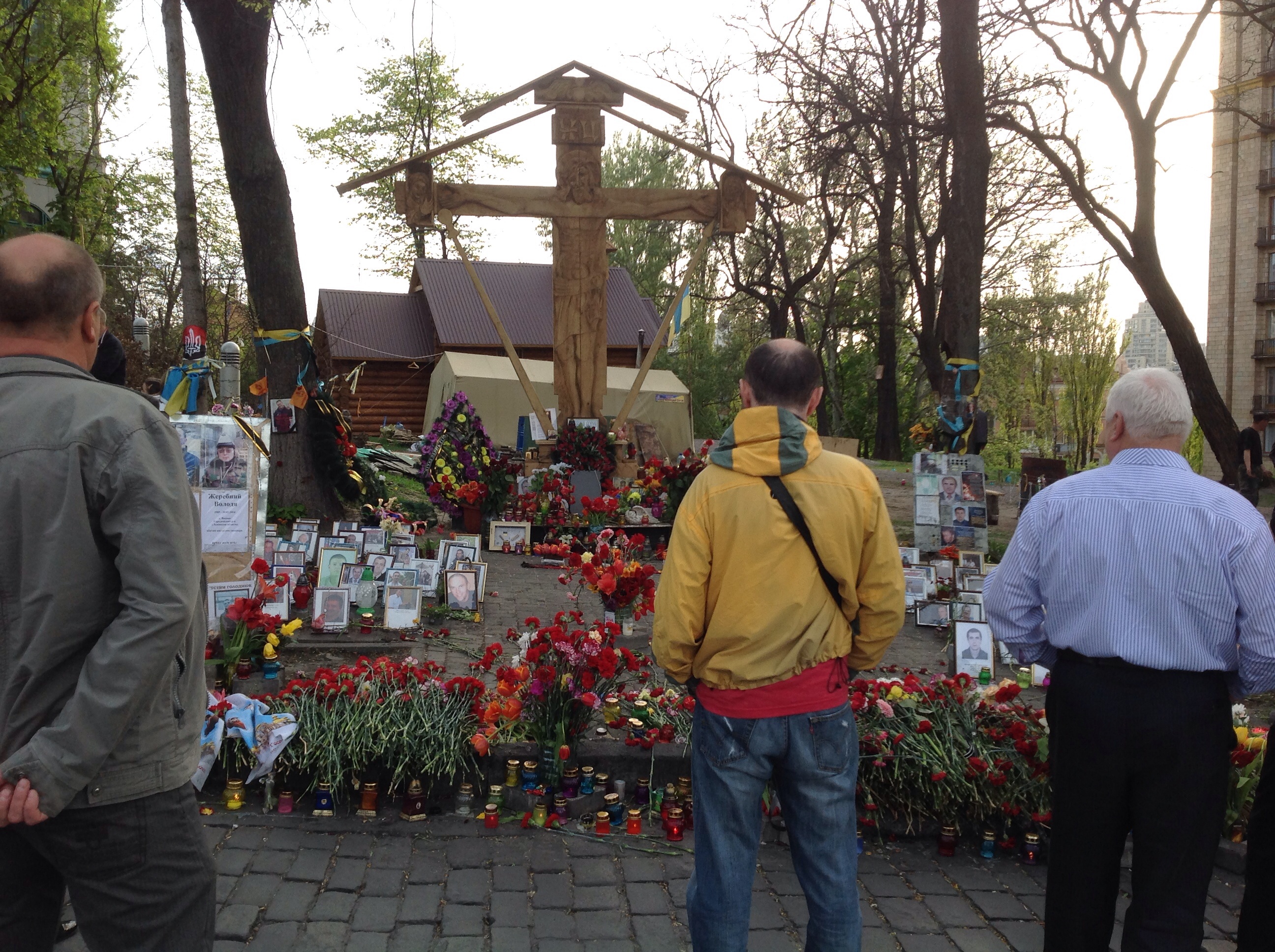
This is a real avenue of military glory, only instead of sculptures there are living trees and photographs of the dead. In the middle of the alley there is a large wooden cross (flowers, wreaths, lamps, towels) and a gray cube made of sidewalk cobblestones with a black marble plaque: “My sons, my brothers! Forgive me for not saving you from a sniper’s bullet on February 20, 2014. Glory to Ukraine! Kievite.” A little higher, closer to Bankovaya, the administrative quarter that Berkut defended, the mourning line ends, the graffiti becomes colder (but the curses and the will to win or die are no weaker) and disappear a couple of buildings before the Presidential Administration. Here the colors are gray and beige.
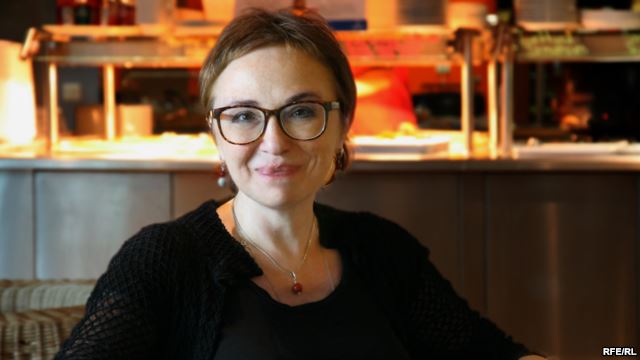
Elena Fanailova is a poet, winner of several literary awards, author and host of the Radio Liberty program “Freedom in Clubs”
Opinions expressed in the "Author's Rights" section may not reflect the views of the editors