Date
Author
Разборы Продолжение следует
Source

Preserved copy
Translated material
How to survive on a salary when prices are only rising. And where are normal vacancies?
Inflation, high prices, expensive real estate, low salaries, personnel deficiency and hard working conditions have become the “norm” of modern Russia. Why do Russians have to work so much and hard for a decent life - Pavel Kanygin understands
This message (material) was created and (or) widespread by a foreign media that performs the functions of a foreign agent, and (or) a Russian legal entity that performs the functions of a foreign agent “continued”You read the text version of the analysis
In June of this year, the Pravda.ru portal was an article with the heading: “As a family of three people to survive 30 thousand rubles a month - real life hacks.” What kind of life hacks are there? Let's see:
Buy seasonal vegetables and fruits in the markets, choose basic cereals and bread in trusted inexpensive stores, cook at home, avoiding semi -finished products. Save on utility bills - try to use water and electricity reasonably, turn off the light when it is not needed. Choose public transport or a bicycle instead of a taxi and a personal car. Entertainment and leisure can be organized at home or at free city events, avoiding expensive campaigns in cafes and cinema.
The jokes end when you feel this animal-hearty tone. This is not a joke, the media really teach Russians to survive, because in the summer of 2025, in the richest resources of Russia, there are still full of people for whom such “life hacks” are relevant. The same Vladimir Putin will not allow to lie .
Why so? What does Russians do with income and employment? And why, in order to live in Russia, not just good, but at least acceptable, you need to literally tear your ass and break into a cake?
Some time ago, even before the war, a scandal in the Saratov region thundered throughout the country. TTAM, Minister of Labor and Employment, Natalya Sokolova, opposed the increase in the subsistence level for non -working pensioners, saying that it is quite realistic to live by 3.5 thousand rubles. Like, "the minimum wage is good for health" , and "pasta and kefir are cheap." One of the deputies, the hooligan-communist and outrage of the united stability Nikolai Bondarenko, suggested that Sokolova try to live with that kind of money. Sokolova, of course, refused, saying that I quote her, "the status of the minister will not allow this." But she promised to help compile a balanced “diet” menu, following which you “will become younger, more beautiful and slimmer” .
Then Bondarenko fit into the challenge and decided to try to live with this money. As part of his experiment, he divided the amount into four parts, it turned out 875 rubles for products per week. As a result, as in some kind of TNT comedy, the deputy ate only cereals, eggs, vegetables and soups, buying only chicken from meat. For dessert, he allowed himself a seasonal apple per day and caramel. From such a “diet” he lost several kilograms, planted health and proved that the size of the consumer basket should be at least 10 thousand rubles a month. And the Minister Sokolov was fired - for "a neglect of topics that have vital importance to people."
This case clearly shows what kind of abyss is gaping between those “who live well in Rus',” and those who are not yet very good. Moreover, among those who still live, rather, not very, not only non -working pensioners. Let's say directly: among the young 20-year-old and 30-year-old Russians there are many who work, like a arable horse, and at the same time barely makes ends meet. And over the years, contrary to the victorious relations of officials at different levels, the situation is only worse.
But how does it work? It seems that we are a richest country - that is, we produce a lot of goods, and our people are not at all lazy. But why then do they often work just for food? Why do such banal expenses as the collection of a child to school, many, especially in the province, are forced to take loans? To explain this, as Ivan Urgant said, you can’t tell two letters, at least three are needed here.
Lucky boomers
According to the law, from January 1, 2025, the minimum wage (minimum wage) in Russia is 22,440 rubles per month. This is a federal indicator, and regions can set their own minimum wages, but they cannot be lower than the federal. For example, in Moscow, the minimum wage is set at 32,916 rubles. It is clear that either interns are ready for that kind of money or those who have no other choice. Therefore, the situation is extended when the employer prescribes the minimum wage in the clause of the “salary”, and pays the rest of the lion's share of the money in the form of a “gray” salary in an envelope, which formally takes place as bonuses and allowances.
So employers are trying to reduce the tax burden, because for each of their employee they are required to pay from 13% to 22% of personal income tax and about 30% of insurance premiums. That is, in fact, every month from your “white” salary, the state bites from 43 to 52%(depending on your income on a progressive taxation scale). Count now in your mind, how much your salary actually makes up. Well, impressive? By the way, in many developed countries, social contributions also make up about half the salary, and often workers pay them themselves. And only this one factor - when a person raped this amount on his account - and then gave the state, it greatly affects the consciousness of citizens.
In order to “optimize” their own costs for the maintenance of full-time employees a little, many employers today instead of an employment contract offer employees to work under the GPC-that is, under a civil law contract for the provision of certain services. This imposes much less responsibility to the employer - he is not obliged to pay sick leave, vacation, maternity leave, provide conditions for work and guarantee for dismissal.
And since 2019, when Russia introduced the tax status of a self -employed one, employers began to switch to this calculation scheme. Well, if you also have an individual entrepreneur openly, then this is generally a gift. And what, it is convenient - the employee and taxes pays himself, and he does not need to provide any social package. Moreover, people have nowhere to go, they agree to this. So, by the beginning of 2025, the number of self -employed in Russia flew up to 12 million people - and this is twice as much as it was in 2023.
There is, of course, and another factor. After the Covid’s completion on the labor market, a generation of Zumers slowly began to go out - those who were born from 1997 to 2010. Now many of them are just 25 years or so. They are released from their educational institutions, stand up to jobs - and just go nuts. It turns out that it is difficult to work, and they pay a little for it! Moreover, this happens not only in Russia, but also around the world. Recently, in Tik-Tok, a video was encouraged, where a young American girl in tears tells how she is unbearable to work in an office according to 5/2 schedule from 9 to 17 hours. On her income, she cannot afford to live close to the city center, so she has to travel from afar. After work, she returns home, and she only has the strength to have dinner and go to bed. And the next day, everything is repeated first.
But our Russian girl is already writing a similar video , causing a wave of discussions already in Runet.
Many conscious Zumers call this system “inadequate” and refuse to play by these rules, preferring to interrupt part-time jobs and self-employment, avoiding an 8-hour working day in the office. Those who nevertheless got a job, according to managers, "demonstrate a lack of motivation and productivity, require a high salary and consider themselves entitled to refuse even standard load." Because of what you have to fire them.
On the one hand, you can, of course, gloat: "Welcome to real life, snowflakes!" On the other hand, the question is very acute: how to these children generally provide themselves with a decent existence and their own housing? Like it or not, their parents, grandparents, who are attributed to the generation X and baby batter, were in a more advantageous position: then housing was more accessible, and quality education and medicine. Boomers could not afford both two and three children - moreover, this is not only about Soviet citizens, this is a global picture. Our grandfathers and grandmothers built their careers and lives in relatively more favorable economic conditions than the current generation of workers.
Military economy
In general, as statistics show, now in Russia is not the best time to search for work.
On the one hand, it is difficult not to believe the wise economists like Natalia Zubarevich who convince us that the labor market in Russia is bloodless due to the fact that a huge number of men have pulled off their own.
On the other hand, it must be understood that the lack of these working hands concerns completely specific segments of the Russian labor market, and we will return to this. And if we talk about the market as a whole, then the situation is exactly the opposite: the number of vacancies is reduced, and the competition increases greatly for them. According to HeadHunter , in February-May 2025, the number of active vacancies was 13-25% lower than a year earlier, and the resume at the same time became more than a third. More than half of the applicants - 54% - are faced with difficulties when searching for work and complain of mass automatic failures, the inability to break through to real interviews, as well as fake vacancies and extremely low salary offers. Moreover, studies show : every sixth company in Russia is going to cut out the salaries of employees over the next months. First of all, the so -called “linear” workers - couriers, sellers, cashiers, drivers, managers - but a third of employers are ready to reduce income even managers - will fall under the blow.
It's all about the general fall in the revenue of companies against the backdrop of "sunshot". Although Putin on the PMEF-2025 and calls for the business to move to the "high salaries" economy, in conditions of high inflation and prohibitive bets of the Central Bank, real salaries are stagnant at best. Well, in general, harsh times require harsh measures, so employers in the conditions of business survival are less and less considered to be the interests of employees and increasingly increase the requirements for those who remained at the workplace. Now Russia is a “country of miracles” from Carroll's fairy tale about Alice: you need to run with all legs in order to stay in place, and in order to get somewhere, you need to run at least twice as fast.
We have already mentioned Professor Zubarevich, but we do not have to be a doctor of sciences in order to understand how the beginning of a “special military operation” was reflected in the labor market. According to economists , in 2022–2024, the Russian economy could lose more than one and a half million workers - this is about 2.2% of all labor in the country. All these are mobilized and contractors, as well as people who emigrated abroad due to the threat of draft or due to disagreement with politics.
The Central Bank admits : personnel hunger has become one of the main factors for accelerating inflation. Enterprises cannot find people on vacancies, production is sags - and prices are rising. It would seem, how is it? There has been a resume in the vacancies market, but there is no one to hire anyway? All because they took some, and others offer their services. The master of manicure will not replace the milling machine operator at the machine, and yesterday’s student will not pull the task of the Signor developer. Tens of thousands of professional men were pulled out of industry, transport, construction and other spheres, and their remaining colleagues were forced to pull the double load so that the conveyor would not stop. In turn, thousands of highly qualified specialists chose to go abroad, fearing a call. This created a shortage of engineers, programmers, scientists, so in some directions the companies even had to lure them back to higher salaries and a profitable mortgage. But most ordinary Russians have no more easily from this.
But "to whom the war is, and to whom - the mother is relatives." With the beginning of his “sucker”, the economy began to switch to military rails - and, of course, there are those who benefited from this, if you can say that at all. Firstly, the demand for frames in the defense industry, for factories producing weapons, ammunition and drones, has grown sharply. According to the Ministry of Industry and Trade, salaries in the industry increased by 30-60%in 22–24, and enterprises began to actively lure specialists from other industries in order to keep up with a sharply increased volume of production. Russian workers of enterprises of the military -industrial complex actually turned into a new middle class, with good salaries, reservation from mobilization and stability. And these people the least want to end now that the war ends, and they can also be understood: "They just begin to live like people."
However, do not forget about the other side of this medal. About the fact, in particular, that many took part in this war as the last chance to get out of poverty. Close a loan, buy a car, make repairs in the apartment. Go on vacation, after all. For the conclusion of the contract, a resident of Moscow, for example, can receive 5 million 420 thousand rubles for the first year of service (well, if he lives before the end of this year). 2 million 300 thousand is a one -time payment and 260 thousand - monthly monetary allowance. In the regions, these amounts, of course, are lower, but still the money that the military receives is much, much more than what simple hard workers can count on somewhere in the Kurgan region.
Boarders VS private traders
But not all of Russia is a mound, you say, and you will be right! And what is true for the mound is not at all fair, say, for Moscow.
Although Moscow is, of course, not quite Russia. In Moscow, the average salary can be 3-4 times higher than in the regions, and this despite the fact that the prices in stores, in general, are comparable, but the communal apartment in many regions cost even more expensive than the Moscow one. With such initial introductory, life in the regions is, of course, not life, but survival.
Why so? Well, in Moscow, as we know, there are headquarters and representative offices of many large enterprises, state corporations, IT companies-they have a corny more money and opportunities to provide employees with acceptable working conditions. In addition, competition for an employee is already starting to work with vacancies of this level. If you are a steep IT -School, then you can already choose who has a social package and lavender raf, and if you don’t like anything, you can always go to competitors, and you will be torn off with your hands.
In the regions, especially where there are no noticeable industries, the economy, in fact, is not something that did not step into the post-industrial era-but, on the contrary, rolled into agrarian. People perceive the salary and pension not as a financial support - but as an help. The main hope is the garden! Supplies, own farm. After all, most vacancies are in trade, maintenance, budget sphere, often with minimal payment and high load. Well, there are not as many vacancies themselves as in Moscow, so employment turns into a competition, who is ready to plow more for a smaller amount.
By the way, about the budget sphere: it so historically happened that the state in Russia is the largest employer. And it continues to strengthen its position in this regard. Today in the country, almost every fourth citizen works in a public sector, these are doctors, teachers, scientists, military, officials. That is, every fourth financially dependent on the state. Although, again, we take the working population, but if we take it wider, if you take into account all recipients of social benefits, then up to half of all citizens depends on the state in our country, and even more with the right to vote in the elections. Which, of course, cannot but affect how we all live. But we will talk about this another time, and today we will see: what gives a person a place in a budget institution.
Well, first of all, the notorious stability. The state employees almost always have white, paid leave, sick leave and almost guaranteed salaries, just slow. For example, from January 1, 2025, the government introduced indexing the salaries of state employees (teachers, doctors, military and TD) by 13.2%, which for someone in the outback turned out to be a good help. But in general, prices in stores change much faster. There are also enough disadvantages - they can, for example, forcibly drive to a rally or make the screen be sent by voting, for whom he voted.
On the other hand, employees in private business have an average salary higher than state employees, but you will have to work more. In commercial companies, there is not such a rare irregular working day, high turnover, gray salaries.
It often happens that employees are delayed there or do not pay salaries at all. At the end of April 2025, the total wage arrears in the country exceeded 1.48 billion rubles. Almost all of this amount is the debts of enterprises due to the “lack of their own funds” , that is, companies do not pay a corny, because they themselves are in the minus. Builders, auto industry, small factories are especially common - they can feed promises there for months. The law requires to pay at least twice a month, and the delay for more than 15 days gives the employee the right to suspend the work. But in practice, people are afraid to do this-not only will they not return the duty, they will also be fired and what they write in the labor line, then you won’t get anywhere at all.
Another frequent problem is a violation of the operating and rest mode. The Labor Code is supposed to work no more than 40 hours a week, have a vacation 28 days a year, paid sick leave and so on. Но если вы попробуете всерьёз считать часы на рабочем месте или уйти в отпуск на весь месяц, а потом начнёте качать права, долго вы на этой работе скорее всего не задержитесь. Притом касается это как бюджетников – так и тех, кто работает в частной компании. Ну а ипешники и всякие там самозанятые вообще таких слов как отпуск и больничный не знают.
Ну а еще, чтобы сотрудники лишний раз не расслаблялись, многие частные компании практикуют штрафы к заработной плате. Например, могут оштрафовать за задержку доставки, если ты курьер, за несоблюдение дресс-кода, за порчу оборудования, за кражи товара покупателями, за разглашение внутренней информации и так далее.
Вот, к примеру, как штрафуют в одном известном банке. Это запись реального собеседования с канала «Жизнь анонима».
Такая недружелюбная среда способствует тому, что и сами работники идут на ухищрения и хитрости, а часто и обман. Кражи товаров на рабочем месте, манипуляции с отчетностью и прочие манипуляции часто не просто ответ на токсичную рабочую среду, а часть широкой культуры. Вы делаете вид, что нам платите, а мы делаем вид, что работаем.
Главным наказанием работников при этом остаётся увольнение. В нормальных компаниях с официальным трудоустройством уволить не так-то просто – для этого нужны серьезные основания. При сокращении полагается предупреждать минимум за 2 месяца, выплачивать выходное пособие в размере 1 среднего заработка. Но на практике это часто не соблюдается, и сотрудников вынуждают увольняться «по собственному желанию», создавая невыносимые условия, когда человеку проще махнуть рукой, чем бороться за свои права. Да и к тому же в российской бизнес-культуре, даже если руководитель самодур, зачастую ему или ей психологически некомфортно увольнять людей, а проще и иногда и приятнее доводить до увольнения.
Несколько лет назад в ютубе стал популярен канал Олега Асса «Все работы хороши». Блогер и его тайные агенты снимают ролики о том, как они устраиваются работать в ту или иную компанию в России, набирая миллионы просмотров. Иногда от просмотра реально возникает ощущение, что Олег открывает портал куда-то в ад. Например, в одном из роликов он показывает, как при трудоустройстве в крупную аптечную сеть официально предлагают рекордно низкий оклад – 33 рубля в час.
То есть за 8-часовой рабочий день по тарифу выходит всего 264 рубля. А остальное обещают как премию, но на практике эту премию можно получить, только если выполнил план. Как правило, в этот план входят лекарства с истекающим сроком годности и бады от аффилированных с сетью фармкомпаний. Короче, не впарил бабке просроченный фуфломицин – сосёшь лапу. А если хочешь уйти в отпуск – сам ищи себе замену, иначе не отпустят.
Или другой пример , от ведущего канала «Жизнь анонима», который попытался устроиться продавцом в магазин электроники. Условия следующие: работаешь до 8-10 часов вечера, но несколько раз в месяц нужно ещё подождать несколько часов, до 11, и разгрузить машину с техникой, которая еще может и опоздать. Причём время ожидания никак не оплачивается, а за саму работу грузчиком платят всего 1000 рублей.
А вот как проводят свои рабочие будни продавцы популярной сети магазинов одежды.
Звучит как анекдот, но самое страшное, что находятся люди, которые на это соглашаются. Из-за этого многие работодатели сейчас чувствуют свою безнаказанность. Аргумент простой: «Что-то не нравится? Вон, за забором очередь желающих».
Play of squid
Недавно на Netflix вышел последний сезон «Игры в кальмара» – это сериал про жестокие игры на выбывание, где люди борются за финальный приз. В целом, это в чистом виде метафора того ада, через который должен пройти человек, чтобы получить официальный оффер от работодателя. Весь путь от отклика на вакансию до полноценного трудоустройства выглядит как извращённый квест, который придумывал какой-то маньяк-психопат. Притом зачастую оффер – это не так, чтобы прямо работа мечты.
Сначала ты рассылаешь десятки резюме, в ответ на которые получаешь либо полный игнор, либо авто-отказы от роботов-алгоритмов. Если тебе повезло, и тебя всё-таки позвали на собеседование, то тебе, как в компьютерных играх, предстоит схватка с первым «боссом» – HR-менеджером. Часто это человек, который мало понимает в специфике самой работы, его задача просто отсеять всех, кто «не подошёл по вайбу».
Вот ещё один блогер, Сергей Стогов, записывает свои разговоры с эйчарами на собеседовании.
Отсюда все эти вопросы «Кем вы видите себя через 5 лет?», «Назовите ваш главный недостаток». Если кто не знает, то правильный ответ: «Я слишком много работаю» . Эйчару в принципе не так важно, какой вы профессионал, тут как на ЕГЭ – вы просто должны пройти проверку по чек-листу. Кстати, какие наиболее странные вопросы вам задавали на собеседованиях?
Нередко эйчары залезают в личную жизнь, особенно если вы девушка. У вас обязательно спросят, замужем ли вы, планируете ли вы заводить детей и уходить в декрет. Могут спросить про ваши политические или религиозные взгляды, отношение к президенту. В творческих профессиях, например, в киноиндустрии, в договоре теперь прописывают отдельный пункт, что на время выполнения работы работник не имеет права нигде публично высказываться о политике, в противном случае договор сразу расторгается, а имя сотрудника вычеркивается из титров, даже если он автор сценария или режиссёр.
Но если вы думаете, что после одобрения эйчара всё закончится – хрен там плавал. Вас с большой долей вероятности ждёт ещё несколько раундов собеседований с начальниками разных уровней, а также тестовое задание , скорее всего, бесплатное и притом объемное, так что вам, может, придётся потратить на него несколько дней работы. А так как вы пробуетесь на несколько мест, то и заданий параллельно может быть несколько. Как написала одна девушка-соискатель, «в какой-то момент жизнь превращается в бесконечное выполнение тестовых заданий» . Но и работодатель не дурак, так что под видом тестового некоторые компании часто дают свои реальные текущие задачи, а потом используют ответы претендентов как свои собственные разработки.
Ну и, наконец, коронное. Когда вы уже прошли весь этот путь, вам с улыбкой крокодила говорят: «Спасибо, мы вам перезвоним». Могут реально перезвонить, но вообще эта фраза уже стала эвфемизмом для «Вы не прошли» .
К слову, в сети можно найти целые « словари » таких внутрикорпоративных штампов от опытных соискателей. Берите на заметку. Например, если пишут « мы молодой дружный коллектив », это значит, что ваш начальник будет нарушать ваши личные границы и «по дружбе» будет наваливать вам сверхурочной работы, а отсутствие соцпакета будет компенсироваться «атмосферой».
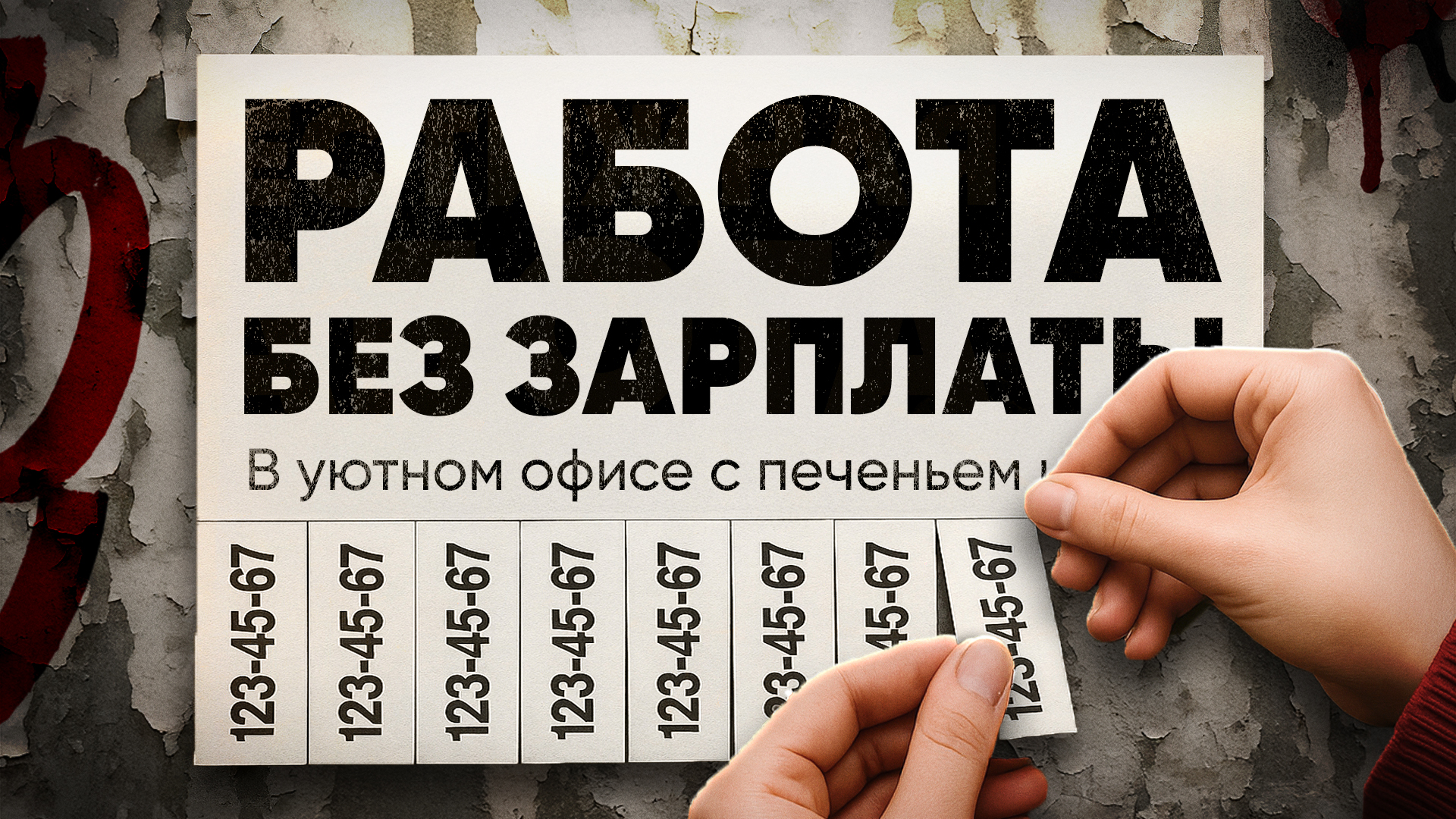
« Гибкий график » – значит, будут звонить и писать по работе в любое время дня и ночи. «Молодая динамично развивающаяся компания » – фирма-однодневка с текучкой, где не отлажены базовые рабочие процессы. « Рыночная зарплата » – значит, платить будут по минимальной планке. «Мы ищем гуру» – значит, сами ничего не умеют и все проблемы и задачи будут вешать на вас. «Кофе с печеньками и фруктовые пятницы» – будете работать за еду. «Вы получите строчку в портфолио» – того хуже, буквально будете работать просто за опыт, чтобы потом устроиться было полегче. И самое популярное « мы не просто компания, мы семья » – значит, в компании царит сектантский подход, где здравый смысл и ваша личная жизнь приносится в жертву интересам «семьи».
Конечно, все это немного преувеличение, но и в шутке есть доля шутки.
Про успешный успех
Каждый маркетолог вам скажет, что половина успеха – это правильно нащупать боль своей целевой аудитории. А так как трудоустройство и поиск своего места в мире – это чуть ли не главная боль любого человека, то на этой теме паразитирует огромное количество разных тренингов, курсов по самореализации и личностному росту, а также марафонов успеха.
Как отличить инфомошенников от нормального учебного заведения? В соцсетях вы найдете уйму компаний, которые будут обещать вам быстрый результат при минимуме затрат и усилий. «Заплати пять тысяч – и через месяц найдешь работу своей мечты» . Грустная правда в том, что так это не работает, волшебных таблеток не бывает. Чтобы стать профессионалом и хорошо зарабатывать, нужно много учиться и работать. Более-менее серьезные профессиональные навыки начинают формироваться при тщательном обучении от полугода, а по-хорошему – в течение двух-трёх лет плотной работы. Краткосрочные тренинги помогут вам создать в голове общую картину или подтянуть какой-то узконаправленный навык, но кардинально никуда вас не сдвинут. Ещё меньше эти курсы помогают с реальным трудоустройством. Они могут лишь немного повысить вероятность успеха, но точно не дают никакой гарантии.
Поэтому, если вы решили поучиться какой-то новой профессии, сперва хорошо изучите рынок и отзывы, и обращайтесь только к самым проверенным. Смотрите сертификаты, ищите реальные проверяемые кейсы успеха выпускников. Но вообще лучший способ чему-то научиться – это начать этим заниматься самому, регулярно, по открытым источникам. Сейчас при наличии интернета вы можете освоить очень многие профессии, было бы время и желание. И совсем не обязательно платить кому-то 5 тысяч.
А как у них?
На федеральных телеканалах и в разных провластных блогах часто можно увидеть выпуски о том, как всё здорово в России и как всё плохо на Западе. Дескать, посмотрите на США – у них там сплошные бомжи и наркоманы на улицах, Европа утопает в мигрантах, а у нас чистота, порядок и духовно-нравственные ценности. Что ж, в каждой стране есть свои проблемы, в том числе в развитых странах вроде США и Германии. Однако это не отменяет всего остального – например, того, что различия с Россией в плане организации труда у этих стран колоссальные.
Во-первых, зарплаты на Западе существенно выше российских. Средний американец зарабатывает около 6 тысяч долларов, то есть примерно 490 тыс. руб. per month . В Германии средняя зарплата в долларовом эквиваленте 5800 или примерно 480 тысяч рублей. В Швейцарии и Люксембурге в топе списка – 6–8 тысяч в долларах. Ну а в России средняя зарплата составляет в 2025 году около 80–90 тыс. рублей в разных регионах, то есть разница с США в 5-6 раз! Так получается из-за особенностей распределения доходов, где большая доля прибыли идет самим работникам, а не собственникам капитала.
Второе ключевое отличие – соцзащита работников. В Европе трудовые права – это святое. Сюда входит гарантированный по закону отпуск от 20 до 30 дней, защита от увольнения, щедрые больничные. Больному могут выплатить от 70 до 100% зарплаты за период болезни, и уволить его в это время практически нельзя. В США медицина платная, но поэтому там работодатели часто оплачивают сотрудникам страховку – это стандартный бонус, без которого нанять хорошего специалиста невозможно.
В большинстве европейских стран сложно уволить сотрудника без веской причины. Например, в Германии, как правило, работодатель должен обосновать увольнение, предупредить за несколько месяцев, выплатить щедрое выходное пособие, а в некоторых случаях решение об увольнении должен подтвердить производственный комитет. У нас формально вроде бы как тоже – однако на практике, вы сами знаете, у нас законы работают совсем не как в Германии. У европейской системы есть, конечно, и недостатки. Та же самая бюрократизация увольнений делает рынок труда очень малоподвижным, и часто молодые не могут найти работу, потому что все места заняты старшим поколением, все места насижены, а уволить даже бездельника почти невозможно.
В Швеции сильны профсоюзы: коллективный договор зачастую гарантирует, что зарплаты повышаются ежегодно на уровень не ниже инфляции, а массовые сокращения сопровождаются компенсациями и программами переобучения. В США, правда, ситуация иная – там принцип «at-will employment», то есть работника могут уволить в любой момент без объяснения причин, кроме дискриминационных оснований. Но и там, если речь о квалифицированных кадрах, компании стараются давать хотя бы двухнедельное предупреждение и даже обеспечивают severance pay – то есть выходное пособие, из репутационных соображений.
Помимо этого, в Европе государство, как правило, берет на себя разные меры соцподдержки: бесплатная медицина, дешевые или бесплатные детсады, пособия по безработице. В некоторых странах оно составляет 60-80% от прежнего заработка в первые месяцы без работы. Из-за этого люди не боятся остаться без куска хлеба при потере работы. В Швеции, например, безработный может получать пособие около 80% от прошлого оклада в течение длительного времени, плюс бесплатные курсы переквалификации. В России же соцпакет вне госсектора минимален. Если вы официально потеряли работу по сокращению или ликвидации, и у вас есть стаж, то можете рассчитывать на пособие в 15 044 рубля в месяц. Это одно из самых низких пособий по безработице в мире: его не хватает даже на базовые потребности. Ну а за пределами этого срока люди и вовсе получают минимальное пособие, в 2025 году его уровень установлен на уровне 1 764 рублей.
В Европе также развит культ work-life balance: после 17-18 часов большинство офисов пустеют, переработки не поощряются. Во Франции вообще принят закон, дающий сотрудникам право не отвечать на рабочие письма в нерабочее время. В России (но и, кстати, в США, это я вам по опыту скажу) корпоративная культура иная. Задержаться до ночи — это значит, проявить усердие. Быть всегда на связи – это норма. Многие россияне рассказывают, что, переехав в Европу, ловят культурный шок: по вечерам всё закрывается, коллеги не понимают, зачем «убиваться» на работе, если можно спокойно жить. Лично мне это не близко, поскольку для меня моя работа всегда была важнейшей частью жизни, а не способом заработка.
Ну а в скандинавских странах считается важным, чтобы человек мог уделять время семье, хобби – поэтому и декретный отпуск там довольно продолжительный, причем и для отцов тоже, и больничный по уходу за ребенком не обернется проблемами. В итоге качество жизни работников на Западе выше: они чувствуют защищенность и могут планировать будущее, не упахиваясь на работе. В конечном счете, выигрывает от этого и работодатель. Спокойные, отдохнувшие сотрудники – они и более эффективны, и болеют меньше.
С другой стороны, для полноты картины надо сравнивать себя не только с лучшими, но и с худшими. В рейтинге ВВП на душу населения по паритету покупательной способности Россия находится на 43 месте из 186, то есть всё ещё входит в своего рода высшую лигу. Для сравнения, на последнем месте этого рейтинга рядом с другими африканскими республиками находится Южный Судан, его ВВП по паритету покупательной способности на душу населения почти в 44 раза ниже, чем у нас, а инфляция достигает до 120% в год. Если же брать среднюю зарплату чистыми, то там она составляет около 390 долларов в месяц, а это примерно в два раза ниже, чем в России. Так что, строго говоря, в России работающему человеку живется во много раз лучше, чем в Южном Судане. И нам не только есть куда стремиться, но и есть куда падать. Даже если порой кажется, что ниже падать уже некуда.
To be continued…