
Translated material
Fear caught up
In the Ostankino court, in his absence, the “Momotov case” is being heard

Victor Momotov. Photo: Petr Kassin / Kommersant
Those who are in office today are confident that they are guaranteed against illegal persecution, including from “their own people.” But such security is an illusion. Officials can rely on the law no more than ordinary citizens, and the case of Judge Viktor Momotov is a clear example of this.
The “anti-corruption lawsuit” against the former chairman of the Council of Judges continues to be considered in the Ostankino Court of Moscow. Momotov himself was hospitalized on October 8, the day the trial began, and asked that the case not be heard in his absence, but his Ostankino colleague ignored this request, considering that Momotov’s interests were sufficiently represented by his lawyer. This is a gross violation of the defendant’s rights, especially since nothing indicates that the hospitalization is based on a simulation - rather, on the contrary, the judge - now retired - can be understood.
“Anti-corruption claim” is a concept missing from the law, synthesized by the Prosecutor General’s Office for its own convenience. According to the law, the conversion of ill-gotten property into state income is possible only in two cases:
confiscation under the Criminal Code as an additional penalty for a number of crimes;
according to Law No. 230-FZ of December 3, 2012 “On control over the compliance of expenses of persons holding public positions and other persons with their income” - according to a claim by the Prosecutor General’s Office and a court decision.
Nothing is yet known about the criminal case against Momotov, although the invoice seems to indicate signs of a crime. And the procedure for turning property into state income within the framework of 230-FZ is strictly regulated. In particular, the official concerned should be notified of the audit being carried out and be given the opportunity to provide data on his income and expenses. Momotov learned about the claim brought against him only on the day when the claim was registered in the Ostankino court - this is also a gross violation of his rights.

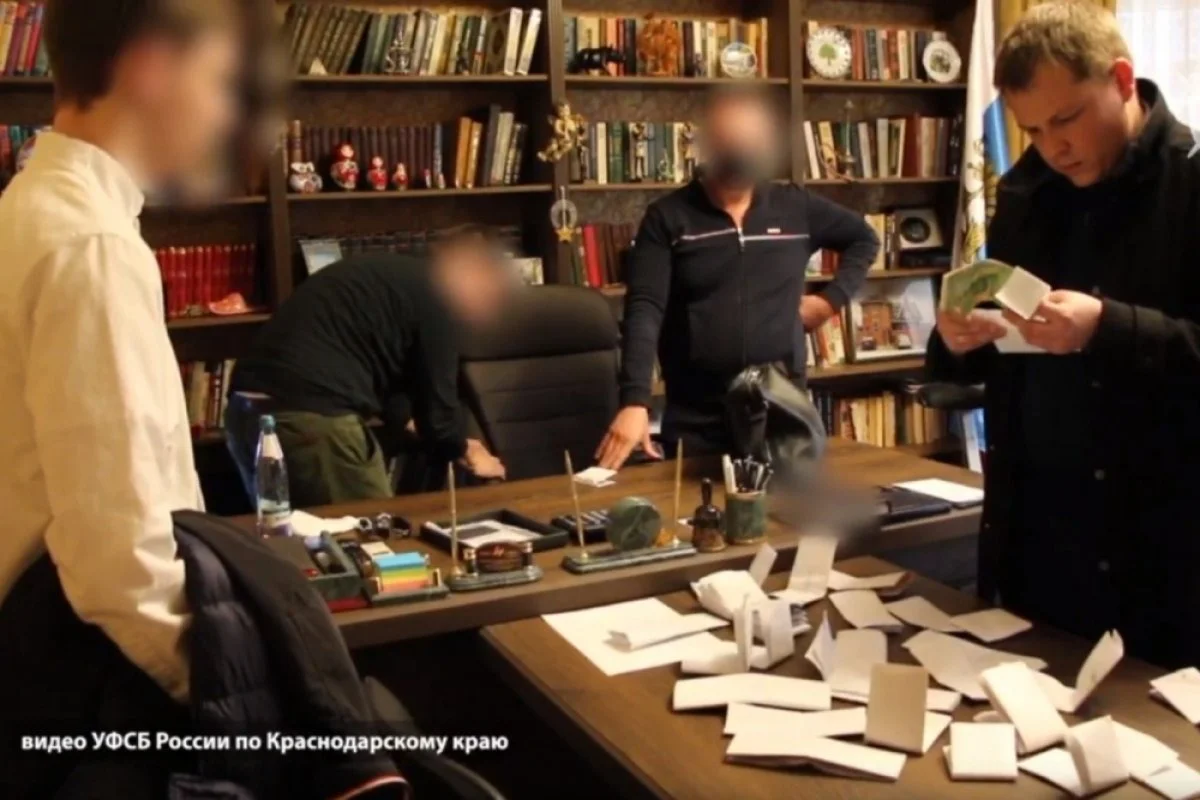
Andrei Marchenko, the owner of the Marton hotel chain, who is currently in the Krasnodar pre-trial detention center on charges of fraud and a number of other crimes, is named as a “co-defendant” in the lawsuit of the Prosecutor General’s Office. However, Marchenko is a businessman and cannot be a defendant (co-defendant) in a claim based on Federal Law-230.
His property can be confiscated in the future only as part of a verdict in a criminal case, but for now the Prosecutor General’s Office, as an administrative plaintiff, constantly and deliberately mixes elements of criminal law and special legislation on civil service, seasoning it with stories about intimate services in hotels.
Marchenko, interrogated (in Momotov’s absence) via video conference, testified, in particular, that the judge continues to receive income from the hotel business: he allegedly transferred 50-300 thousand rubles to Momotov through his mother every month. depending on the season.
The chicken pecks every grain, and many would not refuse such support, but for the chairman of the Council of Judges, whose business, according to the Prosecutor General’s Office, is estimated at 9 billion rubles, this, we agree, is undignified.

Meanwhile, 9 billion is the valuation of the entire Marton hotel chain along with other real estate, but the prosecutor’s office does not indicate how this property is divided between Marchenko and Momotov, and the court is not trying to find out. Instead, the court is presented with photographs from the foreign trips of Momotov and Marchenko - apparently from the latter’s collections.
Well, the judge had a go at his partner’s expense, but why is he the only one? In other circumstances, this would not even be enough to deprive of status.
When I was a member of the HRC, I met several times with the chairman of the Council of Judges in his luxurious office on Povarskaya.
The professor and former dean of the Faculty of Law at KubSU surprised me by the fact that to connect words in a sentence, he constantly swallowed something like “***”, but otherwise he was kind, and the fact that the programs proposed by the HRC did not move one iota was not his fault.
Momotov is definitely not the most corrupt figure in the justice system; his “exposure” is more of a PR stunt, which now makes all his colleagues tremble with fear: if there is no protection at this level (according to the law and according to “concepts”), then there is nothing to say about ordinary judges of the Supreme Court and chairmen of regional courts.
In fact, the fight against corruption in the judicial system (in the broad sense of the word, including “law enforcement agencies”) should begin not with judges, but with “deciders,” who most often occupy inconspicuous positions as assistants and staff members. So they know exactly: who, how, for what and how much.