
Translated material
Baghramyan, 6
Coming to Yerevan and opening a cafe is like coming to Tula with your own samovar. Maria and Gregory Karelsky did just that when they opened Common Ground

Cafe visitors. Photo: Common Ground
Indeed, Yerevan has been famous for its cafes since the times of the USSR. In the mid-1970s, students often asked: “Where are you sitting?” There was nothing in common with the Soviet dissident-arrest context here: the question was about what cafe the interlocutor was used to spending his evenings in. The “Bermuda Triangle of Yerevan”, which consisted of three famous establishments - “Float”, “Kozyrka” and “Skvoznyachka” - was just the tip of the iceberg. The cafe was much larger. A couple of “Aquariums”, the 4th store, “Ponchikanots” (where polytechnic students met conservatory students), “Aragil”, “Fairy Tale”, Araks... And so on.
Yerevan cafes of the Soviet era were islands of freedom, where one could discuss the latest BBC broadcast, exchange news from the world of rock music, or pass on something from samizdat to a friend. Usually the regulars knew the regular informer by sight, and sometimes by name. And when he approached the table, the conversation abruptly turned to the weather or the artistic features of a fashionable film.
Now there are many more cafes in the center of Yerevan - there are probably hundreds of them. For all tastes: sit over a cup of coffee, drink a glass of wine, eat... And into such conditions, mother and son Karelsky rushed headlong into a pool, opening Common Ground on Bagramyan Avenue. But they (I don’t know, willingly or unwillingly) were able to continue the old Yerevan tradition and make their cafe a territory of freedom. Freedom of thought, opinion and speech.
At first, and for quite a long time (at least for me), Common Ground was for me a bookstore that sold books on contemporary art, Russian postmodern poetry, and interesting contemporary prose.
However, let's not forget that every self-respecting city should have at least one bookstore, which is also a cafe.
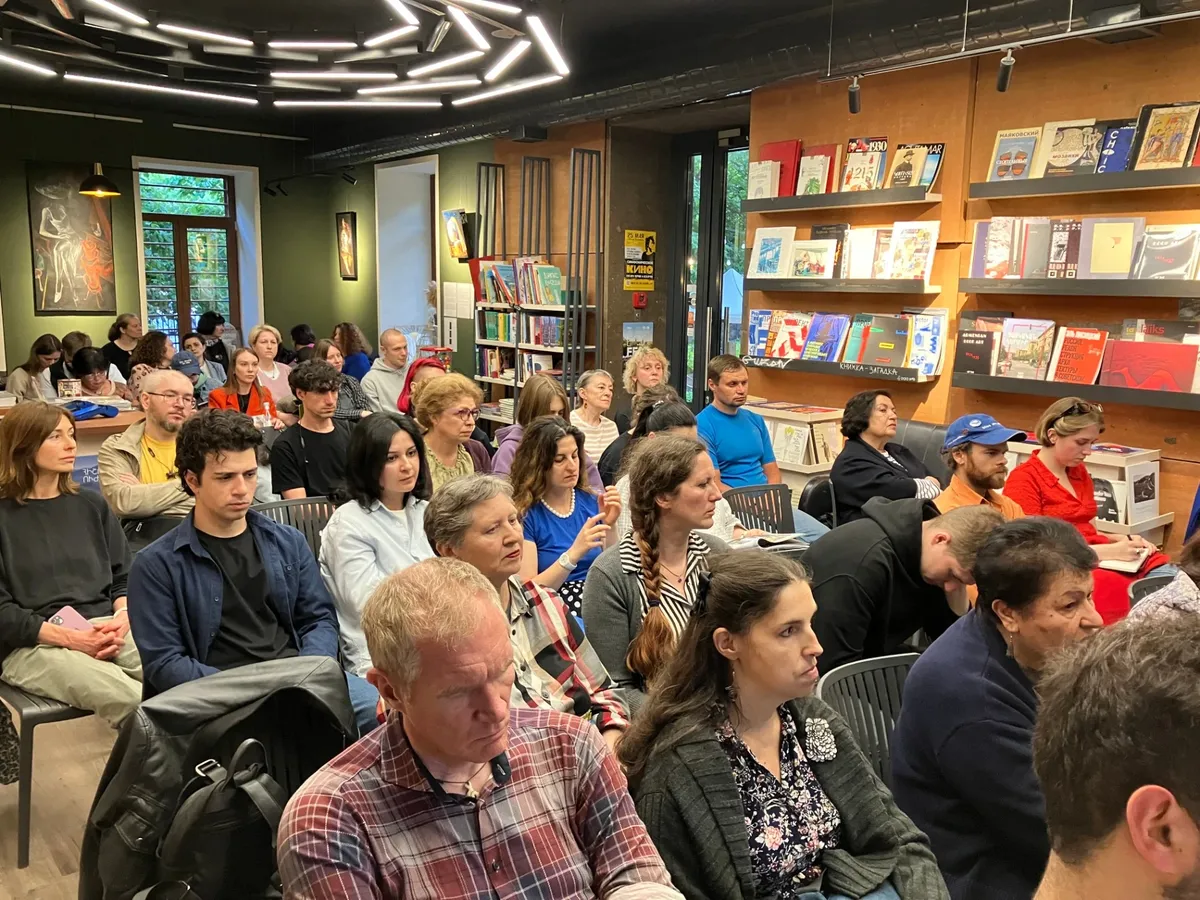
And since Yerevan is a city that respects itself, the first such establishment opened back in 1999 and was called Art Bridge. There were exhibitions and presentations, you could eat delicious food, chat with friends and check out the latest books. Almost immediately after its opening, Art Bridge became a gathering place for the Iranian-Armenian community, as its owner, Shake, was originally from Iran.
Here, as they say, there is a different target audience. The idea of Common Ground, as I understand it, was to create a space, a common territory, where new Russian emigrants could meet the residents of Yerevan, which should help them integrate into Armenian society. But at the same time it had to be a territory of art, culture and intellectual meetings and conversations. So Common Ground continued the Yerevan tradition here too, taking the place of the much-loved Art Bridge, which, unfortunately, closed shortly after Covid.
The interpenetration of books occurred most quickly. First, and somehow imperceptibly, works by Armenian authors began to appear in the store. And then there was one presentation, another... A rather funny story happened when my book “Yerevan: a biography of the city” began to be sold here. The fact is that at first Yerevan bookstores sold it quite expensively (I won’t name the amount, but it was, from my point of view, unreasonably high). But as soon as the book appeared here, the price in other stores dropped almost three times. Now the publication in Russian is a bibliographic rarity. Although you can still buy it in Armenian. Where? Stop by Common Ground.
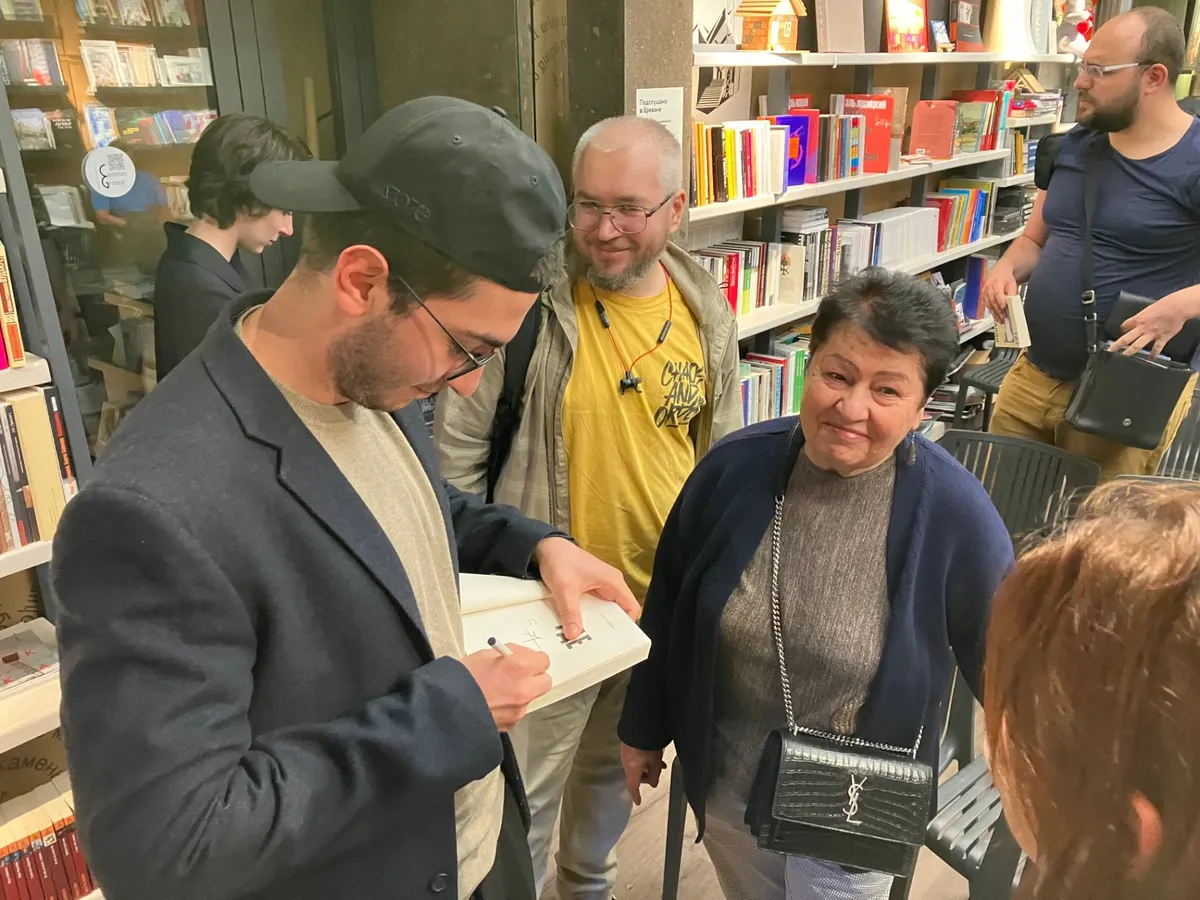
But in order for the idea of a shared space to become a reality, it was necessary to add something else to the idea of a bookstore and a cafe, to create some additional value. And she appeared. Numerous events, concerts, exhibitions and even fairs have become such a value. And you know, it worked.
Strictly speaking, I was familiar with the relatively small hall located in house No. 6 on Baghramyan Avenue with texts by Armenian classics Hovhannes Tumanyan and Avetik Isahakyan, covering the walls in waves, even before the appearance of Common Ground, that is, until 2023. This room, which was once the living room of architect Koryun Hakobyan, now looks completely new, with lamps stylized as an ancient Armenian azarashen, which is a dome-shaped structure in the form of several octagons tapering towards the top. I visited there several times when I filmed the online interview series “Let’s Talk About the Future.” And in 2023, the interior was enriched with metal shelves and became a bookstore.
Common Ground as a cultural space was revealed to me later, when my friend, director of the Mediamax news agency Ara Tadevosyan, invited me to a public discussion of Andrei Bitov’s book “Lessons of Armenia.” I'm here. The format was quite unusual. The event was hosted by two people: Russian journalist Alexandra Livergant and her Armenian colleague Ara Tadevosyan. And there were two guests: a Russian - writer and publicist Alexander Arkhangelsky - and an Armenian - director David Matevosyan, the son of the famous writer Hrant Matevosyan, to whom most of Bitov’s wonderful essay is dedicated.
I really enjoyed the level of conversation. The point is not only that “Lessons of Armenia” is a series of essays about a distant and unknown small Soviet republic. For many people in the audience, this was a conversation about a country where they unexpectedly found themselves. And very useful were the comparisons between Bitov’s deep and rich prose, telling about Armenia in the late 1960s, and modernity, in which so much was - and remains - obscure and difficult to comprehend for relocants. And of course, the brilliant observations and comments of Alexander Arkhangelsky sounded like a kind of writer’s solo, jazz improvisation on the themes of Bitov, Matevosyan and Armenia.
The conversation about Bitov’s book turned into a series of meetings dedicated to how Russians see Armenia and how Armenians explain their comments. Soon I took over the baton from Ara Tadevosyan and began leading these events together with Alexandra Livergant. “Lessons...” were both funny, when we talked about Gyumri and the peculiar Gyumri humor, and even tragic, when the relocants shared their problems in the new country.
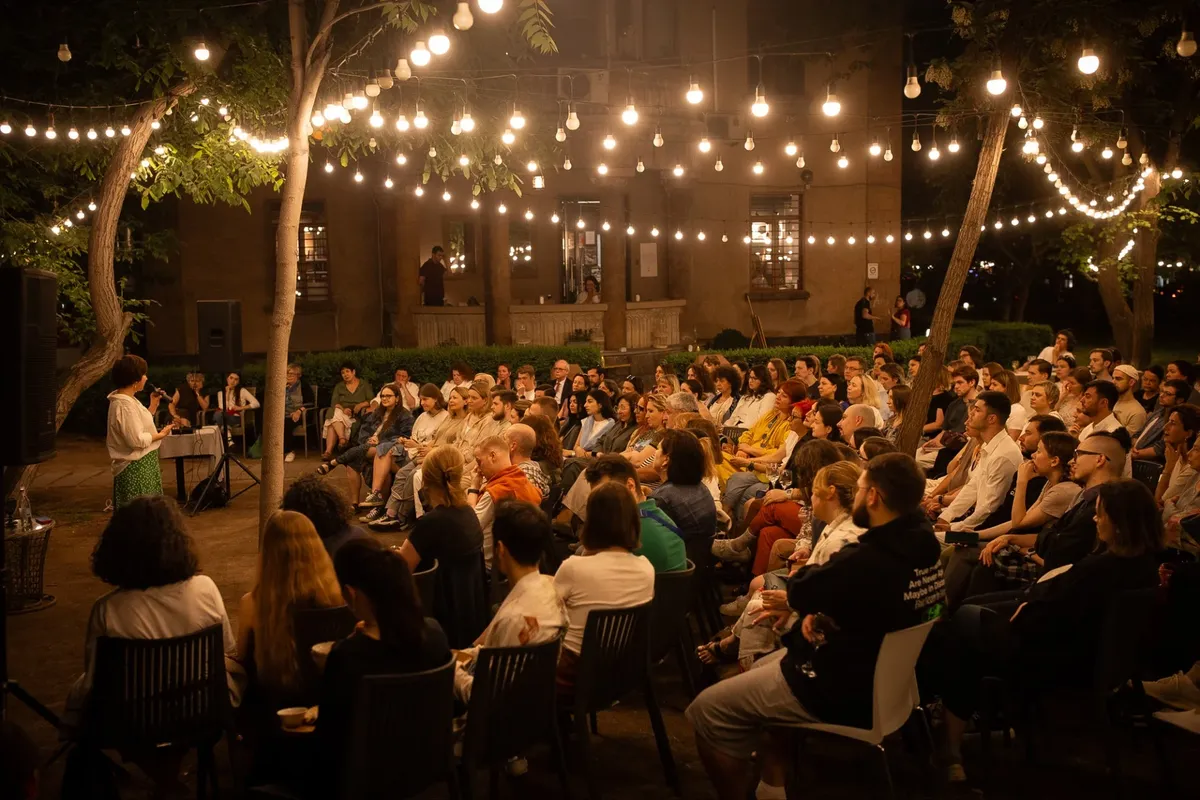
Alexandra Livergant and I decided to devote one of our meetings to the question of how Russian relocants are integrating into Armenian society. Of course, the issue of language was very important: how can you become part of society without knowing the language?! I had hope in children from the very beginning. They learn languages faster, and I imagined that at some point the children would begin to speak secretly in Armenian, which would force their parents to learn the language faster. And this will bring closer the integration of adults into Yerevan life.
But during the conversation, one of the relocants rose from the hall, having independently learned the Armenian language.
“The Armenian language is very strange. Sometimes words don't mean what they're supposed to mean. For example, when they say ախպեր (brother), this does not mean at all that they are addressing a relative. When they say իմ ախպեր (my brother), this again has nothing to do with family ties. The speaker simply emphasizes his respect for the interlocutor. The expression մեծ ախպեր (elder brother) speaks of even greater respect. This is understandable. But what does թագավոր (king) ախպեր mean, I cannot understand.”
Translator and literary critic Lilit Meliksetyan responded instantly: “Crown brother.”
And you can't add anything to this.
After a little time, the best, in my opinion, expert on books in Armenia, writer Aram Avetis, began working here. And Common Ground has moved to a new level: books here are now not only sold, but also published. Moreover, books by both Russian and Armenian authors. I would like to specifically mention Andrei Ivanov’s wonderful book “Gyumri: Vernacular of Black Tuff”, a new updated edition of which is about to go on sale.
And Karen Balyan’s wonderful album Armenian Book Art of the Charents Era in Armenian and English! And the works of Lev Rubinstein and Vladimir Sorokin!..
Thus Common Ground became the territory of intellect.
But this is not an abstract, refined intellect that exudes coldness.
These are very lively and warm evenings with Linor Goralik* and Narine Abgaryan, Katerina Gordeeva and Nobel Prize laureate Dmitry Muratov*. Of course, in these meetings there is a lot of nostalgia, which - completely understandably and naturally - is experienced by relocants. But Yerevan is generally a city of nostalgia. So everything is correct.
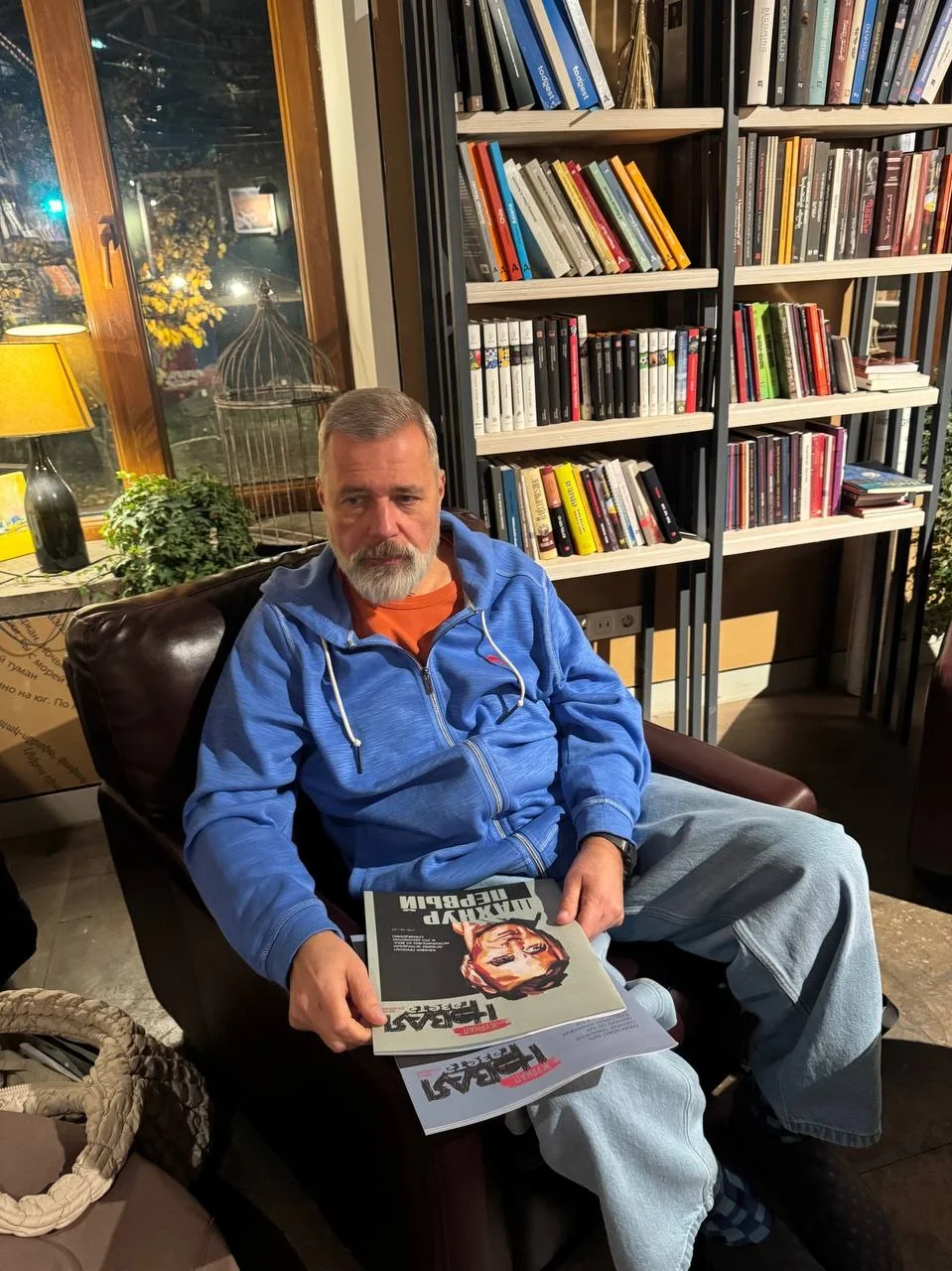
Common Ground is the territory of nostalgia.
Among the people named in the previous paragraph, almost all of them, except Narine Abgaryan, are recognized as “foreign agents”, and some of them cannot travel to Russia. This means that Common Ground is also a territory of freedom. The territory of the right to think and speak, the right to disagree and argue. The right to be yourself.
And it’s not just the traveling poetry festival Table Talk that makes Common Ground a poetry destination. Famous Russian poets Sergei Gandlevsky, Yuliy Gugolev, Zhenya Lavut and others read their poems here. And how much nostalgia there was in these poems for home, for Russia, for the old life...
*I have been living in Tbilisi for some time now,
and to me among the streets, stairs, dead ends
then Losev will come up, then Lynx,
then Benya, then Tsvetkov.*
*No wonder: the further, the more persistent
any city, town, village
and indeed acquire a resemblance to the heavenly
an abode where it is sad and light.*
*And if we do without antimonies
lyrical and other blah blah blah,
then the memory is closer to death, more vivid,
but reality is more desolate, that’s all.*
But I wouldn’t say that Common Ground is the territory of Russian nostalgia. After all, this is a Yerevan institution. And the nostalgia here is typically Yerevan. It appeared during the presentation of the Armenian translation of Karen Balyan’s book “Hrazdan Stadium”. A small (probably for children) football goal was installed in the garden, and the author of the book, who is already over seventy, happily kicked the ball around.
The presentation of the book about the famous stadium in the Soviet Union had to take place here, because the house and garden where Common Ground is located were built by the architect Koryun Hakobyan, who became one of the authors of the Hrazdan stadium. And its other author, Gurgen Mushegyan, has been here many times. And those gathered remembered this: “I remember very well,” said one of the architects, “there was a living room here, and if you go in that direction, you will come out into the kitchen...”
In the middle of the last century, this entire area was allocated for the construction of houses and dachas, where, according to the plans of city architects, famous Yerevan residents, prominent representatives of the culture and art of Armenia were to live. And Hakobyan’s neighbors were the outstanding singer Haykanush Danielyan, composer Aram Khachaturyan, writer Avetik Isahakyan... That is, the house at 6 Baghramyan has special significance for Armenian culture.
But I started talking about nostalgia. At the end of June 2025, a presentation of an interesting and very unexpected book took place at Common Ground. The famous British and American analyst and journalist Tom de Waal, who gained fame thanks to his book “Black Garden” about the Karabakh conflict, translated into English... a book of poems by Osip Mandelstam Tristia.
And the translation turned out good. De Waal was able to convey the spirit and meaning of Mandelstam’s poems, and even maintained the rhythm. By the way, translators do not always do this. Tristia's presentation in English soon turned into a poetry reading. First the original sounded in Russian, and then the translation.
*I studied the science of breaking up
In the simple-haired complaints of the night.
The oxen are chewing and the waiting continues,
The last hour of urban vigils;
And I honor the ritual of that cock night,
When, having lifted the burden of road sorrow,
The tear-stained eyes looked into the distance
And the women's crying mixed with the singing of the muses.*
*I have learned the art of separation
By weeping in the night, long hair let down.
The oxen chew and expectation lengthens
One final hour of vigil in the town;
I venerate the cockerels' night chorus,
The traveler's sorrow added to his load,
As women's sobs blend with the Muses' singing
And stricken eyes gaze at the distant road.*
***
By the time this issue of “New” is published, Common Ground on Baghramyan 6 will be closed.
So, it turns out that this article of mine will be something like Rilke’s “Requiem for a Friend”? No, it doesn’t work out, because the cafe and store will open in another place. Like the phoenix bird that dies in fire only to be reborn as a symbol of the victory of life? I’m not sure, because a new place means a new format, new ideas and, of course, new people.
How could it be otherwise?
Mark Grigoryan