
Translated material
"Hyperrealistic helplessness"
With what feeling do Russians celebrate National Unity Day in the fourth year of the war, queuing for gasoline and waiting for new taxes?
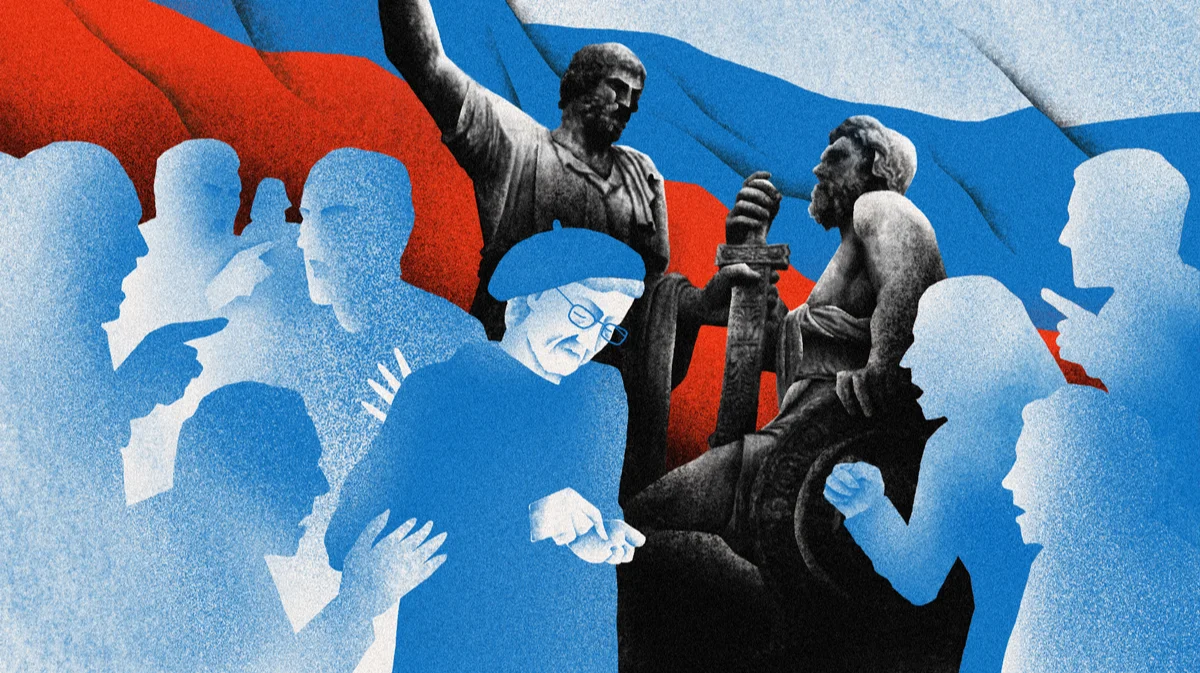
Illustration: Lyalya Bulanova
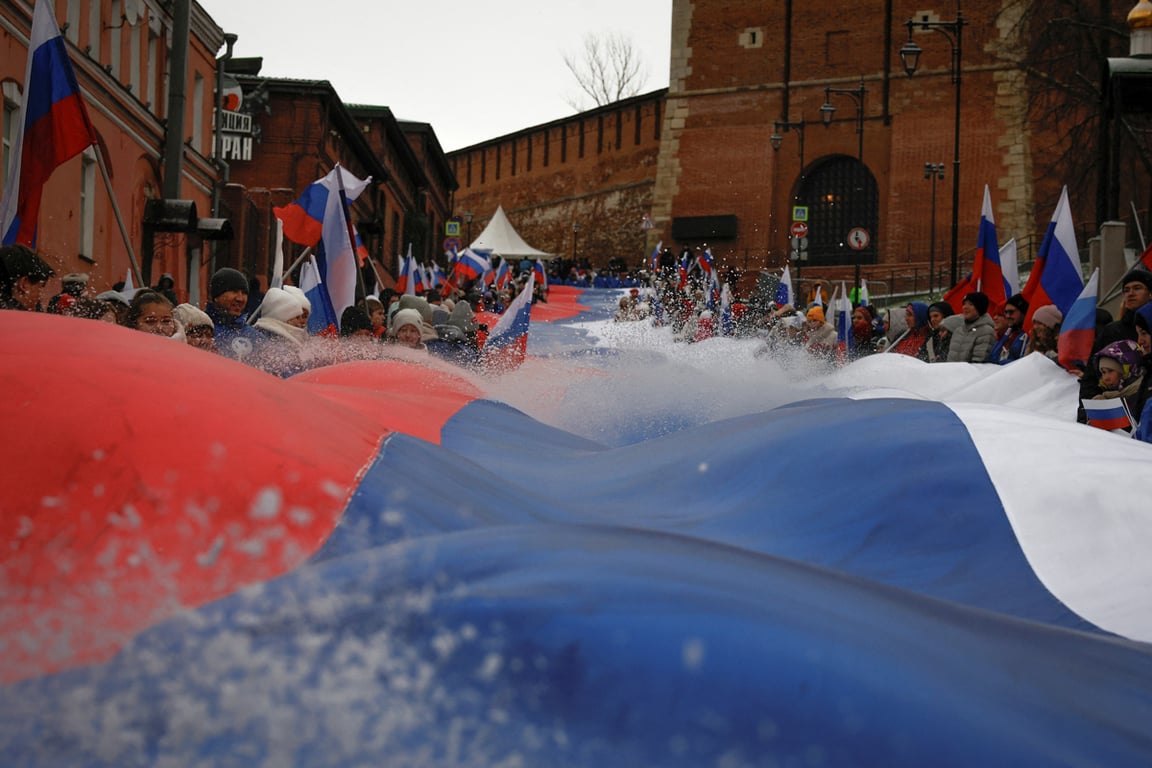
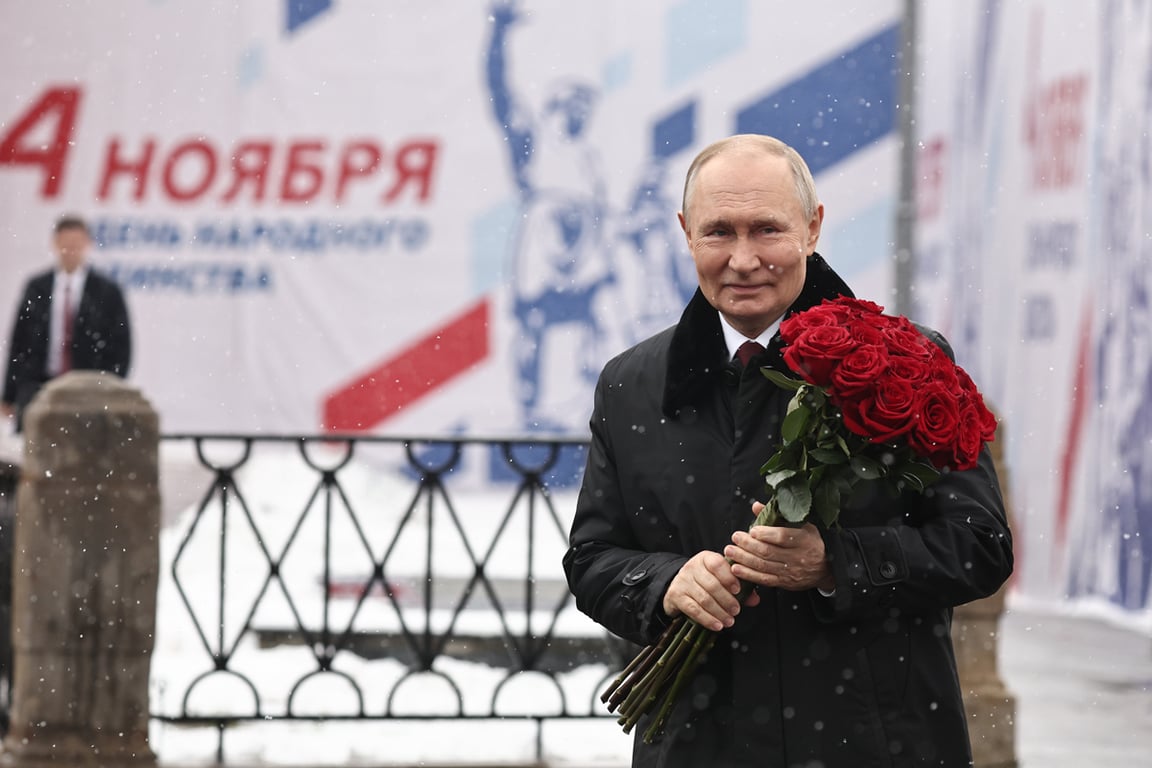
National Unity Day in Russia has been celebrated on November 4 since 2004. This is a holiday whose meaning no one really understands. It had to be invented so as not to deprive post-Soviet people of the day off that the anniversary of the revolution had previously given them. As luck would have it, nothing suitable was found near November 7th. Metropolitan Kirill (Gundyaev) remembered the 17th century, the Time of Troubles, the people's militia against the Poles, Minin and Pozharsky, but nothing happened to them on the 4th. But Putin said: “Then, back in 1612, here, under the walls of the Kremlin, not only was victory won over foreign invaders: thanks to the unity of the multinational people of Russia, a limit was put to many years of unrest and internal strife.” And since the main historian of the Russian Federation is Putin, the people did not object: unity is unity, as long as it’s a day off. What national unity looks like in Russia today on National Unity Day and how united the people of a warring country will become in the future, explains Vladimir Zvonovsky, a sociologist, doctor of sciences, co-author of the book “Russian Public Opinion in a Military Conflict.”
The text was first published on the website of Novaya Gazeta Kazakhstan
— Has there been any period in modern Russia since National Unity Day was celebrated when this very unity really existed and was felt?
— There is no unity in any country, but that’s why holidays are held. It's like in a family: a holiday is held so that all family members celebrate the same day. Or - as a corporate holiday, say, Railway Worker's Day. This is why people celebrate, to feel unity. In totalitarian countries, some kind of mass folk celebrations are held - to show that this is a holiday not for the elite, but for the whole people. This is why totalitarian regimes take all sorts of demonstrations to the streets.
In the 1990s, we conducted a study that showed that Russians love May 9; Victory Day was a common national holiday, because it was perceived as a holiday by the majority of the population and was interpreted unambiguously as a joyful event.
There is, of course, also New Year, but it is not a public holiday. And states are trying to somehow cling to it, starting with the addresses of US President Franklin Roosevelt, who was the first to congratulate the nation on Christmas and New Year. Then there were Soviet leaders, for them congratulations became a ritual. New Year is perceived by most as a holiday, although not everyone celebrates it equally.
We once conducted a study, it showed that approximately 20% of the population simply go to bed like any other day. Another approximately 30% survive until the chimes strike. And only 4–5% walk until the morning.
But in general, it is also a holiday of unity. What is unity? Most celebrate it, believing that it is a positive day.
- Yes, I remember how during my childhood my parents said this: there are only two holidays in the year - Victory Day and New Year. But in recent years, even with Victory Day, there have been some changes, or more precisely, with the manner of celebrating it?
“We haven’t looked into this in detail, but it’s obvious that celebrations have ceased to be perceived as unambiguously as before.
— Over the 20 years that we celebrate universal unity on November 4, the country, it seems to me, has become more and more polarized: different groups in society have been fighting with each other more and more.
- Such is the time. For a long period, the last, I would say, almost 30 years in Russia, throughout the country as a whole there has been a constant and ever-increasing accumulation of material wealth. And during the period of accumulation, material inequality also grows, it is noticeable visually. Therefore, people perceive Unity Day, to put it mildly, with mixed feelings.
— Do you want to say that the split was along purely material lines?
— The material basis remains important, but besides it there were other splits, including in relation to the ongoing special operation. This is simply the most obvious option.
— Have there ever been such opinion polls in your practice where people answer almost unanimously? For example, how much do they love Vladimir Vladimirovich Putin? VTsIOM, for example, shows values at 80%?
— People usually do not answer unanimously. There are, rather, some formulas, canons: it is customary to answer such and such a question in such and such a way. If you ask the question a little differently, the answers may look different.
— The main split, which apparently needs to be talked about today, is along the line of attitude towards the “special operation.” Could it be the other way around: the homeland is in danger, so everyone is in one impulse, a swift jack - and so on?
- No, it's impossible. Because the main pathos of the special operation is that it is special. That is, special people are engaged in it, they are, as they say, “allowed”, this is not the same as a total war, this is not a war for everyone. Everything is so special, it’s inherent in pathos.
You know, many people in Russia are still surprised why they didn’t rename the “Kyiv” cake, and in Samara, for example, they didn’t rename Kievskaya Street or Odessky Lane.
— One manufacturer of semi-finished “Kyiv” cutlets renamed them.
“But at the state level this is impossible. We are fighting, as it were, for our colonies; renaming it means admitting that the colony is not ours. A special operation is not a war. By definition, it cannot unite. So everything is quite logical.
—Can, for example, the majority be united in complete indifference?
— The spectrum here is very wide. Both VTsIOM and FOM asked people what feelings they experience, and the range of options is quite wide, all measurements on this topic have been published. There is no single feeling here, and it changes over time.
— How has this spectrum changed recently? Almost four years later, after huge losses, after attempts to reach peace agreements?
- This is a complex attitude, not just “for Putin” - “against Putin.” There are those who support the special operation conceptually. That is, they know the whole concept, they will lay it out to you, they understand it and support it.
- Sincerely?
— In general, yes. But what is important here is that the theoretical basis that they share allows them to have their own attitude to the special operation, and not reproduce the audio of state propaganda. We call them “firm supporters of the special operation.” There are those who support because Putin does so, and they support him. This also includes the logic “we were forced”, “the past cannot be returned”, in the sense that once we started, we need to bring it to some result. There are people who, when asked directly whether they support the special operation, answer: no.
— Do they still openly answer “no”? And how many are there?
— There are almost 20% of them. And there are people who answer the question about support in the affirmative, but if you change the wording, it turns out that they are no longer very supportive. That is, they begin to say that peace negotiations are needed, that if the situation at the front worsens, then it is necessary not to carry out a new mobilization, but to come to an agreement, and so on. All you have to do is change the wording of the question a little, and these people cease to be supporters.
Finally, there is a conventional “swamp”. These are people for whom politics is a matter far from their everyday life, they don’t want to get involved in it, so they simply reproduce the narrative that has become the most widespread today. Since today the most common narrative is the state one, they reproduce it.
You can find several more transitional groups, they are small, for example - people who believe that a special operation is needed, but it is not being carried out like that. But I have named you four main groups.
- And how many are there who do not support, if you reformulate the question?
— Such “hidden” supporters of peace or unsteady supporters of a special operation are approximately 15–18% in total.
— Does this mean, if we add up, about 40% of Russians do not support the war?
- Something like that. What surprises you? We have such a mouthpiece of truth as Dmitry Peskov, Putin’s press secretary. In the first year, he said: We know that about a quarter of the country's population does not support the CBO. And the man told the truth. So they are aware there.
- But still not 40 percent.
“I think they looked at the data from VTsIOM and the direct answer to the question “do you support it or not.”
— How has the ratio of results in these four conventional groups that you mentioned changed over these almost four years?
- It's quite interesting here. It would seem that extreme points of view should be relatively stable in scope, but even they are unstable. And a lot depends on the situation at the front, on the situation inside the country, on what is happening in the country’s economy.
For example, in 2022, many economists said that the Russian economy was about to collapse. By the end of the year it did not collapse, and this greatly increased optimism among people.
For people, the situation closest in meaning to war was the early 1990s, even for those who were not of conscious age or were not born at all, they were told this either by their parents or from TV screens. But here nothing like that happened, so people began to be more optimistic about what was happening.
Next comes the moral and ethical component. Of course, there is little of it in Russian society now for various reasons, but it exists. These are people who believe that fighting is bad, but living in peace is good. For them this is the foundation, an axiom, they proceed from this. When this axiom becomes more obvious, more explicit, more transparent, the share of its support increases.
— How can it increase if for the majority the country is not at war, but is conducting a special operation? How do new people appear in such conditions who suddenly understand that war is bad, peace is good?
— You know, such duality is characteristic of the public consciousness. People use both options perfectly well - both “SVO” and “war”. Even if at first a person during a survey is indignant at why we call a special operation a war, then he begins to use the word “war” perfectly. Although this is one of the signs of whose point of view he shares. When the conversation is getting to the point, when a person no longer needs to carry out the procedure of recognizing who he is talking to, he uses a more familiar word.
First, the same fiscal impulse arose when the state began to invest in certain sectors of the economy. But it started differently in different social groups. According to our surveys, from the very beginning the losses were felt most strongly by residents of Moscow and other large cities.
—Are you talking about material losses?
- Not only. They don't say it right away, but if you keep asking, they admit that the main thing they've lost is perspective. Any person who has any resources, material or otherwise, has plans. When all your plans are ruined, then you seem to have lost nothing, but there are no plans anymore. And this is an important resource for every person. And those who were concentrated in the centers of material well-being, that is, in the capitals, lost not only rubles, but also the ability to make plans.
“They talked about this especially often in the first and second years of the war: the worst thing is that it is impossible to plan anything in life.
“It’s not even that people can’t make plans. They had plans before February 24, but now they don’t, and this has crippled people in prosperous regions; they have lost the most.
In 2023, it became clear that the greatest increase in the current conditions was received by residents of border regions. Much of the fiscal impulse was invested there.
From the second half of 2023, this impulse was already felt by the cities where enterprises of the military-industrial complex are located, where the military-industrial complex is an important element of life both in terms of the number of employees there and in terms of income level. Of course, the largest city with military-industrial complex enterprises is Moscow, but there these enterprises are lost against the background of the rest, both in terms of wages and in terms of the number of employees.
“But I saw how cities like Kurgan rose up.
— I also wanted to give the example of Kurgan or Kirov, where the picture is really the opposite. Although the Kurgan plant is small compared to Moscow, there are few people there. And we must take into account one more point, if we talk about Kurgan: it has become the largest transport hub, Wildberries and Ozone goods go along this route. It is for them that the Kurgan-Chelyabinsk highway is being expanded. Our transport industry, of course, is insignificant compared to our industrial sector, but for such small regions it turned out to be significant. And finally, since participation in a special operation, as we know, is paid...
— Have the very poor regions finally healed, where did people come from to sign up for contracts?
- That's right. There is a dependence: how many people in the region went to the front - and how loans and mortgages are obtained there. It didn’t exist before the war; it appeared during a special operation.
For these sections of the population, the moral and ethical dilemma that I spoke of did not exist.
- Since we have healed better, is everything going as it should?
- Yes. They saw this solely as an economic sense. And in general, the calculation was as follows, and people have already said it, that the special operation is a break not only with the political system of the West, but also with the economic one. Accordingly, it was believed that the social structure of Russian society would also change.
- “And the last will be first”?
— I wouldn’t say that, but it was believed that differentiation in society would become lower, inequality would become less.
— Is that exactly what people said?
“And they said, of course, but there are also quantitative data, for example, from the Public Opinion Foundation, and it is clear from them: ten years before the start of the special operation, people expected the same level of social differentiation, and immediately after the start they began to expect less social inequality.
— I remember the greatest delight in the regions in 2023 and early 2024. People rejoiced that they had never lived so well as during the war.
— Well, in general, yes, there was a “monetization” of the war.
“And all this was developing so beautifully, but then drones began to fly over their heads. Has this mood begun to change?
- No. Drones are still an exceptional phenomenon. The mood began to change when it became clear: the man who remained in the rear received greater material success than the one who went to the front.
—Have people started to realize this?
“People saw that inequality does not disappear, the social structure remains the same. Yes, they make more money than ever before, but they still have no place in social reproduction. It’s not for nothing that Putin talks so much about the “new elite”; he is trying to stir it up, but the “old” elite does not want to concede anything. In Samara, for example, there was a deputy who went to the special operation zone - either voluntarily, or was mobilized. He spent some time there, then returned and began working in the regional government. It would seem that he used a sting operation to get ahead. But he didn’t succeed; he essentially remained at the same level he occupied before the war. Or even ended up at a lower level. Well, those who, in principle, wanted to advance with the help of a special operation, simply remained at the same level.
“It’s just that not everyone there, to put it mildly, lives up to the “new level.”
— It is important that it became clear: a man who remained in his previous status in the rear receives more material benefits than the one who went to the front.
— Is this why the cooling towards SVO began?
- Absolutely right.
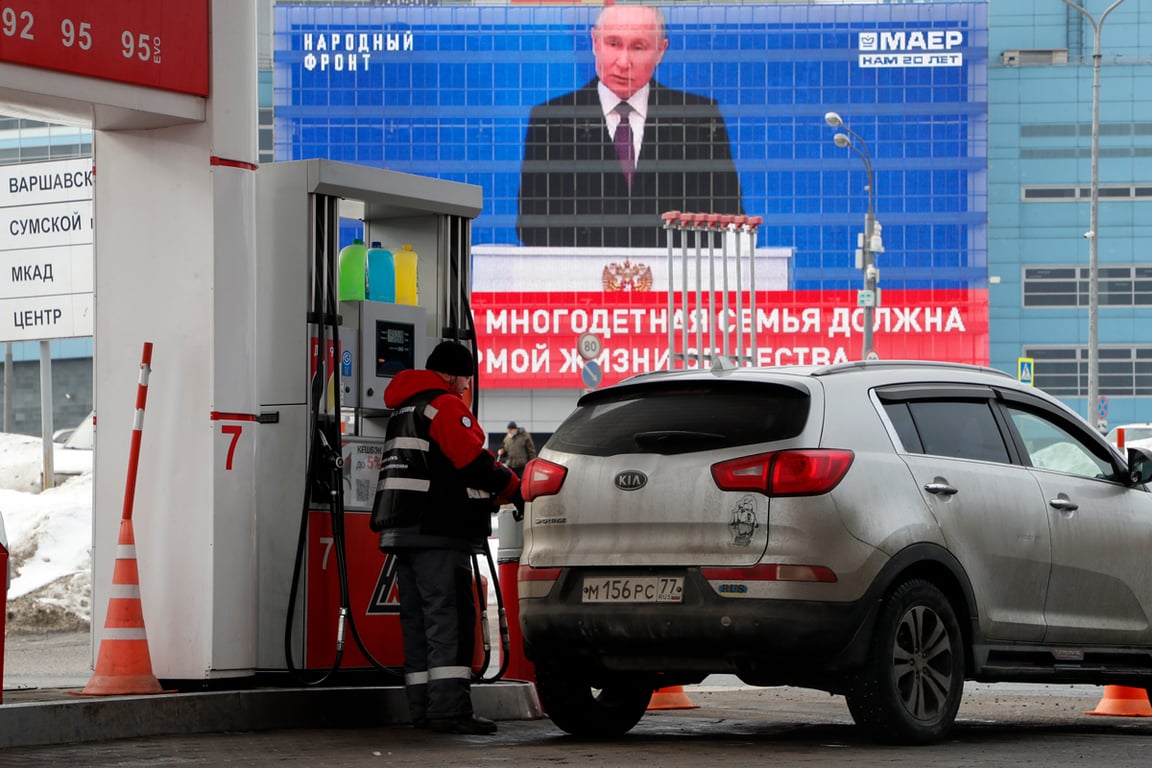
“But there are people who were not going to or could not use the war as an elevator. We lived our lives, then there’s a boom - drones are flying, there are queues for gasoline, prices are rising, the Internet is not working. How did their opinion change?
- I have two examples. Back in 2004, when the “Orange Revolution” was going on in Ukraine, I found myself abroad in an international company where there was a Ukrainian. And he said: formally I should support Yanukovych, because I work at one of his enterprises, but in fact I support Yushchenko. And recently we conducted focus groups, and a girl of about thirty, working at a military enterprise, uttered almost the same phrase: it seems that we are happy here, the salary has become higher, the status is higher, but I do not support the war.
— It was you who came across a person with that same moral and ethical dilemma. And what happened to those who did not have such a dilemma, who perceived the war as an improvement in life? Do they attribute the deterioration to the war?
- Of course they do. They are not crazy.
— At the end of October, VTsIOM announced the results of a survey according to which 69% of Russians are ready to tighten their belts for the sake of the security of their homeland. Are you really ready?
- It depends on how the question is formulated. If it is formulated differently, then the result will be different. For example, you can ask people why they are willing to accept a tax increase. But this should not be a question about a “spherical horse in a vacuum,” but a very specific one. Then it turns out that 43% of Russians, in principle, do not want a tax increase, they are simply not ready for it, 32% said that they are ready for it for the sake of the social sphere - healthcare, education. For the sake of improving roads and housing, 15% of the population are ready for this, for the sake of restoring “new regions” - 14%. For the sake of the army and the military-industrial complex - 23%.
— A quarter of the population is ready to endure increased taxes for the sake of the army?
- Yes. But then we ask: are you ready for taxes to increase by a maximum of, say, 15%? And then it turns out that the number of those who do not agree to increase taxes increases to 48%. At the same time, the number of those who are ready to send money to the army remains the same - 23%.
Of course, these are not mathematical calculations. But we see that most people are not very ready to share their wallet.
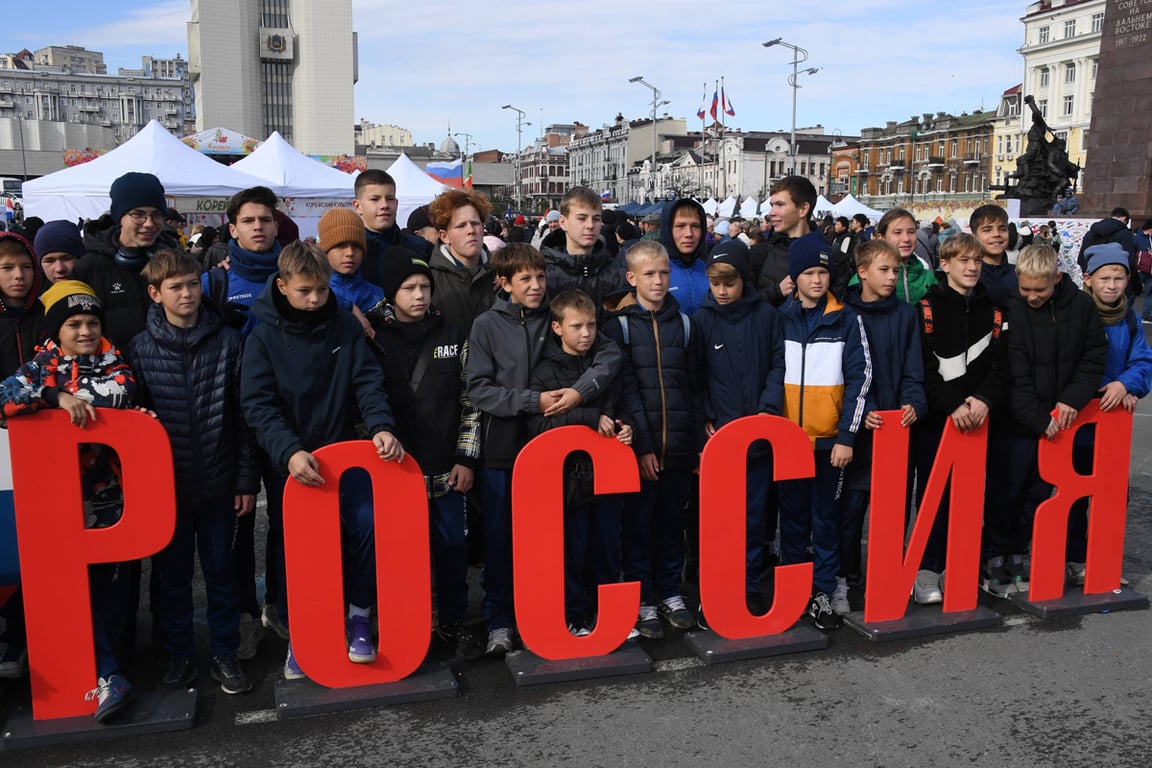
— If we return to the topic of national unity, then the people are quite united in not giving their money to their homeland. Then where does FOM get these 69% of altruists?
“That’s the problem: if you’re talking about a special operation, it can’t unite people.”
— VTsIOM’s question was: are you ready to “save, limit your needs” for the sake of protecting your homeland. Is this the art of asking a question?
- Of course, there is art in this, but the question here is about the goals. VTsIOM is testing some arguments that will be used for propaganda work. Essentially, it's like introducing a new type of yogurt to the market, figuring out what kind of yogurt customers would like to eat, and testing the formulations. We tested it - yeah, we understood this formulation by 69%, which means it works, and we will use it.
- And if you ask more specifically?
— If you ask whether you are ready for a 15% increase in prices for products and housing and communal services, it turns out that the population is not ready for this. Surveys are not conducted in a vacuum; they are conducted for a purpose. If you want to do something, for example, raise taxes, you will test those formulations that will allow you to explain to the population that this is for their benefit. If we had a different political system, if the polls were conducted by the opposition, it would, without hesitation, also test its formulations.
— From communicating with people in Russia, I got the feeling that by 2025 all “national unity” will be a single and general fatigue and apathy. It’s as if people don’t give a damn whether this war is going on or not, as long as they get left behind.
- There is such a thing. But people understand that they will not be left behind, that this will last for a long time. And here there is a change in sentiment: people have come to terms. This is very important. You know what will happen on January 12, 2026, right? The special operation will last 1419 days.
- Longer than the Great Patriotic War.
- Yes. And the question naturally arises, what have we achieved during this time? People have a feeling that can be called hyper-realistic helplessness. This is also characteristic of the national character, and the existing order is also consciously reinforced: no matter what you do, nothing will change. And it is cultivated in people consciously: the main task is so that you do not become detached from the sofa, you are consciously convinced of this. People cannot do anything, everything is done by the greats of this world, and the slaves must sit still.
- With such apathy, where does such hatred for everything “other” come from? To those who left the country, for example? This did not happen, it seems to me, even in the USSR.
- Everything is simple here.
A Russian person, in principle, believes that living in Russia is hard work, and anyone who leaves has gone on vacation. Then there are emotions, but there is state propaganda that explains that those who left, of course, are not with us.
First, we need to find the source of everything bad, those who bother us. Secondly, man is a moral being; in addition to looking for where it is better, he wants to find some other moral support. He may not understand why a foreign agent is bad, but something must cause an emotional surge in him. And, of course, although this is negative, it is also unity: we seem to unite in such negativism.
— What is stronger in Russia now—unity, even negative, or polarization?
“I don’t think this can be called polarization.” I would say that the country has been undergoing atomization since perestroika. It was formed more or less successfully. I do not presume to say that this was always government policy; sometimes the grip weakened. But atomization either intensified or remained; there was no reverse movement.
— And hence all the attempts to cover up any volunteer movement?
- Certainly. And hence the nationalization of any volunteer activity.
— How did this happen with the “Immortal Regiment”, when just a group of journalists from Tomsk was able to unite people across the country?
- There is such a thing. Since the mid-2000s, the state has tried to take advantage of any volunteer activity. The “Volunteer Book” alone is worth it. This is practically a tracing paper from notebooks on the “Lenin Test” in the Soviet years. When a student participates in some kind of volunteer activity, they give him a “Volunteer Book”, where his participation in volunteering is recorded. For this he is awarded points; they can be, among other things, an increase on the Unified State Examination. A person enters a university with a “Volunteer Book” and then supports it. In educational institutions, this is a completely working tool, and children treat it that way.
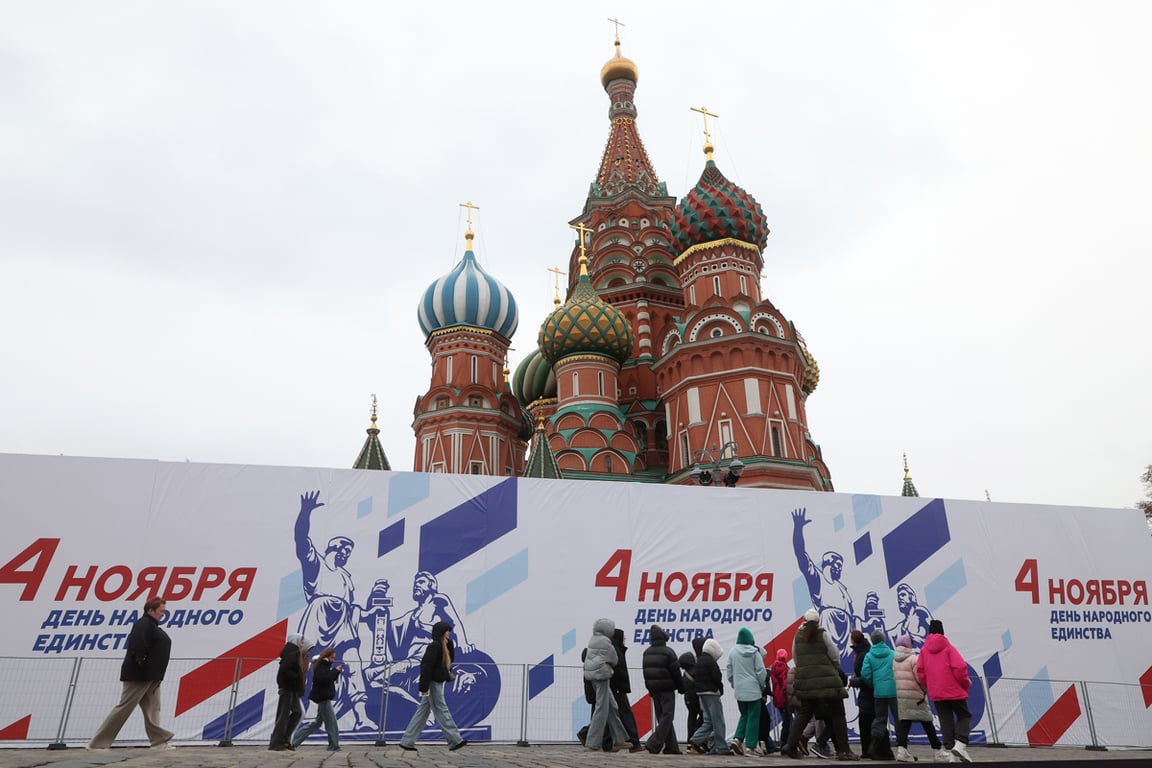
— Sociologists and economists say that Russia’s failures are largely a consequence of the enormous mutual distrust instilled in people back in Soviet times. What will this atomization you are talking about lead to?
- To what we have now. Sociologists can only predict the future based on what has already happened. What Russia is experiencing now has never happened before. Therefore, we cannot predict what will happen next. It is clear that mistrust paralyzes any civic activism; it is only possible with people you know very well, and to the depth to which you know them. If, for example, you are gathered in a handicrafts group, you are unlikely to discuss foreign agents there. And then there will be peace and friendship between you. This is the same conversation about trust.
“But you can probably see from the polls how distrust grew before—and how it is growing now.” Is it possible to continue the curve and imagine where it will lead?
- In the current situation - nowhere. There is a state, within its mechanism there are people occupying certain places. And they don't trust each other either. But they trust the mechanism itself. And this mechanism should work. Naturally, it turns out to be stronger than any other alternative node of power. And in this sense, nothing can change; the situation will remain as it is now.
This is already a classic. There are several options for changing the social system. The first is external intervention, which we immediately discard. It can be anything, not necessarily military, up to the arrival of aliens, but this is clearly not our option yet.
The second is a civil society that has grown from below. But atomization, as we have already discussed, interferes with this process. The third option is an uprising of the masses. But this only worked once in Russia, in 1917.
And the fourth option is a split in the elites. We are familiar with this; we saw this in 1991. In such a situation, it is the state that loses its unity. Its different parts begin to act against each other. And then informal unity will be required, which is not reflected in the interaction between different parts of the state. That’s when informal unity plays a greater role, and atomization weakens.
Author: Irina Garina