
Translated material
The raft capsized
Cases of desertion and AWOL look different now, and not everyone is allowed into prison. Military transport workers fly with the fugitives back to Rostov

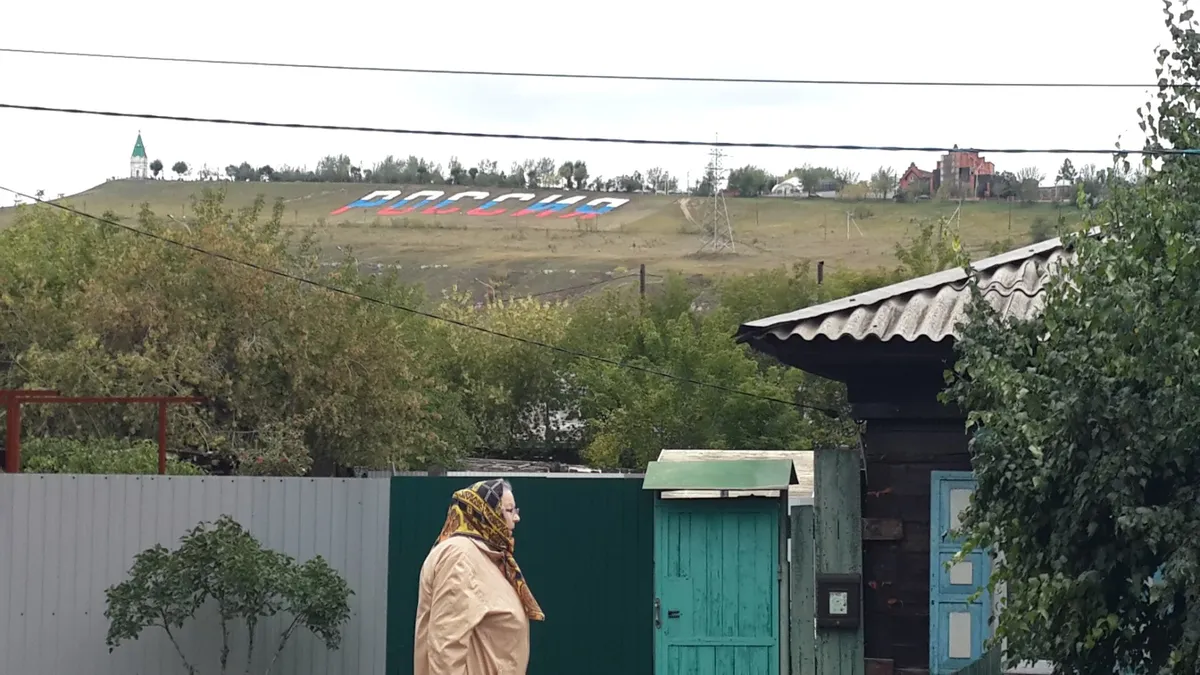
In the courtyards on Lenin Street, Krasnoyarsk. Photo: Alexey Tarasov / Novaya Gazeta
Seeing hope for yourself in prison and asking to go there—Russia has never known this before. Case files recently published by garrison military courts indicate that there are many cases of unauthorized abandonment and desertion. It would seem that there is something wrong with this: a cycle in Russian nature of men who have not found themselves, some from prison to the troops, some back, some frozen, some already sprouting with dreams, and some revolve in this cycle. But no, today the whole point is that sometimes fugitives are not taken to prison. Although they write confessions.
Russia is losing one of the fundamental foundations of its life. The prison seemed to be with her forever, it was as eternal as this weather, like this empty sky, shot right through. The fear of prison held this space like a hoop on a barrel. And so the colonies are closed, and the new clientele - with all their appearances, confessions, repentances - is selectively allowed into prison. You still have to earn it. A tough competition weeds out those who are not elected, who are not untouchable—a huge category of the population. She is now safe from jail. And, by the way, from the bag.
And life now is such that not only are they not afraid of prison (one cannot help but be afraid of it), but it is already less of a fear.
And one more thing that was difficult to imagine recently.
Previously, I refused to write about those men who came for help, but were afraid of publishing their name (nothing would help them). Now even those who do not hide themselves, you hide yourself. Or the lawyer asks about it. Because we can’t keep up with the country and the people. They are already different, they have decided something for themselves, but we still cannot believe it - it still seems that they do not fully understand where we find ourselves.
This, of course, is no longer exactly journalism, but what remains the same with us.
“To prison! To jail! To jail!
Lawyer K.:
“I just don’t hire military people anymore.” My nerves, all my feelings have burned out for three years, I can’t watch what they’re doing... The last boy finished me off. A military lawyer called from Moscow about him; he is still trying to do something. He says: we saw that you exist, can I advise you? The boy is a sochnik (SOCH - unauthorized abandonment of a unit), he was detained, he wants to confess and surrender. What's the point? This is what I'm asking. I immediately tell the caller: I know what will happen... Well, he answers, I can’t do anything from Moscow at all, let’s give it to you at least for a consultation.
And then his mother comes. Crying. They are from the village. My son is 20 years old and has another child. What do you want? We want to confess to a serious crime, be convicted and go to prison. I say: it’s a great recipe, but it hasn’t worked for six months (or even a year). Why, she asks. It gets to them slower. Until the radio informs them... And we are on the cutting edge of all the novelties... Well, so and so, I say. They'll put you on a plane and take you away.
He asks: let's try. Well, I felt sorry for them.
You need to get into the unit (it’s in a nearby town), take a confession from him (confessing) for committing a serious crime, formalize it, register it (register). Prepare everything for this. There is no time at all.
A couple of days later, on a day off, I took a taxi and arrived at the unit.
It turned out funny. The machine gunner runs out: who are you? Reports upstairs. He asks: have you agreed? Probably yes. I answer evasively, because everything is decided, the commandant’s office allows it, and the investigators still don’t know that I exist. Well, they take him out. And I have everything ready, all the papers. Signs. I explain to him: most likely, it won’t help. But…
I go back (to the nearest settlement) on foot - I can’t call a taxi from there. The next day, the appearance was accepted at the duty room, and a copy was sent to the prosecutor.
And four days later he is stuffed onto a plane. And about 40 more people. And to Rostov-papa.
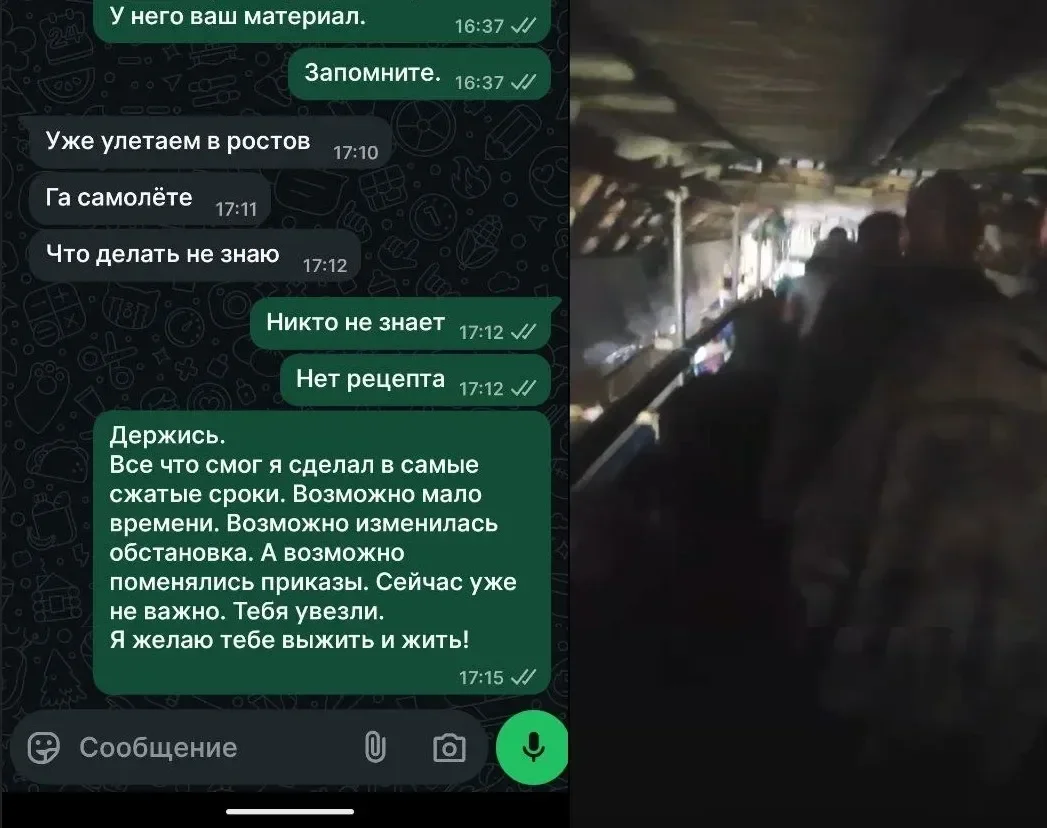
K. shows telephone correspondence:
13:22. “They took me on board. They are taking us to Novosibirsk to a collection point.”
16:36. The lawyer calls the name of the military investigator: “He has your material. Remember."
17:10. “We are already flying to Rostov. By plane. I don’t know what to do.”
17:12. “Nobody knows. There is no recipe."
17:15. “Hold on. I did everything I could in the shortest possible time. Perhaps there is little time. Perhaps the situation has changed. Or perhaps the orders have changed. It doesn't matter now. You were taken away. <…> I wish you to survive and live.”
“The mother cuts off the phone and writes at that moment, writes,” she continues. K. - What will you do? Then I saw the investigator in another place, he said: the case was assigned to me. Me: the plane is today. He: how was it today?.. Damn, we didn’t have time.
Because, as a rule, if a person gets on the list on board, neither God himself nor anyone will get him out. And he was on the list, as I understand it, even before I appeared.
Such things.
And I couldn't. It hurts inside. And they are like this, with the same problem - they come in batches.
This boy came from the Northern Military District on vacation and stayed. For six months. At home, with mom. He lived and did not hide. That is, he earned himself 5-10 (years). There's a fine line there. If you run away and specifically refuse, you have desertion, from five to 15. And if you wanted to return, but later, then 5–10 (well, there is a gradation according to the length of absence from the unit).
I ask the boy: “Why did you sign the contract?” Eyes to the floor and silent...
I still don't understand. Well, money. Or forced. I hear all this now from those who apply.
But these cases are not needed, they are not initiated. Then they stop. These boys are not needed in prison, they are needed there, on the front line. Forty (flying from Novosibirsk to Rostov) from here, 40 from there, 40 from somewhere else.
There is an intention to return. Spend kerosene and return it (K. repeats this word ten times).
We have reached the point where people are not afraid of prison, they are not afraid of anything and they don’t want to go back. But the lawyer cannot help: as it was before - admission of guilt, repentance, appearance, gravity of the article - it does not work.
According to the law, they are obliged to take and judge, keep in a pre-trial detention center, a disciplinary military unit and condemn, but they do not do this. And everyone who comes into contact with this topic understands: it’s useless.
If a lawyer ensures that a person’s appearance is accepted, a case is opened and a person is imprisoned, this is called a victory, can you imagine?
Why did you sign (the contract), you ask? So, they answer, they promised a contract for a year. And then you leave with the money.
Illiteracy and unwillingness to be literate. They look at the zombie box. And then I want to live. They arrive and find something different than what the recruiters promised. I immediately want to go to my mother’s house.
Well, and the immorality of society... One here came to me. Eighth of eight wives. Fake. I wanted to get 14 million. She got married a day before being sent to the front...
Underdevelopment. There is no critical thinking. Lack of self-preservation instinct at the initial stage. I don't take on these things anymore. Enough.
Red is like black and vice versa
The prison in Russia and the USSR never stood above the army in the preferences of the population (there were exceptions, but I’m talking about mass attitudes), they never even merged into something equally terrible.
May flood of 1987 in Kungur (Perm region). We, then black-pogonnik soldiers (military air defense), who had just arrived from guard duty, were driven to build protective dams: we carried and laid sandbags. Our enemies, the Red Pogonniki (internal troops), were nearby. They guarded countless Kungur zones, and we fought with the “reds” with belts when we went out into the city on leave. Nearby, prisoners were carrying bags. Everyone pulled together to save the city.
The brown, bubbling turbidity spread rapidly, carrying and swirling debris, bushes, trees, cut and uprooted. I remember how two prisoners, having picked up one “red” one, ended up on a raft - something like a construction panel, a pallet, a piece of formwork. And how it ended was not even clear: we had not slept for a day before, and there, near the rising Sylva, we had been sleeping for almost a day by that time. I only remember the scary smiles of the bony prisoners when they were carried away by the current, and the fear of the “red one”. Well, somehow they didn’t look particularly closely, they weren’t interested: both the prisoners and the “reds” belonged to a completely different part of our common Soviet life. To the part that was disgusting to even think about. I think if we hadn’t all been knocked down, we would have fought with them even then.
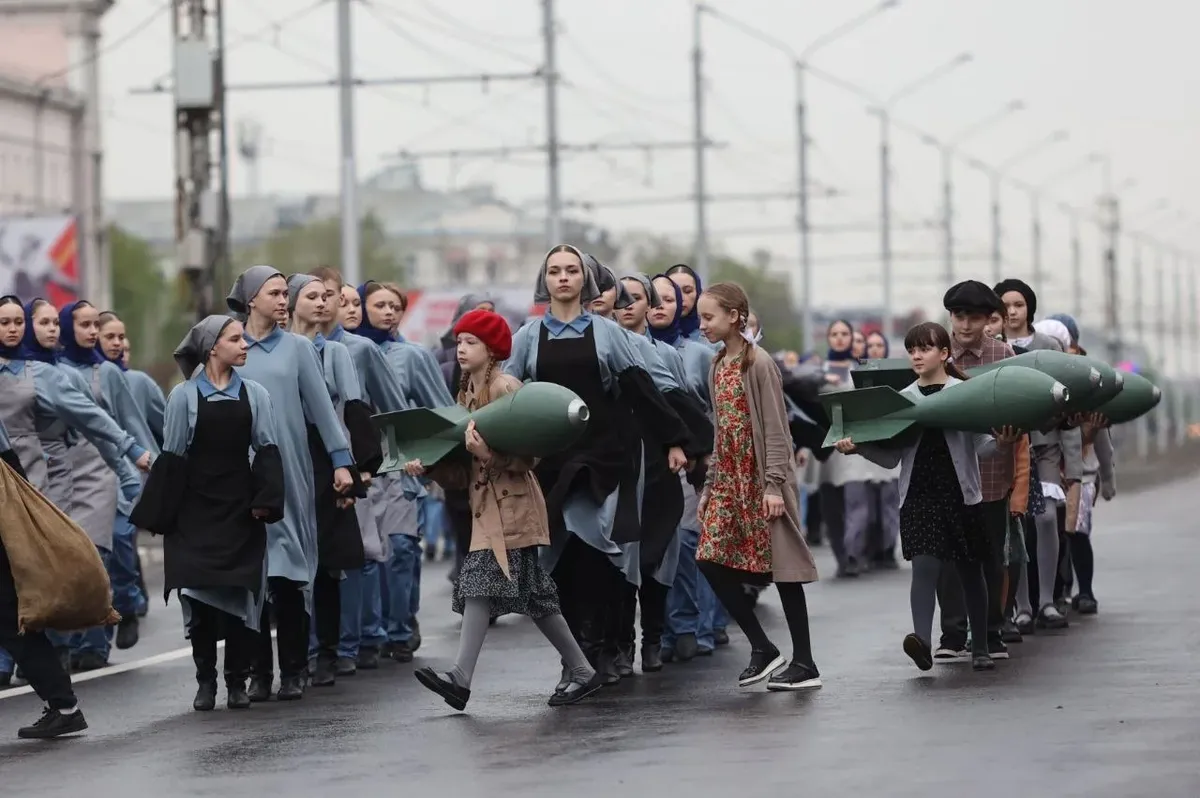
When Soviet children's toy soldiers broke, they were filled with epoxy. Most often, soldiers broke their legs. Where they were attached to the stands. The hardening resin gave volume, and from now on the Red Army men in pea coats with bandaged heads and rifles at the ready seemed to each be floating on a separate raft.
The children played war. But Soviet children did not play in prison, the Soviet industry did not produce toy prisoners, and they did not float on rafts.
In 1982, Yuri Loza wrote the song “Raft”. Then, in 2007, she will end up in Balabanov’s “Cargo 200” - under her, a maniac cop with a victim rides through Leninsk on a motorcycle. Well, these signature multi-minute Balaban passages through urban landscapes accompanied by music... Then there will be “The Groom Has Arrived” and the corpse of a soldier. From Afghanistan. This violated - for me personally - my personal and reinforced concrete associative series from childhood: raft - soldier - wound. It added cops, prison and all its abominations.
I’m talking about personal things because I don’t know how to speak in general terms about the destruction of the most important of Russian foundations. And this has already happened. When in the rear they see something extremely dangerous in someone who has returned from there. When a significant part of the country stands for the continuation of the SVO, but only because it is afraid of these soldiers returning home. It began with the “Wagners”, with the raking out of zones and prisons, with the stories of soldiers about the order prevailing there. And now - a logical continuation, when the courts consider the cases of those who want to get a better prison... The pyramid has turned over. The raft capsized.

I am an expert in this matter; I also experienced AWOL in the army. I was sitting in the guardhouse, and the battalion commander, Major Balakirev, rescued me from there. And the divisional special officer promised me a disbat. They were afraid of the disciplinary battalion (“diesel”): its reputation was worse than that of the prison. But about the prison itself, no matter what kind of incidents occurred in our division, no one - neither the commanders nor us - even stammered. These were different spaces, different physics there, even the worst enemies did not want this. And now - like this. (It’s clear that disbats seem to be of no use now - they don’t give out weapons, where do they go...)
Eight years after the release of Balabanov’s “Cargo 200,” in 2015, the Russian Reporter magazine, based on the results of a sociological study and a survey on social networks, compiled a rating of the most popular poetic lines in Russia. The song “Raft” did not become the national anthem, but took an honorable 44th place. The USSR anthem is nearby, in 39th place.
For some reason, the prisoners and the regular military men found themselves on the same page. The planting culture has changed radically. New crimes, special contingent. And they ask to go to prison... And for many it now looks like the most honest place. Previously, the army was trusted by the majority of the country, more than the church, more than all other institutions and structures (87% in 2016).

It looks like the end of one big story. Perhaps another one will begin later. Or it won't start.
However, these are general words, and we are talking about people. The prisoners are still leaving for the special operation in a conveyor belt. Prisons are emptying. A real decolonization of Russia is taking place - many camps are being boarded up : the prison is closed, everyone has gone to hell. And they don’t take soldiers to prison, they bring them back.
I would say that such measures as lice arise from complete hopelessness and decline, but no - in its own way it looks logical. Soldiers should fight, not sit.
But this is how it looks if you don’t delve into specific fates and don’t hear what exactly the soldiers who prefer prison say. If you don’t see how the thinnest fabric from which each of us and our common civilization, one for all, is so intricately woven, is corroding. If people - these specific ones - are taken out of brackets. People who shouldn't be here. Which must win or perish - as others like them see it.
Turned grey. They won't let you sit
On September 15, TASS reported : the government commission approved the tightening of three articles of the Criminal Code: 337, 338, 339 (COCH; desertion; evasion of military service duties by feigning illness or other means) for former prisoners who signed a contract. For SOC of more than a month, as well as for evasion of service, the term will increase from 5-10 years to 7-12, and for desertion - from 5-15 to 10-20.
In addition, “Rossiyskaya Gazeta” on the same day, September 15, clarified that two more articles of the Criminal Code would be specified and adjusted—of course, this is not the time for philanthropy—two more articles of the Criminal Code: 332 (failure to comply with an order) and 348 (loss of military property).
In which country are such bills introduced, which country's government approves them? TASS and domestic media write that this is happening in Russia. But in Russia, all these fugitives from the battlefield, whether they were in prison before participating in the SVO or not, are almost automatically released from prison, sent back to the same field.
Who are they afraid of going to prison?
About the Sochniks and their return “behind the tape”: military lawyers call this an algorithm. Lawyer Kh. says that since 2022 he has provided legal assistance to 950 military personnel and their relatives, and “requests for the SOCH are quite frequent.” Obviously, a lot of confessions are being written. And some cases, judging by the files of garrison military courts, are even being considered. And judging by letters from pre-trial detention centers and colonies, recruiters are now asking about their desire to go to the SVO also from those whom the law does not allow to go there - those who have received sentences for terrorism, extremism, treason. As a result, they are not drafted into the troops (at least I don’t know about this), but this is another important evidence of how the state system works: the installation is down, and everyone in their area is trying to give the best indicator. Regardless of its compliance with written and unwritten laws.
I return to the conversation with lawyer K.
“And the first three came... I’ll never forget them either,” he continues after a pause. — Three boys, also from the village, from the same area. All three of them sit down next to each other. I look at them - six gray eyes. They say: what to do?
I answer: surrender, confess... But they just escaped, they don’t have a month yet (the gradation of prison terms - at least, it used to be like this - is based on the length of time the fighter was absent: from two to 10 days; from 10 days to a month; over a month). I say: I can’t advise you to commit a crime, it’s illegal, and it’s up to you to decide in any case, but I can tell you what you’re doing now, and what you’ll do when a month passes and you don’t return to your unit, I can also tell you. And I’ll tell you what responsibility it is. And how it should work, and how it actually works.
...But in general, they themselves know, the people understand everything. Plant “as much as you like.”
— This option—prison—isn’t there at all for such people now?
- She is. For the minimum indicator. When it is beneficial for someone, when something is calculated, then... By the way, they managed to fight off one guy. Also from the countryside. He was mobilized, and his closest relative died at home, leaving only his minor brothers and sisters. Came to the funeral, took out temporary custody of the children, quickly completing all the paperwork. He informed the unit that he would be delayed - for a good reason. There we got into a position. And then he arranges for permanent guardianship. There is a gap in the law on this score (different requirements or silence about them for contract soldiers, conscripts, mobilized), but a guy is not dismissed from service for family reasons. He comes to me: let's appeal against inaction. We flew to court together. We were ultimately denied, but the judge asked for documents that helped us. We understood that they would refuse us, but the movement began. And then some very big boss calls me and says: the case is under control at the Prosecutor General’s Office. We want to understand and help. He offers this option: sign the contract, and we fire him immediately - there’s only a loophole here. We need a contract. And I believe him. That they will do it. He convinced me for 11 minutes: “We will control it, we will keep our word.” I recommend the guy agree. And he said, “No, I don’t believe them. I’ll sign the contract, but someone in this chain might cheat me.”
Okay, I say, then option B. Now we are suing the dependents in the court at the place of residence - that they, just such and such children, are under your care, dependent - and we go again with a demand for dismissal. We do all this, and then it comes to us: you are fired. The Main Military Directorate has transferred you to the reserve. For family reasons. Goodbye!
<...> Well, you have to understand,” continues K. “There is no special secret. In some places, the shortage in the police is close to 70% (the official overall figures are lower, but not significantly lower), in the Investigative Committee - about 50, in the prosecutor's office - about 40 (there are no official figures about the shortage of employees in these bodies). Judges - 19%, according to statistics from the Judicial Department this year. The judges say that the shortfall is greater. Yes, I myself see that they are leaving. They are running. Because they don't take it out. Every year new papers, papers, papers, forms, requirements appear, but the indicator must be kept the same. A person physically cannot fulfill this norm, no way. Secretary, judge, prosecutor, investigator. Living at work, living without a family, without children, without a normal vacation. There is no time for quality; we need to produce volumes and justify budgets.
And what worked stops working. Because - sorry, there is not enough time. Reports, deadlines, extensions of deadlines, some procedural things... Questions and the quality of evidence fade into the background. You open a case, and there are two out of 10 volumes - this is the progress of the case. 500 sheets. For what? This is an extension of deadlines, again an extension of deadlines, etc. The case must be submitted to the court 25 days before the deadline, and the deadline is two months; It turns out that there is only a clean month for work. Who came up with this? They are shooting themselves in the foot. Or in the hand. And they sit: reports, reports, reports, forms, statistics, inspectors, supervisors, checking supervisors, supervising inspectors, controlling supervisors. And the investigator sits: I quit. The eyes are unhappy. And so it is for many. You see it every day. There is no such thing as “I want to work”! Of course, someone has. But this quickly disappears - when life is only about work.
What does The Chronicles of Narnia advise Russians?
The internal organs are about to burst. The court and prison are also going through drastic changes. They will probably cope, it cannot be otherwise, and, in general, this is not about them. And about the flows of people passing through them or only dreaming of passing through them in order to change their fate. About burnt out lawyers - with their absolutely meaningless empathy in completely unexpected places and circumstances.
I ask:
“You’ve done so much over all the past years, you should be sick by now, why are you so worried?”
“Yes, it seemed that I would have time and be able to,” lawyer K. is all about that guy who “doesn’t want to anymore,” but was taken away. - A lot of them came to me. In three years. That's enough.
The man is not made of concrete. And in the church the candles run out, and the candles themselves burn out. If going to prison is now regarded as a lawyer's victory, this is a different country, unfamiliar to us. The prison is a deceitful alternative, reliable as April ice, but in it, in the word “deceitful,” there is “alive” inside. The phrase “it was accidentally decided that the only thing that must be preserved at any cost was life” is attributed to Clive Lewis, author of The Chronicles of Narnia.
True, enthusiasts do not find anything like this in his writings. Well, whether it’s fake or not, and if it’s fake, then to what extent, everyone can decide for themselves.
Light behind, light ahead, darkness here
And about Andrey, the 31-year-old captain, Sochnik - his story was told on August 29. A military lawyer from Krasnoyarsk, U., unlike lawyer K., did not have time to do anything at all, write after Andrei’s arrest - he was immediately taken from the logging site, where he had been working for two years, quickly recruited a team, and was sent on a military transport ship from Abakan to Rostov. The officer was assigned to an assault unit to train soldiers.
And so - the captain’s relatives (and they managed to write to Vladimir Putin, received formal answers from a number of departments) through sobs: “We went to the military registration and enlistment office. Since the 12th (September) he has been missing. Despite all this, we were sent to give DNA and write a statement for payments. Well, a statement - when there will be a notification. They said that if by fax, it would arrive quickly, if by mail, it would take longer. In short, yes."
I haven’t revealed Andrey’s real name yet.
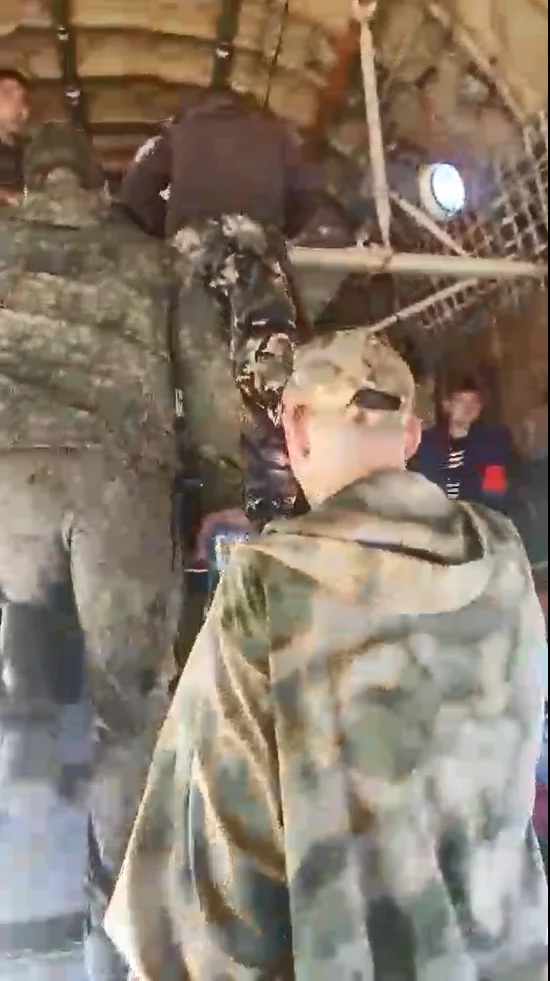
This is the last video left of him. He is in a convoy with other young men in camouflage, but without weapons, rising through the rear cargo hatch into the belly of a military transporter. “We’ll fly on this wonderful plane to the very city of Rostov... That’s it, I hugged everyone, with God.” 25 seconds of video, 25 meters - the length of the cargo compartment, they are walking, there is light behind, from an open hatch, light in front, and darkness thickens in the middle, and the soldiers, who previously walked freely, are getting closer and closer to each other. It’s as if a queue is lining up somewhere, for something.
This text was published in the fifth issue of the New Review magazine. You can buy the magazine in the “For Dear People” telegram store.