
Translated material
Cover me tenderly
How they erase in Russia: body parts, cigarettes, drugs, faces of actors and... memory

Illustration: Petr Sarukhanov / Novaya Gazeta
Liquidation
In Soviet times, we did not know about blurring. At that time, the main assistant of censors was scissors. Kromsali decisively did not correspond to ideological norms “moments”. Censorship and Soviet cinema are the same age. The first Soviet document on the introduction of censorship in cinema dates back to February 15, 1918. Stalin developed and improved Lenin's precept: “counter-revolutionary and immoral films should not take place.” The main improvement concerned “unreliable citizens.” In politics, science, culture. They, too, should have been crossed out, removed from their profession, credits, and life.
It all started with Eisenstein, when literally on the eve of the premiere of “October”, Leon Trotsky, who was abundantly represented in the film, had to be urgently cut out of the finished edit.
They cut scripts and films throughout the history of Soviet cinema, including cult ones - Gaidai, Motyl, Menshov. Etush was not allowed to look like Stalin in “Prisoner of the Caucasus.” They forbade Zhzhenov’s character to die in his sleep in “The Crew,” so as not to upset Brezhnev. Films that are today called classics were not only sent to the “shelf” for decades (from “The Commissioner” by Askoldov to “The Long Farewell” by Muratova, films by Parajanov and German), but were destroyed - as, as a result of editing and alterations, Eisenstein’s “Bezhin Meadow” was completely destroyed, as a screen copy of Khrzhanovsky’s “The Glass Harmonica” was chopped down in the studio yard, like a head of cabbage.
And lists of banned actors are not an invention of today. The names of repressed actors Dmitry Konsovsky, Tatyana Okunevskaya, Leonid Obolensky and many others were cut out from the credits and from the films themselves. It was impossible to show Oleg Vidov, Elena Koreneva, and Savely Kramarov who had left (from “The Elusive Avengers,” the viewer’s favorite scene with the guards around the fire, where Kramarov once again tells the story about the dead with scythes, had to be urgently eliminated).
For various, sometimes mysterious reasons, it was not recommended to cast Rolan Bykov in the leading roles (due to his unheroic appearance), Vladimir Vysotsky (officials did not approve him for the role of Fisherman in the film “Rise”, General Black in “Run”, D’Artagnan in “The Three Musketeers”), Sergei Yursky, Inna Churikova, Ekaterina Savinova, Lyudmila Gurchenko, Oleg Strizhenov, Larisa Luzhin. Why could you be blacklisted? For “condemnation of Operation Danube during the Prague Spring”, for “lack of social health in the person or non-Soviet appearance”, for “pro-Western views”, due to personal hostility of the authorities (Furtseva or Mosfilm director Ivan Pyryev). The names from the secret lists form a collective portrait of unique talents, as if the best were chosen, without whom the history of our cinema would have been different.
Scenes with alcohol were “removed” from a huge number of films (including classics) (at the time of the anti-alcohol campaign). The favorite folk songs “The Irony of Fate”, “Kin-dza-dza”, “The Diamond Arm”, “Prisoner of the Caucasus”, “Pokrovsky Gate” were damaged.
Out of sight
After a few years of relative freedom, everything returned to normal. Today, new technologies have come to help censorship: blurring, computer graphics, artificial intelligence. What needs to be hidden, concealed, removed “out of sight”?
Politics and history
It is quite difficult to look for logic in the blurring of this or that element. Someone, for example, was frightened by the news about the death of Vladimir Putin in the fictional universe of the dystopia “The Collapse of the World.” The Exponenta company released a censored version of the film, where the news story and the portrait of the Russian President along with the inscription “Putin Dead” were blurred out. From the grotesque black comedy “The Palace” by Roman Polanski, the scene with the New Year’s address of the Russian leader (and at the same time other Russians shown with irony) was cut out.
The memory of the past also falls under blur for unclear reasons. In Francis Ford Coppola's blockbuster Megalopolis, the inscription "USSR" was painted over on a space satellite that flashes on the screen a couple of times. No affiliation of the space object with the Soviet Union is allowed in the Russian rental version. And when one of the characters reads a newspaper that mentions “soviet satellite” (Soviet satellite), the translation reads “an old, outdated satellite.”


Do not offer sex
In recent years, blurring has become one of the main mechanisms of compromise between legislators and Russian distributors, who are forced to comply with a number of restrictions in order to release films and sell them to streaming services.
The human body also fell into the dubious category. Male nudity (the fifth points of the “strong half of humanity” and genitals) is exactly what no one should see on screen under any circumstances. Again, blurring occurs regardless of the age rating assigned to films when obtaining a distribution certificate.
Shots of an intimate nature are deleted from the paintings first. Sometimes it reaches the point of absurdity. Numerous circles with blurry focus eventually cover everything. Not only genitals, but also nature, architecture, books on the shelf...
In the horror film Bring Her Back from the Dead, a man's genitals are shown for a few seconds. Joaquin Phoenix was also unlucky in the film “Every Fear of Bo” by Ari Aster: the naked actor appears in a couple of episodes with a soap stain between his legs. Another soap spot is Sebastian Stan in the film “The Other Man”. The men's naked asses in the thriller "Ugly Sister" are regularly covered, while women's asses are allowed to be looked at unhindered. They hid the genitals in the horror film “Scream.” Season of Ghosts."
The military drama “Under Fire” has slightly more sophisticated censorship. For a split second, the wounded soldier's genitals are shown damaged by the explosion. In the theatrical version they were closed with a blur, but after the digital release the short episode returned to its roots. In rare cases, what isn't allowed in theaters is still acceptable online.
Alexey Fedorchenko could not “pass” the film “Mitrofan Aksenov’s Sausage” because of a short episode in the museum of erotic art, where one of the heroes worked: Fedorchenko was ordered to remove all the exhibits. The director “compressed” them into cuts one second at a time, they flew by unnoticed. This turned out to be not enough. Why? Because everything can be clearly seen in a still frame! As a result, all the exhibits were covered with “bushes”, and the hero found himself in a strange “garden”.
Body blur also encroached on the immortal classics. For example, the re-release of the melodrama “The Dreamers” by Bernardo Bertolucci suffered. The Illusion Kino company, which produced films in Russia, covered up Michael Pitt's genitals. The change affected only the theatrical copy. In the digital version, available in Russian online cinemas, everything remains the same.
No drugs
There are understandable reasons for the blur. However, this transparent logic does not in any way justify the fact of interference in works of art. The drama about the German gangsta rapper Xatar “Das Rheingold”, whose life was tightly connected with illegal substances, suffered from a drug blur, and one of the episodes with their use disappeared completely.
Drug addiction is an important part of the narrative of The Last Tomorrow, starring Canadian singer The Weeknd, but the film also suffered from censorship.
In the thriller "Surfer", cult members persuade Nicolas Cage's hero to use drugs. In one episode, a syringe with a needle turned out to be clogged, although the context of its use is more than clear. What are the censors trying to protect us from in cases of this kind? None of these films encourage drug use, and keeping the problem quiet has never helped solve it.
In the drama “The Bird” by Barry Keoghan (from the Cannes competition!) in the hero’s apartment, white powder flashes on the table, which was also blurred at the Russian box office.
Moments of drug use, not to mention obscene language, were removed from the version of Anora for Russian online cinemas. These scenes were simply framed, leaving a sound track, so that you could guess what was happening on the screen.
In “The Gentlemen” by Guy Ritchie, images of marijuana bushes were blurred out, and the words “anasha”, “hemp”, “cones”, “ganjubasic” were cut out out of harm’s way.
Balabanov was not spared either. In Zhmurki, scenes with Alexei Serebryakov were edited: not only the drug laboratory was blurred, but also posters with topless girls in the background, as well as the moment of the character’s death.
So as not to drink, not to smoke...
Smoking, the dangers of which are usually announced in captions at the beginning of films and TV series, is also increasingly tabooed - despite the age rating of 18+ for most films whose characters smoke. A new movie is also included in the blur - the action movie “Trap” with Bill Skarsgard and Anthony Hopkins; drama "Conclave" by Edward Berger; horror "Bloody Harvest" - and a cult classic.
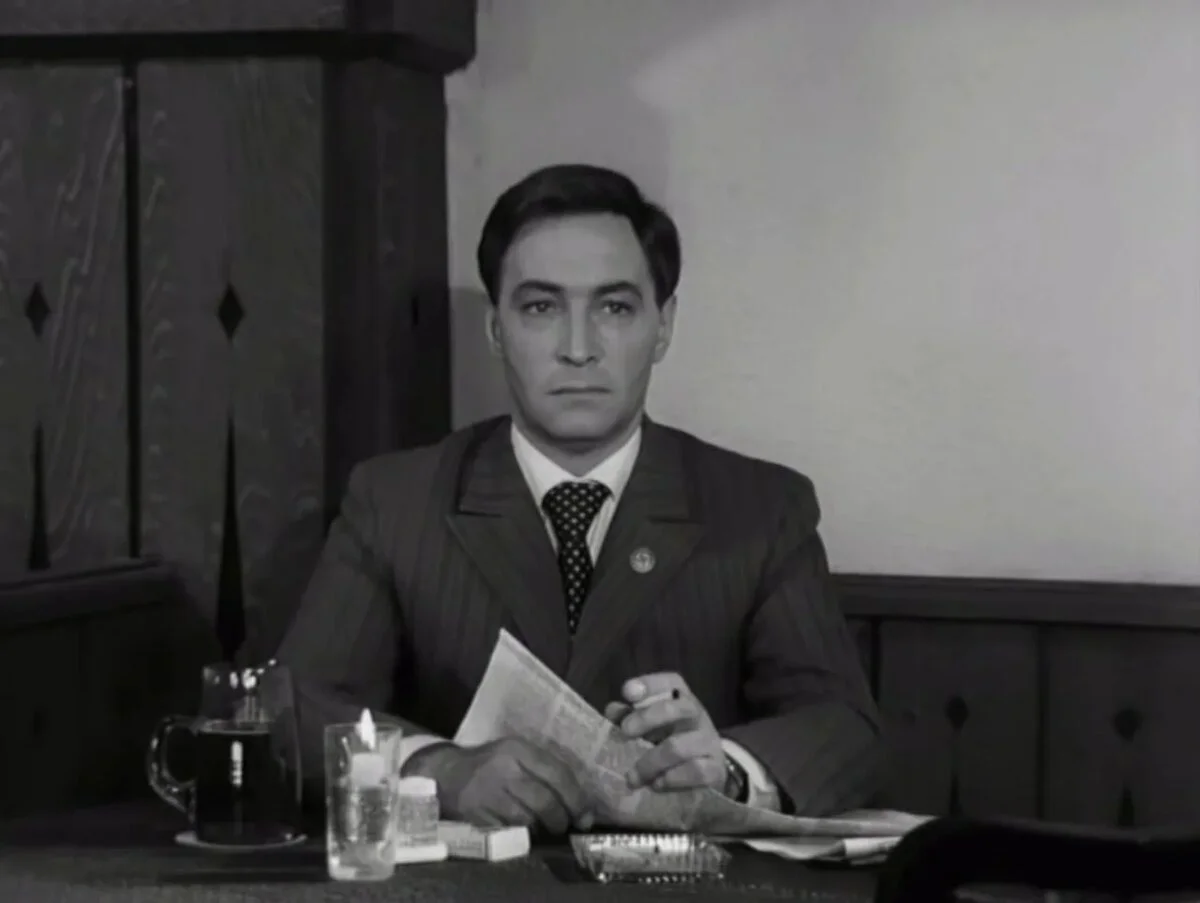
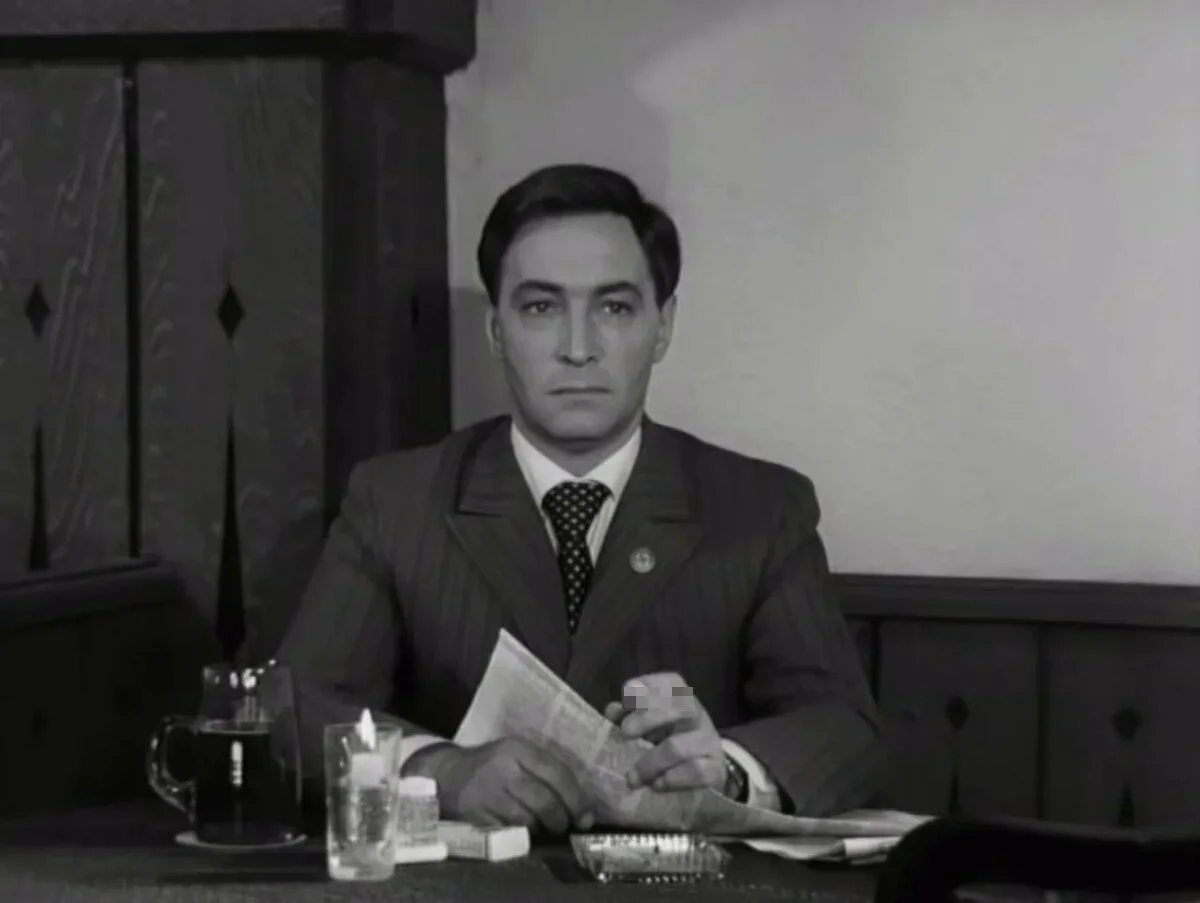
In Hayao Miyazaki's cartoon “The Wind Rises,” which was re-released by RWV Film, not only the process of smoking is blurred, but also packs of cigarettes. On digital channels, the cigarette in Stirlitz’s hands is covered with squares. And you start to think that he smoked there? Maybe we didn't notice before?
They started covering up liquor bottles in movies. In the brand new family comedy “To the Village for Grandfather,” the flask from which Yuri Stoyanov, the grandfather of his cocky grandson, is drinking, was blurred.
Perhaps soon we will watch movies and TV series made only of squares.
Threat to traditional values
They strictly hide any signs or hints of LGBT* people in Russian cinema. In general, even the current law allows the mention and demonstration of LGBT people on screen, but prohibits propaganda of the phenomenon. It is sometimes extremely difficult to separate one from the other, so distributors prefer not to take risks and blur everything indiscriminately.
In the dramedy Jules, an alien wears a T-shirt with the inscription in English “I’m not a lesbian, but my friend.” “This is from distant times, when she could not remain silent about it,” the main character explains the humorous inscription. In the Russian version of the film, the inscription is blurred out, apparently to avoid discrepancies.
In the biopic "Saint-Exupery" with Louis Garrel and Diane Kruger, a man's face is painted over in a short scene. The thing is that he dances with another man for about five seconds, but the viewer should not guess that this dance is same-sex. In the musical biopic “The Last Tomorrow,” the character of Barry Keoghan fell under the blur: in one of the episodes, he kisses first one girl, and then another. Probably (we can only assume) the censors considered this as a hint of a threesome love, which is unconventional and loose.
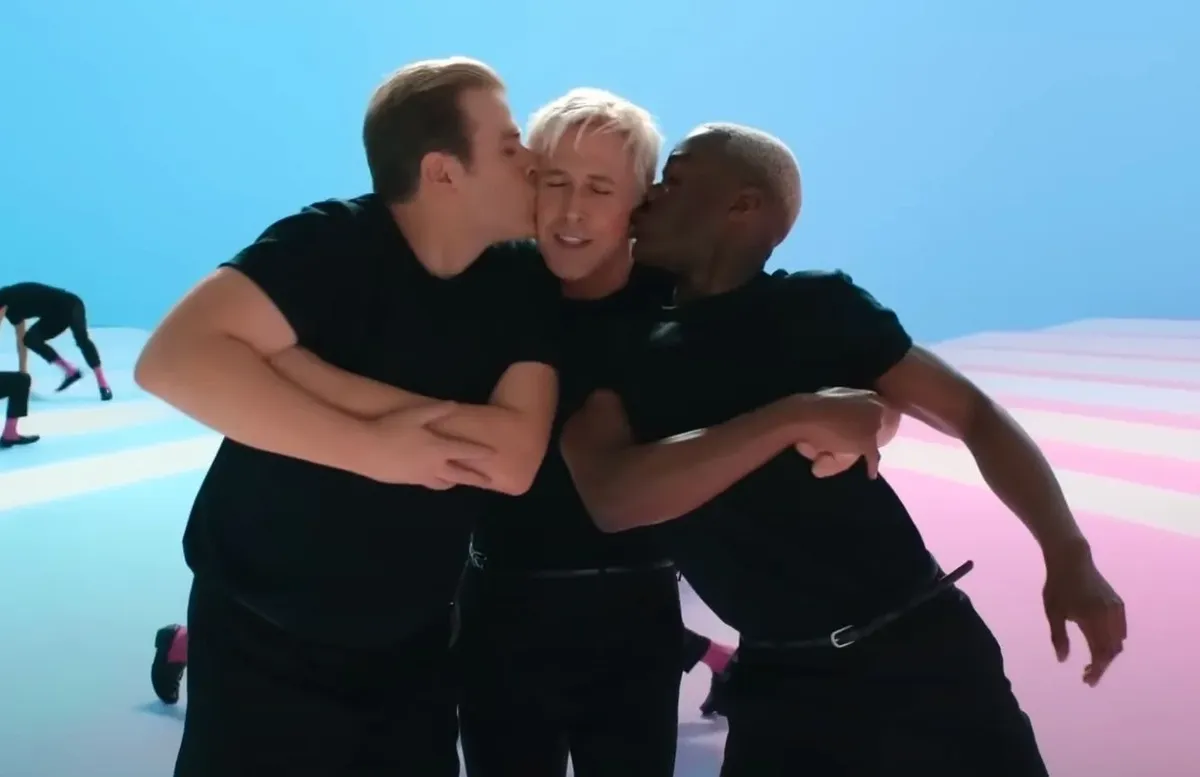
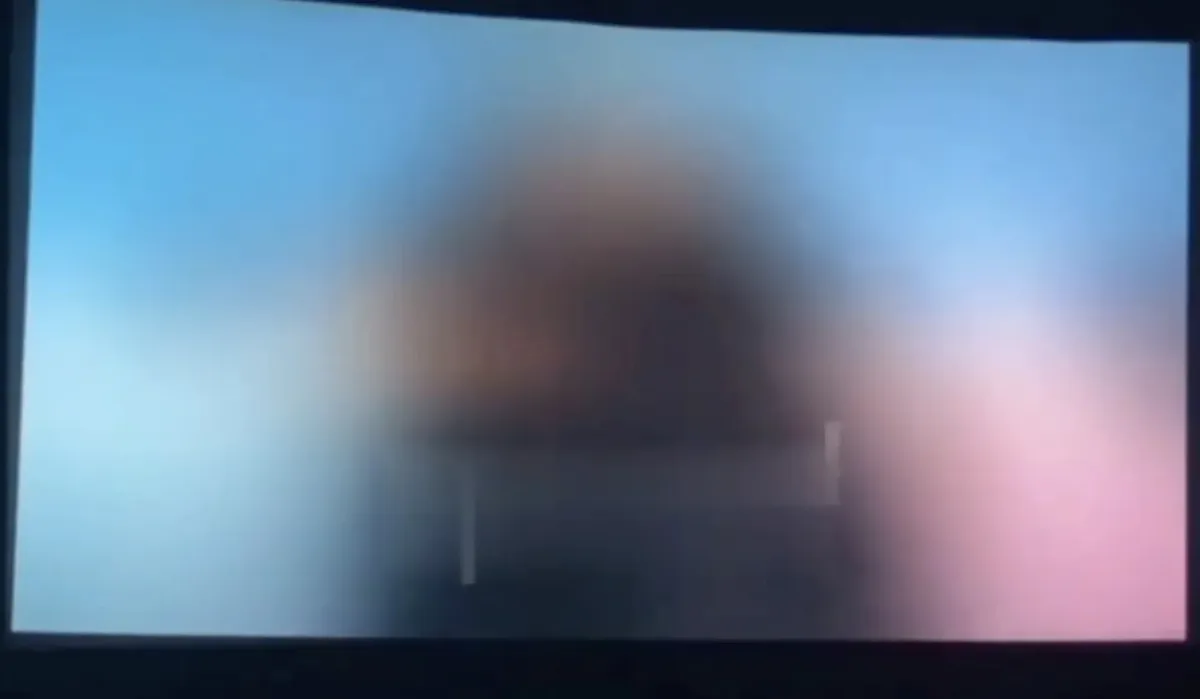
Interestingly, blurring has also extended to pirate screenings. In Russian cinemas, during the so-called pre-show service, they played “Barbie” - an episode where Gosling is kissed on the cheeks by men while dancing to the song “I’m Just Ken”.
Blur also touched on religious issues. One of the latest examples of this kind of blurring is the cartoon “Memoirs of a Snail.” Probably, in order to exclude any parallels between Christianity and a non-existent, but very similar religion, all religious paraphernalia was blurred out in the cartoon - the names of books, inscriptions in the temple, even crosses.
There are no such people... and animals
Blacklisted artists are blurred out and cut out: their scenes and names in the credits. The satirical comedy “Radio Day” on the Dom Kino Premium TV channel has undergone a large-scale “cleansing”. Episodes with the participation of the leader of the group “Nogu Svelo” Maxim Pokrovsky**, as well as the groups “Mumiy Troll” and “Vopli Vidoplyasova” were completely cut out from the film. The names of the soloists of these groups were blurred out in the credits, as were the names of Mikhail Kozyrev** and Alexey Kortnev. The characters played by Kozyrev and Vitorgan seem to remain, but their roles in the film are greatly reduced.
“It seems to me that very timid people work on the Dom Kino channel. This is all a spiritual organization of workers. <…> They are very kind, sincere people,” said Maxim Vitorgan. If only he knew what they would do to him in the series “Bar “One Call”,” the release of which was postponed for two years due to the prohibition of Danila Kozlovsky. Danila was returned, but Vitorgan was deprived of his face. Using computer technology, they drew something new for him.
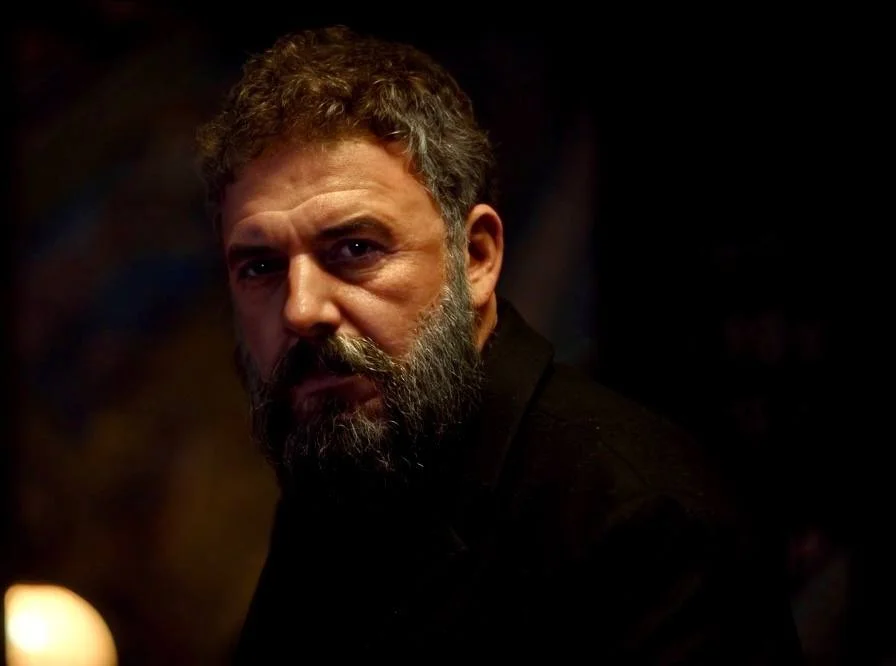
The role of the hero’s mother in the film “Yuryev Island” by Alexander Barshak was played by Yulia Aug, but the scenes with her were not included in the final cut. In the credits of the musical fairy tale “Flint against the Magic Well” there is the King and the name of Sergei Barkovsky who played him. But the Queen, played by Julia Aug, disappeared from the credits. She is in the picture itself, but her face has been changed almost beyond recognition.
A number of films have lost their director's names in the credits due to the fact that these directors also “appear on the lists.”
Sometimes it is extremely difficult to explain one or another act of censorship. In the documentary “Room 999,” the name of Kirill Serebrennikov was blurred out in the credits, and an episode with his participation was cut out. In the film, 16 directors talk about their vision of the future in cinema. Russian viewers are prohibited from learning about the future according to the director of “The Apprentice,” “Summer,” and “Tchaikovsky.” At the same time, Serebrennikov is not a “foreign agent,” not a terrorist, not an extremist. One can only guess what law Arthouse was guided by when deleting this passage.
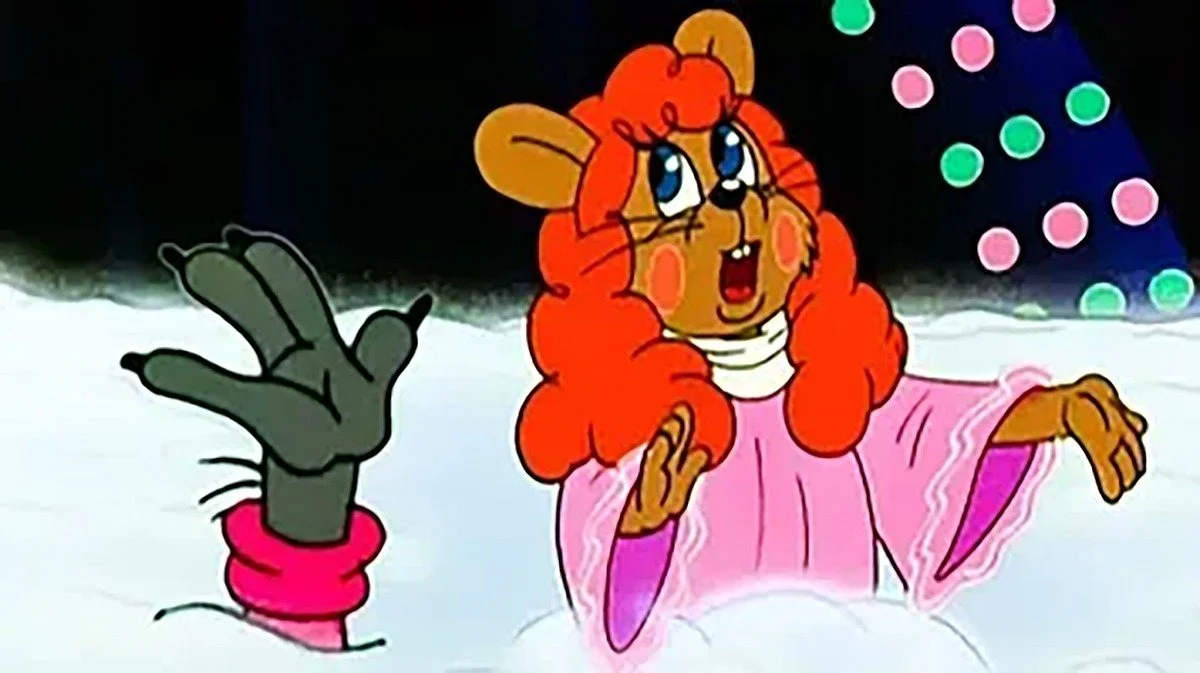

But our favorite “blur” is the Hare from “Well, Just Wait!” in the image of Alla Pugacheva, singing about an iceberg and turned into a cloud spot by the Carousel channel. Pugacheva’s image was also “fogged up” on the poster in the film “Icebreaker”.
Nikita Miklushov (diploma of the festival “In Short”) dedicated the philosophical film essay “Censorocracy” to the process that is gaining momentum. Blur in the frame consumes cigarettes and naked characters in the film. Shackled with adhesive tape, they look at the barely visible bookshelves... Will there be anything left? Alas, gradually the whole world in the frame is blurred in a haze of total blurring.
Larisa Malyukova, Timur Aliev
This material was published in the fifteenth issue of Novaya Gazeta. Magazine". You can buy it in the online store of our partners.