
Translated material
Fencing
Europe has acquired a visa strategy. Nothing good will happen for Russians and Belarusians
Photo: Evgeny Razumny / Kommersant
In two documents that the European Commission proposed on January 29, it outlined who a united Europe would like to see and who it would not. Whether as guests, forced protégés or new residents.
She has made it clear that she will not repeat the mistakes of the recent past and will close the border gates tighter on those who promise to become an unjustified burden, a security threat or incompatible with her values. In fact, there is nothing fundamentally new compared to previous documents, only the emphasis has been strengthened and measures that have already been taken are consolidated.
The European Asylum and Migration Management Strategy for the next five years (hereinafter referred to as the “Migration Strategy”), as well as the EU Visa Strategy, were presented as draft laws by the Executive Deputy Chairman of the EC, Henina Virkkunen, and the European Commissioner for Home Affairs and Migration, Magnus Brunner.
They noted that the migration policy pursued by the current Executive Board and embedded in the first comprehensive strategy is already bearing fruit: with a noticeable decrease in the number of illegal immigrants entering the EU, humanitarian protection for millions of refugees is simultaneously ensured.
“2025 was the year that Europe showed that it can solve the problem of migration,” Brunner said. “The number of illegal border crossings has dropped by 55% over the past two years, and the number of asylum applications has dropped by 21%.” That is
The migration crisis, which peaked in 2015 and caused serious political and social problems on the Old Continent, including the rise of far-right populist forces, is, if not overcome, then overcome.
The EU has achieved this, say the authors of the Migration Strategy, by “building on the significant progress” made in protecting its external borders, pursuing active migration diplomacy, including interaction with partner countries, and implementing system reforms. All these factors have helped reduce illegal migration and improve the management of migration flows.
The Migration Strategy sets out the next steps to achieve three main goals: preventing illegal migration and disrupting criminal smuggling networks, protecting people fleeing war and persecution, preventing abuse of the system, and attracting talent to the EU to improve the economic competitiveness of its countries.
Obviously, given the situation of the last four years, our reader is more interested in the second document: the EU Visa Strategy. The decision to develop it was made back in March 2018. Since then, much has changed in the world and in the EU's relations with Russia, and these changes have contributed to the new Visa Strategy.
In September 2022, the EU completely suspended the Visa Facilitation Agreement with Russia. Also in 2022, the European Commission adopted clear directives that ordered member states to reduce the priority of issuing visas to Russians (except for a very few specific categories) and strengthen security requirements and border controls.
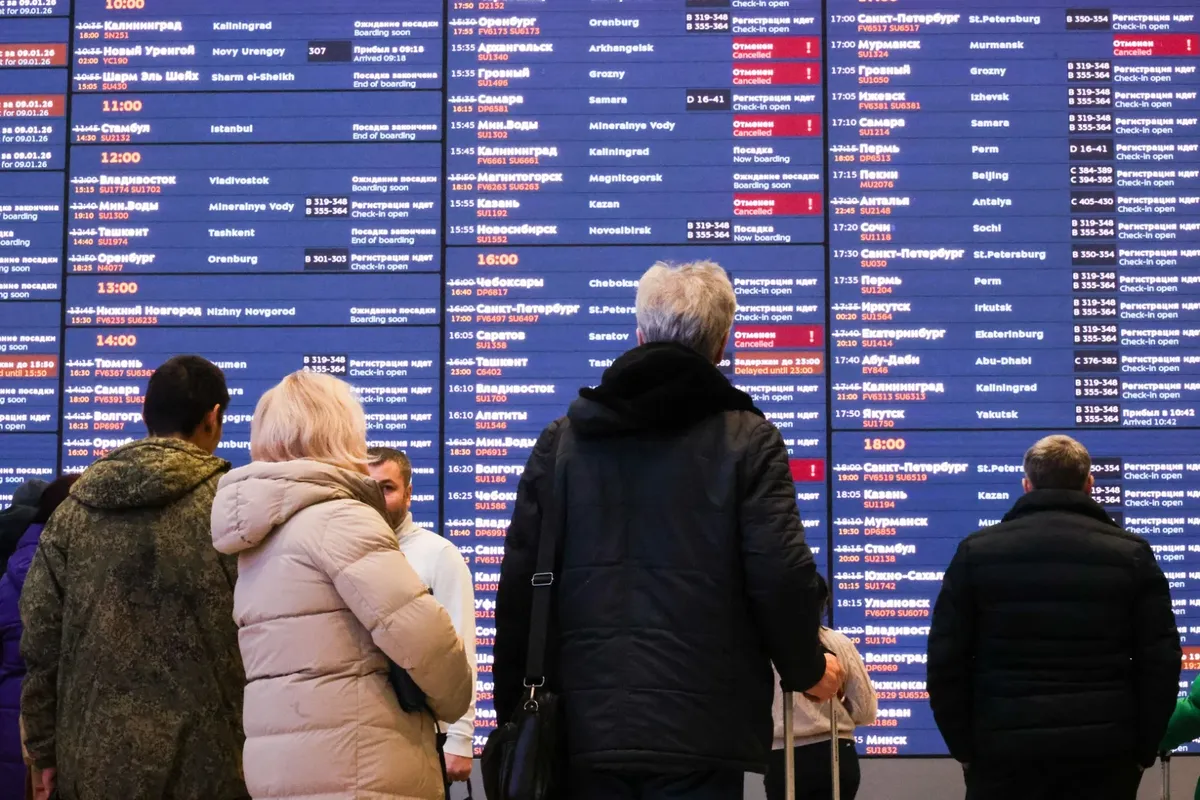
In November 2025, the European Commission adopted stricter rules for issuing visas to Russian citizens, as a result of which Russians no longer receive multiple-entry visas. Even earlier, similar measures were taken against citizens of Belarus. Both union states are now far down the scale of EU visa priorities, along with “problem” countries.
The issuance of humanitarian visas is still possible. Here, it is not the country of origin that plays a decisive role, but the history of a particular person.
EU countries have the right to continue to issue short-term visas for humanitarian reasons in exceptional cases, on an individual basis.
The visa strategy has a framework nature and is a recommendation document for the governments of all countries of the union that are responsible for issuing visas. But the document announced that in a future bill to revise the Visa Code, it is possible to introduce targeted restrictive visa measures throughout the EU. This new category will give the European Commission the power (in consultation with Member States) to mandatorily suspend, reject or limit the processing of visa applications submitted by citizens of such “problem” countries. Of course, “in the interests of the EU.” Brussels wants to further “harmonize” its visa policy, which is now quite broadly interpreted by the countries of the union.
Such a tool will allow the EU, as noted on the European Commission website, to better respond to cases of hybrid attacks, information manipulation and interference, politically motivated use of migrants as a tool, the use of migration as a weapon and open acts of aggression. This will enhance the strategic autonomy and coherence of the union, aligning visa policy more closely with the objectives of the EU's common foreign and security policy.
According to Virkkunen, the EU “needs clarity and predictability from reliable partners” in visa policy, as well as “tools for coordinated action at EU level.”
On the other hand, the EU views visa policy as a “powerful tool”, an important soft power and is not going to focus on security. Europe is one of the most visited places in the world. 40% of all foreign tourists come to Europe. EU member states issue 10 million visas annually. Citizens of more than 60 countries have visa-free access to the EU.
“Visa-free entry into the EU is a privilege, not a guaranteed right,” says Brunner. “Visa-free travel” entails certain responsibilities, and now we will make these responsibilities very clear. Think of it like a traffic light. To receive the green light, third countries must meet objective criteria, such as a low visa refusal rate and a high return rate.”
Digitalization will radically change the lives of those traveling to Europe. At the end of this year, the introduction of the electronic identification system ETIAS will make it easier for visa-free visitors to cross the Schengen border. By 2028, fully digital procedures will make travel easier for those requiring a visa.
EU countries will consider issuing even longer multiple-entry visas for frequent travelers and speeding up processing for established companies.
In attracting “valuable personnel”, both documents - the Migration Strategy and the Visa Strategy - are clear. The European Commission is proposing a recommendation that sets out specific measures that EU member states can take within the existing legal framework to attract students, academics, highly skilled and experienced workers, start-up founders and innovative entrepreneurs. These categories are granted long-term national visas. The practice of “talent visas” for creative people is expanding.
In general, the methodology and procedures for granting visas or “visa-free travel” remain the same. Consideration of both visa-exempt and visa cases must be carried out “on the basis of a careful assessment of each specific case, taking into account a variety of criteria.” These include migration, security, human rights issues, reciprocity and economic benefits, particularly in tourism and foreign trade.
However, the bureaucracy, the peculiarities of the country, the costs of an individual approach, and bureaucratic indifference remain the same.