
Translated material
Winterers
Stories of Kiev residents who are undergoing another military test - cold, lack of light and water
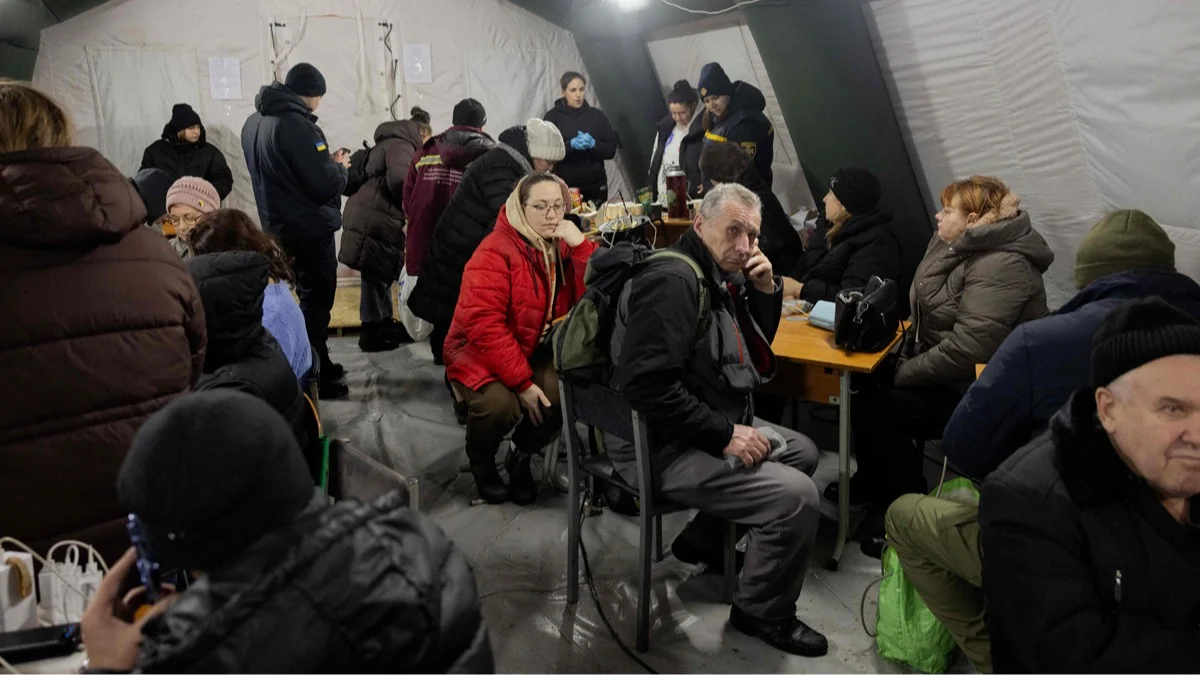
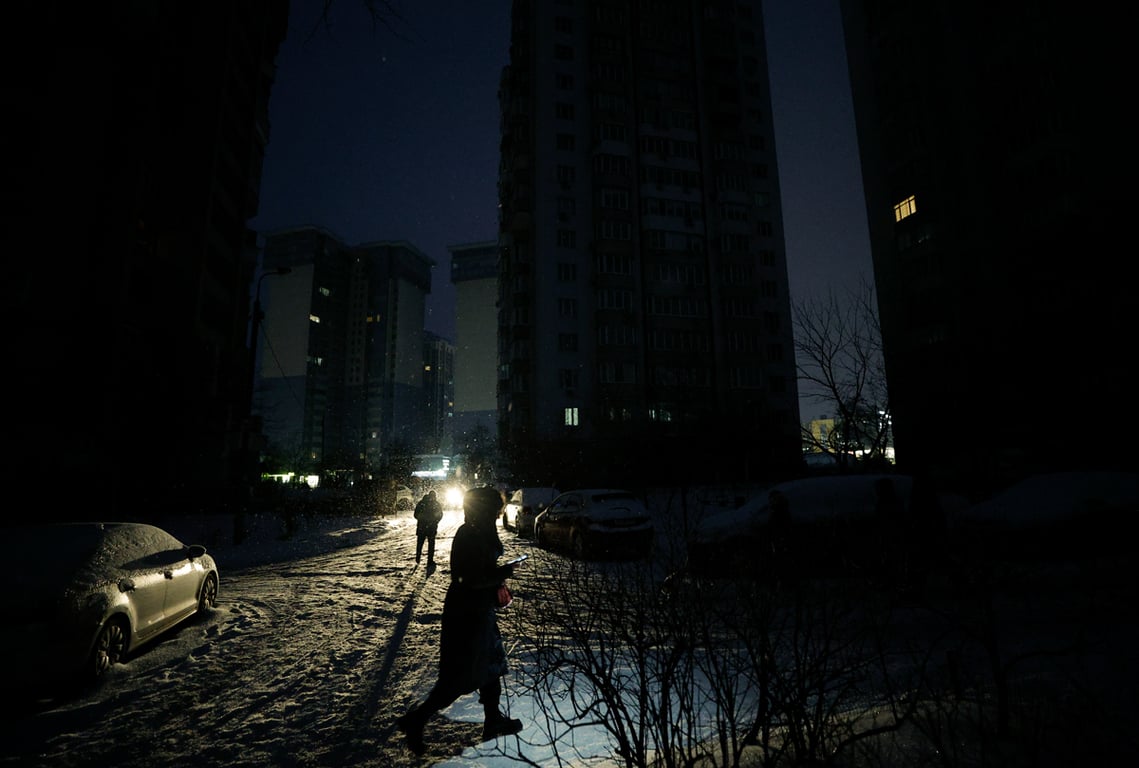
People charge devices at the "Point of Indestructibility" in Kyiv, Ukraine, January 11, 2026. Photo: Tetiana Dzhafarova / AFP / Scanpix / LETA
Night under Oreshnik
“Minus eight, it feels like minus fifteen. Light snowfall,” the forecast said. Instead of a flu-like, loose winter, a real Christmas miracle has come! The war did not prevent us from seeing the beauty of nature; on the contrary, it exacerbated it. Although objectively there was nothing to be happy about.
The night from January 8 to 9 in Kyiv was remembered not only for the anticipation of the Oreshnik, which eventually flew to Lviv, and not only for the waves of jet Shaheds, Calibers and Daggers that hit the capital. Even before dusk, freezing rain began to fall, and it immediately froze. And when the air raid signal sounded, the roads, sidewalks, and underground passage steps were already sparkling like a dark mirror. The cars barely moved, they were carried away. The branches of the trees were covered with a crystal crust of ice and sagged almost to the ground.
An unprecedented number of people still made it to our metro station, one of the shallowest. The US Embassy officially announced that an unusual attack was expected, advising its citizens in Ukraine not to ignore shelters. The nature of the targets chosen by the Russian army left no doubt: they were “taking out” thermal power plants and boiler houses, which power engineers did not have time to repair after previous attacks. And also, for the purpose of intimidation, they hit high-rise buildings so that the population demands any kind of peace from Zelensky. It doesn't matter whether it's fair or not.
Moscow has long promised retribution for the mythical Ukrainian drone raid on Putin’s residence in Valdai. But this is not revenge. We were just waiting for the appropriate weather. And they waited. Throughout the beginning of the week, weather forecasters predict frosts down to minus twenty. How long can the average Kiev family survive in a house with windows knocked out during shelling, covered with film, without light, water and heat, but with children and the elderly? Meat assaults on yet another “historical territory”, a village in the Donetsk, Kharkov or Zaporozhye regions, somehow do not cause any upliftment in Russian society. But the prospects of Kyiv turning into an uninhabited space are very invigorating.
You can rant as much as you like about how this is a war only of Putin and his entourage, while at the same time recognizing the fascisation of Russia. But Russians who are sick with fascism will be treated someday later, if they do. In the meantime, Kremlin propaganda has to explain complex things to the population:
Why is Ukraine not satisfied with the role of an unrequited victim? Why are Ukrainian drones already “extinguishing” Belgorod, Voronezh, Kursk, Tver, Penza?
Drain the water
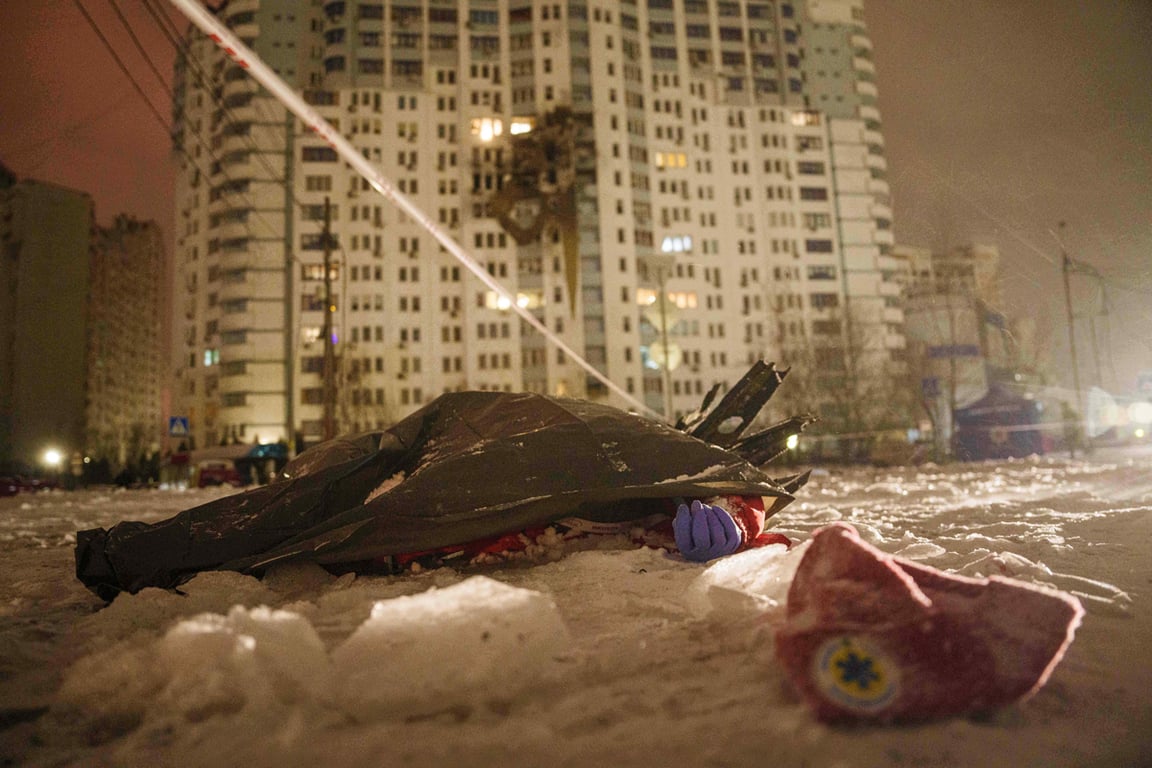
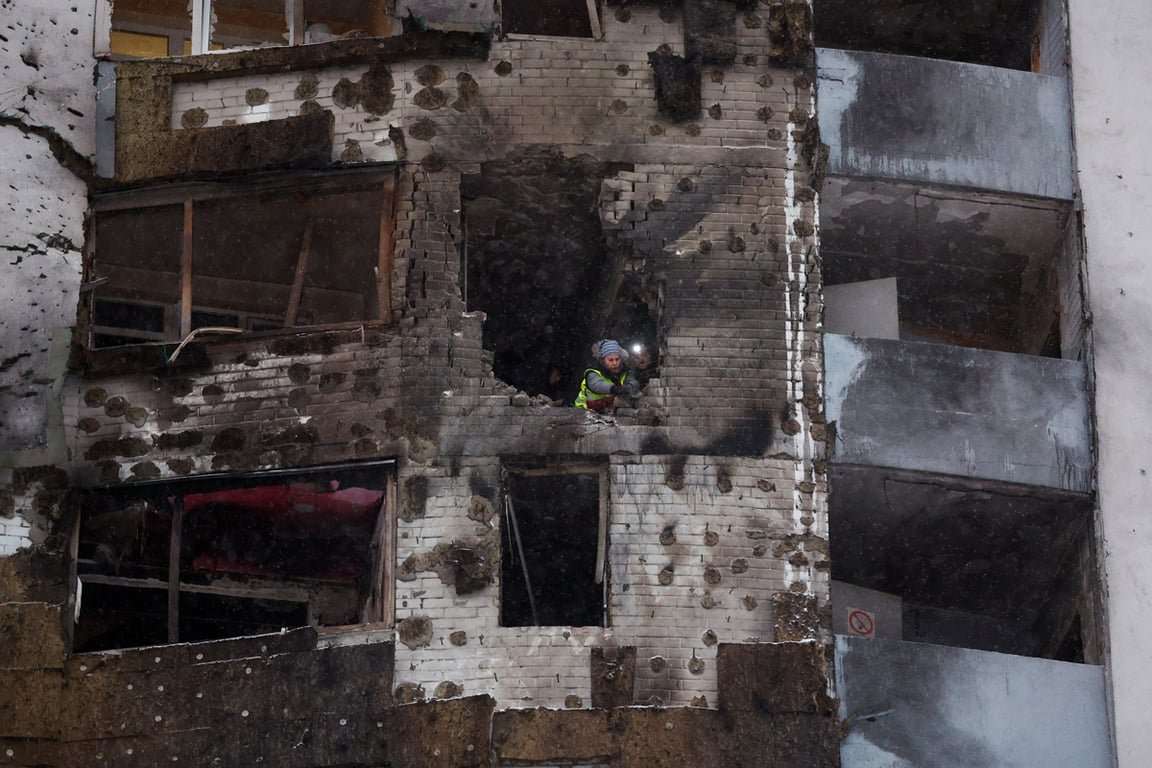
Now about the consequences of the night in Kyiv from January 8 to 9. There were four dead, 24 injured, among them five employees of the state emergency service and four doctors. Shahed ended up in a high-rise building on the left bank of the capital, on Mikola Bazhan Avenue. The ambulance team arrived. While people were rescued, they struck again at the same “strategic” point, this practice has not surprised anyone for a long time. The red knitted uniform cap of 56-year-old Sergei Smolyak, an employee of the Center for Emergency Aid and Disaster Medicine, who died on the spot, remained in the snow that fell and fell. Someone placed a bouquet of red roses nearby.
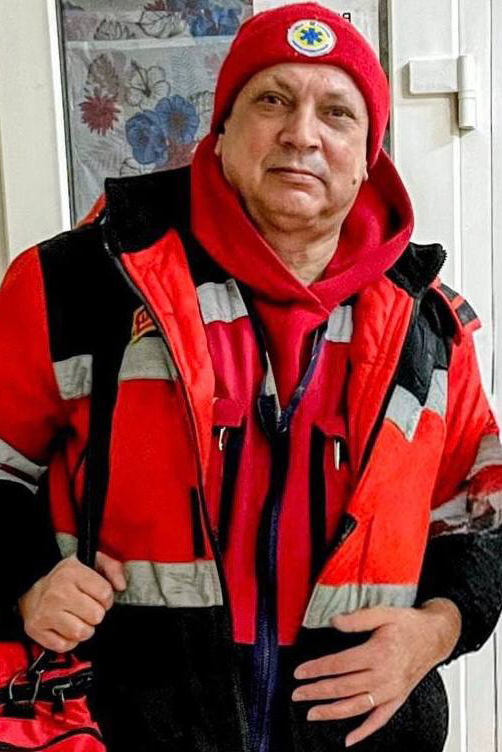
Smolyak is a forced migrant from occupied Kakhovka. Colleagues remember him as a top-class specialist who never complained of fatigue. Forever without Sergei now his wife, daughter and two granddaughters.
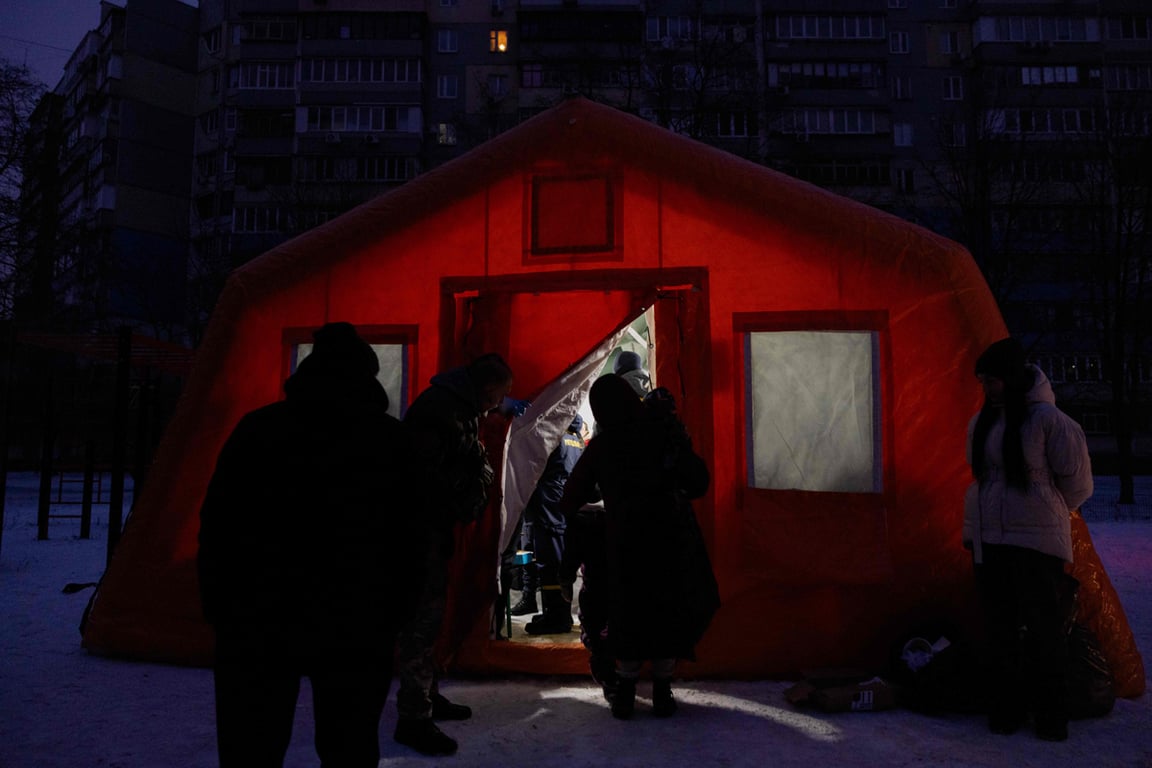
As of the early morning of January 9, half of the apartment buildings in the capital, almost 6 thousand, lost heating due to damage to critical infrastructure. The water is gone. There were interruptions in the operation of the metro. The power outage schedules for household consumers ceased to apply: the power came on unexpectedly and only for a couple of hours. Utility workers have restored social facilities, in particular hospitals and maternity hospitals, from mobile boilers, and together with energy workers have once again begun repairs. 1,200 indestructibility points have opened, where you can warm up, charge phones and other gadgets, and drink hot tea. Another war winter has taught me to make obvious decisions.
But the current combined attack forced Mayor Vitali Klitschko, after information about the problems , to say something exclusive: “City services are working in emergency mode. And the weather conditions, unfortunately, will be difficult in the coming days. I also appeal to residents of the capital who have the opportunity to temporarily travel outside the city, where there are alternative sources of recharging and heat, to do so.”
Klitschko’s proposal was explained by the city administration. Like, no one is pushing anyone in the back, but... In cold weather, draining water from central heating radiators is a mandatory measure, and it does not mean that there will be no heat in the apartments for a long time. Simply, without coolant circulation, pipes can freeze and rupture.
In some areas of Kiev, they have already begun to drain water, as reported by the famous volunteer Maria Berlinskaya. She also noted that the indestructibility points are not designed for mass and long-term stays, and called on the local and central authorities, together with their partners, to immediately organize the placement of families with children, at least in schools and other social facilities with individual heating points.
Many remembered the cold winter of 2006 in the city of Alchevsk, Lugansk region (now occupied territory), when, due to an accident in worn-out networks, thousands of people were left without heat, and due to an error by managers and utility workers who did not drain the water from the heating system on time, they suffered a humanitarian catastrophe. The frozen water damaged the equipment, and even after the boiler room was repaired and started up, the heat did not reach the apartments, which were turned into freezers.
The mayor's opponents immediately asked not to compare Kyiv-26 with Alchevsk-06 and began to calculate how much the capital of the warring country received through the energy line of humanitarian aid - from Taiwan to Poland, from Canada to Sweden.
The figures were given: the budget of Kyiv is 106 billion hryvnia, the distance to the Russian Federation is 400 km, the budget of the Dnieper is 23 billion hryvnia, the distance to the occupied territories is 215 km, the budget of Kharkov is 21 billion hryvnia, the distance to the Russian Federation is 30 km.
But neither in the Dnieper nor in Kharkov, which the Russians are ironing with triple force, did local authorities call on the population to save themselves and warm themselves outside the city limits. In response, the mayor’s supporters reminded: Kyiv’s energy system, in fact, is not the property of the capital. It is owned by DTEK, the largest private investor, the company of Rinat Akhmetov.
The heroism of DTEK’s repair crews, for the fifth year, day after day, restoring damage and often dying during shelling while working, is like tears invisible to the world. Journalists cannot film stories at critical infrastructure facilities. And it’s impossible to even specify where exactly the power engineers lost their lives or were wounded. This is tantamount to adjusting the target for the next strikes.
What can people stand?
I asked my friends and just acquaintances of Kiev how ready they were to follow the mayor’s proposal and independently provide for the winter by leaving the city.
The family of the iconic Ukrainian musician Dmitry Shurov, frontman of the band Pianoboy, helps the army systematically and without PR. Despite the fact that Olya, Dima’s wife, a French teacher, musician and journalist, is the PR director of Pianoboy.
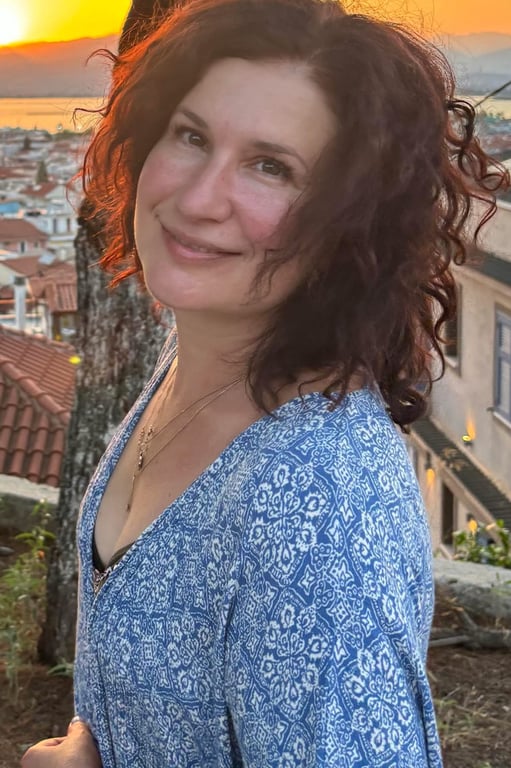
— We moved to the village two years ago. Small house, no gas, everything is electric,” Olya said. “But we installed a potbelly stove and prepared firewood in the summer. We installed inverters ( devices that convert direct current into alternating current. - Ed. ). Therefore, if there is light at least six hours a day, then they keep the refrigerator, water pump, sockets and light. If they stop producing light at all, the generator will recharge the inverter in a few hours.
Although in general, according to Olya, “you can drink like that, but you can’t work.”
— Instruments and studio arctic fox. Temperature changes mean cracks in the instruments, which most often cannot be repaired.
The Shurovs plan to take their parents from the ninth floor of their Kyiv apartment:
“The sofa near the potbelly stove has been prepared for them,” my interlocutor smiles sadly. And he continues: “Next to the house, about fifty meters, there is a well, that is, natural access to water; an electric pump is not needed.” The well is public, everyone can take water. But this is a last resort, for the Stone Age.
Former deputy of the Rada of the 3rd, 4th, 5th and 6th convocations Olena Bondarenko answered briefly and without tragedy:
— My grandson and I are not going anywhere, because, honestly, there is nowhere.

Contrary to the established opinion “all deputies are rich,” Olena Fedorovna, an ally of the legendary Vyacheslav Chornovol, who entered politics at the beginning of Ukraine’s independence, remained faithful to the principles of national democrats. And she didn’t acquire stone chambers, and she didn’t lose her strong character.
The story of Olena Bondarenko’s family is an example of what people can endure. She was born in a camp for political prisoners. Mother, Olga Lyadskaya, spent fifteen years there on trumped-up charges of betrayal of members of the Krasnodon Young Guard, although she was never a member of this underground organization. The author of the novel of the same name, Alexander Fadeev, contributed when, even before the trial, he “appointed” Olga to the role of a traitor to the Soviet homeland. Olena's future father, a Hungarian surgeon, also a political prisoner, together with his beloved, participated in the Kengir uprising in Steplag. In 1956, Olga was released with her criminal record cleared. And she rushed to the village in her native Lugansk region, where her grandparents had a daughter growing up. The Soviet government showed humanity: it allowed a barely alive nine-month-old child to be taken from the camp into the care of relatives.
In 1990, Olga Lyadskaya was completely rehabilitated due to the lack of evidence of a crime. Despite all the trials, she lived a long life, was proud of her daughter’s work, and left a year before the Russian invasion, in 2021.
Middle class on generators
Olena Suslova, a well-known researcher of gender politics and women's rights, said that her family bought and equipped a hut in the village twenty years ago.
— We immediately focused on the possibilities of independent, autonomous living: there were always blackouts there. Our option can be considered economically acceptable for the middle class,” noted Mrs. Olena. — I continue to work actively, constantly on business trips, “two roofs over my head” helps out. I told many of my friends to consider this option in case of force majeure. You have to think about some things yourself, and not expect them from the authorities. About five people followed suit, the rest are now regretting it.
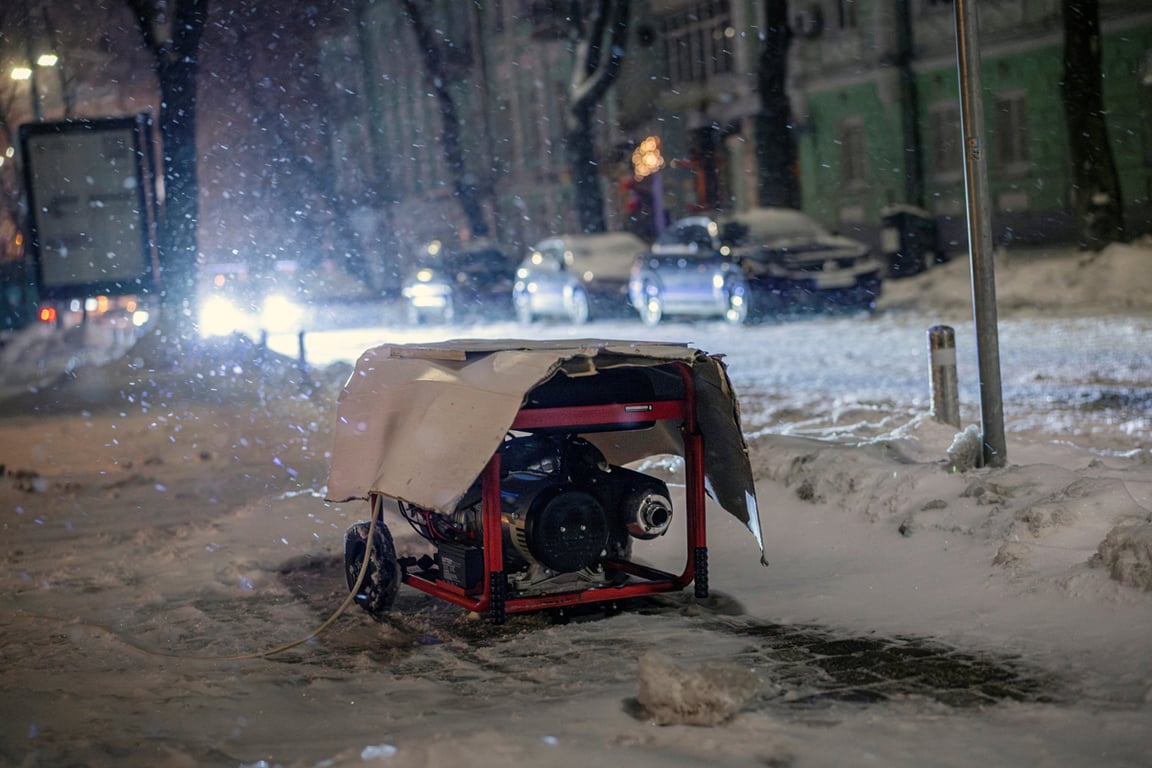
At the same time, Olena Suslova emphasized that people her age and older remember how they used to warm themselves in the kitchen in the winter cold and sleep there.
A migrant from Kherson, Svetlana Kiselgof, after what she had to experience when leaving her native place, also does not see anything supernatural if she has to leave Kyiv for a while:
- There has been a plan for a long time. The children, two adults and two small children, will go to the Vyshgorod district of the Kyiv region, to the village. There is autonomous water, a generator, and firewood. If it gets really bad, the two of us and the dog Java will join them. The work allows remote or combined participation.
Media specialist Bogdan Ponomarenko sent a message:
“I can’t leave on my own due to work and other circumstances. But we will send the parents, 70 plus, to Transcarpathia, where the family has a three-room apartment. Now we are renting it out to resettlers from Pokrovsk. Therefore, we will negotiate on “compressing” and, accordingly, reducing the rent for a difficult period.”
Colleague Ivanna Slaboshpitskaya from the 24 TV channel described in detail how, by the fifth year of the war, her family of four turned their private home in Kyiv into a “center of indestructibility.” When there is no light in Kyiv for many hours in a row, friends come here to work and spend the night. Ivanna herself also has the opportunity to work remotely for part of the week.
— The house is completely electric, but there is also a stove and ten cubic meters of firewood. Currently we heat with wood. In 2022, we bought a gasoline generator, I even know how to start it by hand, like experienced men. This winter we took out a large 3000 kW power station on credit. And now, when there is no electricity, water is supplied to the house, the refrigerator is working, there is light in the rooms.
Previously, when the lights were turned off, the family went to the Sportlife fitness club to wash and dry their hair. Well, we trained at the same time.
— The training was daily and forced. But everything has its advantages,” Ivanna smiles. — We bought a gas cylinder and now we cook food with it. We are trying to do something simpler and faster. We built a fireproof brick oven outside, just in case. We prepared to the maximum after October 10, 2022, when 128 missiles simultaneously flew into Kyiv and the first blackouts began. I had to immediately become Baron Munchausen and pull myself out of my fears or leave,” my interlocutor continues. — We chose the first option. And if the shelling of the capital becomes completely physically unbearable, we’ll move on to plan “B” - we’ll move to friends in a village in the Kyiv region. There is a well, a stove, gas, a generator. We fled there for the first three months after the invasion.
“It’s not all right!”
Journalist Svetlana Galata, an expert at the National Research Foundation of Ukraine, writes excitingly on scientific topics. And not only:
— There is no Plan B. I live in a five-story panel building on Darnitskaya Square ( Left Bank, an area where there are traditionally strong “arrivals.” - Author’s note ). It looks like water is being drained from the heating system. Thanks to everyone who offered warmth and temporary shelter.
On the eve of the New Year, Sveta regularly posted on Facebook a chronicle of survival in conditions close to combat - her house after the attacks was often left not only without light, but also without water and without heat. “The five-story building cooled down within a day. When the light came on, I turned on the air conditioner for heating. On the gas stove I placed a bucket pan of water and a cast iron iron, still my great-grandmother’s. I would heat it up, turn it off, then turn it on again.” “On Monday I quietly worked my workday remotely, using USB heated insoles. My feet felt warm and even hot. Hands, ears and nose were jealous.” “Light, water, heating - minus. Healthy anger and thermal underwear are a plus. It’s not all right!” ( that is, “We won’t shit ourselves!” is a play on words, a humorous transformation of the Spanish and Portuguese slogan Venceremos!, which means “We will win!” - Ed. ).
Ksenia Dyba, English teacher at the Nadiya secondary school:
— We are staying in Kyiv. There is an inverter that lasts for two hours. Then we connect the power bank to the router. Light from lamps that are charging. And next to it is the Silpo supermarket, where there is excellent cooking, a microwave oven, tables with chairs, sockets, light and Wi-Fi.
Anna, pharmacist at Pani Pharmacy:
- How will we leave Kyiv? Shift work, I can’t quit: my student daughter, mother after a stroke, dog, cat, no financial reserves. And where to go?
Klitschko thinks that everyone has a dacha like his? We're warming up at work, there's a generator, a microwave. Maybe they’ll put my mother in the hospital, it would give me a lot of help and peace of mind. Of course, if they offered to move to some sanatorium or holiday home in the suburbs, with a mini-boiler room for the most difficult time... But they definitely wouldn’t accept animals. And I won't abandon them.
Independence is worth a lot

Tatyana Lupova told her friends and colleagues even before the Maidan that a big war with Russia is inevitable and that we need to start preparing for war in everyday life, without counting on the state. (Lupova was involved in strategic and crisis communications, now she is a troubleshooter - she owns a problem resolution agency, scales her experience.) And in 2013, no one believed her, including specialists who studied models of the future. This did not bother a young Ukrainian woman with a good education, a career, a steely character and a small child:
— I sat down and wrote a plan: what was needed. A house outside the city - one, a car - two, a supply of money - three, and little things: medicines, long-lasting products,” Tatyana lists.
I started making money against the backdrop of the annexation of Crimea and hostilities in the Donbass. She continued to bring bad news to her circle like “Putin will bomb Kyiv.” I bought a car in 2015. Not a small one, a ladies car, or a SUV, but a Tucson: it will get out of any mud, go off-road, and at the same time it’s easy to drive.
According to Lupova, they were looking for a housing option until 2018 - there was not enough money. We met with realtors, traveled to villages, looked until a more or less acceptable amount was collected. The house in the metropolitan suburb that was chosen was located on the outskirts. Small, 50 square meters, two bedrooms and a common room, only technical water, but there is a well and 70 acres of field overgrown with weeds up to the neck. All the fun cost 25 thousand dollars. In the Buchansky district, next to Borodyanka. At that time, these toponyms did not yet carry a tragic load.
— The house turned out to have a tricky heating system. I don’t tell anyone, everyone waves their hands: this can’t happen! I invite you: “Come and look,” Tatyana remarks. — In the corner there is a seemingly ordinary wood-burning fireplace with glass doors. On top there is a metal cube with water, called a “water jacket”. The fireplace heats the water. It goes down through pipes under the floor, a pump pumps it through - and here you have warm floors. There are no batteries at all, not needed.
- So, is even now enough? - I’m interested.
“I like it to be at least twenty-five degrees in the house.” If it’s less, I’ll freeze. We heat it in the evening, once. In very severe frosts twice, in the morning and in the evening. Somehow we started almost from September until the end of May,” says Tanya. — We burned ten cubic meters of wood.
- Until ten! - I hear my husband clarify.
“Yes, it’s not cheap,” she continues, “especially this year.”
And getting firewood is a real problem. But! Independence is worth a lot. The neighbors had an oak tree that had fallen over, so we bought that pile of wood and chopped it into pieces.
The interlocutor clarifies: their pump is small, 0.5 kW. And if there is no light completely and for a long time, it will not be able to download. And if you don’t turn on the pump and just light the fireplace, the water above will quickly heat up and blow up the system.
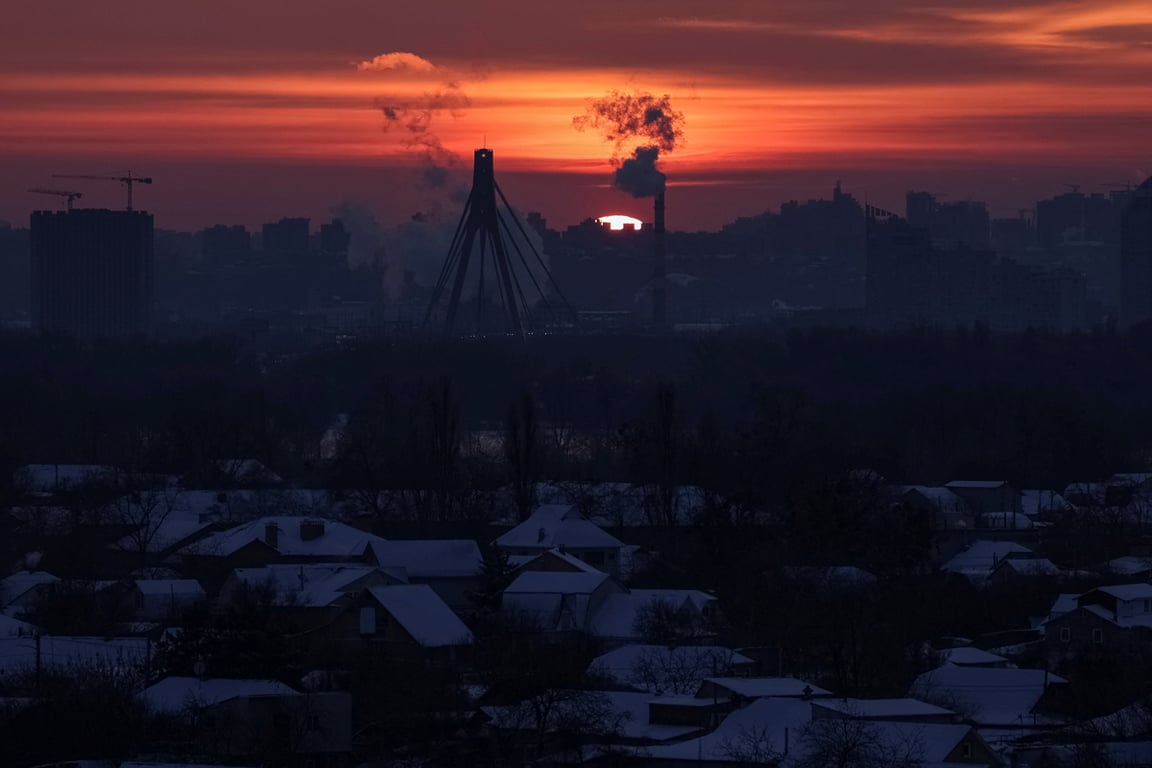
“It was like that, the pump broke down and started making a noise... They ran into the street, throwing wood out of the fireplace to put it out,” he laughs. And the story continues: “The generator is enough for the whole house, except for the well.” We penetrated deep, 80 meters, but it doesn’t work at all. Therefore, we “play” with the switch: we turned off the house, pumped it into the storage tank... When there is no light for seven hours in a row, there is enough water, although we are saving.
Five cans of flour and sugar
Tatyana Lupova notes: they never counted on electrics one hundred percent. Precisely for the reason that today deprives Kiev residents of communal services - because of possible shelling of infrastructure.
The final, so to speak, touch to the picture of household independence was made at the end of 2021, when we bought a gas stove with an oven and a cylinder. And five large metal cans with hermetically sealed lids; beekeepers keep honey in these. I filled them with flour, sugar, pasta, cereals, and canned food.
“They already looked at me like I was peek-a-boo,” continues Tanya. — I stocked up on everything, including toilet paper, salt, matches and medicines according to the list. My grandmother survived that war and repeated: “Store it, it’s better not to use it!”
Calling on rural craftsmen for help, she built a utility block: a summer kitchen and a shed. The gas stove settled there so that if something happened, the family would not be left without hot meals.
— I was given a fairly powerful charging station, EkoFlow. Now we hardly turn on the generator. It’s diesel, it works in any weather, although it hums like a fool,” Tanya clarifies. - Well, it costs money to refuel. A charging station was not built into the system. We plug in Wi-Fi into the sockets when needed - TV, refrigerator, if there is no light for a long time.
Lupova’s house is located on the edge of a small village, almost in the forest. Silence, beauty. You have to go by car to get to the supermarket and pharmacy, although in the larger village there is still a village store: bread, canned food, vegetable oil, vegetables. And the Ukrposhta and bank branches there were closed. The school bus picks up my daughter from the bus stop to and from school.
It was into the living space of the former Kiev residents, who had preventively protected themselves from military disasters, that this very war broke into.
“What are you doing?”
“Right before the invasion, my husband refueled the car, filled the tank full and two cans. And I wrote a status on Facebook: “What are you doing?” And went to bed. My husband wakes me up: “Two missiles have flown towards Kyiv!” We went outside and stood there. We hear explosions in Gostomel, where there is a military airfield, ten kilometers away from us in a straight line.
Tanya falls silent. A very peculiar state, when long-standing forecasts, about which the inner circle had teased, suddenly came true... Then, he recalls, his godfather calls: “We’ll drop our son off with you, let him stay a little while until the Russians are kicked out.”
“I was smart enough to refuse: “No, it’s better to come all together and stay so that I don’t bear responsibility for someone else’s child.” They made a blackout, curtained the windows with blankets so that the creatures wouldn’t find the village. I didn’t sleep or eat for days. The next day we learned that there were Kadyrovites in Borodyanka. The daughter says: “I have a feeling that if we don’t leave now, we won’t survive alive...” The daughter is seventeen. My brain immediately pictured such horror! Before that, they took out the mosquito net in the window of her room, and I explained: “If someone tries to go through the gate, you will immediately climb out through the window, through the terrace - onto the roof, from there into the attic, where old tires are stacked in a well. You'll jump into the middle! The tires don't miss shots." And from the direction of Borodyanka the wind is rushing, not wind, but the trees on the edge of the forest are folded in half. What the hell is this anyway? They didn’t yet know what a shock wave looked like and that the creatures dropped an aerial bomb on Borodyanka, on the high-rise buildings on Tsentralnaya Street. We were literally pulled along the terrace...
According to Tatyana, they threw whatever came to hand into the car, without any plan. The main thing is that they planted five cats and a huge dog. The husband threw the contents of the cabinets onto the floor. "For what? - she was indignant. - We'll be back in a couple of days! And I’ll be raking for another two months!” The husband interrupted: when the Russians enter the hut, they will think that everything valuable has already been stolen.
We drove through the forests onto the highway, not understanding where to go next. The Romanovsky Bridge in Irpen was blown up, there was fighting at the fork. Traces of tank tracks were visible in the forest. He will notice a civilian car nearby and shoot.
It took a day to get to Lvov. A friend called, also driving: “Let’s cooperate, it’s not so scary!” On the way we picked up friends who had come under fire in Kyiv. Exhausted, we parked at a construction site, next to the same disoriented cars full of children, cats and dogs. The police arrived. I looked into everyone's windows. “Sleep, we’re under guard, everything’s fine.”
The large village next to Tatyanin was occupied.
The residents were no longer allowed out, and several people were killed. The Russians, looking for their deserters, entered the small village with caution. The forest was shot through by the Ukrainian military.
—Here one of our deputy from the “Servant of the People” ( Tanya swears in her hearts ) before the invasion reassured voters: “The Russian army will not touch the civilian population!” And summer residents from Kyiv, also with children, flocked here. What are summer residents? The locals at least have canned goods, livestock, and chickens. I still have a freezer full of meat, my brother brought about five kilograms of butter, a large package of yeast to bake bread, and so on.
In general, Tatiana’s supplies helped a family with five children who did not have time to evacuate. Lupova directed over the phone: “Open the barn, there’s food there too. Give to everyone who needs it. God forbid that my creatures should eat me!”
Tatyana and her family stayed in Lvov until May. And then they returned to the house.
...And in Russia, someone expects that Ukrainians will not survive this winter?
Kyiv
PS
On Tuesday night, Kyiv experienced another night attack from the air, suicide bombers and missiles. DTEK reported: its facilities have been attacked for the eighth time since October last year, and again there is significant damage to thermal power plants. Emergency power outages have been introduced in all areas of the capital. According to Mayor Klitschko, 800 houses in Pechersky, parts of Goloseevsky and Solomensky districts still remain without heat.
Today in Kyiv in the morning it’s minus 14, it feels like minus 18, sunny.