
Translated material
Four elements of hip-hop
Ivan Shcheglov - about the memoirs of Russian rappers and about themselves
Russian rap became extremely popular not so long ago and has not yet had time to acquire relevant literature - neither research nor memoir. However, Ivan Shcheglov made some effort and found four books with memoirs of rappers and about rappers, which, despite their unpretentiousness, are not without a certain interest.
All of us, since February 24, 2022, have found ourselves in the face of advancing barbarity, violence and lies. In this situation, it is extremely important to preserve at least the remnants of culture and support the values of humanism - including for the sake of the future of Russia. Therefore, the editors of Gorky will continue to talk about books, reminding our readers that there is still a place for thought and fiction in the world.
Once again, planning to replenish my supplies of rap music on media, I headed to a hip-hop point and made a new decision. Now I wanted not only music, I wanted reading about Russian rap. However, the range of literature was not only small, it was negligible. Naturally, my choice fell on Master Sheffa’s book “Bad Balance. How Russian rap began" (2018). The price of this literature was substantial, but years of inflation did their job, lightening the burden. During the purchase, I asked Seryoga Smoke from the hip-hop point : are these really the only memoirs about Russian rap, not counting the books of Evgeny Alekhine? To this Seryoga Smoke replied that “waste paper” really does not fit into his picture of Russian rap, it stands apart, but there are also memoirs written by Ma.Ru’s father.Si, and also by DeTsla’s mother. Before this, the book White Smoke about a street rap clan flashed into the discussion; a copy of it had been collecting dust in my home library for more than 10 years. This is how the boundaries of the future article were outlined; 4 books is a suitable volume. I started reading.
Vlad Valov. Bad Balance. How Russian rap began (2018)
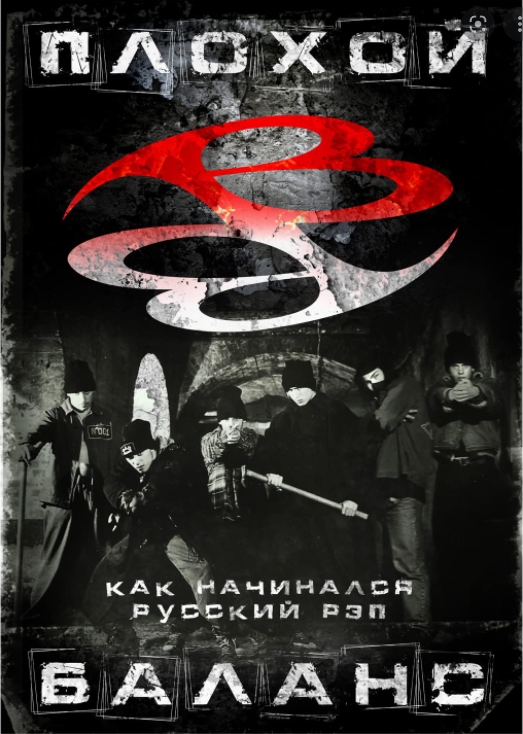
Before starting this book, for the first time in my life, I deliberately listened to a stack of Hip-Hop Info compilations, Bad B. albums, DA 108 and various products of the 100pro label. I can’t say that I especially fell in love with this circle, but now, instead of the former sluggish rejection, it aroused a certain interest, something stood out quite positively. It was helpful that I already had an understanding of the context in which they started and worked in the 1990s. The surprise was the massive scale and popularity of Bad Balance’s work, the book ends with Valov’s organizational success, a huge concert on Red Square with the participation of Run DMC and Coolio, it was the Adidas Streetball Challenge 1998. And since everything ends with success, then inside is his story.
At the same time, the focus was not even on creative nuances, but on business, building a small hip-hop empire through lucrative offers to the right people. What is surprising is the frankness with which Master Cheff describes his dexterity as a businessman and marketer, how he came up with schemes for making money and sold them to people for interest, how he negotiated with semi-criminal figures and former KGB officers who went into business. Passages like: “I realized that property would soon start to rise in price, so I decided to buy myself an apartment so that the money wouldn’t languish” are unlikely to add to his listeners or readers a sense of belonging and social closeness... In his own words, he started from scratch, moving from Donetsk first to St. Petersburg, then to Moscow, and on his way to success he readily endured various hardships and showed everyday asceticism. The book contains a detailed description of the Berlin adventures of “Bad Balance” with life in squats, street earnings and theft (it’s interesting that here Valov raises topics more typical for the prose of Alexander Brener and Yaroslav Mogutin). And yet, for the majority of compatriots, such a mentality in the 1990s was not only not close, but even hostile: clever masters of life, pushing everyone aside with their elbows on the way to their goal - there were hardly many of these among listeners of Russian rap. However, Valov’s goal was hip-hop culture and its propaganda; he perceives money as a natural means of achieving it, so he willingly describes his actions as a strong business executive, surrounded by careless colleagues, whom he sometimes had to get rid of because of their immaturity. Valov's musical work is largely devoted to narcissistic self-praise, which runs as a central thread through decades of songs - in this sense, the picture develops organically. At the same time, his hip-hop project was a collective one, Sheff clearly pulls behind him many surrounding creative people, helping them to realize themselves, willingly shared certain resources, the fruits of his labor are numerous concerts and festivals, including Rap Music on a competitive basis, breakdancing and DJing schools, magazines, collections of various groups and a label... In many ways, his project seems to be a mirror image in relation to KTR Spider, where their own mythology and slang were also developed, collections were published “Punk Revolution” and “The Skinheads Are Coming”, produced by various groups and projects, “Iron March”. Spider managed to work even more in the field of literature, but where Sergei Troitsky praises himself with a touch of irony, Vlad Valov does it with complete seriousness.
Against the backdrop of such practicality of the author, it may seem unexpected that the literary qualities of the book are high; we have before us what is commonly called “the prose of a poet.” During his life, Master Sheff wrote hundreds of song lyrics, not only for himself, but also for many colleagues, often engaging in stylization. He writes his memoirs in a bright and concise language; it happens that he exhaustively packs his thoughts on some topic into one paragraph. The memoir came out extremely rich. The combination of a strong business executive and a poet might seem surprising, but a well-known example from classical literature is Afanasy Fet. His lyrics were more romantic and did not touch on the practical aspects of life, in this regard Sheff revealed himself more fully, but Fet was also the author of both well-known articles about the worker Semyon, etc., and moderately well-known memoirs, where he spoke about his life quite freely.
Unsurprisingly, the subtitle “How Russian rap began” does not correspond to reality; all the colleague groups take up very little space in the text, but Sheff coped with the task of recording his affairs perfectly. It's hard to say how much he's embellishing (beyond the obvious self-praise) - but it seems that the factual side of the book is not mythologized, much of what is said is confirmed by surviving physical media and documentation.
In general, the book came out great - it’s a pity that it didn’t find its publisher, now we have a samizdat that looks like “print on demand”, with white printer paper, a circulation of 300 copies, poor proofreading (very strange punctuation and occasionally spelling errors) and a design in the spirit of the controversial fashion of the 2000s. Perhaps time will change this, especially since the groundwork for a continuation is huge. But in the book, along the course of the text, there are many black and white photographs, there is something to look at. By the way, an even better visual representation can be made from the films “The History of Bad B.”, the course of events there coincides with the book, the time of the book is shown in the first and second parts, and the three-hour third part can be considered as a sequel to the book.
Mikhailina E.V. and Tolmatskaya E.A. Who are you, Kirill Tolmatsky? (2020)
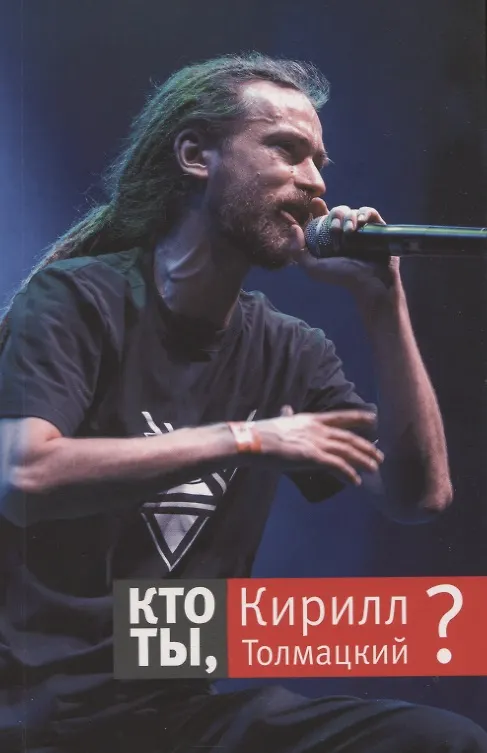
Memoirs of Decl’s mother, recorded by a journalist of women’s magazines and published in the series “Literary supplement to the magazine “Everything for Women””: this information sets certain expectations from the book, and the book lives up to them. It is made in the style of “the rich also cry” - although the story is really sad, notes of sugary sentimentality and huge gaps in the context turn it into a specific read. According to the plot of the book (for some reason called a “novel” in the annotation), Irina lived in the USSR, then Alexander won her heart, then he began to spin around and earn money, for which he was suddenly sent to prison, and before that his son Kirill was born, and then Alexander came out and somehow became influential, and the son became a great musician, whom for some reason part of the public disliked, but now he can’t even remember why, and the son was so unusual, then he became great a rap philosopher, but the public has not yet matured to the depth of his message, but in reality he is the Russian Bob Marley, and he also had a strange wife, and then he died. The book is of moderate size, contains a bunch of illustrations, 2/3 of which are hardly valuable, but still, if the reader himself knows the context at the level of documentary films about Decl, he will be able to fit information from the book into it; there is enough rare data here. There is practically no place given here to Decl’s colleagues on stage and genre; the story is more family and recorded from positions far from music.
While I was looking for a book about White Smoke in my home library, I came across a forgotten object - an earlier book with the name “DeCl” on the cover. He himself is also on the cover, and behind him in a picture frame there is a photograph of Oleg Kulik. The title of the book is “Heroes of my time. Part two. Reboot”, published in 2005, by the once popular youth writer Irina Denezhkina. Actually, the book consists of two interviews, with Decl and with Kulik, but Denezhkina also turns out to be a full-fledged character and willingly pulls the blanket over herself - she tells stories “to the side,” leaving comments disparaging towards her interlocutors (for spice). The book is of a reduced format, 210 pages in large print, there are no special illustrations, but there are pages with written quotes (it seems that my neighbor at the bench in the metro spotted one of these and was stunned, not expecting to see something like this in the book - there Irina Denezhkina with obscenities described Oleg Kulik’s photographic work dedicated to the mating of animals). Thus, Decl is presented here simply in the format of a longread interview, well, quite good. I especially liked the moment when Decl reads a newly written poem, to which Denezhkina answers him: “Cool. Don't you take on a lot at 21? “I will open a new world for you, I will show you the way”? The answer is also revealing. But the book is more valuable as an artifact of its time, which is why it had to be mentioned.
Igor Simanovsky. Ma.ru.Xia. Jungle Girl (2005)
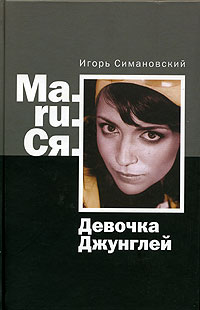
When I took the book out of my backpack and looked at the annotation, I began to get nervous, whether I had made a mistake: “We offer readers the seventh book of works by the modern Russian poet and writer, famous bard, venerable employee of Rosneftegazstoy Igor Grigorievich Simanovsky, who is a laureate of the Art Song Festival named after. Valeria Grushina...”, further listing of regalia. But it turned out that everything is correct, and the summary is not so formal - it largely defines the book. The text is written in the classic Soviet style, with the realities of the sixties and their optimistic spirit; as an example of the style, I will give a paragraph:
“Tanya and Marina wanted to take a ride to the rock of horrors, so let’s go. Gennady Ivanovich and I were eagerly awaiting their return from this terrible journey. We only heard the squeals and screams of the adventurers coming from inside. Finally, our girls rolled out of the rock, squealing with delight and laughing, vying with each other to tell us about the horrors that they encountered in this terrible rock filled with monsters.”
The text is very open, the author trusts the reader as a close friend, such frankness sometimes seems strange and excessive, but is fundamentally different from the shocking frankness of modern prose, here it comes more from a certain human naivety and simplicity.
The story begins shortly before the birth of Marina Simanovskaya (1978–2002), childhood is described in detail, some infant stories, kindergarten and school, all of her youth are described in great detail, and here, of course, everything is quite positive. The text has a relaxing effect, so you are unsettled along with the hero when the description of a suddenly diagnosed brain tumor bursts in, followed by a detailed description of the treatment and months of struggle for life, filled with heartbreaking details of parental experiences. In addition to caring for her daughter and medical treatment, various traditional medicine and untested moves were used, as was customary in those years. Religion strengthened her: during her illness, Marina was baptized, and when she realized that the struggle was over, she asked to call a priest for unction; in general, her resilience on the path to death is impressive.
For the father, nothing ended with death, then he continues to tell how he covered his daughter’s entire room with her photographs, how he goes to her grave almost every day, how he participates in organizing events in her memory and the release of her legacy, constantly writes poems addressed to her... In general, the book is, first of all, a human document that would be far from music (Marusya’s solo career is described briefly; archival photographs are commented on in the same spirit - for example, semi-erotic cards from photo sessions have captions like: “Marinochka is beautiful and sad,” dedication songs are praised for the fact that the authors remember Marinochka, and compositions from the disc, most of which are sung by other people, are evaluated by him according to the criterion of attempts to convey the intonations of his daughter), if it consisted only of the father’s text, but it takes up half of the book.
The remaining part includes sections “letters and poems brought to the cemetery”, “letters and poems brought to our house”, “messages from the Internet”, “press”, and the book closes with the section “Requiem” - poems by Igor Simanovsky (these were also found in the main text, like Marusya’s poems). The applications are impressive - such materials are rarely collected, leave their habitat and appear on paper. Of particular interest among them are the letters from young Marusya fans, telling about their teenage life, misunderstanding from the outside world, desire to do rap and love for Marusya - in one letter the girl even mentions that she prayed to her. But “messages from the Internet” and “press” provide hip-hop context, the reaction of the music community and listeners, and there was criticism of Sheff. From these materials it turns out that the posthumous album of Ma.ru.Si is the first domestic r'n'b record (more precisely, as the earlier mentioned album "Liza - Surprise Me (2002)", produced by N'Pans), after it the album "White Chocolate" was released, and after a couple of years the genre had already gained popularity and hit the top along with Potap and Nastya Kamensky and others. However, pop music rarely records its history, so Marusya’s fame remained modest, even 1000 copies of the book did not sell out in 20 years... It is interesting that her last text, written two weeks before her death, was devoted to criticism of the industry. Artistically, it is most filled with strange religious images intertwined with life history: “My skin was stretched on a hoop // They are embroidering the name of the new God // They have little left, // And the ice of someone’s fingers // Burns out my mind, branding my new body” (“The Cry of a Departed Soul”, performed on the album).
The book was full of diverse materials, it even included a disc with an album, but Igor Simanovsky did not stop there and also produced a documentary film using the home video archive. Among other things, there you can see Maria Simanovskaya singing with a guitar - it sounds powerful, more impressive than her pop repertoire.
Andrey Eyal. White Smoke. “The status of freedom is the voice of your streets.” The whole truth about street wars from the first persons of the legendary clan (2009)
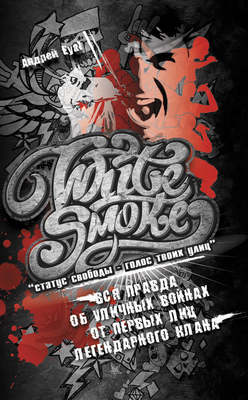
This book was published by the Oxygen publishing house, a short-lived project with which Alex Kervey managed to collaborate - by that time he had broken with AST and was looking for new partners. Thus, Oxygen became the heirs of Alternative, but they only published about 10 books, then everything collapsed (it turns out that the publishing house was then somehow revived in a new form and is now actively publishing young adult literature). And at the end of the 2000s, the book about White Smoke was the most interesting thing they came out with. This helped me buy it, but it didn’t help me read it—I waited 15 years.
Nowadays it is perceived somewhat differently - the topic of street gangs and street violence was popularized by the book and series “A Boy’s Word”, it’s hard not to draw an analogy in your head. Although literature about fighters and fights existed longer - village-to-village fights have been popular for a long time, “Ode to a Kulash Fighter” was included in the Barkoviana, and already in the time of Catherine II such literature was prohibited. However, as you read, you gradually forget about these parallels.
The book covers the years from 1995 to 2002, when rap listeners grew in number and conflicts with punks, metalheads and skinheads forced them to learn to defend their passions. The most militant gathered into clans and waged street wars, gradually becoming addicted to violence, translating it into everyday life and spreading it to everyone around. This is what Vlad Valov wrote in his book:
“At that time, street gangs White Smoke Clan and Night Soldierz appeared in Moscow. The guys from these groups were fans of rap music, wore Kangol caps, and were on the same page with us. But they traded in robbery, robbing other rap music fans of clothes, players and money. Many of our fans began to be afraid to come to festivals and concerts, not because of skinheads, but because of such street gangs. And yet, after six months, everything changed, the White Smokes were sent to prison one by one, and the Knight Soldiers hid for a long time.”
The book greatly clarifies this passage, there were not many prison sentences there, everything resolved later and somehow by itself, but the narrators admit that during the active period, pressure from “their own” was the norm. The story is told in the first person, so from a personal perspective it looks like the story of a rapidly developing addiction, akin to alcoholism - the ideological rap component in this view immediately fades into the background, although it seems that the person is taking risks and suffering for the idea, but the actively drinking person also suffers from hangovers, so the idea and suffering do not seem to be entirely connected. However, the analogy is a stretch; this process also had a social component. In addition to street fights and a little gop-stop, the book describes big events - the same Adidas Streetball Challenge festival in 1998 and the right-wing march along Manezhnaya Square in 1999, the most public event. Rap artists are mentioned just a little, and in a couple of episodes they receive messages from wrestlers under strange pretexts. Foreign rap was mentioned in the moment, but in general music plays a minor role, and even the main opponents of rappers - right-wingers and fans - received much more attention in the book. Therefore, it is not surprising that the introduction to the book was written by a fighter from the other side, Alexander LightSmoke Smoke, whose “Diaries of a Musk Scumbag” was published in the “Oxygen” next door. The years quickly brought the two warring camps closer together, and LightSmoke, who hated rappers, began rapping himself years later.
From an artistic point of view, the book does not pretend to be anything, its style is the so-called. “spoken written”, with the use of emoticons, errors and jumping spelling of words - the publisher did not bother to correct it - closer to Internet posts. In addition to his story, the author interviewed a number of comrades, their memoirs were inserted into the book. The main dynamics of the text are based on fights, sometimes the descriptions are very detailed, but there was a place in the book for prohibited substances, romantic episodes, and erotic ones (without excessive detail). In the end, the author himself talks about “adrenaline addiction” and describes how he had difficulty getting out of it. Life changed very quickly, so in the mid-2000s, as a schoolboy listening to rap, I no longer encountered anything similar to what was described in the book; the more valuable it is to record a page in the history of Russian rap as a subculture, because this page quickly became unobvious.
***
Well, four memoir books about Russian rap, with their fundamental diversity, reminded me of how the genre itself began, when no canons had yet been established and everyone tried to do it in their own way. This is a big plus, and I did not expect such a bright set. It is interesting that Vlad Valov turned out to be one of the pioneers not only among rap artists, but also among rap memoirists and rap writers, perhaps showing even more impressive results in this field - if among the first rappers there were a number of worthy performers (DMJ, MD&S Pavlov “Thermonuclear Jam”, KTL DiLL, Bust As, Dubovy Gaai, etc.), then he has few neighbors here. Three books out of four are dedicated to his circle, united by artistic mythology - the rest of Russian rap remains a huge hole. Here I named individual groups of the first half of the 1990s, but in the second half many such circles were formed, from Baboon Records to the Baltic Clan, not all of them overlapped, and hundreds of rap releases (including collections) were recorded. Another quarter of a century has passed since then, during which the genre has continuously grown actively.
A few words about what other books related to Russian rap have been published. First of all, these are collections of poems or texts, the first of these was “My Decadence” by Alexey “Grundik” Perminov, then there were Rustavelli, Naum Blik, Zamay and Slava CPSU, Seal from KTL DiLL was noted in electronic form, Dolphin became a poet, Oleg Gruz published many of these, etc. Well, I myself am such an author - it’s not a complicated matter. Art books by rappers became a more cunning matter - for example, Nigativ from the “Triad” wrote “astral detective stories”, two art books written in co-authorship were published by Vlad Valov, some fan fiction based on the work was published by the group Noize MC (written by its drummer), LSP and Oksimiron [recognized by the Russian authorities as a foreign agent]. There were also comics about Pasha Technik and Khan Zamai. A certain “Pure High.” The novel flow" was published by a certain writer Gelasimov. The only rap memoirs that I know of that are not included in this article were written by the performer Kizaru (very modest in volume, but published on paper). Quite recently a biography of a certain Gio Piki was published, and before him a biography of the group “Bachelor Party” was published, but in electronic form. Once upon a time, a book related to the pioneers of domestic hip-hop DMJ was posted on the Internet; it was called “Sketches for Technomodernity” - it is unclear what was inside, and, unfortunately, the text was not preserved online. Thematic journalism of dubious value by Andrei Korobov-Latyptsev was published under the title “Philosophical Essays on Russian Rap.” There was also “Freestyle Rap: A Guide for Beginners. From zero to first victories” by practicing rapper Maxim Chernetsov. Some domestic literature on breakdancing is posted on the website hiphoplibrary.ru ; a potentially intriguing memoir on this topic was recently written by Artem Salnikov (“Only Broken Bars”). Finally, modest files of RAPress and hip-hop.info magazines remain unique sources of information. As you can see, the field remains unplowed, and there is a suspicion that someday thematic literature will be trampled upon. The more valuable will be the first signs of the genre. But, perhaps, Russian rap and books are simply not compatible and nothing like this will ever happen - the favorite format for recording rap stories now is video interviews, without exaggeration, hundreds of them have been taken, Sasha Med’s “Hip-Hop in Russia from the First Person” alone is worth it.