
Translated material
Father and daughter
The story of two pacifists - Soviet dissident Yura Saboteur and his daughter Sima, an anti-war activist
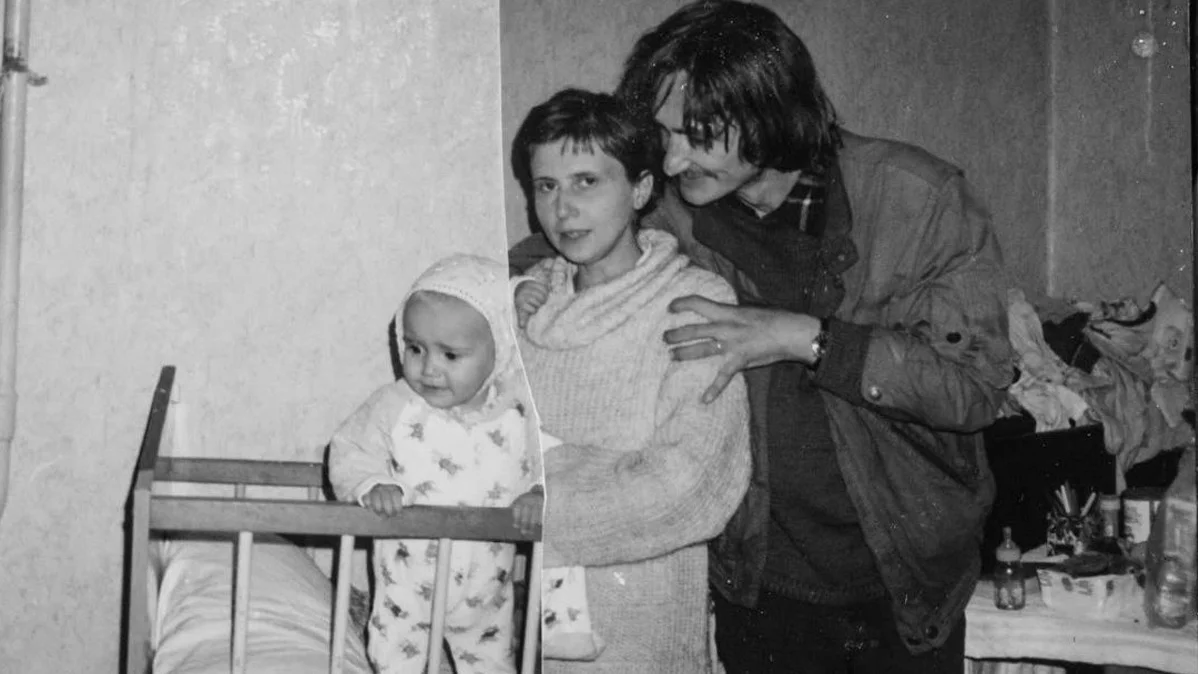
Sima with his father Yuri Popov and mother Maria. Photo from the personal archive of Sima Truevtseva
On February 12, 1999, Yura Diversant, a Soviet and then Russian hippie and actionist, who in the 1980s published the samizdat magazine Svoboda and distributed anti-war leaflets in Moscow demanding the withdrawal of Soviet troops from Afghanistan, died. His daughter Sima hardly knew her father, but now that she herself opposes the war and was forced to move to Germany, she feels a special connection with him.
“If a person has not read Kurt Vonnegut, there is nothing to talk about with him”
Last summer, Yerevan hosted a screening of documentary animation - short films, most of which were made at the school of the "Mine" festival. The selection was presented in the capital of Armenia by director Sima Truevtseva, who graduated from the Faculty of Philosophy and the Razbezhkina and Ugarov School of Documentary Film. Now Sima lives in Germany, together with like-minded people he is involved in the Animators Against War project and shows documentary cartoons by Russian authors in different countries - not only about the war. I had never seen Sima before, but her face seemed surprisingly familiar. While the screenings were going on, I was wondering why. Everything became clear at the end of the program, which concluded with Sima’s animadoc “We Will Be Together” about her father, the Moscow hippie Yura the Saboteur.
In some publications about the anti-war movement in the late USSR, there are photographs of him: a thin, artistic man, who behaves independently, even brattishly, with a pointed face and an expressive, slightly mocking gaze. The image of a spiritual and fearless hipar is etched in my memory, which is why Sima’s face seemed familiar to me: she is very similar to her father. She was not even two years old when Yura died. A photograph has been preserved where Yura is holding her little daughter in her arms, but Sima herself did not have time to remember her father. The short film is an attempt to reconstruct his image, the visuals are drawings from Yura’s diaries and his photographs. At the end there is a song based on the verses of the Saboteur of the underground rock band “Displacement”, where Olesya Troyanskaya, cult in circles of initiates, but little known to the wider audience, sang.
The text is read by Sima herself behind the scenes. Until she was six years old, she did not know that her father had died. She recalls that when she was given her father’s diaries and she showed them to her friend, she said that Yura’s handwriting was similar to Simin’s. Studying the texts, Sima increasingly felt a spiritual kinship with her father. “The more I learned about dad, the more I realized that I was not just his child, I really was some part of him,” she says in the film.
Her mother, Maria, close to hippie circles, also died early. Sima was eight then. She remembers her mother, but she was raised by her grandparents - her mother’s parents. Grandmother said that Yura was a very interesting person and drew well. Later, Sima met her older brother, Yura’s son from a previous marriage, and Yura’s sister, but they were reluctant to talk about their relative. The reason is probably that he, like many hippies in the 70s, was killed by drugs. But from the stories, Sima realized that her father was a very famous person in his community.
“My friend Katya Mamontova studied at Rodchenko’s school, she decided to do a photo project about hippies,” Sima told me. — I was 19 years old then. On September 1st she took me on a photo walk. We went to Gogol, where hippies traditionally gather on this day. My attention was drawn to a girl wearing a blue skirt interspersed with other colors. She danced around and somehow reminded me of my mother. I told my friend, “Perhaps these people knew my dad.”
This is how Sima met hippies—her father’s age and those a little younger—and also the historian Irina Gordeeva, who studies pacifists. Irina is perhaps the first researcher to see in Yura a civil activist, and not just a colorful character.
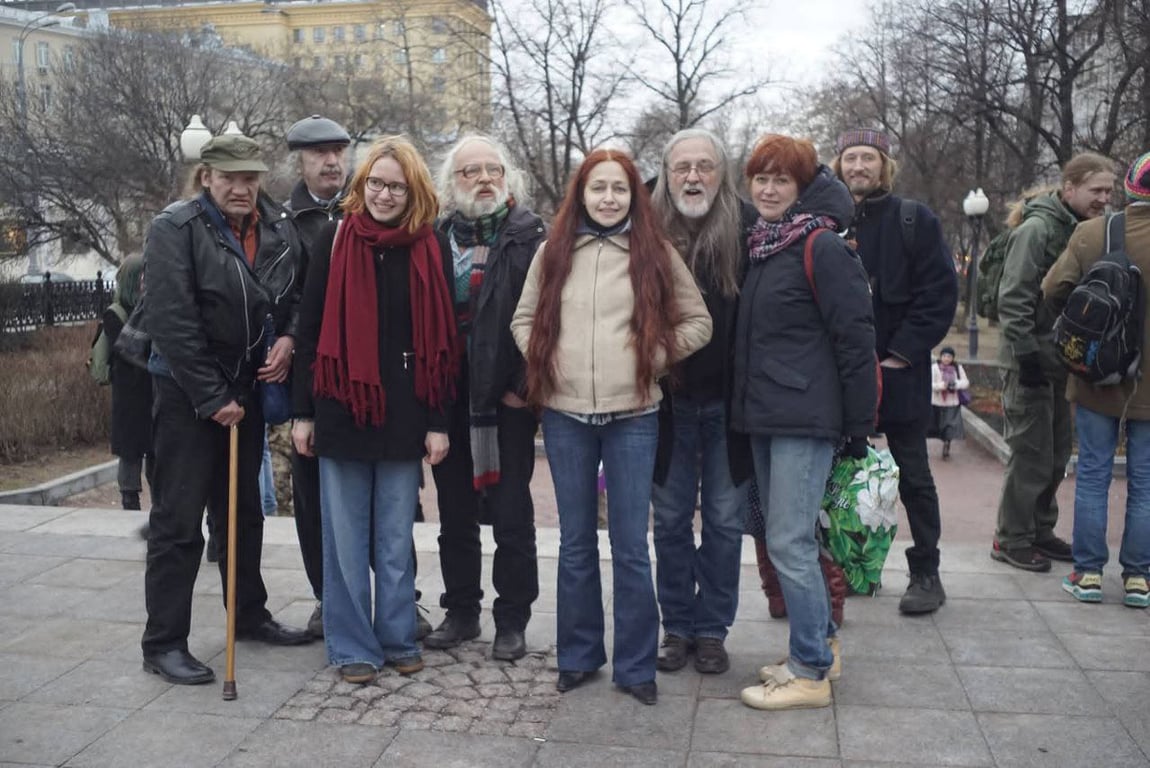
“Ira told me that Yura the Saboteur believed: if a person has not read Kurt Vonnegut, there is nothing to talk to him about,” recalls Sima. — I was reading a lot of Vonnegut at that moment. It seems that I had no other idols in my life besides Vonnegut.
She told me a lot more, from which I realized that my dad and I have a lot in common. We are surprisingly similar, although he did not raise me.
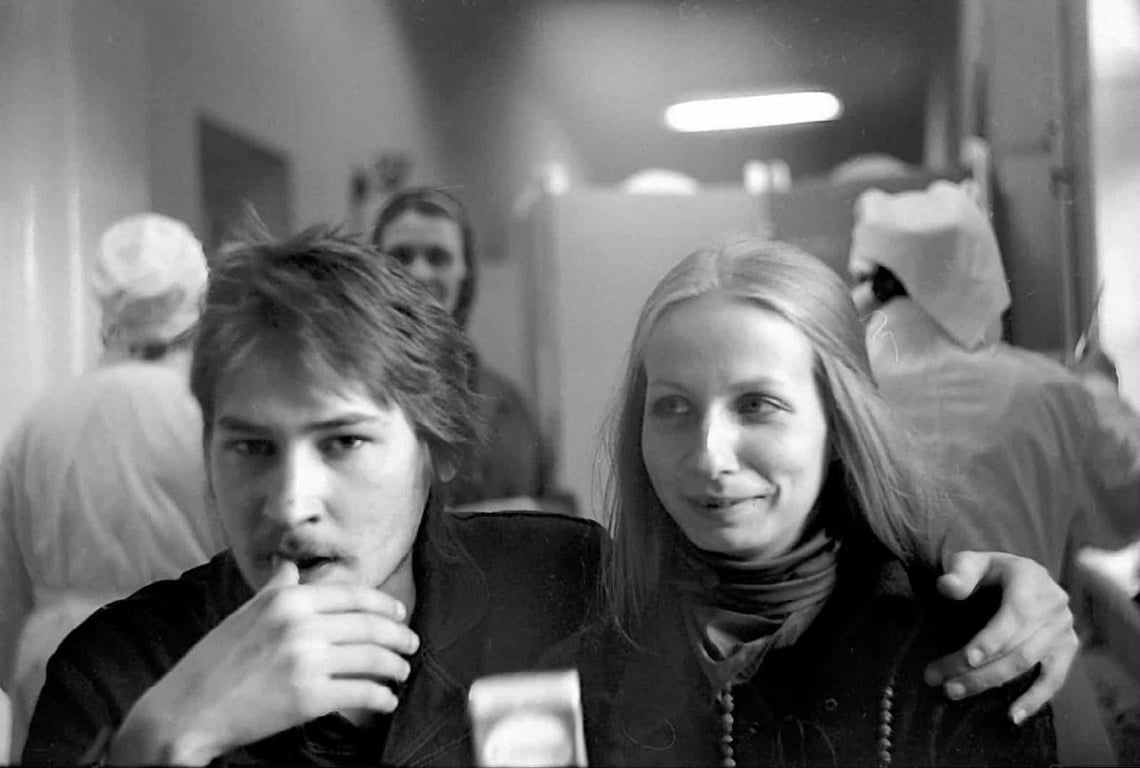
Yura Saboteur became interested in the hippie subculture in the late 70s. How a schoolboy from a Soviet working-class family learned about it and why he decided that this was his destiny is unknown. But perhaps it was he who came up with the idea of gathering on Sparrow Hills on the anniversary of the murder of John Lennon - at least that’s what his comrades say.
In 1971, the first anti-war demonstration of Soviet hippies took place. They protested against American aggression in Vietnam, but the Soviet authorities did not like this initiative. Participants in the demonstration were subjected to repression, as far as Sima knows, her father was among them.
“In 1971, as I was told, he should have been imprisoned,” the girl recalls. “But his parents did their best, and the prison sentence was replaced by a psychiatric hospital.
"We only need Freedom"
The movement of Soviet hippies is mythologized by themselves and poorly studied. There are many gaps and information in the history of the Saboteur, the authenticity of which cannot be verified. It is known that he was admitted to a psychiatric hospital several times. His sister recalled that in his brother’s medical record it was written: “He walks barefoot and reads L. Tolstoy.”
“Everyone wants something: communists want peace,” wrote Yura Saboteur in his first “Manifesto,” dated 1972 and later published in the magazine “Svoboda.” — The imperialists want war. Everyone cares about the fate of humanity. And we only need Freedom... We demand for everyone without exception, for everyone who resists or expresses their protest in any way - ABSOLUTE FREEDOM... In all cases of incidents with the existing government, we want everyone who admits that they belong to the “Hippie System” to be immediately handed over to their close friends and like-minded people. No changes in the appearance of detainees, such as haircuts, changes of clothes, etc., are possible. Otherwise, we will be forced to resort to the last resort of self-defense - suicide.”
The most famous action of the Saboteur and the Free Initiative group he created took place on June 1, 1983. At a traditional hippie meeting in Tsaritsino, he distributed leaflets calling for the abolition of the death penalty and an end to the war in Afghanistan. The police dispersed the crowd. As historian Irina Gordeeva told Novaya-Europa, not everyone knew about the leaflets, and the appearance of the security forces came as a complete surprise to many. After the action in Tsaritsyno, the Saboteur was once again sent for compulsory psychiatric treatment, accusing him of possessing drugs without the intent to sell them. He was released only in 1987.
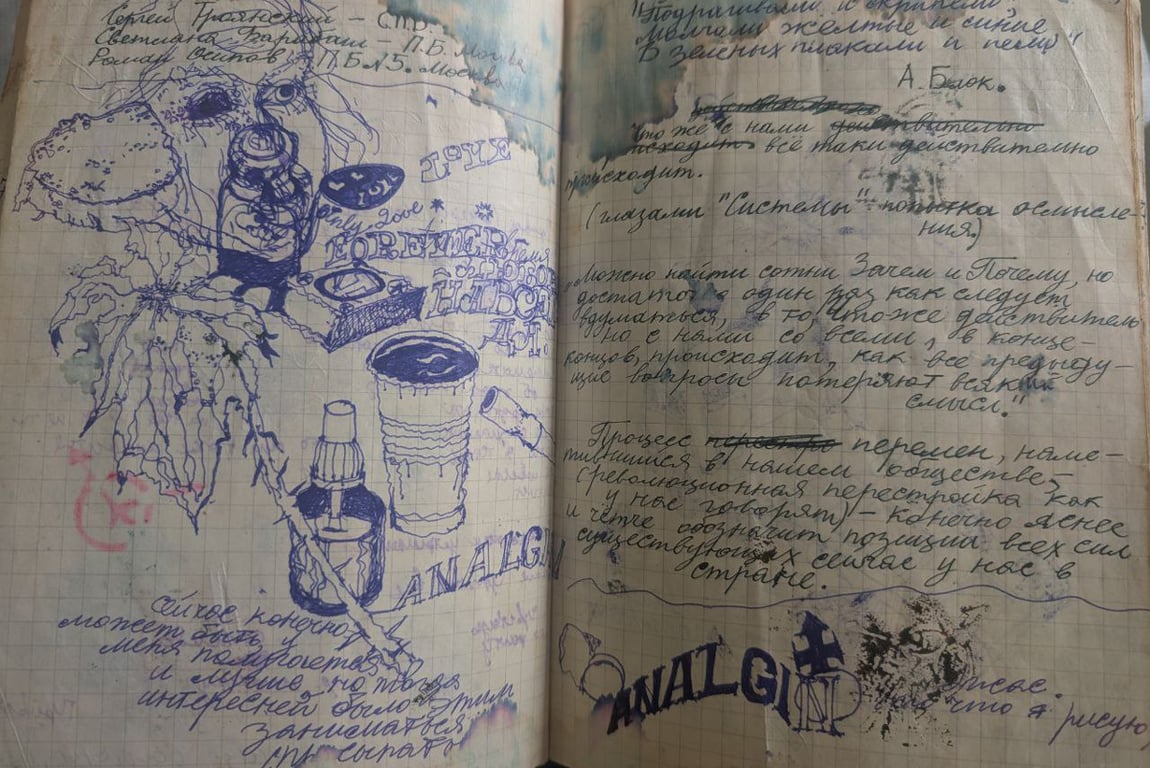
— In 2012, the Russian opposition was faced with a choice whether the protest should remain peaceful. It was as if there was such a contradiction in my dad, too,” says Sima. — On the one hand, posting leaflets is a peaceful protest. On the other hand, an action with a fake lemon ( according to friends, once a Saboteur in a subway car threw a fake grenade at the feet of passengers and shouted: “Get down! ” - Ed. ), that is, an aggressive gesture. I am sure that he could not intentionally cause physical pain to anyone, but this contradiction lived in him, I see it in his diaries. At some point, he starts making a lot of militaristic drawings. In some places these militaristic images are deconstructed: in the first picture there is a machine gun, and in the second this machine gun is already broken, but in other places it is not. For example, a tank is depicted, and dad seems to admire its power.
Yura's diaries were given to Sima by his friends. Today she has six notebooks. According to the girl, the most interesting one dates back to 1987–1988. This notebook contains psychedelic drawings, his own and other people’s poems, biographical information about the poets of the Silver Age, information about the “Democratic Union” of Valeria Novodvorskaya. And, for example, a very childish entry in the corner of the page: “I have a hedgehog - I brought him from the village. He's funny." And next to it is a drawing of this animal. On some pages there are prints of peace messages resembling chicken feet.
“Why are there such terrible losses in any war, no matter who we fight with?” - this is from a “fantastic story” written in the diary, called “The Dream of a Pacifist. 2003.” And on the next page:
“There was an opinion that we know how to fight. Stupidity. We know how to die - that’s all we know.”
On another page there is a picture of a nuclear apocalypse: “Nobody sleeps. People gather on the streets in front of meter-long television screens built into the walls of houses... They broadcast only reports on the weather and radiation conditions. There is an incessant hurricane wind along the entire coast... Broadcast from Khabarovsk. The decision was made not to use the army - the soldiers are crying in the barracks, sobbing bitterly.”
The program text “Through the Eyes of the System” (“ System” is the self-name of the hippie community. - Editor’s note ) is the Saboteur’s reasoning about how the hippie movement relates to the perestroika that has begun in the country. The author writes that love for a person is the same talent as the talent of an artist, writer or performer. And it is the System that can and knows how to develop this talent.
The Saboteur published similar programmatic texts, his own and those composed by friends, in his samizdat magazine “Svoboda”. As historian Irina Gordeeva has established, the magazine existed from 1988 to 1991. At least 12 issues were published. Each circulation was no more than 30 copies. The magazine was typed.
In 1982, the Saboteur announced the creation of the Free Initiative group. On the membership cards - ordinary sheets that Yura himself typed on a typewriter and distributed to friends - it was written: “... The poor, the hungry, the criminal, the damned, the mad and intoxicated, the corrupt and the fallen - let's hug each other.”
“He saw an ideal world order without political organizations,” Sima believes. “He was a classical anarchist, although perhaps he did not identify himself with anarchism; his political education was fragmentary. He was interested in politics only because he had a keen sense of justice. He was an artist. Everything related to politics came as a derivative of art.
The Free Initiative organization existed largely in Yura's imagination. Many of those whom the Saboteur ranked among her had no idea about this. Others agreed to accept a membership card or even sign the next appeal published in Svoboda, simply out of a good attitude towards Yura. In 1987, Saboteur published a manifesto of the Free Initiative in his magazine entitled “There is no turning back.” He demanded freedom of speech and assembly, the immediate withdrawal of all troops from Afghanistan, the destruction of nuclear weapons, general demobilization followed by the creation of a professional army, the abolition of the death penalty and reform of the penal system.
— In Poland, I gave a report at a conference. In this small country at the same period there were dozens of such magazines and groups, hundreds of such leaflets,” recalls historian Irina Gordeeva.
— And we have, one might say, three crippled pacifists in the entire Soviet Union. We have a weak civil society - then, now, and always.
What Yura the Saboteur did was one of many attempts, and it failed, just as it fails today in Russia. Sims with anti-war cartoons are also individual resistance. Then, perhaps, they will say that there were five such Sims or ten. But cartoons don’t lift people up, they don’t bring them to the square. And the Saboteur did not take him out to the square.
"Impossibility and Desire"
Yura the Saboteur died in 1999. Sima tells her version of events, clarifying that she is not completely sure of it. Yura decided to visit his daughter - she was living with her mother’s parents at that moment - but he wanted to come to her with gifts. To earn a little money, he went to unload a barge. On the way back, the Saboteur and his comrades probably took drugs. Yura said that he needed to be alone. The comrades went ahead, assuming that Yura would catch up with them. After a long time had passed, they returned. The saboteur was unconscious. He was taken to the hospital, but doctors could only declare death.
According to Sima, as a child she was offended that her father led such a lifestyle and left very early. But later she accepted him for who he is.
“Dad left behind an intangible legacy,” she says. “Internally, he was a very full person, and this is valuable to me. I grew up and developed without my dad, but for some reason it clicked for me at the age of 12–13 when I heard the Beatles. For some reason, Kurt Vonnegut's books drove me crazy. And then, when I got my dad’s diaries, it struck me that it was as if I was reading long-familiar thoughts. There was a person who, just like me, felt pain and loneliness. I felt the impossibility, but at the same time the desire to change something. Drug addiction can be treated, but it is impossible to get rid of it if there is no therapy, no support. In our country, drug addicts are treated like lepers.
Sima is non-binary and lesbian. She usually refers to herself in the masculine gender, but she can also be addressed as “she”. Like her father, she belongs to a group that is stigmatized and oppressed in today's Russia. True, Sima clarifies that the subculture is chosen, and gender identity and sexual orientation are rather a given.
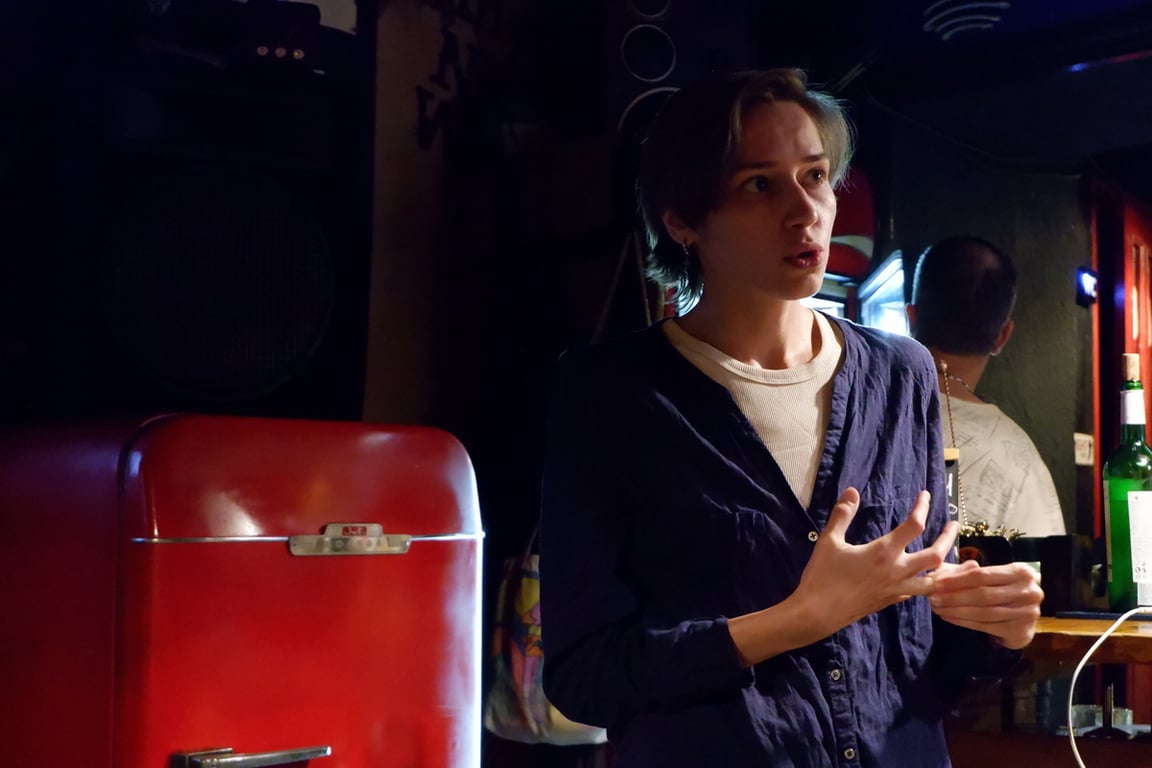
On December 7, 2022, Sima emigrated, taking her father’s diaries with her.
“Somehow the time has come, apparently,” she says. “It was scary, and it seemed that the space for living and working was narrowing. This is such a big cumulative effect. I was part of the Animators Against War project, and since it is a direct anti-war project, it was dangerous to stay in Russia. The project continues to work and evolve. Many spoke out and understood: this does not affect anything, except that it makes your soul feel better. But we went a little in the other direction: together with Memorial we did a ten-minute episode about political prisoners. There are four teasers for a future series or full-length documentary. We are currently looking for funding for such a film. And together with Memorial we are creating a gallery of portraits of political prisoners on Instagram, which is constantly being updated.
At the age of 12, Sima already understood that her father was a hippie, and, although she still knew little about this subculture, she bought herself a metal peace record in a rock store. Now she wears a wooden one made by her father. It was given to Sima by Olya Ponomareva, with whom the Saboteur lived in recent years.
— I loved the music of the Beatles, I knew that they were close to the hippies. As a child, I was very impressed by this,” admits Sima. “Now I think that hippies are lonely people who didn’t like the reality around them, they ran away from it. It was a path of escapism - both in the USA and in the USSR. I like these people, but I don’t want to be like that. I want to look at the world broadly and in all directions.