
Translated material
"Look at us!"
Elections in Ukraine will again have a unifying effect and will accelerate the country’s movement to the West, regardless of the name of the future president
(18+) THIS MATERIAL (INFORMATION) IS PRODUCED, DISTRIBUTED AND (OR) SENT BY FOREIGN AGENT ANDREY VLADIMIROVICH KOLESNIKOV OR CONCERNES THE ACTIVITIES OF FOREIGN AGENT ANDREY VLADIMIROVICH KOLESNIKOV.
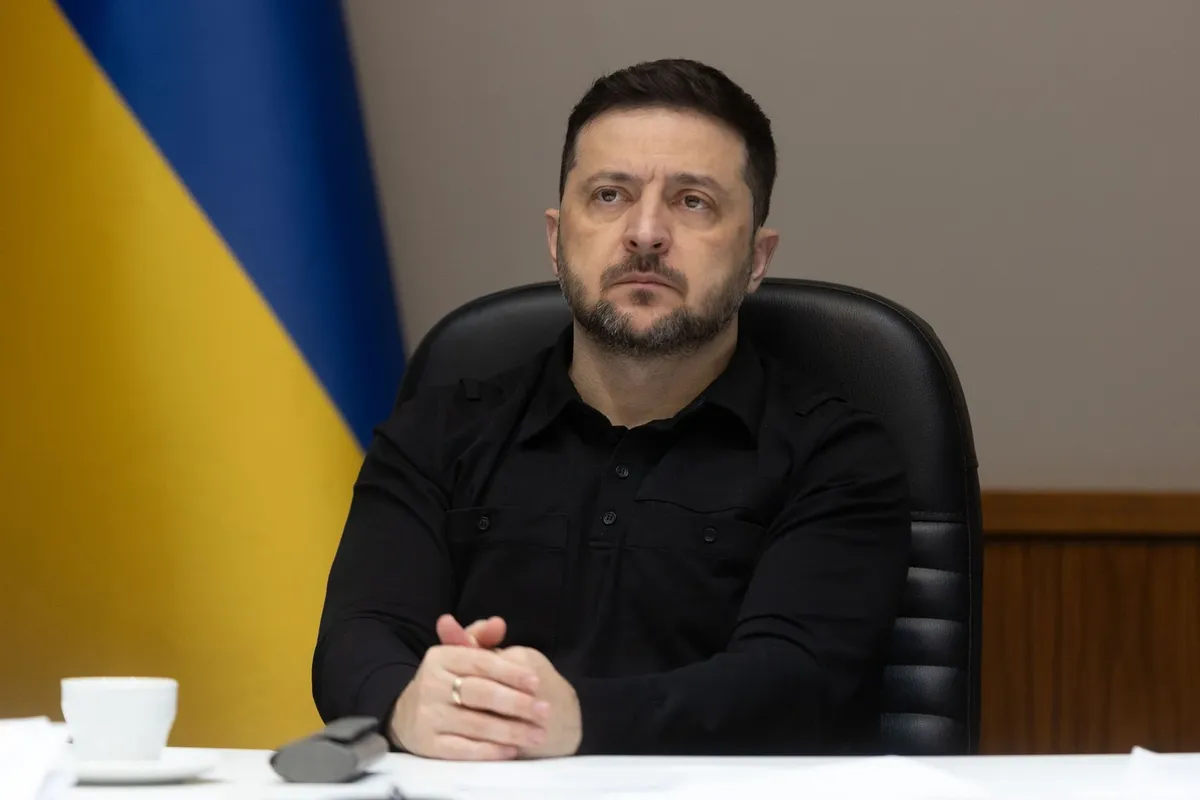
In April 2019, immediately after winning the presidential elections in Ukraine, Vladimir Zelensky, addressing “all countries of the former Soviet Union,” said the most terrible words for autocratic regimes: “Look at us - everything is possible!” This phrase sounded especially poignant in a situation where Russians were following the presidential elections in a neighboring country with the same interest as the 2018 FIFA World Cup in Russia. However, even then it was more of a sporting interest: few people thought that changes were possible in the Russian Federation thanks to such an instrument as elections: a year later, voting for amendments to the Constitution, turning Putin from Brezhnev into Stalin (at least in terms of the duration of his reign), summed up the twenty-year political transformation of Russia.
Rejection of Pax Americana
Martial law, introduced in Ukraine for completely objective reasons, cannot be lifted now for the same reasons, and accordingly, presidential elections cannot take place. And Putin cannot get a leader who is “illegitimate,” from the point of view of the Russian side, as a partner in signing a peace agreement. A truce and freezing the confrontation along the contact line are not an acceptable option for the Kremlin, despite the fact that the Ukrainian presidential elections could be held during the truce period. (One of the insiders close to the Kremlin reflected in private conversations about the possibility of this option back in June of this year.) Moscow needs Donbass and Novorossiya, if not by diplomatic methods (the pressure on Zelensky is so powerful that he allowed the possibility of a referendum on the withdrawal of the Armed Forces of Ukraine from Donbass), then by military means. This means that the outcome is a continuation of “*** attrition” and a long period of approaches to negotiations. And they mistakenly call political tourism of Witkoff and now Kushner. It was wrong to call the meeting in Anchorage, which ended, to use Foreign Ministry slang, “understandings” that turned into complete misunderstandings, real negotiations.
What follows is just a Brownian movement with announcements of a solution to the problem either for Thanksgiving or for the universal Christmas, which in Russia is persistently called “Catholic”. (Which carries negative allusions, because, as Minister of Justice Chuichenko said recently, there were many Catholics and Lutherans among the destructive Decembrists.) Zelensky, the author of the phrase “Everything is possible,” is preventing Trump from turning the impossible - redrawing borders on Putin’s terms - into the possible, as well as putting into practice the most important and hitherto unknown theses of the new US national security strategy.
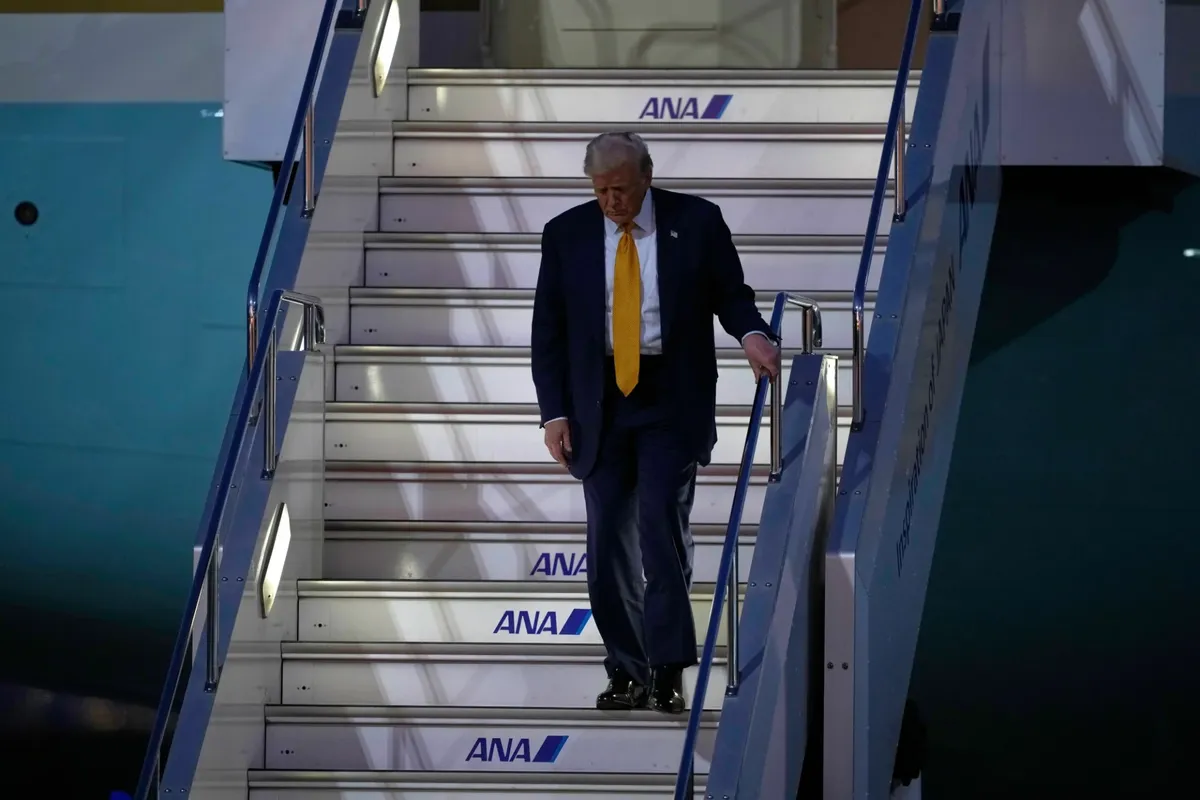
According to this model, unheard of in the history of foreign policy doctrines of the United States, no significant role is played in the redistribution of spheres of influence, not only Ukraine, nor even Europe, including the UK. Multipolarity according to Trump is the USA, Russia, India, China, Japan (Core 5, or C5). Moreover, the last three powers are in conflict with each other.
Internal Russian anti-Americanism cannot disappear anywhere, since it underlies the Russian national-imperial ideology, and Trump is not eternal.
In a word, these are the same fantasies that stand out from any “understanding” of the United States about itself, like Putin’s ideas that Russia is at the center of an imaginary imperial entity, the size of which resembles not even the USSR, but the Russian Empire. But these fantasies are dangerous, because “small nations” are again assigned the role of waiting in the waiting room, if not in the hallway, for the decisions of the big bosses who conclude big deals. This is not even a Pax Americana, but some kind of global dystopia, a distorted political map of the world, somewhat reminiscent of a map of the earth in the time of dinosaurs.
"Architects" without architecture
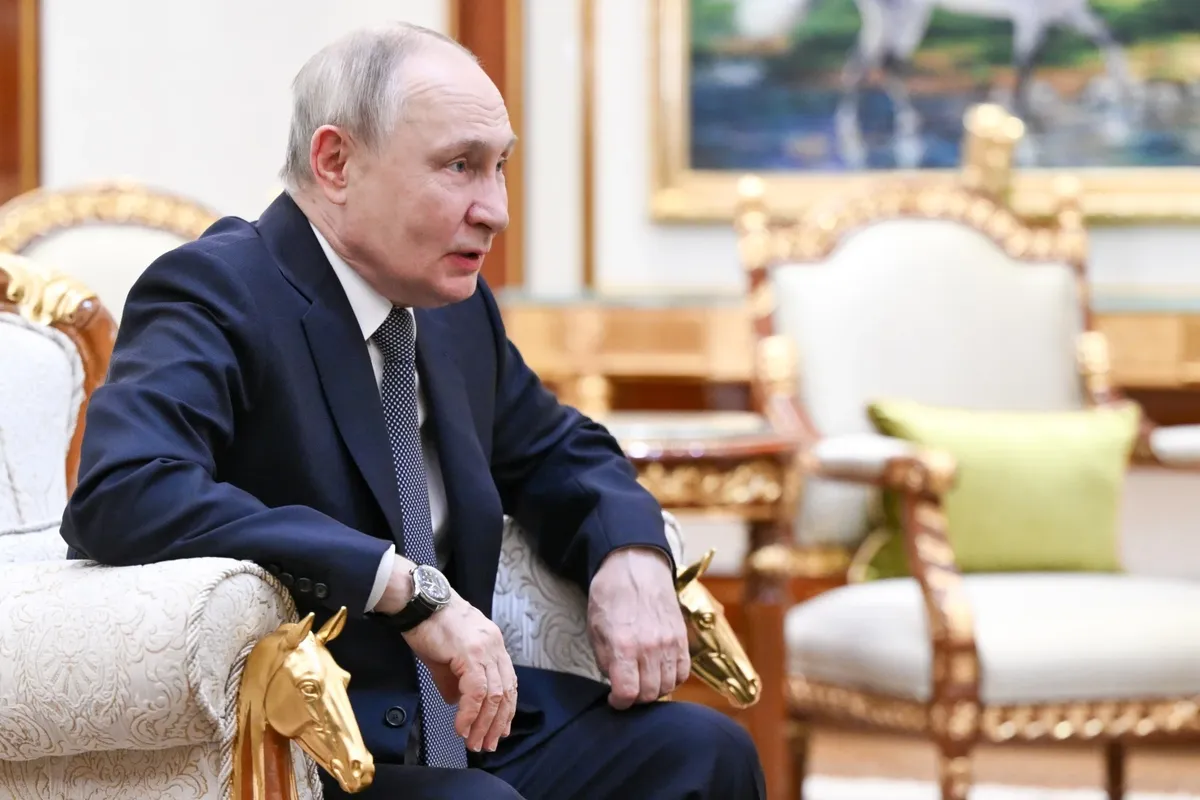
The current situation allows the Kremlin to continue to move in the wake of the “doctrine 2025,” which allows it to conduct military operations with the same energy and keep Trump in its field of influence, despite the lack of any clear approaches to peace. The US President is so tired that at least now he is in the state of a “Putinfersteyer” (“Putin understander”), a supporter of a peace deal on the Kremlin’s terms. Going into detail is not Trump's strongest quality, and he is probably unable to understand why presidential elections cannot be held in Ukraine, and why a ritual with the same code name in Russia is not at all evidence of democracy.
The Russian side would be happy to drop a landing party of “social architects” on Ukrainian territory, as it has done more than once, only then they were called political strategists. But for now they will only have the thankless role of demonstrating the successes of new territories and border areas - “architects” without architecture. Ukraine, with or without Zelensky, will become a border country in close proximity to the new Iron Curtain that will separate Putin’s Russia from the West. The elections that Trump and Putin are so striving for will turn out to be competitive - that is, elections in the true sense of the word. And then a “legitimate” president will appear. It is possible that his last name will still be “Zelensky”.
On the other side of the border, the West, which, as it seems, has now narrowed to Europe, still remains a concept both cultural and institutional, culturally and institutionally drawing Ukraine into itself - the “root causes” will not be eliminated at all. And for this, it is not necessary for Ukraine to join NATO; it is quite possible to limit itself to the European Union, the potential rejection from which was provoked by the very Maidan of 2014.
The presidential elections in Ukraine will again have a consolidating effect and will only accelerate the country’s movement in a western direction, regardless of the name of the president.
And again, on the other side of the new Iron Curtain, someone will say: “Look at us - anything is possible!”
Trump and his supporters will leave sooner or later, and the US-European Atlantic Pact can be quickly restored. Institutionally, Japan is also part of the West, as Stanford historian Stephen Kotkin pointed out. Russia, in this scenario, is culturally Western, no matter how non-existent traditional values are now implanted.
Apparently, at the beginning of 2026, the conflict in eastern Europe will take place within the framework of the 2025 model: while Trump once again complains about the difficulties in ending the confrontation, military operations can continue. The Russians, participants in the great redivision of the world, will focus on private problems - the fight for peace with inflation and freedom of private communications. They no longer care about Ukraine, although everyone knows that “victory will be ours.”