
Translated material
Are we eating at home?
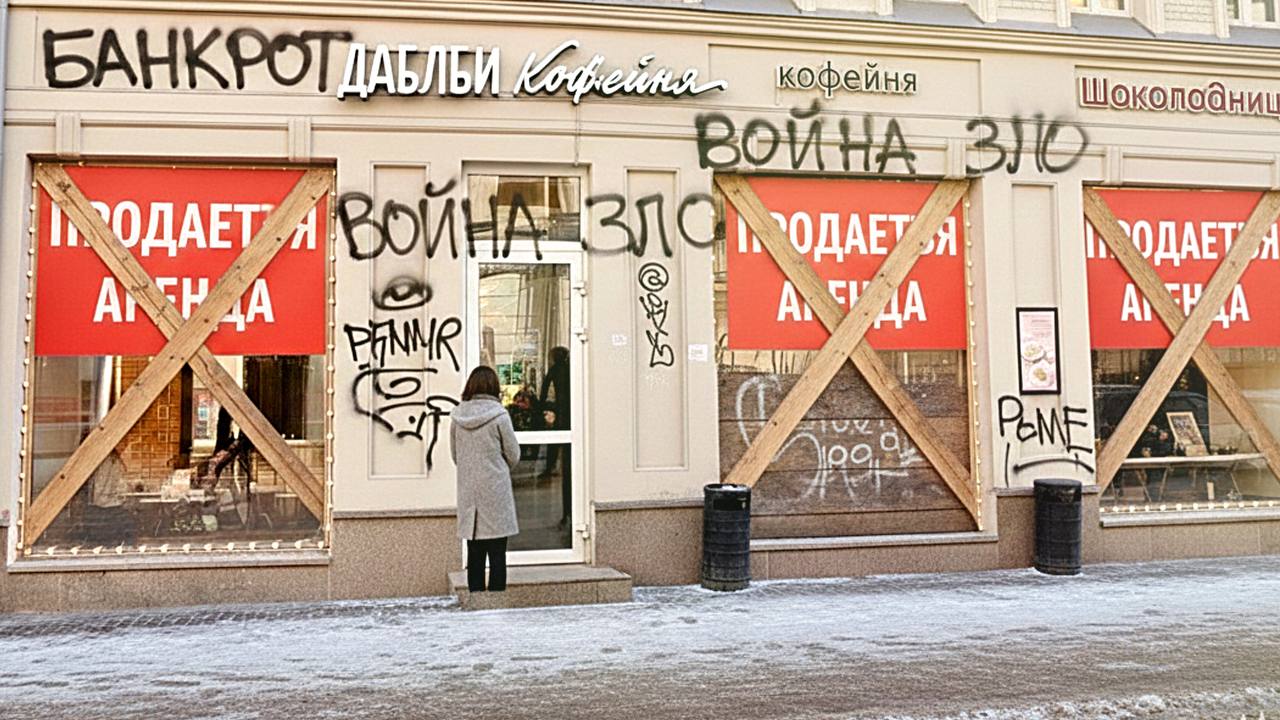
Restaurants and coffee shops are closing in Russia
The crisis has arrived. Where are economic problems most pronounced? Consumers are already feeling the effects of stagnation. Travel, a car, an apartment have become not the norm, but a luxury. The same goes for restaurants. Consumer habits are being restructured, but businesses are not always successful and are forced to close.
Restaurants and coffee shops are closing in Russia
by Radio Liberty Text copied width px height px The URL has been copied to your clipboard
No media source currently available
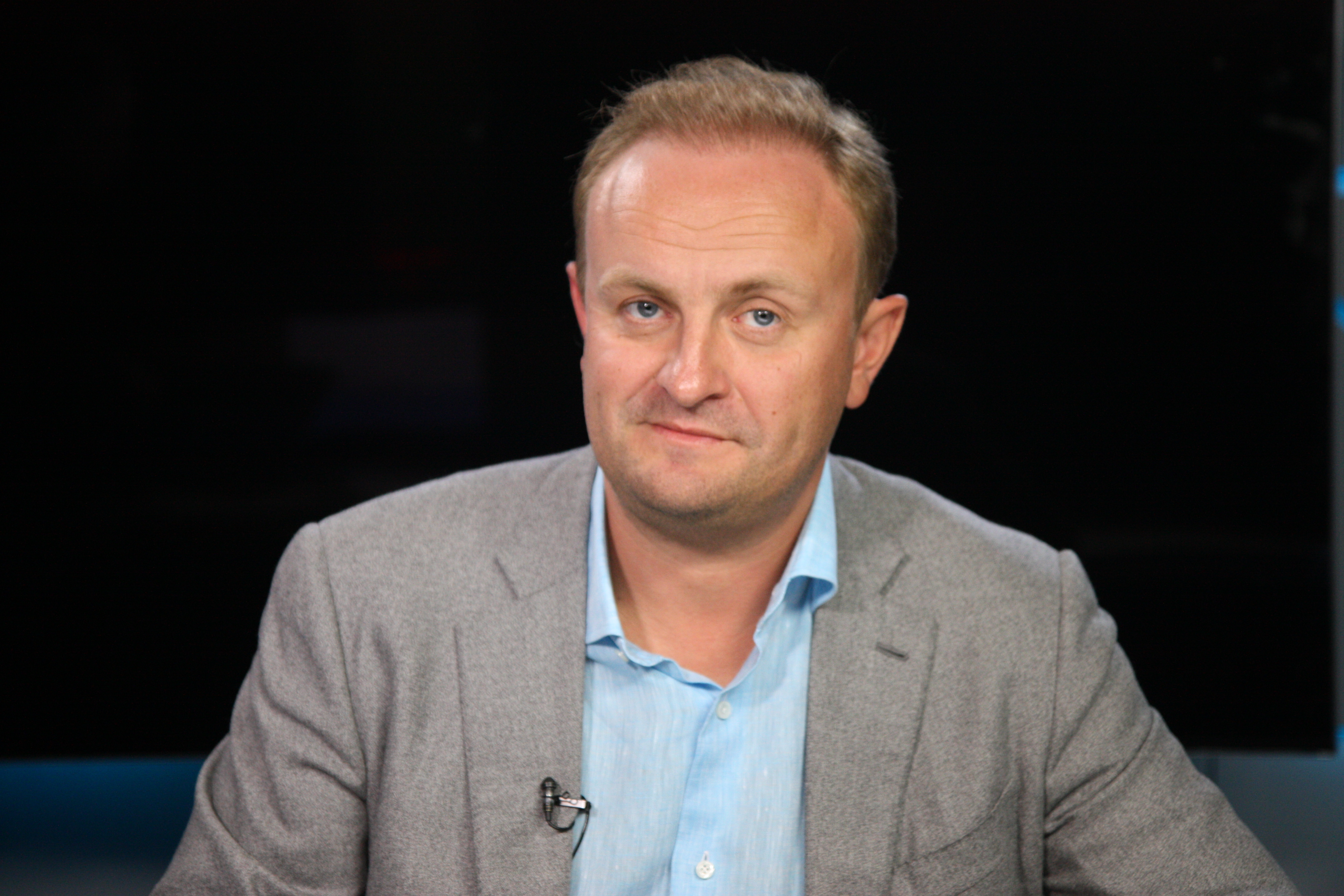
Dmitry Nekrasov, economist, director of the European Center for Analysis and Strategies, is one of the few economists who did not expect or predict death for the Russian economy after the outbreak of war in 22. Now Nekrasov also says that this is just stagnation.
– Can what is happening now, in 26th, be called a crisis?
– It is clear that the situation is worse now than a year ago. The growth of the economy and incomes of the population, which was provoked by the budget impulse, the injection of a large amount of money due to the outbreak of the war, exhausted itself in the summer of 24. All we saw from that moment was a slowdown, which in its logical continuation reached approximately a point near zero. Minus one percent of GDP is not a very good economic situation, but it is difficult to call it an acute crisis.
– Will the Central Bank rate continue to decrease?
– It will decrease rather than increase, but there are many factors that do not depend on the Central Bank. Firstly, it is clear that now, taking into account the increase in VAT, and the fact that inflation rates are always high in January, this year it is being deepened by a whole set of government decisions, so now there will be obvious stagflation, January-February.
maintains a strong exchange rate because capital outflow has stopped
In the spring it will slow down, but how quickly is unknown. This will greatly influence what the Central Bank will do. The second factor, even less predictable, is what will happen to the exchange rate, because we are in a rather unique situation, this is one of the main uncertainties that I see for next year. This is a situation where, with a sharp reduction in exports and revenues from them due to various factors, from falling oil prices to sanctions, a strong exchange rate is maintained because capital outflow has stopped. How stable this is is unclear. If capital flows reverse and money starts flowing out again, a jump is quite possible, that is, a weakening of the ruble. If the situation on the foreign exchange market is the same as it is now, which is also quite likely, then the Central Bank will lower the rate much faster. In general, the Central Bank will react to what is happening.
– Compared to 2022, prices have increased. What are the main points of growth, where the average person’s wallet especially suffers?
– Traditionally, in Russia, as well as throughout the world after Covid, food inflation is ahead of commodity inflation, for durable goods. Probably, the hierarchy is such that services grew a little faster than food. Food is definitely faster than non-food items.
– Are catering establishments closing due to a lack of labor?
– In any warring economy, the main problem is always the labor shortage. This is a problem. And, of course, the 2% unemployment that we see today in Russia is harmful to the economy. According to various estimates, the safe level of unemployment is 4-5%; it does not create additional pressure on inflation and allows, if necessary, to increase production where needed. Accordingly, this restriction has not gone away. The war continues to take people away both directly and through the military-industrial complex, emigration and other indirect means. If you add migrants to this, this creates strong pressure that is unnecessary for the economy. That is, the labor shortage is a very significant factor, one of the key ones that influences the situation.
– Why are restaurants closing en masse?
– If we take data year by year, and even more so year by three, the number of restaurants and the volume of spending on catering services has grown almost the fastest in the economy. There was rapid growth. The fact that during this growth the networks developed too actively and are now adjusting their policies is obvious, especially at a high rate.
need to compare data year to year
But always after a sharp surge there is some correction of the least thoughtful decisions. You can take a few messages from the networks out of context and make news out of it. But if you analyze reality, you need to compare the data year by year, December to last December, they show significant growth. The rapid expansion ended in the summer of 2025, although the segment continued to grow even as the rest of the economy slowed. If we talk about public catering as a sector of the economy, then this is one of the fastest growing and most profitable sectors in this situation.
– Which sectors of the economy will be in a fever, what will be closed?
– Civil engineering industry was constantly declining. It will most likely decline under strong pressure from the coal industry. The building materials industry, at least compared to what we saw two years ago, has seen rapid growth. There was also a sharp slowdown there, and most likely there will be a negative impact on construction. In principle, everything except the military-industrial complex, the same oil production, has decreased. This is a new reality, you shouldn’t expect a radical collapse, but there will be minus 2-5%, and most likely for more than one year.
– You say that current war expenses allow the Russian economy to exist for a very long time. Besides them, what else influences?
– The budget for 25 was much worse than planned. A very optimistic budget was adopted for the 26th year. Most likely, everything will be worse there too. This is on the one hand. On the other hand, since the beginning of the war, everyone has been very fond of monitoring the size of the National Welfare Fund and saying that “we are eating through the money.”
the government borrowed all the money
But in the 25th year, the National Welfare Fund has grown, albeit in a certain accounting sense, but nevertheless. They definitely didn’t spend anything, but the amount of money in it increased. And the government borrowed all the money, and is borrowing more and more actively. This year it will also be busy. The possibilities for this over the next three years are endless. However, you must understand that you will have to pay for all this. And with such high rates, Russia has a colossal advantage in that the national debt was very low at the beginning of the war.
– Putin decided to sacrifice the economic stability that he loved to be proud of?
– I would say that the collective Putin, relatively speaking, the economic bloc continues to strive as much as possible for economic stability. Still, the decision to make such a dramatic rate increase obviously gives a negative impact on economic growth at the moment. If the rate had not been raised so sharply, the pace would have been slightly higher. But it provides long-term stability. The slashing of the defense budget for 2026 also indicates a desire for stability.
they continue to act very conservatively
They could afford to not raise the rate so much, and increase military spending, because they can borrow an infinite amount of money over the next few years, and therefore they could spend even more. The fact that they make decisions that limit their capabilities in the moment, but in the long term, relatively speaking, are beneficial for the stability of the system, suggests that they continue to act very conservatively. They have one risky, crazy solution - war. Everything else continues to be done in an extremely conservative scenario. By and large, the state of the Russian budget would make it possible not to raise taxes, and to increase military spending, and to do a lot of things even more from the master’s shoulder, without cutting some expenses. From everything that is happening now, unless something like this happens, some “black swans” on a global scale, it is clear that the slowdown cycle is already close to the end. Most likely, both inflation and the general situation in the financial sector will return to fairly normal conditions by the second half of the year, at least by November.