
Translated material
Dwarf facing the wall
Life of E.-T.-A. Hoffmann's ten optional facts
Ernst Theodor Amadeus Hoffmann would have turned 250 years old on January 24, it’s scary to think. On this occasion, the editor of Gorky re-read the book by Rüdiger Safransky, dedicated to the most terrible and at the same time funny romantic, in order to select from it ten seemingly meaningless, but in fact important, if you think about it, facts.
All of us, since February 24, 2022, have found ourselves in the face of advancing barbarity, violence and lies. In this situation, it is extremely important to preserve at least the remnants of culture and support the values of humanism - including for the sake of the future of Russia. Therefore, the editors of Gorky will continue to talk about books, reminding our readers that there is still a place for thought and fiction in the world.
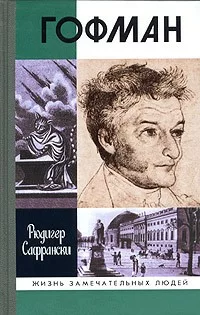
Rüdiger Safranski. Hoffman. M.: Young Guard, 2005. Translation from German by Vasily Balakin
1. Hoffmann, according to Safranski, was a dwarf who knew how to wait. “The long absence of attention to him, although it did not save him from everyday routine, nevertheless saved him from its devastating effects. This agile, quicksilver, extremely excitable dwarf knew how to wait without giving up on his plans. He took what the day gave him, but remained too impatient, too demanding, to feel any satisfaction. Involuntarily, he had to master the ability to be leisurely,” writes Safransky.
Let us note on our own: the average height of a German at the time when Hoffmann lived and worked leisurely was, according to statistics , up to 167.8 centimeters. In the testimonies of his contemporaries, he is indeed depicted as a short man. It turns out that by the standards of our days the writer was indeed a midget, but by the standards of the early 19th century he was probably still short.
2. At home, no one needed Hoffman anyway. Unlike neighbors:
“After his death, he was quickly forgotten in Germany - as a writer whose time had passed. But in France his fame continued to grow. There, Hoffmann was already considered, along with Goethe, the most important representative of German literature at that time. Only at the beginning of the 20th century, under the influence of the interest shown by expressionism and existentialism in the abysses of the human soul, Hoffmann’s star again rose in the German literary firmament.”
This is partially confirmed by Serafima Evgenievna Shlapoberskaya in the classic article “ Fairy tale and life in E.-T.-A. Hoffmann ,” which contains many valuable comments about the German writer’s connections with France, his attitude to the Great Revolution and the subsequent reaction.
3. The insignificant rabble that sometimes surrounded Hoffmann considered him a fool. This he reported in a letter dated January 25, 1796 to his best friend Theodor Hippel, the author of a work with the telling title “On the Civil Correction of Women.” And he was right: “Suicidal tomfoolery with form” - this is how contemporaries responded to “The Everyday Views of Murr the Cat.”
4. At the same time, he sincerely believed that the “Elixirs of Satan” would make him rich. Which, of course, didn't happen. However, what is interesting is not this, but the way Safranski notices a curious and extremely sad motif that is repeated again and again in the work of his hero.
“Hoffmann grew up among women, but he missed his mother. Subsequently, this experience was reflected in his works. In “Little Tsakhes” (the mother would most willingly get rid of her hunchbacked gnome, and there is a certain good fairy who relieves her of this burden. And the mother Medarda from “Elixirs of Satan” very early entrusts her son to a certain well-intentioned abbess. The title character of “Cata Murra” first met his cat mother when he was already “grown-ups.” He had to listen to her complaints about her unfaithful father - just as Hoffmann’s mother complained.”
The writer met his mother’s death, let’s say, stoically, reporting this sad news to the same Hippel: “This morning we found my poor mother fallen out of bed and lifeless - at night she suddenly suffered a stroke, as evidenced by her face, distorted by terrible convulsions. <...> Whoever does not make friends with death in a timely manner and is not on friendly terms with it, will ultimately bring its visit torment.”
5. Hoffmann was born in Königsberg. For some reason, we constantly forget about this, having become accustomed to associating today’s Kaliningrad primarily with Immanuel Kant. Although, perhaps this is our problem, and you already know this fact that doesn’t really mean anything. The other day, in Hoffmann’s hometown, they even hung a memorial plaque with a comprehensive inscription:
“On this site stood the house where, from 1778 to 1796, Ernst Theodor Amadeus Hoffmann, the author of the fairy tale “The Nutcracker,” lived in the house of his grandfather, the lawyer of the royal court and adviser to Johann Jacob Dörfer.”
6. By the way, Hoffmann never attended Kant’s lectures. And he can be understood, because Fichte remarked: “Kant’s lectures have a soporific effect.” “While outside the walls of the university, throughout the entire intellectual world, Kant’s ideas sparkled like lightning, in the classroom his listeners resisted with all their might the onslaught of sleep. The reason for this was not only the early morning hours, but also the pedantry of Kant, who did not want to limit himself to presenting the “hot” topics of his critical philosophy, but conscientiously unfolded before the students the entire encyclopedia of knowledge in all possible fields of science - geography, pedagogy, astronomy, cameralistics and anthropology, taking into account their practical application,” adds Safransky.
7. The writer’s mysticism did not arise out of the blue, but in the same Königsberg. Safranski notes: “When a bright future darkens, the dull voices of the past become more audible. People again find pleasure in the mysterious, the dark, coming from afar. Once again, the foggy melancholy of folk songs enchants: “A ring fell on a spring night...” In order to protect against catastrophic fires (Königsberg suffered from them twice within ten years), the city government publishes very reasonable fire regulations, but despite this, people still resort to traditional magical conspiracies.”
We checked this information and found that Königsberg actually experienced at least two big fires in Forstadt during the years of Hoffmann’s youth: in 1769, one of them destroyed the house where Kant was born, and just six years later, in the year of Hoffmann’s birth, a plague barracks caught fire there, after which the city was missing almost a thousand buildings.
8. The first large and, alas, not preserved work of Hoffmann was called “Cornaro - Memoirs of Count Julius von S.” And it bore the subtitle: “From the papers of the Marquis von G.” It was written under the influence of Karl Grosse's book "Genius", written in the most popular genre of the novel about secret societies at that time. Hoffmann then wrote a story called "The Mysterious." It also did not survive - unfortunately (or perhaps fortunately). However, an important remark from the young Hoffmann from that time has been preserved: “If you feel displeasure, then start writing a novel - this is an excellent cure.” We don’t recommend writing novels to anyone, but it’s still worth keeping this valuable advice in mind.
9. “An unknown sweet melancholy gripped me,” Hoffmann wrote in his diary when he saw his beloved’s daughter and learned that the latter had died. “It was for him the moment of death and resurrection of an old love,” comments Rüdiger Safranski on this, as modern youth put it, a little creepy, let’s be honest, note.
10. The last wish of the great writer was a request to turn him face to the wall . Which in itself is an understandable desire, yet Safranski ends his book on Hoffmann with this comment from Ernst Bloch:
“When awake, we most willingly turn our backs to the wall, turning our gaze inside the room. But here’s what’s surprising: when we fall asleep, we most often turn our face to the wall, although at the same time our back turns out to be facing a dark and therefore unknown room. It seems as if the wall suddenly attracts and the room paralyzes, as if sleep reveals something on the wall that would otherwise be more fitting of death. It seems as if sleep is learning something from death; in any case, then it seems that the scene looks different, as if revealing the dialectical visibility of the homeland.”
Couldn't have said it better.