
Translated material
My life
Boris Kupriyanov - about Zakhar Prilepin’s novel “Tuma”
A work of large form, coming from the pen of a famous writer, always attracts attention. The only question is which one. Take, for example, Zakhar Prilepin’s recently published novel “Tuma.” Some readers praise him beyond measure, others only frown in disgust. But neither one nor the other assessment, believes the publisher of Gorky, Boris Kupriyanov, has anything to do with the actual literary features of this book. Here's what he himself thinks about this new attempt to create a historical narrative about Stepan Razin.
All of us, since February 24, 2022, have found ourselves in the face of advancing barbarity, violence and lies. In this situation, it is extremely important to preserve at least the remnants of culture and support the values of humanism - including for the sake of the future of Russia. Therefore, the editors of Gorky will continue to talk about books, reminding our readers that there is still a place for thought and fiction in the world.
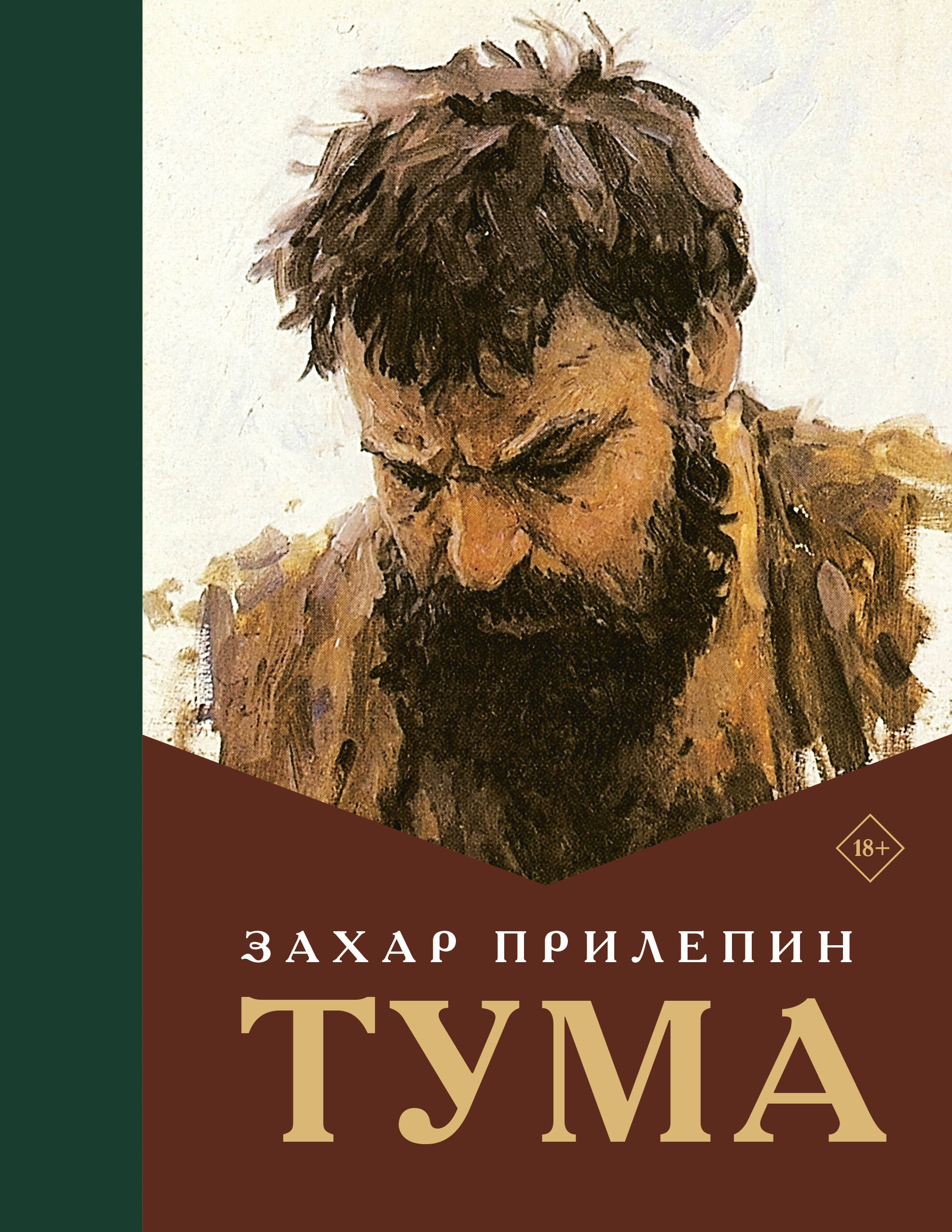
Zakhar Prilepin. Tuma. M.: AST, 2025
They say that there are some writers whom it is impossible to evaluate critically. If a writer is a representative, and even more so the leader of a certain political camp, then only political assessments will be given to him. Allies will give praise, opponents will pour out blasphemy. Perhaps this statement is true, but there is also a “Letter to Gogol”, in which Belinsky extremely harshly criticizes Nikolai Vasilyevich, but does not at all deny his talent.
So in the situation surrounding Zakhar Prilepin’s new novel “Tuma”, it is extremely difficult to maintain objectivity. I personally wouldn't take it on. But, having become acquainted with the “criticism” of “Tuma”, I was struck by its... vacuity. The author said much more about the book itself than the readers. Supporters praise, but very, so to speak, monotonously, in the spirit: “Great book, read it with a dictionary, amazed.” The most popular review on Ozone: “The book is a masterpiece! The author is a genius, the publication is super! I read it avidly! Well, the book itself is very well made, good font.”
Prilepin’s opponents either ignore Tuma, which is understandable, or look for blunders in its text, which are not difficult to find in any historical novel - and in any novel in general. But there is no actual criticism anywhere, no attempt at analysis, no meaningful conversation.
Spiteful critics may note: “What could Prilepin count on by bullying, “reporting” about his opponents, celebrating victory and not recognizing the opinions of others” (spelling and punctuation of the original have been preserved). But let others write about it. I’m interested in understanding what Prilepin actually wrote his book about, a 688-page volume, just the first of the promised three. I repeat, I am by no means a supporter of Evgeniy Nikolaevich - neither in the aesthetic, nor in the political, nor in the ethical sense. Moreover, I am outraged when he calls himself a leftist: a leftist cannot be an imperial, this simply does not happen! So I don’t even want to pretend to be objective. I can't be like that.
We’ll talk about the genre specifics of this novel later, but for now let’s note that it also has an autobiographical element. The narrative opens with a description of death, or rather the dying state of Stepan Razin after captivity, battle and torture. It is unlikely that the reader will not compare these pages with the words of the author, who said that he began writing the book in the hospital, where he found himself after his car was blown up. Perhaps the first pages of “Tuma” are the most sincere and honest, even though Prilepin’s language is generally not flawless and is extremely overloaded with archaisms. But more on that later, but you believe in the description of what a person feels who has already had one foot in the next world. Perhaps someone will see a classic manipulation here: they say that by constantly reminding the context in which the book arose, it is easy for the author to bribe the reader. But, excuse me, don’t writers ever manipulate readers?
So we won’t develop this topic, let’s turn our attention to something else. Why, in fact, is the hero of this book Razin? The answer, in my opinion, is obvious: it’s all about Shukshin, whose one-dimensional image, to put it quite roughly, is cultivated by a certain part of our society. For a long time now, this actor and writer has been painted in a red shirt on flags, trying to turn him into an icon, instead of studying his legacy and thinking about his work. In fact, Vasily Makarovich was a much more complex person, and a flat picture does not expand his personality, but turns it into a caricature. But be that as it may, the desire of Prilepin, who strives to be “people's”, to inherit, in the words of Rasputin, “the Russian man himself” and his novel “I came to give you freedom”, is quite understandable!
It is extremely important for the author to also inherit Sholokhov with his Don theme (Prilepin’s love for the author of “Quiet Don” is known), which is why the word “tuma” arises here, meaning a person of mixed Russian-Tatar blood - after all, Grigory Melekhov’s grandmother was Turkish. By listing Sholokhov and Shukshin as his ancestors, Prilepin is absolutely masterfully building his literary pedigree, not only laying claim to the “nationality,” but also hoping to gain the love that his great predecessors enjoyed, as if to join their greatness.
In “The Thumb” you can feel the approach to a big book. However, some funny moments still catch your eye. Such a repeated technique as transliteration looks quite cinematic and at the same time comical in the book. According to the author and his fans, “Tuma” is written in many languages. Let's try to list: Russian, Serbian, Polish, Greek, Crimean Tatar, Turkish - probably some other, I forgot. But the way it's done is quite funny. According to the author, Razin is a polyglot: a bold assumption, but acceptable. Therefore, the lines in the novel are given in the language of the person who pronounces them, but using Russian letters. After such a transliteration of, say, Tatar speech, a Russian translation is given in parentheses.
Perhaps this was done so that the reader could hear the rhythm of the language of the characters in the story, but translation in parentheses, naturally, kills the rhythm. And Tatar words written in Russian letters look a little stupid. Why not, in this case, resort to the native writing of each language spoken in the novel? Maybe because readers won’t understand Arabic script, but the author knows this and doesn’t want to make page-by-page footnotes? I dare to suggest that it is no longer Sholokhov and Shukshin who appear here, but the shadow of Leo Tolstoy himself. If the great Russian classic could begin his novel with entire paragraphs in French, then why is the current “main Russian writer” worse? Well, perhaps because Tolstoy knew French, but Prilepin does not know Serbian, Turkish, or Tatar. And it would never have occurred to a Russian count to begin his novel with the words: “E bien, mon prance...”
And this is far from the only claim that casts doubt on the greatness of Prilepin’s book. Take, say, protracted, rather colorless and numerous descriptions of the surrounding nature - completely impossible for a person of the 17th century, but at the same time data interspersed with Russian words of the 17th century. Apparently, Prilepin believes that there is no “great literature” without descriptions of the various seasons of the year, states of nature, and so on.
Surely such descriptions will make experienced readers wince, but, in my opinion, something else will cause them much more irritation: the excessive, let’s say, physiology in the description of battles and torture - simply put, gore. But it is precisely this that is very important for Evgeniy Nikolaevich! The excess blood and violence in his book is present in a completely meaningful way. It is important for the lieutenant colonel of our day to show that 350 years ago there was much more violence than today, and the current conflicts, in comparison with the past, are, whatever one may say, “humane.” After all, the sacrifices and bloodshed of today are not comparable in scale to what happened during the time of Alexei Mikhailovich - this is the author’s important message to the reader.
The genre of the historical novel is not very popular in “high Russian literature.” It’s hard to accuse “War and Peace” or “The Captain’s Daughter” of being involved in this albeit highly respected genre. Their main characters are not historical figures, but mostly fictional ones. Yes, and “Taras Bulba” is also difficult to classify as a historical novel. Here is “Prince Silver” - perhaps. The historical trilogy of A.K. Tolstoy, like Pushkin’s Boris Godunov, is a dramatic work, written down in a column, and Prilepin does not seem to be taking on poetry yet. And yet, for Tuma, the genre of historical novel was not chosen by chance. And here one cannot help but recall the third Tolstoy, so as not to slide down to Pikul and others, whom I don’t really want to mention, and it would probably be unfair.
The Red Count addresses a historical topic with very clear objectives. “Peter the Great” is a highly obsequious novel and dedicated not so much to the reformer tsar as to his contemporary, “the great friend of children.” But you shouldn’t criticize Prilepin’s novel for what it doesn’t contain. Apparently, the author set himself other goals here. So why does the author of “Sanka” turn to the historical genre? For me this is a question, and here I can only speculate, but it would be interesting to analyze what came out of this attempt.
We have already talked about transliteration, but let us once again turn to the language of the novel. Prilepin tries to use Russian words that could actually sound in the middle of the 17th century. There are, of course, mistakes: for example, he has partisans hunting near Kiev, but this is said by the Muscovite Prince Pozharsky, and in Moscow even girls blacken their mouths, they can. In general, it is clear to what extent the author did a lot of work in selecting words that Razin could actually use.
In many of today's historical novels, the heroes, without bothering, speak modern Russian interspersed with archaic words. This, of course, does not at all correspond to historical realities; well, not every contemporary of ours is able to freely read the works of Archpriest Avvakum.
Prilepin creates some special stylization that has no relation to the true language of Razin and Rus' of the 1660s. Probably, the historian will find many errors in the novel in the description of life, geography of that time, and other things. I, not being a historian, came across several such errors - but they are inevitable, and that’s not the point. But why does the author make such philological sacrifices and set himself such difficulties? Does he want to prove his skills to us? For what?
There may be different opinions about the literary lieutenant colonel's talent, but no one will accuse him of inability to write, of lacking skill. It seems to me that when conceiving his epic, the founder of the For Truth party unwittingly fell into a trap: he used too many artistic means to prove his literary worth. It was as if he had deceived himself, like director Yakin, who entered into a dialogue with Ivan Vasilyevich Rurikovich from the popular film. I am not ready to analyze remarks in Serbian, but I will assume that Prilepin’s Serb also speaks a painfully stilted language, the language of epic ballads, and not the one that sounded in the Balkans of that era (everything was generally complicated there until Vuk Karadzic).
So why all this abundance of funds? And what is this book about? The author's own words do not clarify the questions. Either he says that “Tuma” is about Zakharchenko, or something even more mysterious. However, I think this work is quite simple to analyze. The novel describes the process of development of Stepan Razin from adolescence to his, let’s say, transition to the opposition. Prilepin's Razin does not seek to give freedom to anyone - like Shukshin, and is not obsessed with rebellion - like Nazhivin. His Stenka is a natural intellectual, a polyglot (although this cannot be verified), a diplomat (even if nothing is known about this) and, most importantly, a deeply Orthodox Russian person . Indeed, one had to be a truly powerful intellectual to be born around 1630 in a very chaotic, poorly governed territory, to be so ahead of his time as to recognize himself as Russian long before the beginning of the era of nationalism and any kind of nation-building.
Razin in “Tuma” is a super-Russian hero: he understands the need for national unity and the national interests of Rus' better than the distant Moscow Tsar; he knows that all Russian people need to be helped, that they are our own, and even the Orthodox Cossacks closest to them are strangers. Noisy, quick to betray, envious - they can easily rob their Russian brothers. The Don Cossacks will not agree to this, they will not take anything away from their own. And the characteristics of other peoples in the novel are simple and unpretentious, taking into account the attitude towards Russians. Poles are vile and arrogant, Serbs are brothers, Crimean Tatars and Turks are enemies. Jews (sometimes it seems that the trick with linguistic archaization was specially invented in order to write “Jew” and not “Jew”) are self-interested, cowardly and vile. There are also foreign agents in the book - Russians who defected to the Turks and converted to Islam for the sake of temporary benefits, earthly pleasures and an easy life, that is, they consciously betrayed their people and faith.
So, the protagonist of the novel, a noble, intelligent passionary, understands the urgent tasks of the homeland and the needs of the common people better than the Tsar-Sovereign himself and all his clerk-politicians. So Prilepin’s version that “Tuma” is about Zakharchenko is not so ridiculous. Besides, we don’t know what awaits us in the next volumes. How will the defender of the Orthodox and the support of the Russian people turn into a robber, a pogrom-monger of Russian cities? And in general, as if Razin’s campaign against Moscow reminded us of another character of recent years. Apparently, according to Prilepin, the passionary has the right and even the obligation to “sort out” the tsar if he sees that he is not acting in the interests of the Russian people.
I would venture to guess that this book will not have a happy fate. Fans of the brutal Prilepin simply will not be able to read it - they will not be able to break through the heavy, archaic language, a sea of blood, historical errors and almost seven hundred pages of text. Apart from the already mentioned meaningless words (“the author is a genius, I read it in two days, I thought a lot, the book was published well”), they are unlikely to be able to say anything more meaningful. Prilepin’s haters won’t read anyway; the author’s figure is too odious for them. Moreover, what is important for the success of a book is not the author’s sermon, but the invitation to dialogue (let’s remember “Sankyu”).
And there are serious doubts that the two promised volumes of the trilogy will eventually appear. It will be difficult to explain the transformation of the ideal Russophile Razin into a rebellious robber. Either the Presidential Grants Fund, or fellow party members, or the command (military discipline is still important for officers), or some other organization may also suspect something bad here. And they will advise the author not to continue.