
Translated material
Can you breathe?
"New-Europe" tells how the state worsened the lives of teenagers in 2025
Photo: Novaya Gazeta Europe
In December, Roskomnadzor, teenagers joke, gave the whole country an advent calendar with blocking: a new day - a new restriction. However, not only the RKN, but also deputies, activists and concerned officials gave children “gifts” for a whole year in the form of new textbooks, life sentences, lessons in chastity and beauty, as well as endless military victories. “New Europe” highlighted the main moments of the past year in the lives of teenagers.
Blocking platforms and messengers
“Soon we will have 2 games Max and SVO” ( the author’s spelling and punctuation are preserved hereinafter. - Ed. ), - one of the most liked comments under the video about the blocking of the Roblox gaming platform.
Others chimed in: “Soon we’ll be playing State Services.”
“Roskomnadzor has some kind of hatred for schoolchildren.”
The number of videos that feature fragments from Roblox to the song “It Was in Russia” by Monetochka is difficult to count, but there are already several hundred of them. Children complain about Roskomnadzor and write insults against the department, jokes about the ingenuity of fellow citizens and requests for help addressed to “Mama Mizulina.” Here are some of the most popular comments under various Roblox videos:
“Thank you, another part of my life has been destroyed. RKN, continue in the same spirit, and I will be left without friends.”
“Sometimes it seems to me that Russian schoolchildren are smarter than the entire Roskomnadzor office,” writes another teenager.
He refers to ways to bypass blocking that began to appear an hour after the RKN decision came into force.
Mostly schoolchildren use the Zapret program, it allows you to bypass Roskomnadzor blocks. In the description, the developers indicate the following functionality:
- the ability to bypass YouTube and Discord blocking;
- the ability to unblock access to non-working ChatGPT, Google Gemini, Notion and other resources blocked for Russia;
- the ability to register custom DNS servers.
“Soon “Prohibition” will be a mandatory program on the PC,” the children write.
Nadezhda, the mother of an eleventh-grader from Khanty-Mansiysk, like her son, is dissatisfied with the blockages. The whole family uses a VPN:
— My son has different programs and a VPN installed on his laptop to bypass blocks, so Roblox works for him. In some areas of the city there is no mobile Internet at all, only in the center all operators work stably. It’s very annoying that everything has been blocked, we’re going back to the Stone Age.
Oksana from Moscow also uses VPN:
— I have two children, twelve and five years old. After YouTube was blocked, we installed a VPN - the eldest child did it himself, I installed it for the youngest, and he already uses it perfectly.
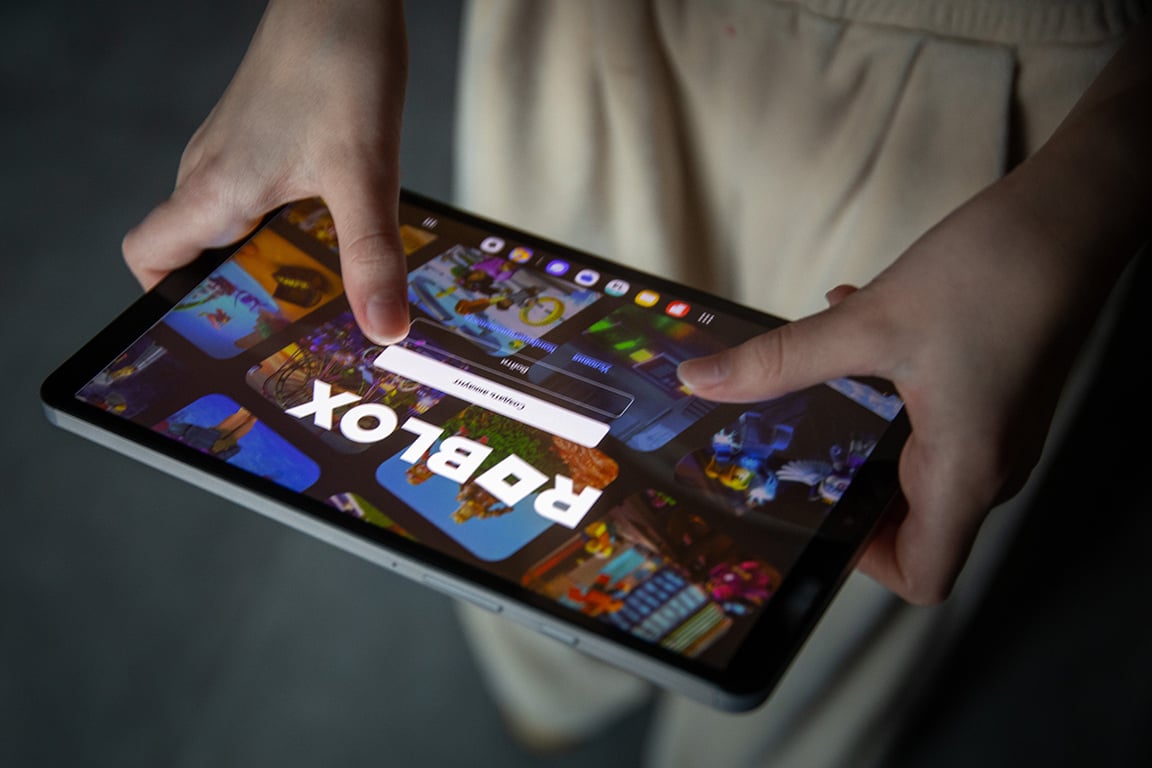
Even before Roblox, Discord, YouTube and TikTok were victims of blocking among teenagers’ favorite services. The first gives users the opportunity to make calls, including via video, without signal delays - which is why it has become popular among gamers who often need online communication with teammates (game partners - editor's note ) during gaming matches. There, users can create open and closed chats, where they can communicate with huge companies from all over the world. According to RKN , such chats contain extremist materials.
“Access to the Discord messenger is limited due to a violation of the requirements of Russian legislation, the implementation of which is necessary to prevent the use of the messenger for terrorist and extremist purposes, the recruitment of citizens to commit them, the sale of drugs, and in connection with the posting of illegal information,” the department said. In addition, according to RKN, Discord is a platform for communication between pedophiles.
Schoolchildren respond by filming their videos and posting them on those same blocked platforms. Many were made to music - the song “Fuck off the children” by the group “Pornofilmy”, “Tablets” by IC3PEAK, with the words “I’m dying in Russia”, and “Roskomnadzor” by Paul Baldhill, which begins with the phrase “Roskomnadzor banned the letter “A””.
“We’ll eat now, but the portion is big. Oh, fuck, in Russia it’s banned, we need to turn on VPN,” the author of the video knocks on the table. “Oh, it’s turned on, you can eat!”
In the comments to such videos, children also practice their wit:
“Roskomnadzor banned the Internet, Roskomnadzor banned living and breathing...”
“Can I breathe?”
“And if Minecraft is blocked, then I will gnaw the wire to Roskomnadzor.”
Many parents in this story are on the side of their children.
“Protection from scammers, pedophiles, and so on makes little sense; it all depends on Internet literacy and sex education for children,” says the schoolboy’s mother, Inna. — The older generation needs to be taught the skills to use technology, and children need to be explained that no one can touch their body without their consent.
“The certificate will not be issued without Max”
A separate reason for dissatisfaction among teenagers is the forced installation of the MAX messenger. It is called even more useless and inconvenient than the previously launched online educational platform for learning “Spherum”.
“Even if we omit surveillance and so on, Max is simply inconvenient, there are no chats, channels, stickers and the like that Telegram has,” writes one of the messenger users in the comments under a post about forced installation of the application.
Experts believe that the MAX messenger is a convenient tool for collecting user data in one place. In addition, MAX is quite vulnerable to hackers.
Schoolchildren are concerned not so much about the security of the new messenger as about the mandatory nature of its use. In their opinion, a good service does not require such aggressive advertising:
“We only had five people agree to Max out of 32 people,” writes a user of one of the forums.
“It was the same with Spherum. Did we sit in it a lot?
“We were also forced to enter the school chat and subscribe to the Shaman’s channel in Max.”
“We were told that without Max the certificate would not be issued.”
In the comments, teachers communicate with schoolchildren, explaining that this is not their personal initiative, but a “decree from above”:
“As a teacher, I’m sad that we were forced to do this too. And I didn’t have the opportunity to refuse, because refusal would ruin my life. Unfortunately, by the age of 23, I understood why adults in Russia do nothing. The opportunity to earn a piece of bread is felt more important than beliefs.”
“As a person from the education sector, I can safely say that we are forced. The roots come from the government that comes up with this, and if we don’t give them statistics, we are strangled with endless reports and checks. Nobody needs this, and, unfortunately, we have to force everyone to download this Max.”
There are also small stories of resistance in the comments.
“I'm a teacher. I refused. There are no sanctions. Because they have no right to force.”
“We have a classmate who downloaded Max, created a group in Telegram, added the whole class and throws all the information from Max into Telegram.”
Nadezhda from Khanty-Mansiysk says that her son was forced to download the messenger:
— My son’s class teacher conducts school chats on Telegram and MAX. I don’t have it, but my son had to download this moronic messenger, because through it children are tied to the Unified State Exam.
I bought him a simple Samsung, he installed MAX, signed in where needed, turned off the phone and threw it in a drawer.
Their teacher fought with the class for a very long time, the children resisted, but due to the threat of not being allowed to take the Unified State Exam, the entire class installed MAX.

“Nobody installed MAX except my grandmother,” says Oksana from Moscow, mother of two children. “She has connected to all channels and is telling us all the information.” In kindergarten they wrote to install it, but no one uses it - everyone uses Telegram. At school, the class teacher carries out all orders from above, and now all messages are only there, although six months ago she forced everyone to install Sferum, and now everyone has forgotten about it. I think that sooner or later everyone will forget about MAX and come up with something else.
Some schools themselves decided not to switch to the new messenger. Anton, whose children study at a private school in the Moscow region, says that they “have a loyal attitude towards this, everyone is still chatting on WhatsApp and Telegram.”
Great Power Propaganda
Since September 2025, in 22 Russian regions, “Conversations about Important Things” began to be held in kindergartens. Teachers have a special textbook . “Each lesson is devoted to a specific topic that fosters civic, patriotic and ethical feelings in the little citizens of our country,” the abstract says. For example, children are told that all countries except Russia are “small”, fathers are protectors, and mothers have “golden hands.”
“People say: “The main thing in life is to serve the Fatherland!” Defense of the Motherland has always been the main job of men. And it didn’t matter who the man was in peacetime, everyone united to liberate their native land from enemies. Because everyone was taught from childhood: “To live means to serve the Motherland” and “Whoever fights hard for the Motherland is a true hero,” write the authors of the textbook.
Children are asked to imagine themselves as “a sentinel on the Kremlin wall”, learn to “identify military specialties” and “play military”. After studying state and political topics, the textbook begins with chapters devoted to friendship, “good deeds” and “magic words.”
“Talking about important things” has been part of the school’s educational program for the fourth year now. Most of the topics are labeled with the tags “patriotism” and “service to the Fatherland and responsibility for its fate.” There are few exceptions: for example, the lessons "Society of Limitless Possibilities" - about the need for inclusivity, "Pets" - about responsible pet ownership, and "How to resolve conflicts and cope with difficulties?"
The last available lesson is called: “Russia is a country of winners. For the Day of Heroes of the Fatherland." It focuses on the “heroes of the Northern Military District”, and the story is presented only in a positive way.
“Russia has always defended its land and citizens from enemies and has always won. The Battle of Kulikovo and the Battle of Borodino, the Great Patriotic War and a special military operation became a symbol of the strength and inflexibility of the Russian spirit,” is written in the lesson script for grades 10–11.
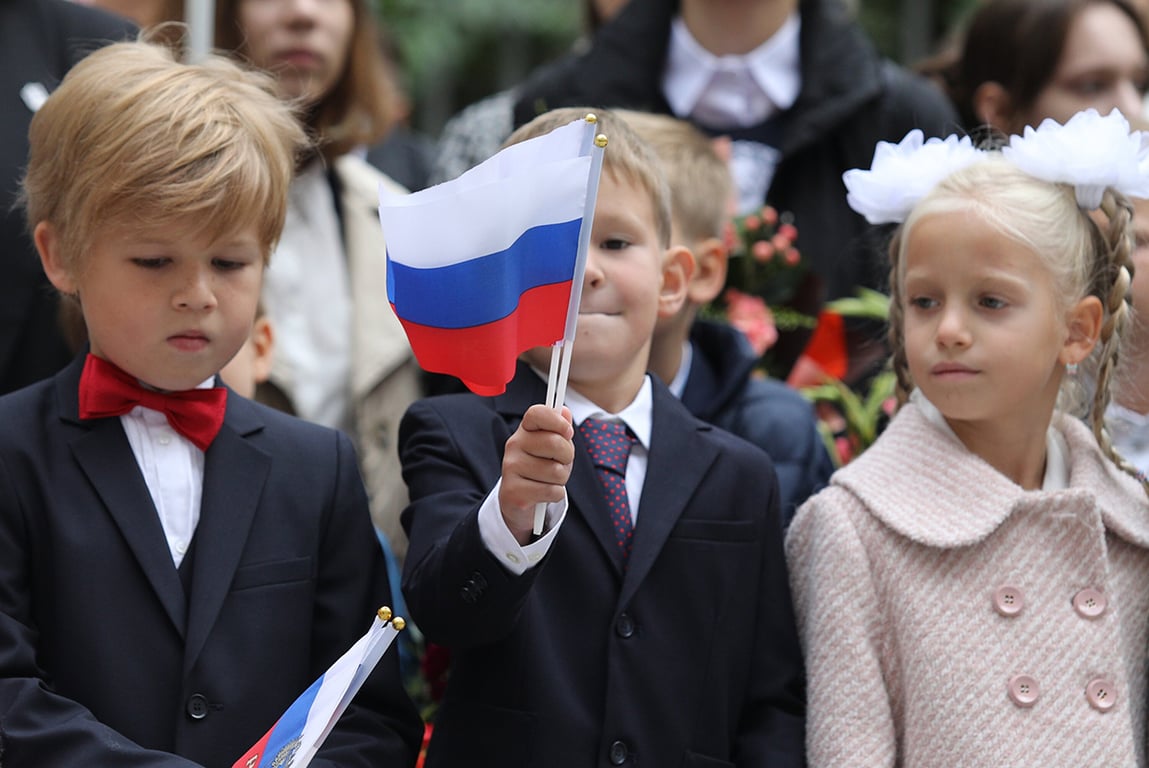
For first-graders, this fragment sounds simpler, but the message is the same: “In the history of the Fatherland, there were many battles and battles, during which our ancestors had to defend their land. And the enemy was never able to defeat them. Thanks to self-sacrifice, perseverance, and fortitude, our compatriots at the front and in the rear, as well as in quiet, peaceful times, defended and continue to defend the independence of our country.”
The authors of the manual omit inconvenient pages of Russian history - for example, the Russo-Japanese War, which ended in defeat in 1905, or the First World War, in which Russia lost a huge amount of territory in 1918.
According to a teacher at one of the Moscow schools, who spoke with Novaya Gazeta Europe on condition of anonymity, despite initiatives coming from above, everything is decided by the leadership of the educational institution itself, and much depends on the creative approach of the teacher. Some people know how to turn “Conversations about Important Things” into truly useful discussions, refusing to follow the manuals.
“If we speak globally, our state wants both good and bad at the same time,” the teacher argues. “With one hand it is trying to turn the school into an instrument of ideological pressure. With ten other hands he tries to do something else, often having something quite reasonable in his intention. There is a conflict of values.
For example, the guidelines that are given in literature lessons and in “Conversations about Important Things” are very much in conflict with each other. It would seem that “Mu-Mu,” where the evil government forces poor Gerasim to do all sorts of crazy things, is an anti-state installation.
As another example, the teacher recalls the December essay, which is mandatory for admission of eleventh-graders to the Unified State Exam. Initially, it was assumed that the student would be able to make arguments from courses in social studies, history and literature. Ultimately, graduates were limited to prose, poetry and drama.
“In the end, they determined that the essay was argued strictly, as in the Soviet Union, only by classical literature,” says the teacher. — The system is very conservative, and it is very difficult to rebuild it.
In addition to “Conversations about Important Things,” schoolchildren complain about Medinsky’s history textbook:
“China conquered countries and they became its vassals.” Thank you, Medinsky, I’ll write that on the OGE,” the teenager sneers in the comments under a video criticizing the textbook.
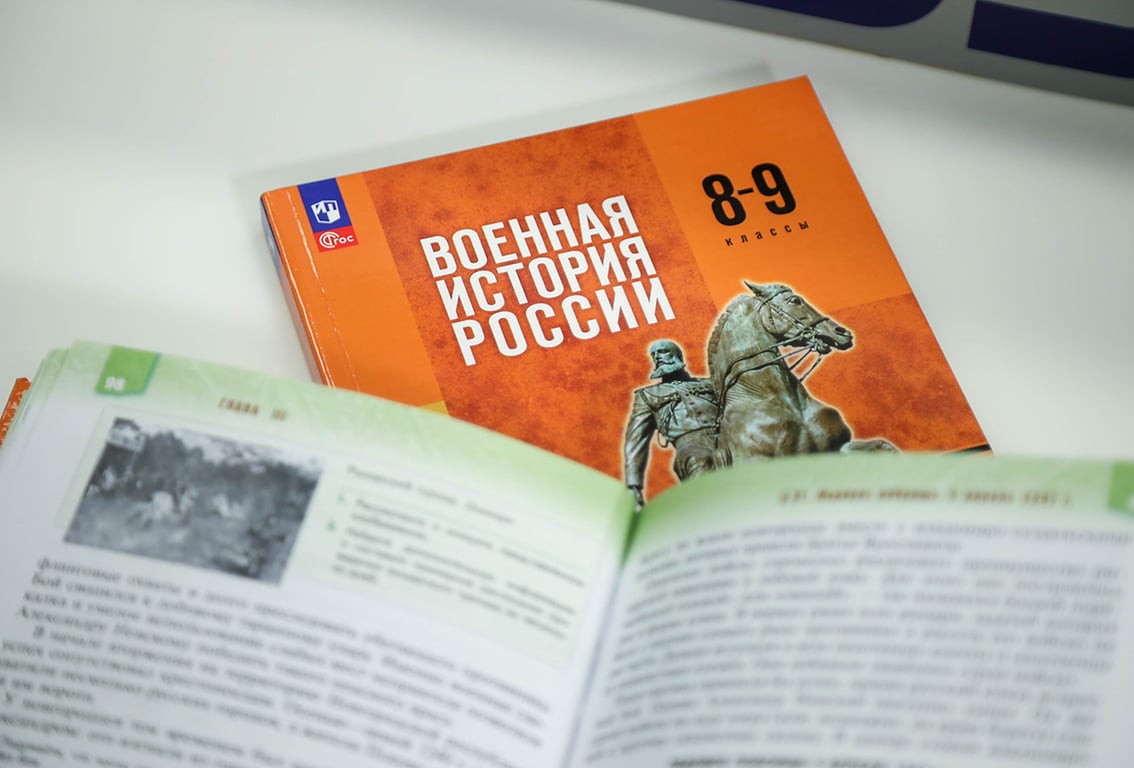
“The decision to launch a nuclear strike was made to show the USSR its (military) superiority.” I can’t, I’m reading some fanfic about marriage games between the USA and the USSR.”
“It was as if it had been translated from the Old Russian language and back ten times, until it became stupidly unreadable.”
Historian Konstantin Pakhalyuk analyzed Medinsky’s textbook in detail, pointing out the factual inaccuracies of what was written.
“They tried to write the history of a “great country,” which, however, is constantly offended by someone,” the expert believes. — A paradoxical image emerges of a global power that is concerned exclusively with national interests — and then mainly in foreign Europe and neighboring countries, as well as in Syria; a strong state for which the real threat is renegade intellectuals; a pragmatic nation that seeks the friendship of those who supposedly “eternally” want to destroy it. And the general “jingoistic” style constantly stumbles over heaps of meaningless names, then over tedious lists of government bodies, now over superficially pathetic quotes, now over half-hidden excerpts from bureaucratic reporting documents.
Traditional values
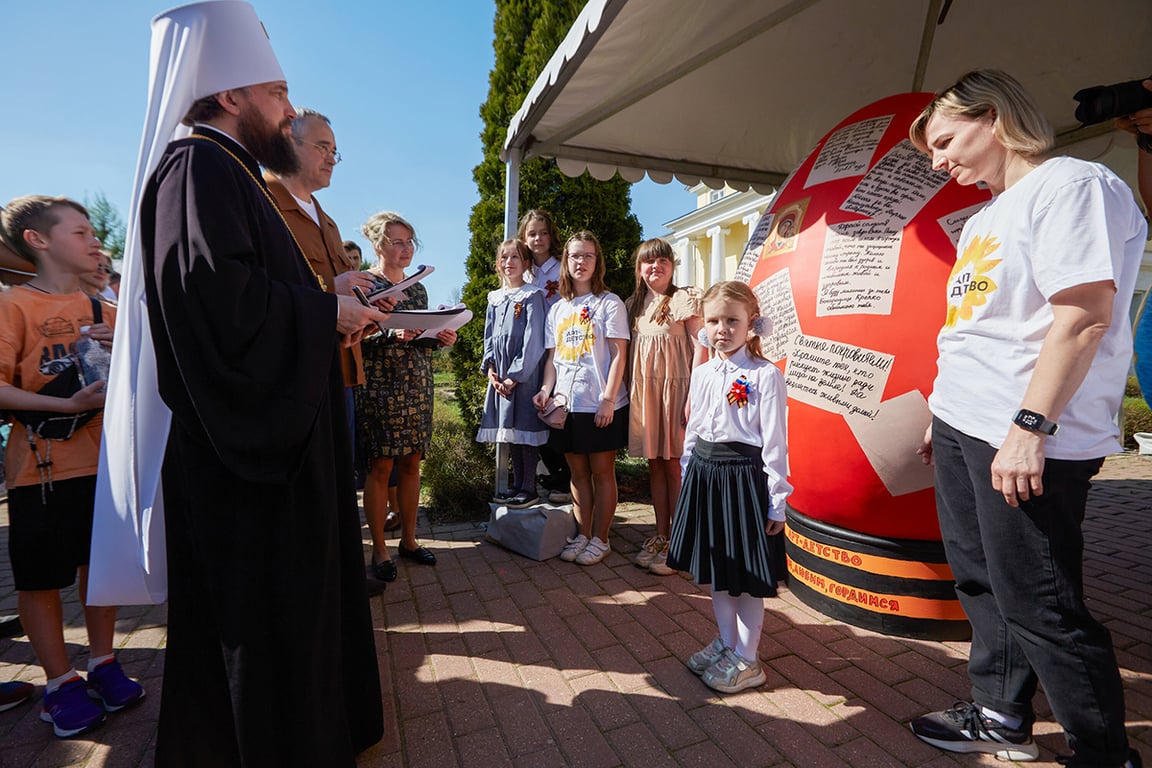
Another highlight of this year was the visits of Orthodox activists and representatives of the Russian Orthodox Church to schools and colleges. For example, in St. Petersburg there is a Center for the Protection of Motherhood of the Department for Church Charity and Social Service of the St. Petersburg Diocese. Representatives of this organization regularly report on their conversations with schoolchildren, where they tell teenagers about chastity, traditional values and the importance of creating a large family. At one of these classes, schoolgirls learned that “ contraception does not work” and “ you need to protect yourself for your husband.”
In Chuvashia, priest Father Boris told schoolchildren that marriages break up due to premarital sex, and “love is a sacrifice, and love already appears in marriage when a person sacrifices himself for his neighbor.” In the village of Reshetikha, Nizhny Novgorod region, 14-year-old schoolgirls were given a “Clean Image” course. In some photo reports, girls sit face down at their desks, covering their heads with their hands. At the last lesson, schoolgirls looked at embryo models as part of the conversation “Woman in the Modern World.” The lesson ended with the distribution of brochures “Human Potential of Russia”, which reflect the themes of the entire course.
The Sphere Foundation conducted a small study among teachers and social workers. According to the results of the study, reproductive pressure in schools has increased: “68% of respondents reported an increase in the activity of representatives of the Russian Orthodox Church in schools and social institutions. Formally, such visits take place under the guise of “spiritual and moral education,” but the content of the conversations is focused on the condemnation of abortion and sexuality.”
“We were indignant: why such lectures in an orphanage where girls are injured? But the administration said: “It’s important for us to be in trend. Now the state is focusing on spirituality,” recalls a teacher from the Rostov region.
“The director says: “We need to show that we support family values.” And he calls a woman who gave birth at 16 years old. She had the support of her parents and is happy. But no one explained to the girls that this doesn’t always happen,” says a social worker from Krasnodar.
“All grants are now about family. If you want to win, add a phrase about “careful attitude towards life” - and you have more chances,” says a teacher from Kazan.
For example, in Bashkortostan, thanks to the Presidential Grants Fund, the “Maiden Wisdom” project worth half a million rubles was launched. During the course, schoolgirls are taught to put on makeup , talk about the advantages of a large family, “how to save relationships,” and set “marriage, having and raising children” as a life goal . As part of “Girl Wisdom,” girls are shown films about marriage and family. All classes are aimed at developing “feminine” qualities.
““Girl Wisdom” is a mentoring project designed to help girls (13–18 years old) living in the village. Verkhneyarkeyevo, Ilishevsky district, to resolve the problems of adolescence and orient them towards traditional family values,” explain the authors of the idea.
Life sentence - crime prevention
“Two schoolchildren from Yekaterinburg received an online order to set fire to a locomotive. The details didn't bother them. Now, in handcuffs, they tell investigators how they committed the crime. And in Stavropol, two teenagers - one on a scooter - threw a Molotov cocktail at the local house of the Union of Veterans. Two more were guarding in the bushes at that time. They planned to earn 50 thousand rubles. They broke the window with a stone, poured gasoline on it and threw a match. The teenagers filmed their actions,” this is how the plot of the “Vesti” program begins. Duty department."
We are talking about the next teenagers who will be tried for terrorism and/or sabotage. Since the beginning of the war, at least 158 teenagers have been convicted of “sabotage” and “terrorism.” Now there will obviously be more such cases.
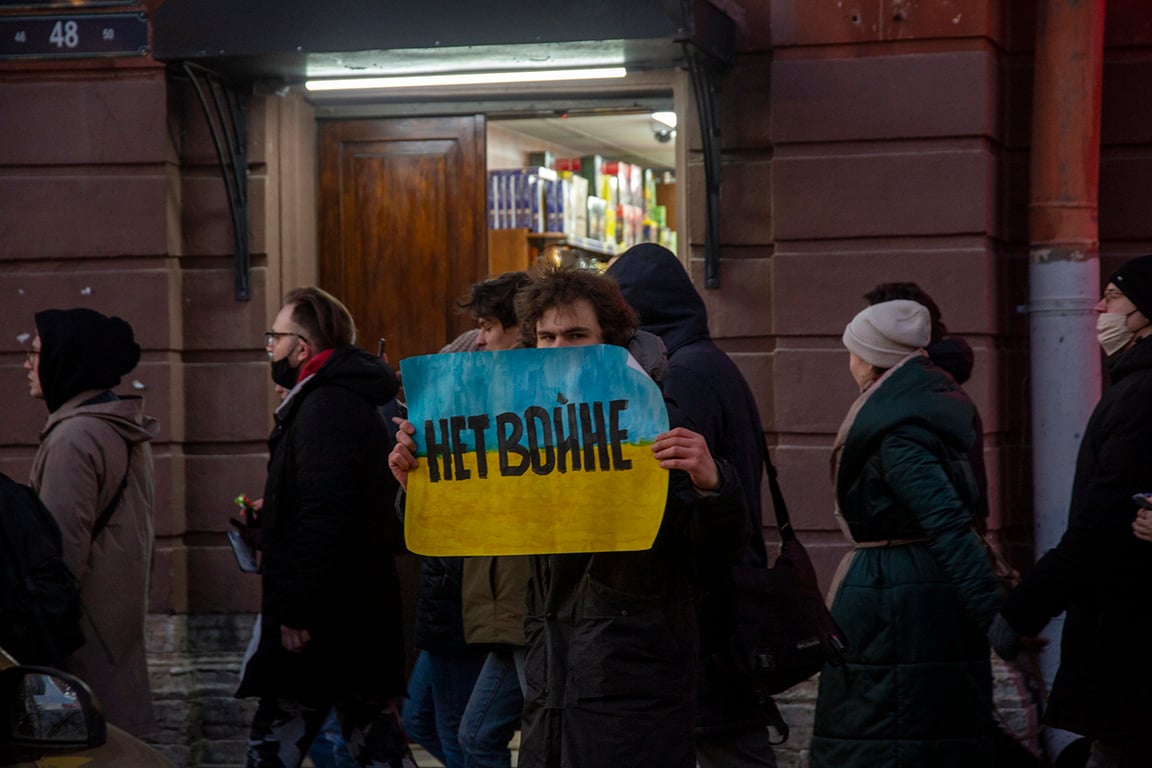
At the end of October, State Duma deputies unanimously supported lowering the age of criminal liability for sabotage and terrorism (arson, explosions, assistance to sabotage and terrorism, training in sabotage activities, participation in sabotage communities) from 16 to 14 years: according to deputies, this is the prevention of sabotage, because the measure “will show schoolchildren that they will not be given any concessions.” Now, for these types of crimes, teenagers can receive any sentence up to life.
Only one deputy, co-author of the bill, member of the Communist Party of the Russian Federation Yuri Sinelshchikov expressed doubts:
“If a person does not understand the essence of the accusation, how to punish him?” - he clarified.
Numerous studies confirm that teenagers are not fully capable of adequately assessing the situation and risks when it comes to such things as throwing a Molotov cocktail. Psychiatrists and neuroscientists Linda van Leijenhorst, Bregtje Gunter Moore, Zdena A. Op-de-Max write in their work that “adolescents are more prone to risky behavior due to the development of the prefrontal cortex at this age.” Minors have worse impulse control and suppress aggression. When evaluating decisions, “adolescents are less likely than adults to evaluate both risks and benefits, understand long-term consequences, and consider alternative options.” They "are less able to plan for the future and have less ability to see short- and long-term consequences or take other people's points of view into account."
Accordingly, a child who has committed a crime can hardly stand on the same level as an adult offender who is able, for neurophysiological reasons, to understand what he has done and what consequences await him.
In addition to sabotage, the state continues to punish schoolchildren who express their political position or identity. Thus, in Kazan, 15-year-old Sevastyan Sultanov was sentenced to 12 months of restriction of freedom. The boy painted graffiti about Navalny. And in Moscow, a teenager who kissed a young man became a threat “to public safety and morality”; a protocol was drawn up against the young people under the article on “propaganda of non-traditional sexual relations.”