
Translated material
Ctrl+Z
How government funding is canceling the gaming industry
Politics has long burst into the domestic cultural industries: separate shelves with Z-literature in any bookstore, a rap album for SVO participants, movies and TV series filled with patriotism and songs by Nika Zdorik. Computer games, although not such an established industry in our country, are no exception. Wagners-Spartans, SVO-strategies and exploits of WWII heroes - this is how the state, represented by various funds, “supports” domestic studios developing “socially significant projects”, which in the end no one but them plays (they, most likely, too). After their test drive, Novaya tried to figure out why, when asked about our most famous game, we can only proudly answer: “Tetris.”
Game, Slavs!
What’s funny is that in the genre category of VK Play - our analogue of Steam (the largest digital platform for buying, launching and discussing video games on a PC) there is a separate game genre (!) - “Russian”.
In this selection, apparently warning the user about something, you can find games from independent studios, for example, a Moscow electric bus simulator or single-player Jenga.
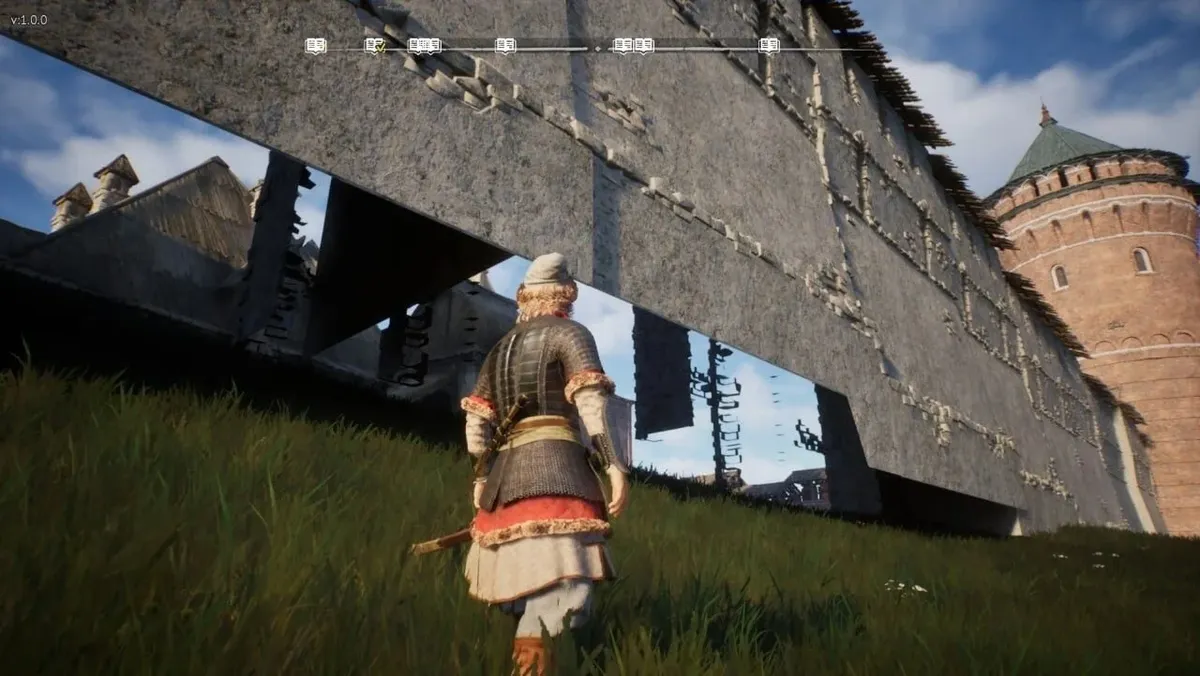
The most high-profile domestic project of recent years - “Smuta” - best illustrates the situation with the Russian gaming industry: the state is ready to allocate about half a billion state rubles through various autonomous non-profit organizations, but in the end it turns out to be another “historical note”,
and not at all to be played. It is needed to report to the “people in jackets” who, with words about traditions and historical value, are ready to sponsor a new project of the studio, despite the past result, which was an absolute failure from a financial point of view and among the players who “destroyed” the game page even on the domestic VK Play platform.
Due to the difficult post-Covid situation and sanctions after 2022, the Russian online gaming industry has lost 80% of its value compared to 2021 - then the market volume was estimated at 99 billion rubles. The foreign market has become officially closed to Russian games due to sanctions, and the domestic market, unfortunately, is not the largest. And, importantly, not the most solvent. This can be understood from the regional price lists on the sites: a significant part of the games on Steam have one price for Switzerland and a lower price for Russia.
Support for the gaming industry could spur its development, but for now legislators are focused on measures to limit “prohibited content” and write decrees on the ideological orientation of the products they sponsor.
But it cannot be said that the authorities are inactive. Thus, within the framework of the National Economy program, a federal project was announced to support the domestic game industry. Now developers can receive grants through various NGOs and foundations thanks, for example, to the Internet Development Institute (IRI).
This is a non-profit organization founded with the support of the presidential administration, one way or another affiliated with the government and receiving the prevailing part of its funding from there. Its main task in modern political conditions is to distribute government grants (almost always on a non-repayable basis!) for the creation of patriotic and socially significant content.
What is symbolic is that its head, Alexei Goreslavsky, before his appointment to the post of general director, himself worked in the presidential administration.
In the summer of 2025, he reported that in the period from 2025 to 2027, total support for game projects will amount to about 3.4 billion rubles.
True, from 2026, games will be released with “anonymous” support, all due to sanctions from the EU, which even the General Director of Iran personally fell under. As the document states: “He (Goreslavsky) is responsible for financing numerous projects that justify and glorify war.”
According to Goreslavsky, the new anonymous financing format will protect development studios from sanctions risks. True, there have been no precedents yet, but the pages of the IRI are closed, reporting is not available to the average user - whether there is room for a turn towards even greater concealment of the “internal kitchen” and a legal buffer in the manipulation of finances - it is still impossible to say for sure.
But you can play their projects and see the whole truth on the monitor.
“Princess” was ordered
According to the latest data from the Organization for the Development of the Video Game Industry (RVI) and the NAFI think tank, three out of four Russians over the age of 14 play video games. Gaming in Russia is the fourth most popular form of regular leisure time.
Thus, about 80% of citizens play video games, and, despite the sanctions, the majority of the population continues to use foreign gaming platforms.
At the same time, over the past couple of years, several domestic projects have received funding, including the world’s first ballet slasher film “The Princess,” inspired by Pushkin’s fairy tales, a visual novel about besieged Leningrad “Immortal Symphony,” etc. The general pathos of the content is probably understandable.
In the modern video game development market in Russia, there is one main investor. State.
Or rather, without his participation the game will never go beyond indie development, especially to the international market. This is not to say that this is bad, the problem is different: good projects should be supported not only by the government, but also by the people.
We decided to test a separate segment of games that raise the eternal theme of war (for some reason, actively funded), and specifically various military strategies (since they attract the attention of officials and, accordingly, developers), including the Wagner PMC simulator Sparta 2035, the sci-fi about men on the hunt “USSR: Enemy from the Future” and the whole series “Frontline: ZOV” about Russians in Syria, Russians “against NATO” and the Russians are already in Mariupol.
ZOV from Kota Parfentia
The theme of war will almost always be relevant to the gaming industry. Globally, such games can be divided into two groups in terms of plot: “wars in a vacuum”, where there is, what is important, the main villain - an impersonal “terrorist” who opposes obvious good; and games that take as a basis historical facts, real events on the basis of which the plot is built (often it can repeat them exactly, narratively tell the story of a particular soldier, etc.).
Obviously, the approach to their creation and their perception are significantly different. In the first case, the authors will not be able to exclaim: “Well, that’s how it happened in life!” Modern game makers, living on grants from Iran, obviously deliberately turn to recent historical stories in order to accurately pass the selection at the application stage, arguing for the social significance and educational component of their future brainchild.
Thus, the Playing Cats studio, which began its journey with the production of children's games about Parfentius the Cat, ended up with a CBO simulator. Before this, there was also a game about Russians in Syria, but these characters “didn’t work” online.
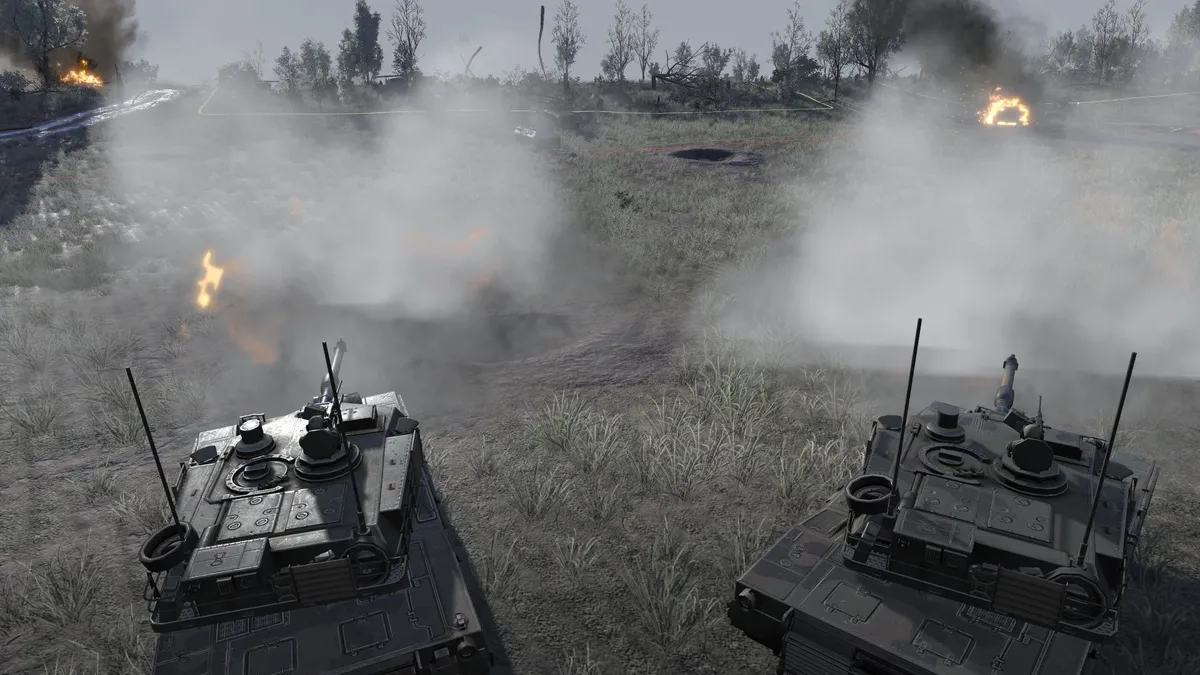
The focus on military topics using government money began with the “Front Edge” project. As conceived by the authors, the game takes place in a conventional modern conflict - in fact, this is a hypothetical military confrontation between Russia and the United States. The emphasis is on realistic technology, modern weapons and the most “serious” tone, without fantasy. A gaming “sandbox”, a platform for different scenarios of modern wars - real prototypes of conflicts.
What’s remarkable is that you can even play for the American Abrams.
At the moment, Steam has refused to publish the game, or rather, its page is on the platform, but you cannot play it. The same thing happened with the developer’s future game, which at the moment is promised to be published only on domestic platforms - “Gostomel Heroes” (a continuation of the “Frontline: ZOV” series about the events of a special military operation).
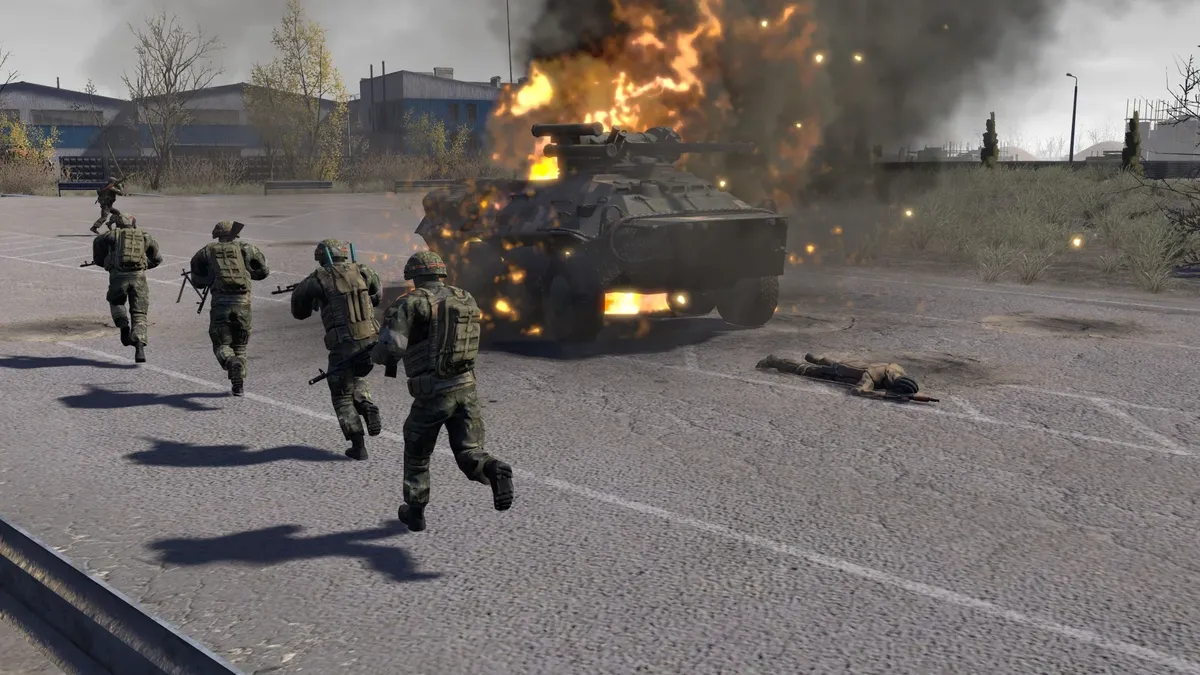
Based on the few reviews of their past projects, we can conclude that the developers make their games for an extremely patriotic audience. There is nothing terrible in the topic itself, there are many projects that reflect on the First and Second World Wars, it is important how to talk about them. Now this is a propaganda tool, and only for literally hundreds of people, because the problem is much more fundamental.
Their games are not played. Not even because they do not always start the first time and can crash at the most inopportune moment. They are simply boring.
"Sparta 2035" about PMCs in Africa
Unfortunately, the VK PLay system does not provide the option to look at the average number of players, but other games on our list were published on the very democratic Steam, where everything is transparent. If you study the statistics of the players in the next game, the situation is extremely deplorable. The game "Sparta 2035" on Steam has a peak of 210 players in November 2025. On average, from 2 to 30 players enter the game. Not per hour or even per day - per month.
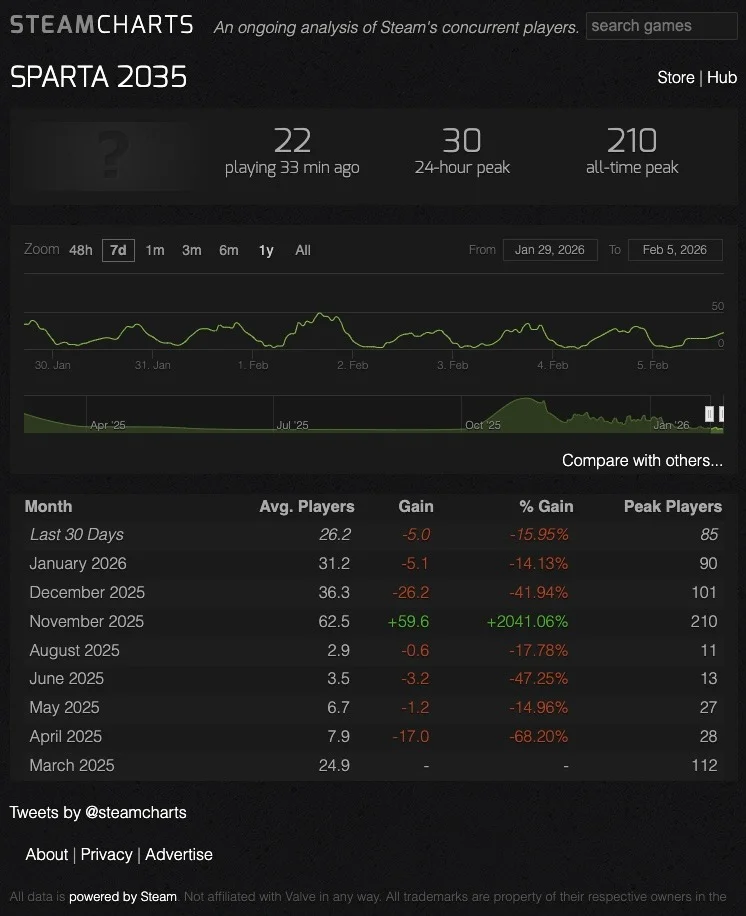
It is important to note that on the domestic platform the statistics are obviously much higher, but certainly not hundreds of times. But the game is notable for other things.
Sparta 2035 is a turn-based tactical strategy game from Lipsar Studio. In terms of genre, it is most often compared to X-COM or Jagged Alliance: the player controls a small squad of fighters, completes missions, develops a base and gradually goes through a story campaign.
The plot is quite straightforward, however, the phrase “alternative reality” does not in any way cancel the association with the probable inspiration of the developers - the Wagner PMC.
The action takes place in 2035 in Africa, where several countries are engulfed in conflicts, rebellions and are actually disintegrating into zones of influence of armed groups. Amid these crises, a private military company, Sparta, emerges and is tasked with stabilizing the situation and helping local authorities fight radical military forces.
And you begin to engage in game management in the role of a conditional Prigozhin, who, according to the script, cannot organize a “march of justice” from Africa to Moscow.
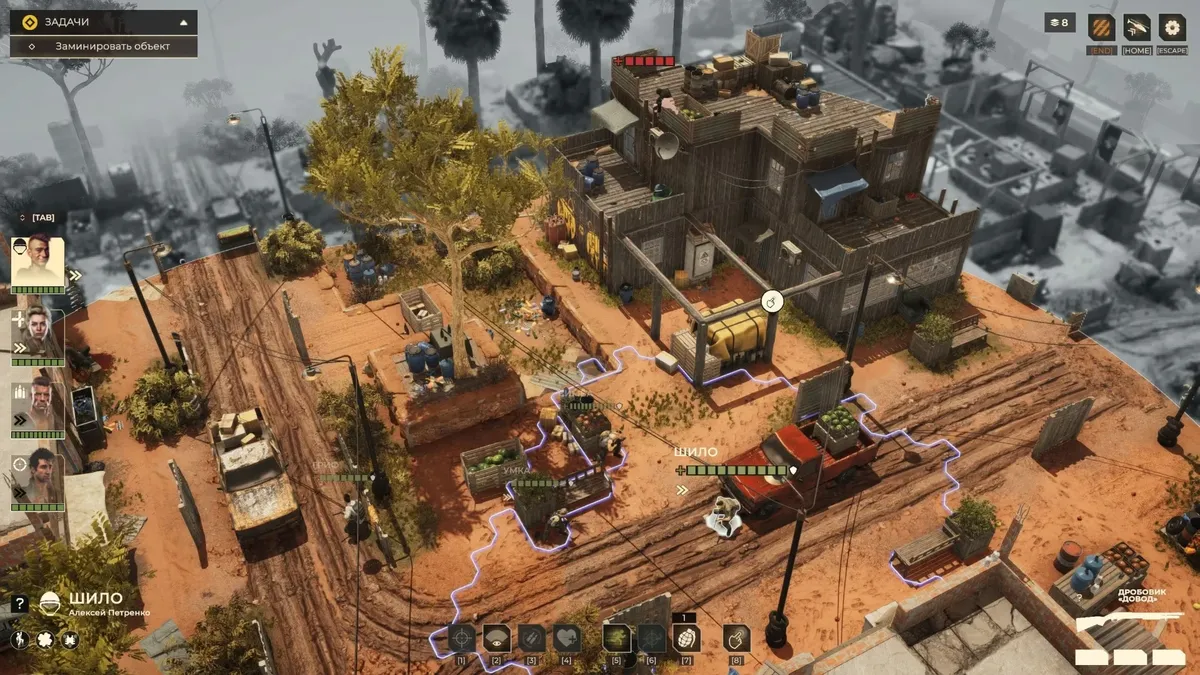
So, the game greets us with the slogan: “Join Sparta - here they fight the bad guys for good money!” - which is very ironic, because the developer himself showed how to properly hunt for money from the state for personal purposes, hiding behind routine slogans.
To understand, after the release of “Sparta”, many bugs were discovered in it, and for 900 rubles you could buy a game of the level of mobile strategies of the 2010s... But, what’s more interesting, another game was found, exactly similar to it. The developer directly writes that Warhounds is a revised version of Sparta, only made for export.
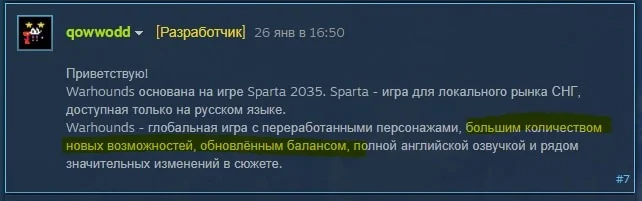
Let's explain the scheme: the developer receives money from Iran to create “socially significant” content, the game does not pay off, remains with the same problems, the developer changes names, makes English voice acting and that’s it. The new craft is ready!
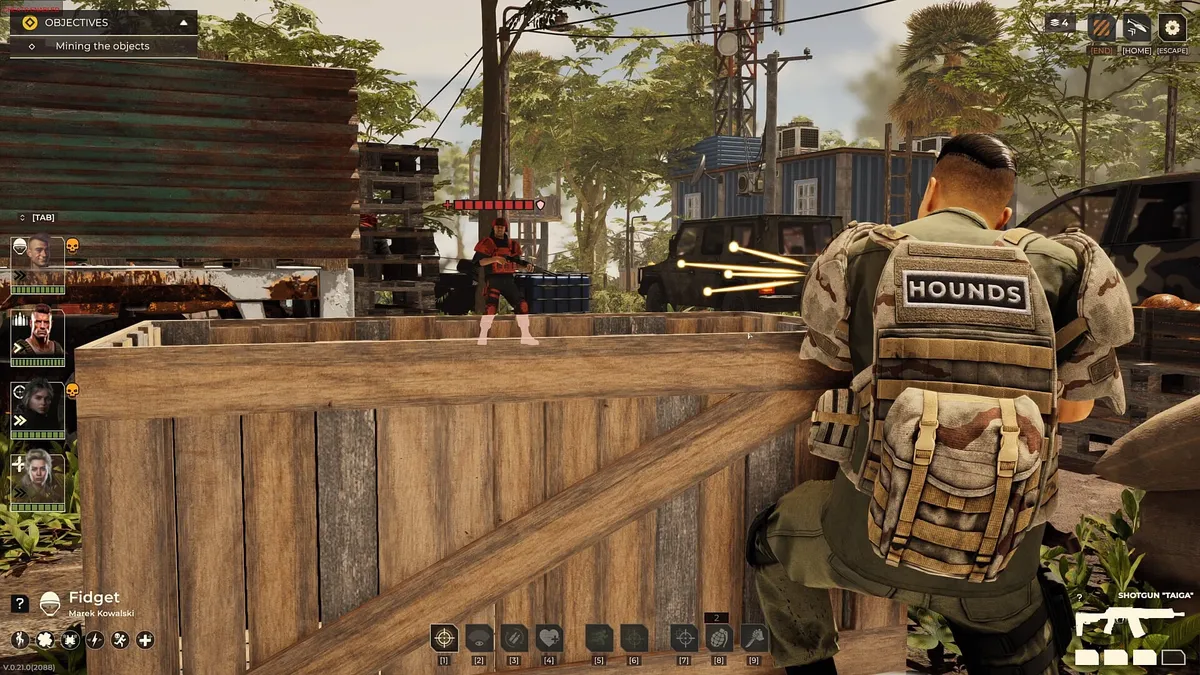
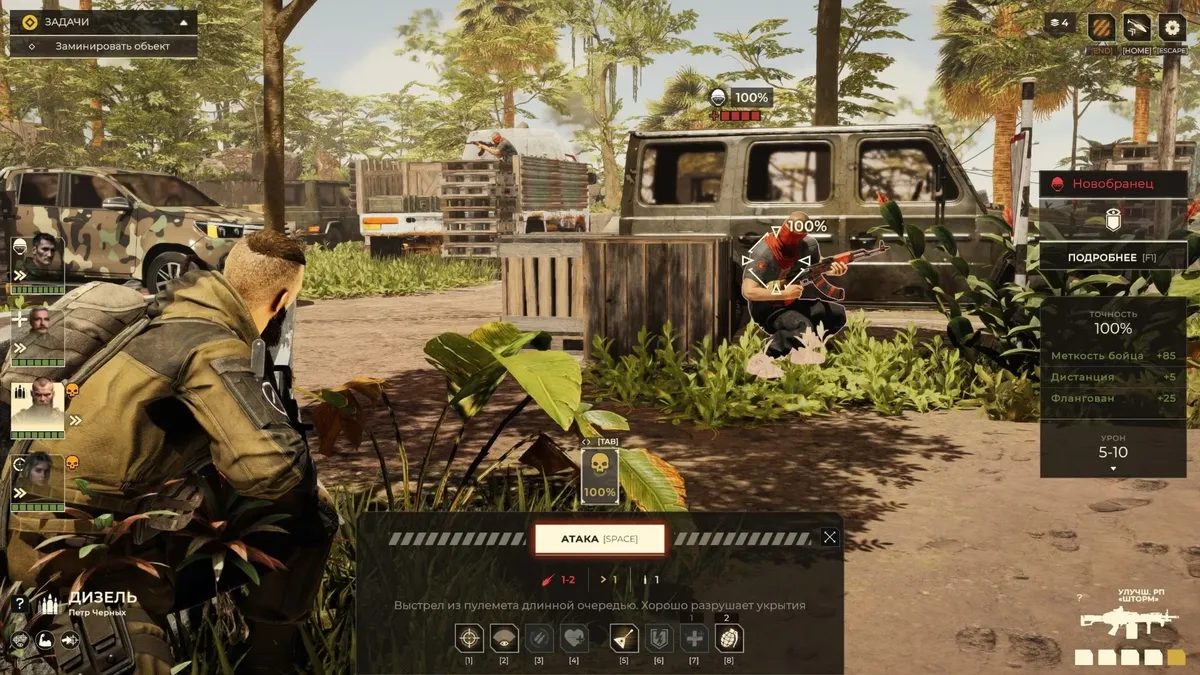
Moreover, the game was essentially financed by Iran. The peculiarity of this financing is that the contract has specific deadlines for the release of the game. What condition it will be in by this time is not so important (at a minimum it should start and not crash every five minutes). The game is still not finished, just read the reviews. Crashes, missing limbs and softlocks (a situation in a video game when the process continues - the character moves, the graphics work, but further progression of the plot or completion of the quest becomes impossible). It turns out that the studio released its “craft” in its raw form, closed its obligations under the terms of financing, and now quietly continues to complete the game to a digestible state for its own income, while simultaneously working on a “new game” based on the old one, releasing it with a third-party publisher.
“Enemy from the future” between the creature and the mother-in-law
Another million-dollar project: imagine that you and your friends go hunting hares, but you are met by “some kind of creature.”
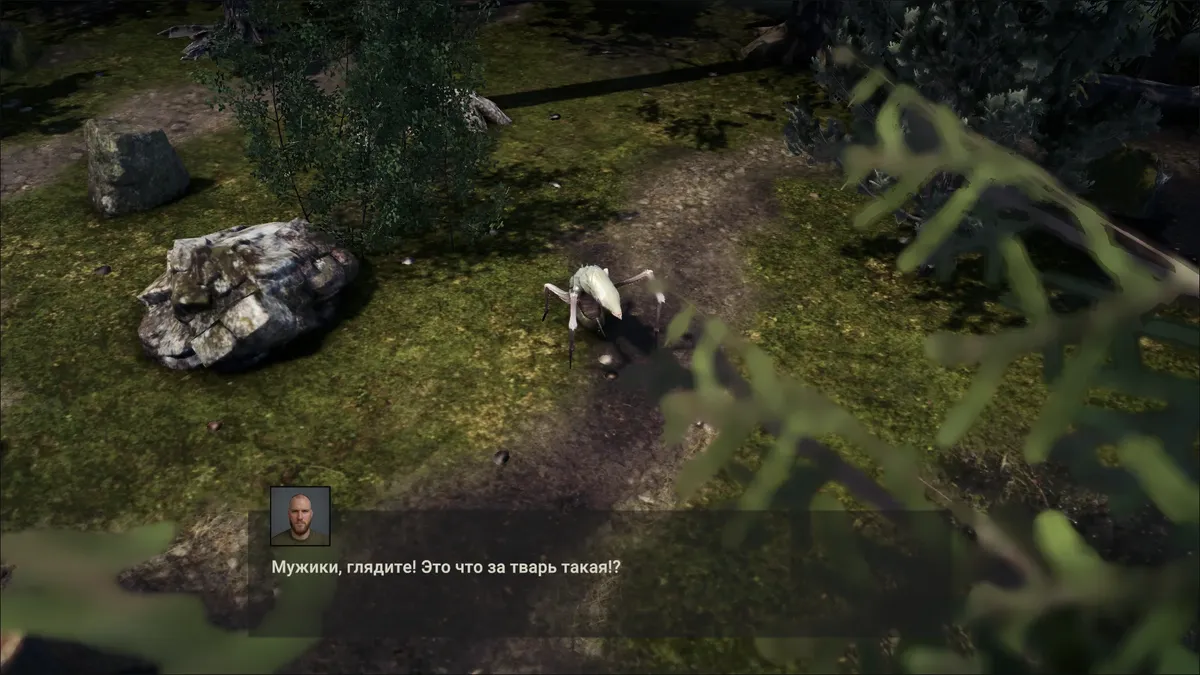
There is no need to talk about the technical components of the game. There is nothing remarkable in the game, except for controversial patriotic motives presented through “jokes about the mother-in-law.”
It remains a mystery how such a “niche” product, which during personal testing crashed in the first seconds of the game, was supported in Iran. But everything is logical, if you are a beginner developer, then you can submit an application with the text only “on paper” with little developments. Apparently they succeeded.
The market situation is as follows:
modern Z-creations have not yet given rise to a single masterpiece, but the “Russian soldier” is gradually trying to conquer it and not allow other projects to receive funding due to his need for propaganda.
Games are art
It is no coincidence that attention to video games is now focused. Once upon a time, teenage fun can indeed be the key to the revival of national culture, as a number of projects not described in this text prove.
The same Atomic Heart showed that the world is really interested in the “Soviet Union”. Only if you show it from an unusual side. It is safe to say that the same applies to earlier periods and themes of our history. Even an adventure game about exploring virgin lands can be made very exciting!
And right now the question is being decided what they will become - a spit of crookedly made propaganda or a way to revive the Russian media industry. So far, alas, many hints at the former.
Daniil Cheryapkin