
Translated material
Not only MAX
In different countries, the national messenger does not have to have a three-letter name

Photo: picture alliance / SvenSimon
Against the backdrop of endless advertising for a three-letter national messenger, whose name conflicts with both 168-FZ “On Advertising” and the notorious 809-FZ on “traditional values” (which require everything and everyone to be written in Russian), a logical question and healthy curiosity arises: what is it like there, outside the vast homeland? What generally happens to the messenger market beyond the boundaries of popular and prohibited?
First, we need to make a few clarifications. The conditional market of conditionally provincial messengers is divided into two categories: popular and state-approved.
No matter how unpleasant it may be to read, the first ones fall on the low-quality part of the planet’s population. Vivid examples of the local market: once it was Mail.ru Agent (now VK Messenger) or Viber. It is unlikely that a person with a higher education will choose these means of communication.
The second category is typical for, let’s say, not the most democratic countries, where the state decides what the people can use and what they cannot.
There is another example - China. And that's a different story. The Chinese market is completely different. Historically, economically, culturally.
When we first mastered QR codes, this was already the norm for Beijing residents. When we learned the word “super-app”, half of the Celestial Empire had been living there for a long time.
Actually, such a super application is WeChat, where there are payments (WeChat Pay) and, accordingly, endless shopping. There is also a DiDi taxi order and any available logistics - from food delivery to numerous entertainments. There is QQ for a younger audience, which works on approximately the same principle. You open the application and, in addition to the usual messaging, you get almost everything. There is Lark (from ByteDance) and DingTalk from Alibaba. They work on the same principle and fight among themselves for the billion-dollar market. What is important is that all of those listed swore allegiance to the Communist Party of China, so by definition there is no sedition there. As compensation: by installing the conditional WeChat, you will not need anything. Food, accommodation, paying bills and other pleasures of life are built into the application.
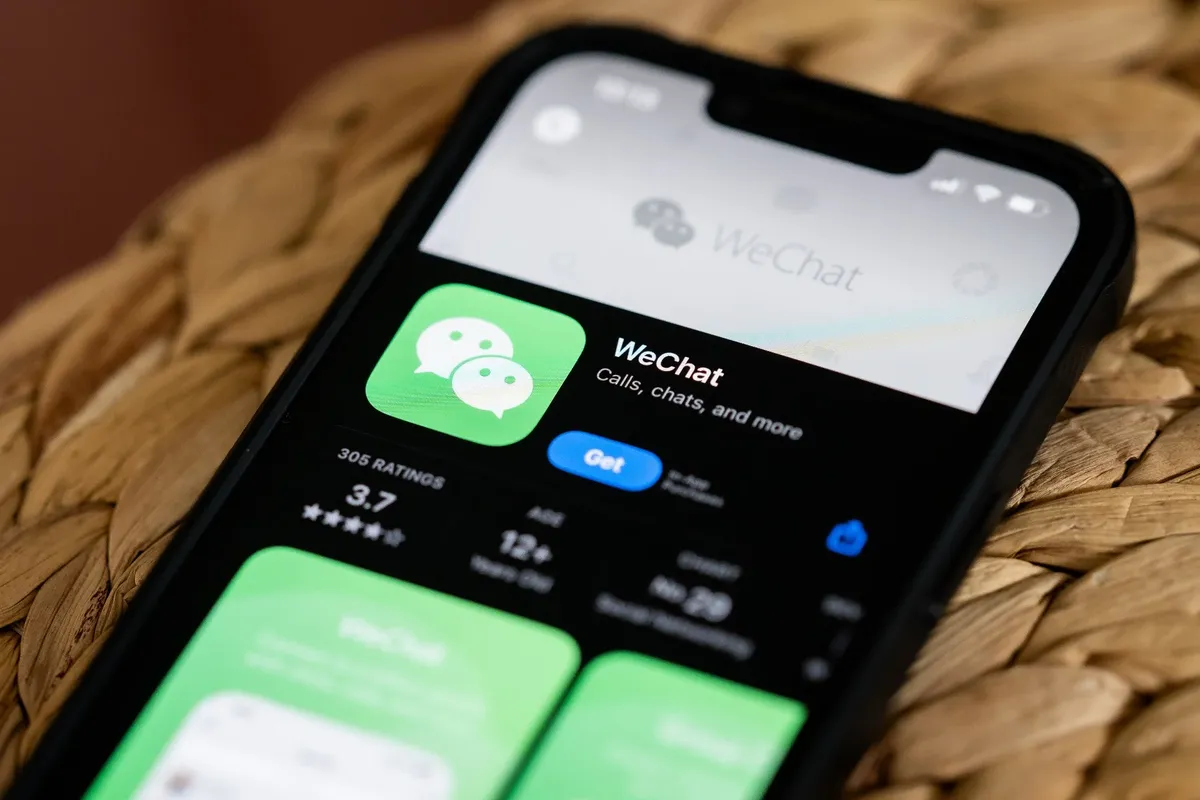
But here is an important point. And mentally insert this after each paragraph: anyone with a little more than two brains, international contacts, and even more so a business, has the usual WhatsApp* and Telegram on their phone. Officially, all world services are either blocked or censored; American business has been fighting for the Chinese market for years, making certain compromises. Unofficially: “Golden Shield” also has holes for VPN and, accordingly, the operation of traditional applications.
That is, if you suddenly want to go to China, then, of course, it would be nice to get a local number and documents, install the listed applications and get all the joys of the local infrastructure. On the other hand, install a dozen more applications - and your usual configuration will work about the same. Let it be slower in places and with errors. But you can use it, no matter what the party thinks.
In other countries with conservative politics, the situation is similar. It can be assumed that those who have chosen Dubai as an alternative place of residence are familiar with the Botim or GoChat instant messengers. These are the first apps you install when you land on oil-rich soil. Because that’s where calls work - IP telephony is allowed, but not for everyone.
Because that is where all citizens “live”. Which, meanwhile, do not disdain popular solutions, but also do not advertise their use.
Deja vu occurs. Someone here also recently negotiated with the other side via WhatsApp, which is formally banned.
There is another interesting paradox. On the one hand, in the same Emirates Telecommunications and Digital Government Regulatory Authority - the local “EmirateComNadzor” - prohibits calls in Western instant messengers, strictly regulates the local market, and in theory and by law nothing should work at all. But Zoom or Microsoft Teams still perform their functions perfectly. This is because these are not mass decisions, but corporate decisions; they are regulated differently. So real life differs from the official picture here too.
In another part of the continent, in Iran, where events are happening right now, the consequences of which are unpredictable, the situation is similar. But on a smaller scale. For example, there is the Rubika messenger, owned by the company Hamrah-e-Aval (which means “First Satellite” in Persian). Formally, this is the Mobile Communications of Iran holding. The local Rostelecom. This means that it is completely under the control of the authorities. There is Soroush with access to banks and Bale with access to local government services. All of the above work through the Message Exchange Bus - a platform from the local Ministry of Communications, which ensures “interoperability”, that is, a user of one messenger can write to another.
But there is an awkward moment here too. All of the above are copies of advertising brochures. Local residents, especially those who are not fools, understand perfectly well that any wrong sneeze ends up in the “Ayatollah’s cave,” so, of course, they do not trust local products and use them as needed. The real life of the Islamic Republic of Iran is not happening there. One of the really popular instant messengers is... that's right, Telegram! However, local residents also do not disdain other solutions known to us for bypassing blockages.
The above are quite radical examples that exist within the framework of conservative politics in difficult regions. But among this there are also quite peaceful stories, without which this story would not be complete. In Japan, the Line messenger has been popular for the last thousand (minus some) years. This is the same super app as WeChat, with all the joys of life that become available to holders of a Japanese number and passport. But Japan is a separate world that fully deserves it. Everything else works great there too, it’s just that the locals don’t really need it - they have enough problems of their own. A similar example is KakaoTalk, everything is the same, only for South Korea. This is also not surprising: such markets (as, indeed, the Russian one) require local products adapted to local realities. Like, for example, in North Korea. There, too, they say, there is a special messenger Sae Byeol (“Morning Star”), but, as expected, no one has seen it.
Considering access to services, which is most often relevant for indigenous residents, regional messengers, whose names are unknown outside their countries, perform absolutely utilitarian functions and have long had nothing to do with their name.
I mean, they do everything there except direct messaging - well, maybe house chats or something like that. No modern person uses this specifically for communication.
And not only because most often these are not the most confidential products (censorship in the Japanese Line has not been heard for a long time), but simply because the world of a decent person is not limited to his own village.
As a result, you can make long lists and list the most secure instant messengers, remembering all sorts of Signal or Threema. You can make reviews and find exotic applications: it is impossible to cover all regions, and there are definitely countries where something else is popular that is not included in this text. But there is practice and real life. In practice: either WhatsApp, which is used by almost everyone, or Telegram, which, for all intents and purposes, already has more than a billion users, or Facebook* (with its separate Messenger product). Wherever you find yourself, something from this triad will definitely be on the phone of your interlocutor. Regardless of what is blocked in the country or, conversely, popular.