
Translated material
"The Bucharest Vampire"
In the early 1970s, young women became afraid to go out on the streets of Bucharest at night. An unknown criminal was operating in the city: he not only robbed and raped women, but also drank their blood, which is why he was nicknamed “the vampire.” Who the killer turned out to be, keeping the capital in fear - in the material of "Cold".
Residents of the Romanian capital were afraid to leave their houses because of a serial killer. He raped the victims and sucked their blood 
On the night of June 1, 1970, an unknown assailant attacked waitress Florica Marka, who worked at the Marashesti restaurant. He grabbed her in the area of the Holy Friday cemetery, forced her to take off her panties, and then demanded that she climb over the fence into the cemetery. Marku was unable to do this, so the criminal dragged her there himself.
Taking Mark to one of the graves, he made her swear in front of the cross that she would marry him and not tell anyone about what happened. He then forced her to completely undress and raped her, biting her several times on the face and left thigh in the process. The attacker then led Mark out of the cemetery.
Having reached the intersection, the man stabbed his victim three times and sucked the blood from her wounds. Marku miraculously survived - she was saved by a truck driver passing by. She was able to escape from the man who attacked her and asked the driver for help. The criminal disappeared again.
In November 1970, an unknown person attacked Olga Baraitaru and raped her, and in February 1971, Georgitsa Sfetka: he robbed her and tried to kill her. Then he tried to kill another woman, Elizabeta Florea.
Fanika Ilie, a 31-year-old employee of the Vulcan restaurant, was killed on March 5, 1971. He attacked her at about two o'clock in the morning when she was returning home from work. She was found dead by residents of one of the houses near the crime scene. Ilie was lying on her back, she was not wearing panties, a garter belt or a skirt - these clothes were lying next to her. Her Pobeda wristwatch and a bag containing personal items and some money were stolen. There were bite marks on the body.
48 wounds including bites
Another woman who died at the hands of an unknown person was 35-year-old Georgitsa Popa. The murder, which occurred in April 1971, was recalled by journalist Adrian Kilcan, who was a child in those years.
“The street was swarming with policemen... <...> People watched from afar, talked with their hands covering their mouths, women crossed themselves, many wiped away tears. Children, in order to appear brave, made their way through the back streets, taking advantage of the inattention of adults to see and retell everything. In this yard, as I quickly realized, the garbage men who came to work at five in the morning found the horribly mutilated body of a woman: she had been killed by knife blows to the head, chest and legs, her head was almost crushed from blows.
Word spread quickly; this was the third victim of the serial killer who had been terrorizing the city. But now the corpse frightened even those who investigated the case: the woman’s genitals were torn apart by teeth.
<...> The body was covered and lay in a pool of blood - but then for the first time I heard strange words, which I later repeated to adults who did not have time to approach: cannibal, necrophiliac, fetishist, sadist...” wrote Kyltsan.
He later learned that the victim was the mother of his classmate Louise. “I saw her several times when I went to Louise’s house with another classmate, Luminitsa Lambrou, the granddaughter of the famous musician, but I only remember that she was young and beautiful and treated us to Turkish delight cookies,” he recalled.
There were 48 wounds on Popa's body, including bites. In some places where the bites occurred, the criminal tore out the flesh with his teeth. Not far from the crime scene, a piece of fabric was found with the blood of the alleged criminal on it. His body fluids were also found on the woman’s thigh and skirt. This helped investigators determine his blood type.
The police gave the operation the code name "Vulture". A witness in the case, a taxi driver, said that at about two o’clock in the morning, not far from the place where Popa was killed, he picked up a man about 170 centimeters tall. The man had dark, combed-back hair and a dark complexion. He was wearing a coat and had pockmarks on his face.
As the media wrote, women in Bucharest now did not dare leave the house at night. The killer was nicknamed “the vampire from Bucharest.” His other nickname was the “blonde killer” - all those killed had blond hair. However, among the victims whom the criminal did not or could not kill, there were also dark-haired ones.
Doctor's certificate
The killings and attacks continued. On the night of May 1, 1971, a criminal attacked a woman named Stana Saracin. She was saved by athlete and stuntman Paul Misai - he even tried to catch the attacker, but he failed.
The next victim was 39-year-old Mihaela Ursu, who worked as an assistant at the university. She died on the night of May 4-5. Her head was damaged, there were two cuts on her neck, one of which cut her trachea, as well as bite marks on her chest and at her shoulder blade. The criminal raped Ursa when she was already dead and ran away from the crime scene. Her clothes were torn or cut, Ursa's bag and wallet lay on the fence nearby. She had money and a watch, but this time the killer did not take them. The attacker's hair was found on Ursu's hands and bag.
Two hours after the murder of Ursu, the criminal attacked another woman, Maria Yordache. He hit her twice on the head with an iron rod, but then dropped it - at which point the woman was able to escape from him. Also in May, he tried to kill two more women, and attacked a third with an ax, robbing her of money and earrings.
Bucharest's security forces were put on high alert: the city was patrolled by more than 100 vehicles and six thousand people , including police officers, teachers and students of police schools, members of the Patriotic Guard and military reservists. Raids were carried out in public places, and people who aroused suspicion were detained and interrogated.
Anthropologist Cantemir Riscucia created an identikit based on teeth prints left on the body of one of the victims - this method of searching for a criminal was used for the first time in Romania. Based on these prints and the testimonies of surviving women, it was possible to determine that the criminal was 26–35 years old, a man of average height (172–175 centimeters) with a flattened back of the head, a protruding chin, dark eyes, a hooked nose, black hair and body hair.
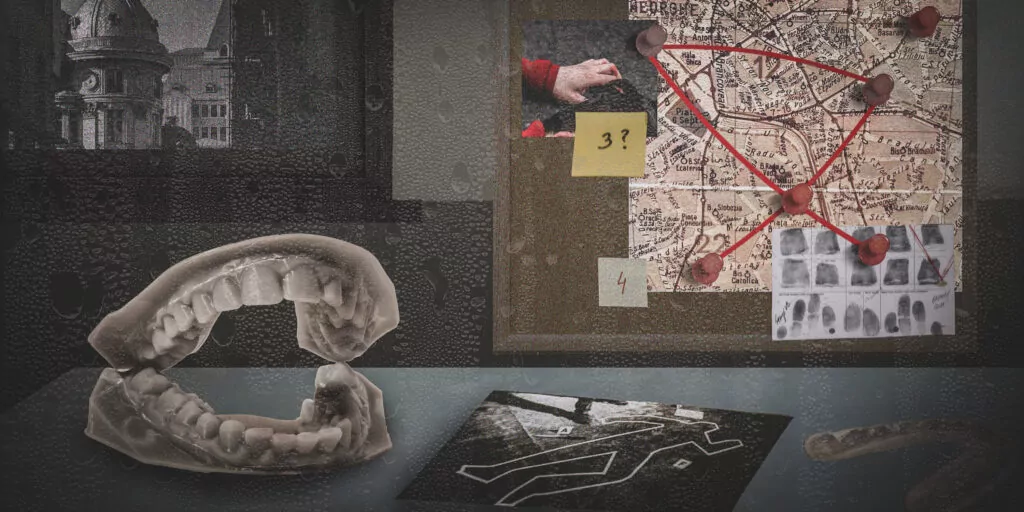
At the scene of Ursa’s murder, they found another piece of evidence: a certificate that was soaked in water and blood, making the text on it very difficult to read. Forensic experts were able to reconstruct part of the inscription: the document was issued by Dr. Enistea Octavian from the neurological department of the university hospital in March 1971. After checking the medical records of all students who applied to the neurological department in March, security forces filtered out 83 people.
The certificate was needed to confirm absences from classes at the university. Of the 83 students, only 15 did not have it in their personal files. It was them that the police decided to focus on: they began to call them to the secretariat of the faculty where they studied and ask for a certificate - some students eventually provided it.
Among these 15 people was 24-year-old Jon Rymaru, who was studying at the veterinary faculty. His classmates avoided him, considered him a strange person and said that in fits of anger he cut his arms and legs. He lived in a dormitory. Acquaintances said that he double-locked the door, called him an unstable psychopath and noted that he carried a knife on him. He had a criminal record for robbery.
Uninvited guests
Around noon on May 27, 1971, police officers came to Rymaru’s dorm room and began to wait for him there. When he arrived, one of the officers extended his hand, ostensibly to say hello. When Rymaru returned the greeting, the officer grabbed his arm and tried to remove the bag from his shoulder. Rymaru responded by biting his hand.
He had a fire ax in his bag, as well as two knives wrapped in a towel. There was also a notebook with a blue cover containing a list of items that police speculated were items that Rymaru might have left at his crime scenes. Among them was the same medical certificate. Rymaru was detained.
Experts compared his teeth prints with bite marks on the bodies of the victims - they matched, as did the blood type. The policeman showed the watch that was on Rymaru’s hand to Georgica Popa’s acquaintance, and they confirmed that it was her watch.
## Single
Ion Rimaru was born on October 12, 1946 in the Romanian city of Corabia, which is located on the Danube near the Bulgarian border. In addition to Jon, the family had two more children. His father, Florya, systematically beat his wife, which is why she left the family. After the divorce, Florea moved to Bucharest, where he worked as a public transport driver.
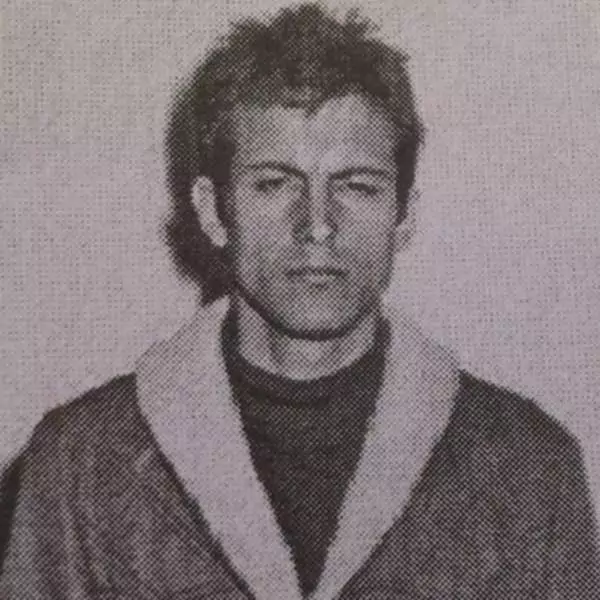
Even as a teenager, Jon acquired a bad reputation - at the age of 18 he was convicted of theft. However, already in 1966 he entered the veterinary faculty. At the time of his arrest, he was facing retakes: due to academic debts, he could be expelled.
After Rymaru’s arrest, his mother told the police that one day, when she came to visit her son, she found money in his pillowcase - he admitted that it had been stolen from the cashier whom he had beaten. Mother and son told Jon's father about what had happened, and he ordered the money to be hidden in a barn near his mother's house in Caracal. Investigators found out that the father knew about his son’s crimes, but could not prove his participation in the murders.
Jon Rymaru underwent a psychiatric examination.
The doctors concluded that he did not have psychotic disorders or any organic brain disease, but the data “clearly pointed to pronounced deviations and anomalies of character, temperament and personality.” The conclusion noted that his psychological state was affected by the difficult situation in the family.
On the first day of interrogation, Rymaru did not make a sound, did not react to anything and looked helpless. No one was able to get him to speak until dark.
Then he tried to convince the investigation that he was mentally ill and could not be held accountable for his actions. However, he was not declared insane, although he was diagnosed with “polymorphic psychopathy with a dominant impulsive and sexually perverted character.” Rimaru then began to confess to crimes, including the murder of Elena Oprea and the rape of Florica Marku, although his testimony was not always consistent.
In total, the crimes charged against him included four murders, six attempted murders, five rapes and one attempted rape, three robberies and four thefts.
During the searches, Rymaru also told the police where he hid the iron bars with which he beat the victims - the police found them.
“Treated badly with women”
Rymaru blamed his father for what happened. “My father told me to stop cutting myself, find a girl and if she doesn’t want to be with me, hit her and rape her. He told me to take money from women and not just rape them. <…> I gave him the money because no one asks him where it came from - he is a hired worker. My father taught me to go out on business in the rain or use a car so that the police could not follow the dogs,” Rimaru said at the trial .
Florya denied the accusations and said Jon "treated women badly." “He said they were perverted and wanted the woman to give in to him immediately after meeting him. When I asked him why there was such a rush, he replied that his blood was too hot,” said Florya.
On September 3, 1971, the court sentenced Rimaru to death. As the media wrote , he asked to replace the death penalty with 25 years of imprisonment:
I am still young and I respectfully ask, dear Supreme Court, I was mistaken, I ask for forgiveness so that I can rehabilitate myself. There were times when I didn't know what I was doing."
After the verdict, Rimaru filed a complaint with the court. He claimed that he often went “to the garage in Floryaska” (the car depot of the state enterprise that managed the city's public transport) to talk with his father. “I told him that I needed to sleep with a girl, because I could not get a woman even for money, although I worked in the port of Constanta to earn money and give it to some woman to sleep with her. He told me that there was a woman who was returning home late at night and that I should wait for her,” he said.
Rymaru also denied that he had lost the certificate, thanks to which the investigators identified him. According to him, the certificate was in his dorm room all the time. He demanded a re-examination of his mental state, claiming that the first one was biased. And he wrote that after serving his sentence “he could be useful to society.”
Rymaru then filed another complaint. He claimed that the police tortured him to extract a confession, and that the true culprit of the crimes was a man named Ahmed.
Both complaints remained unsatisfied. Rymaru was executed on October 23, 1971. Tied to a stake before being shot, he blamed his father. The last thing he said: “I want to live!”
Father's secret
Exactly a year later, on October 23, 1972, the Romanian Institute of Forensic Medicine received the body of a man who had fallen from a train three days earlier. The deceased was Florya Rymaru, Jon's father. Investigators had suspicions that the incident might be related to his son's case, but they could not confirm this.
The head of the institute's bioforensics laboratory, Konstantin Turay, decided to take Flor's fingerprints and palms - he had previously studied the features of Jon's papillary line pattern on the fingers, palms and soles and discovered structural anomalies.
The discovery that followed Florea's fingerprinting shocked Turai: he discovered a drawing that he had been looking for for 28 years. It turned out that Florea Rimaru had committed several murders in 1944. The criminal could not be found for almost 30 years.
Among Flori's victims was 19-year-old maid Elena Udrea, who was killed at the end of June 1944. The criminal entered her house by breaking open a window in the basement. The second victim was 36-year-old Maria Ionescu. Florya attacked her on the street in July of the same year, when she was returning home from work. The woman was struck in the head from behind and subsequently died in hospital. In October 1944, he hacked to death 17-year-old hairdresser Elena Lokustyan with an ax. In November, Florea killed 20-year-old Rosalia Coroi, as well as a young maid, Maria Visitiu, whom he also entered through a window in the basement.
“Everyone was afraid to ride with me”
In 2014, Jon's brother Djordje Ciocan spoke about the problems his family had to face due to the crimes of Jon and Flor. He said that he changed his last name, but despite this, he still faces discrimination.
My children had to leave the city ( Korabia - “Cold” note ) to build a life because they are from the Rymaru family. I couldn’t get a job as a driver because everyone was afraid to drive with me. For the same reason, my wife could not find a job. More than 30 years ago, when we got married, we walked together, holding hands like two crazy people, and begged the priests to marry us, because everyone was running away,” said Ciocan.
He also said that, despite numerous attempts, he was never able to find out where Jon was buried. The family even demanded compensation of 200 thousand euros because Jon’s body was not given to them. The court in Bucharest rejected the claim.
Author: Maria Efimova