
Translated material
Serve everyone?
Will “service learning” become a required subject in school?

Photo: Yuri Samodurov / Kommersant
In mid-February, news spread across the media and telegram news channels that “the service-learning program will be included in the compulsory school curriculum. The First”, developed by the “First Movement”. “The program is moving from the category of extracurricular activities to part of the school subject “Individual Project” for grades 10–11,” the Ministry of Education reported.
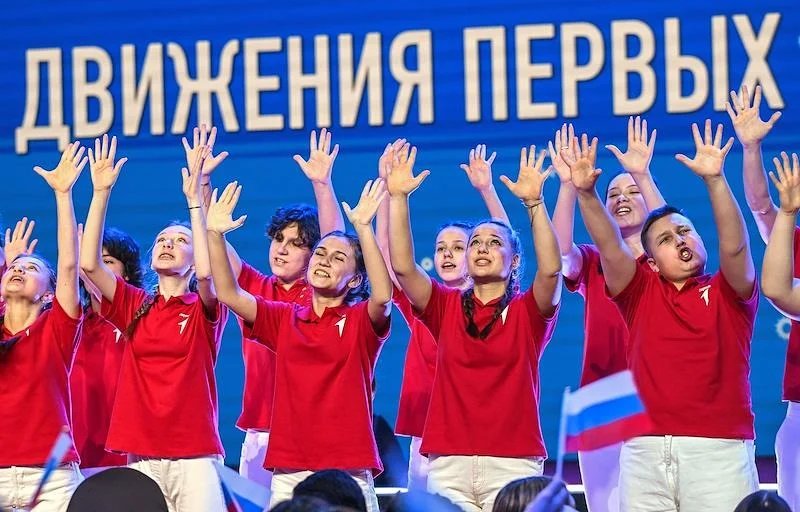
The publications looked alarming: firstly, the “Movement of the First,” a modern pioneer group invented by the state, where a couple of years ago entire classes of children were herded, is a thoroughly ideological organization; secondly, some of the volunteer tasks in the Service-Learning program are somehow related to SVO. Does this mean that there will be another compulsory subject at school in which children will be militarized? And due to what items?
It’s time, as they say now, to call in an explanatory team.
What actually happened
On February 17, a press release “Schoolchildren will be able to take part in the Service Learning program as part of extracurricular activities” appeared on the website of the Ministry of Education. It says: “Service Learning Program. First”, in which schoolchildren solve social problems of NGOs, the state and social business, can be implemented as part of extracurricular activities at the discretion of the school in the form of an individual project. The corresponding methodological recommendations are published on the website “Unified Content of General Education”. It is one of many possible formats for the implementation of individual projects by high school students.”
On the same day, RBC, in its news report ““Service” will be added to the school curriculum” (it was this message that most other media referred to) informed that “from September, the compulsory school subject “individual project” will include the program “Service Learning. The first ones." The message is based on a statement by the Minister of Education Sergei Kravtsov, received by RBC. The statement reads, in part:
“It is important for a modern schoolchild not only to know, but also to be able to put into practice the knowledge acquired in class. Service-learning program. The First" will strengthen precisely this component. It will help children discover their potential, try themselves in socially significant projects, and take the first steps towards professional self-determination.”
In the press release of the Ministry of Education, the same text looks a little different: “ As part of extracurricular activities ( my italics - I.L. ) it will help children reveal their potential, try themselves in socially significant projects, and take the first steps towards professional self-determination.”
Is this mandatory or voluntary? Extracurricular activity or separate subject? Should I panic or is it too early?
Subject "Individual project"
“Individual project” is one of the subjects provided for in the program of complete secondary education (grades 10–11) in the latest generation of Federal standards. Officially, the project is called a subject and a course, but it does not have its place in the school schedule - students do it outside of class time. How many hours to complete it is determined by the school curriculum (usually 68 hours, or two hours a week, in 10th grade). Projects can be very different: scientific research, creative projects (for example, participation in theatrical productions or painting a school building), technological and design developments, social volunteer work, etc. Let's say my students most often engage in scientific research.
According to the Federal State Educational Standard, it is the “individual project” that is obligatory: a high school student must complete and defend it. To protect such projects in schools, there are “project fairs”, “project sessions” and other forms of work.
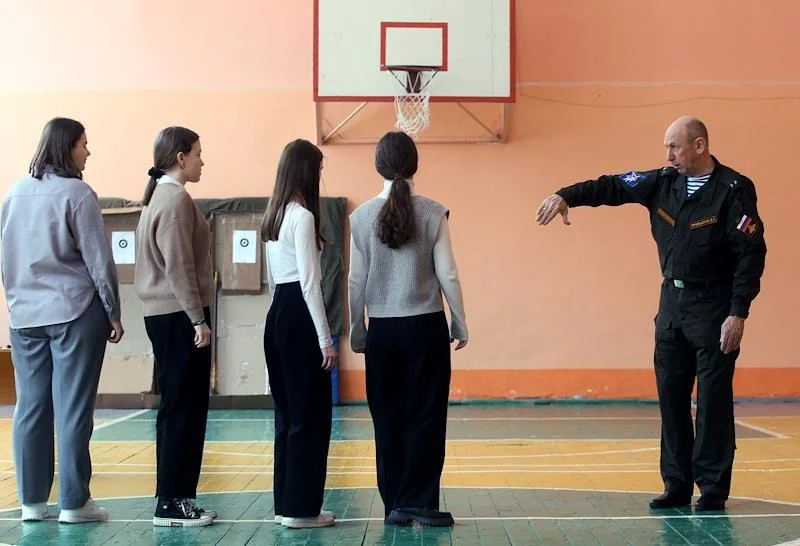
Which project a student chooses depends on his desire and the school’s preferred areas. If a school cooperates with the First Movement and has chosen the service-learning direction, it can select a social order in its catalog or place its project there. Then, for students who complete this project, work on it is counted as work in the “individual project” course.
What does service teach?
Service-learning program. The First" is one of many different programs of the "First Movement". The movement has several directions:
patriotism and history,
volunteering and social initiatives,
ecology, entrepreneurship,
media and cybersecurity,
science and technology,
creativity and culture, sports.
Within each direction, programs have been developed in which schoolchildren can participate outside of school hours. “Service learning” operates within the volunteer area.
But these are not ordinary one-time actions like a trip to a nursing home with gifts or a cleanup day to clean the river bank, but an independent volunteer project.
Such projects are often included in educational programs in Western schools, where it is called service learning - that is, “service learning”: schoolchildren themselves develop from scratch a project to help a local community or business, plan this project, implement it and comprehend the results. For example, 20 years ago, a student at a British school told me that she needed to get credit for volunteer work to get a certificate: projects in which she participated included working for schoolchildren in a local supermarket and organizing a volleyball match between schoolchildren and teenagers serving sentences at a local juvenile center. Similar projects existed in Russia for quite a long time - for example, at the Moscow International Film School (now Film College No. 40), where schoolchildren, together with the pupils of the orphanage under their care, worked together to do something useful for the city in which the orphanage is located.
How does it work for the First Movement? There are two options: either the school sets itself a task, or the school finds a task for itself in the catalog of social tasks on the website dobro.ru. Tasks there can be placed by NPOs, local authorities, government agencies and budgetary organizations (for example, libraries or kindergartens), sometimes this is done by socially responsible businesses. Now in the catalog of social tasks there are, for example, such as developing a chat bot to combat drug graffiti, creating an architectural model-reconstruction of the native village and the estate in it, performances in an inclusive theater, researching the culture of the Sami, etc. But there is, of course, a booklet about the exploits of young pioneers, and a design project for the museum room of NWO volunteers “TOGETHER TO VICTORY!”, and the NWO school museum .
As of February 23, there were 149 problems in the catalog for schoolchildren, of these problems 10 (that is, 6.7%) were related to SVO.
Almost all of these tasks already have a specific executor - the local school; The customer, as a rule, is NPOs or local administrations.
Schools that have independently chosen a task for themselves and found a partner organization can also register their projects in the catalog, officially adding their work to the activities of the First Movement.
What's the big news? Is it really that SVO volunteering with the “First Movement” is becoming mandatory for everyone, since it is moving “from the category of extracurricular activities to part of a compulsory subject”?
No, the only news is
that volunteering with the First Movement will now be counted as an individual project at school. They didn’t count it before, but now they will count it.
When to start being afraid?
So far, the Ministry of Education says that “Service learning. First" is not introduced as an independent subject. Now, if the program’s methodological materials are recommended as the main model for an individual project, then the freedom of choice for schools and students will end. However, even in this case, only the individual project as such (and not on a specific topic) will remain mandatory, and whether specific topics will be imposed on students against their will will, as usual, depend on specific schools. In some cases, especially in small towns or villages, schools often follow orders from local authorities, especially when it comes to perpetuating the memory of fellow countrymen.
However, it’s also impossible to say “false alarm, we’re leaving.” The individual project was originally conceived for research and creative independent work,
and not to serve state ideological orders issued from above by administrations at various levels. Otherwise, this is no longer an educational practice, but a tool for forming loyalty to the state and creating an appropriate ideological position.
By the way, among the social orders where the SVO is not spelled out separately, there are museums of the military glory of fellow countrymen, which include all the wars of the 20th and 21st centuries, and projects to combat “distortions of historical truth.” And there are sociological projects commissioned by local authorities and NGOs, which are designed to study the views of modern youth and find out how else they can be educated in a military-patriotic manner. For example, the Association of Veterans of the Northern Military District of the Saratov Region states that “many ongoing formats do not have the proper social effect, do not evoke a response and interest among the target audience,” that is, adolescents and youth, and orders the Volga branch of RANEPA a project that would help identify “modern and engaging formats, look for new topics and ways of interacting with the target audience.”
In short, ideological projects within the First Movement as a whole and its volunteer service-learning program do not become mandatory for school and do not turn into a new subject, they simply can now officially be chosen as an individual project, and this project will be counted.
And at the same time, this is a small step towards integrating the state ideological movement into school education.