
Translated material
General AI
The Pentagon used Claude to strike Iran and entered into an agreement with the creator of ChatGPT. How did neural networks become an important weapon in modern warfare?

Smoke over central Tehran after another airstrike, Iran, March 2, 2026. Photo: Abedin Taherkenareh/EPA
To plan attacks on Iran, the US Army command in the Middle East used the Claude chatbot from Anthropic, the Wall Street Journal reported. This happened after the Pentagon had a falling out with the company that created the AI tool, and Donald Trump banned government agencies from using it in their work. Moreover, on the same day, the creator of ChatGPT and Anthropic’s main competitor, OpenAI, announced the start of cooperation with the US Department of War. In 2026, neural networks look like an integral part of military conflicts. "New-Europe" tells how the White House and the Pentagon are strengthening their external position by attracting technology corporations and how artificial intelligence is changing the course of modern wars.
How does the US Army use Claude? And why did the creator of the chatbot quarrel with the American authorities?
The massive use of artificial intelligence in the American armyis being promoted by US Secretary of War (Defense) Pete Hegseth. It was under his leadership, according to the Wall Street Journal, that the Pentagon involved Claude from Anthropic in the kidnapping of Venezuelan President Nicolas Maduro.
Anthropic then condemned the Pentagon's use of Claude, citing internal rules that prohibit the chatbot from being used for weapons development, reconnaissance, or violent activities.
Since then, the company has been in conflict with the American government. So, on February 28, Hegseth accused Anthropic of arrogance and betrayal and added that “American military personnel will never become hostages to the ideological whims of large technology corporations.” President Trump spoke out even harsher, calling Anthropic “a left-wing AI company run by people who have no understanding of the real world.”
However, even despite the official ban from Trump, the Pentagon continues to use Claude. According to WSJ sources, Claude helped plan missile attacks against Iranian targets, analyzed intelligence information and conducted military simulations. It is unclear whether the neural network was used after the start of the operation.
From the outside, it may seem that the conflict between Anthropic and the American government is purely ideological and concerns only the ethical standards of using AI in the military sphere. However, this is not so: Anthropic signed a cooperation agreement with the Pentagon for $200 million back in July 2025.
The US Department of War's Director of Digital Technology and Artificial Intelligence, Doug Mattey, has openly stated that the company will develop an AI tool that will help the US military gain an advantage over rival powers.
In the fall of 2025, Anthropic management expressed concern about how the White House planned to use Claude in foreign policy. And Semafor’s sources said that the principled position of the head of the company, Dario Amodei, that neural networks should not be used for military purposes, irritates the White House.
Anthropic also prohibited the FBI, Secret Service and other agencies from using Claude for surveillance and intelligence, although it officially provided its services to American agencies for “national security.” What complicates the situation is that it is this neural network, according to Semafor, that copes with complex military tasks better than others.

The Pentagon cannot immediately abandon the use of Claude, despite the demands of Trump and Hegseth. Sources from the publication Defense One, close to the leadership of the US Army, report that specialists from the Ministry of War have too much tied specifically to the Anthropic neural network. The transition to other services will take at least several months, and the Pentagon simply cannot abandon Claude now.
Apparently, Amodei is unlikely to agree to make concessions to the Trump administration. In a January essay on his personal website, he explained that AI is useful and necessary for democracy, but there is a line for it that he is not willing to cross.
“We cannot ignore the potential for these technologies to be abused by democratic governments themselves,”
- said the head of Anthropic.
After the conflict with Anthropic, the Pentagon entered into an agreement with OpenAI. Is AI already in service with the US Army?
The US military paid attention to the development of artificial intelligence back in 2014, during the administration of Barack Obama. Then the Pentagon warned that in the future there will be robotic weapons that will be able to independently select targets for shelling and missile attacks. In 2017, the department became concerned about Chinese investments in American AI startups: it began to fear the possible influence of China on US defense. And in 2023, the ministry started talking about the need to use AI for military purposes - and a year later it was already using its own Maven neural network for airstrikes in Syria.
However, from the very beginning the Pentagon did not plan to independently develop specialized neural networks. Back in March 2018, the department invited American corporations to cooperate in the military sphere, and in August of the same year it declared the development of artificial intelligence its priority.
To replace Anthropic, the Pentagon has already found a replacement - OpenAI with ChatGPT. The company has already begun to implement its neural networks into a closed military network and has agreed on key principles of cooperation. As OpenAI head Sam Altman said , ChatGPT has only two restrictions for the Pentagon - a ban on mass surveillance within the United States and the use of a neural network to control weapons of mass destruction. According to Altman, the Department of War agreed to these terms, and OpenAI itself wants “to ensure that the people defending the United States have the best tools to protect themselves.”
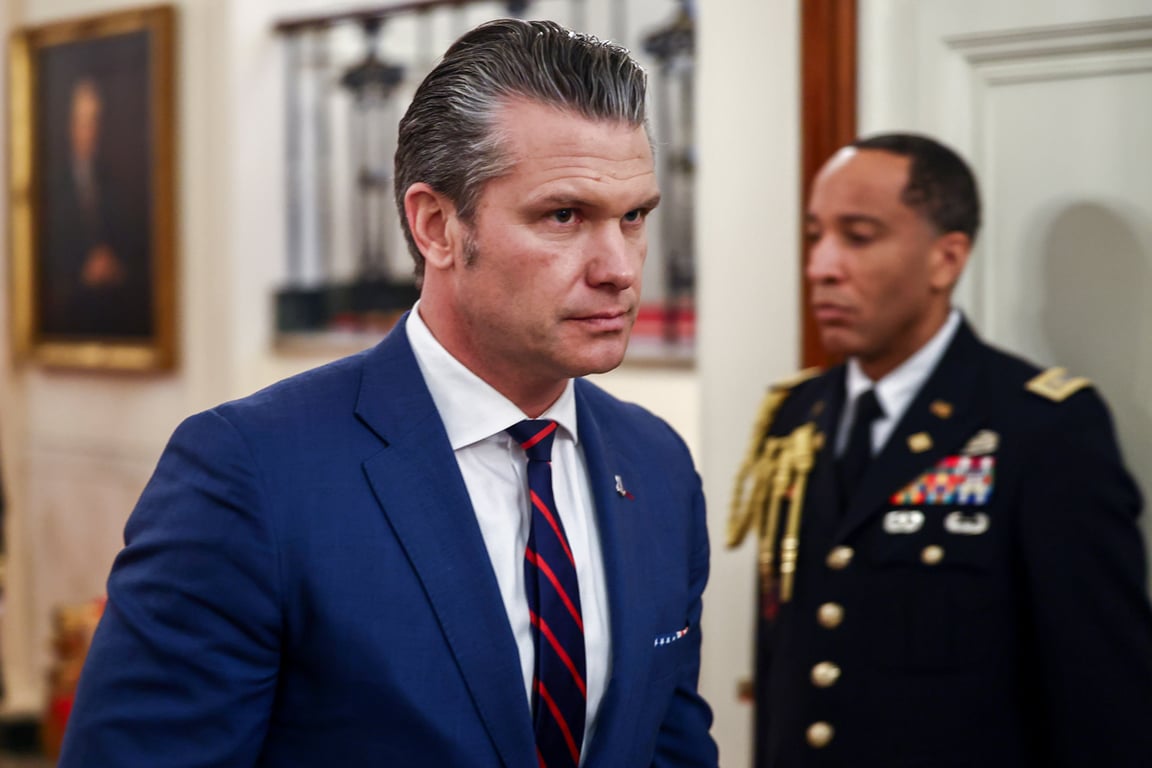
Other corporations cooperating with the ministry are Google and Microsoft. The first took part in the creation of the Maven neural network and signed a contract to implement the Gemini service in the Pentagon network. In February 2026, Google employees from the Deepmind department sent a letter to their management about the inadmissibility of military cooperation with the American government. Microsoft, back in 2018, announced an agreement with the Pentagon and specifies the military sphere as one of the key ones in the development strategy of its Copilot AI. In 2025, the company fired engineer Joe Lopez, who openly opposed management's policies.
Another key service provider for the ministry is billionaire Elon Musk with his company xAI, known for its chatbot Grok. War Secretary Pete Hegseth personally announced Musk’s cooperation with the Pentagon. Grok is used to analyze classified data, develop weapons, and simulate military operations.
The Washington Post explains that US technology corporations are forced to cooperate with the Pentagon because they do not want to fall out of favor with the Trump administration.
There is a risk that refusing a contract will lead to political persecution and financial problems. Therefore, Elon Musk, Sam Altman and the heads of Google and Microsoft need to present themselves as loyal patriots so as not to lose their fortunes.
How do armies of other countries use neural networks?
The main threat to Washington is China, which already in 2025 recognized the need to implement AI for national and international security. The country's main technical corporation Tencent, which invests in DeepSeek and Kimi neural networks, has already been included in the Pentagon's list as a company creating neural networks for the Chinese Ministry of National Defense. Even before this, Chinese scientists from the National Defense University created the world's first virtual commander of troops, which completely copies the strategy of real generals.
During the Joe Biden administration, Chinese President Xi Jinping openly stated the need to limit the use of AI in the military sphere - for example, not allowing neural networks to control nuclear warheads. Whether his position has changed with the advent of Trump is unknown.
Other countries are also actively creating AI for defense purposes. Thus, the DPRK has already created neural networks for cyber attacks and obtaining intelligence data. South Korea and Japan are developing artificial intelligence for defense. The European Union is also studying the use of AI for military purposes, although it does not yet have its own developments.

Apart from the United States, India and Israel have advanced the furthest in the development of military AI. The first used Trinetra, Sanjay and Edge AI's proprietary neural networks to identify targets for missile attacks during the clash with Pakistan in 2025, with the AI successfully identifying them 94% of the time. According to journalistic investigations , since 2023, the Israel Defense Forces has used its neural network to determine the targets of attacks in the Gaza Strip, which, according to media reports, made errors (however, the IDF claimed that the system is not a list of targets, but a database, and noted that the army is trying to reduce damage to civilians).
In 2025, it turned out that the Israeli military had developed an AI for analyzing intelligence data on Palestine, which was based on Microsoft cloud technologies. After this, the corporation limited access to its services.
***
Neural networks have already become firmly established in military departments around the world. Former Japanese Self-Defense Force officer Koichiro Takagi wrote back in 2022 that AI pose a particular danger to global security due to the lack of moral restraints and extremely fast reactions - for example, a neural network can launch warheads in a matter of seconds, without waiting for orders from management. The expert came to the conclusion that even the most advanced neural networks need regulation from people to prevent conflicts.
In the future, neural networks will be an important aid for military leaders around the world, at least because of the ability to quickly and efficiently analyze data, predicts US Deputy Secretary of War Emil Michael.
Also in 2025, a more pessimistic forecast was given by the head of Microsoft’s AI department, Mustafa Suleiman. In his opinion, artificial intelligence in the future may become so powerful that it will have to be stopped by military intervention. Whether in this case military leaders will be able to do without the help of AI is a separate question.