
Translated material
Manuscripts are worth peppering
About Nikolai Travkin’s book “A Separate Branch of Evolution,” which talks about the Russian “mansion”

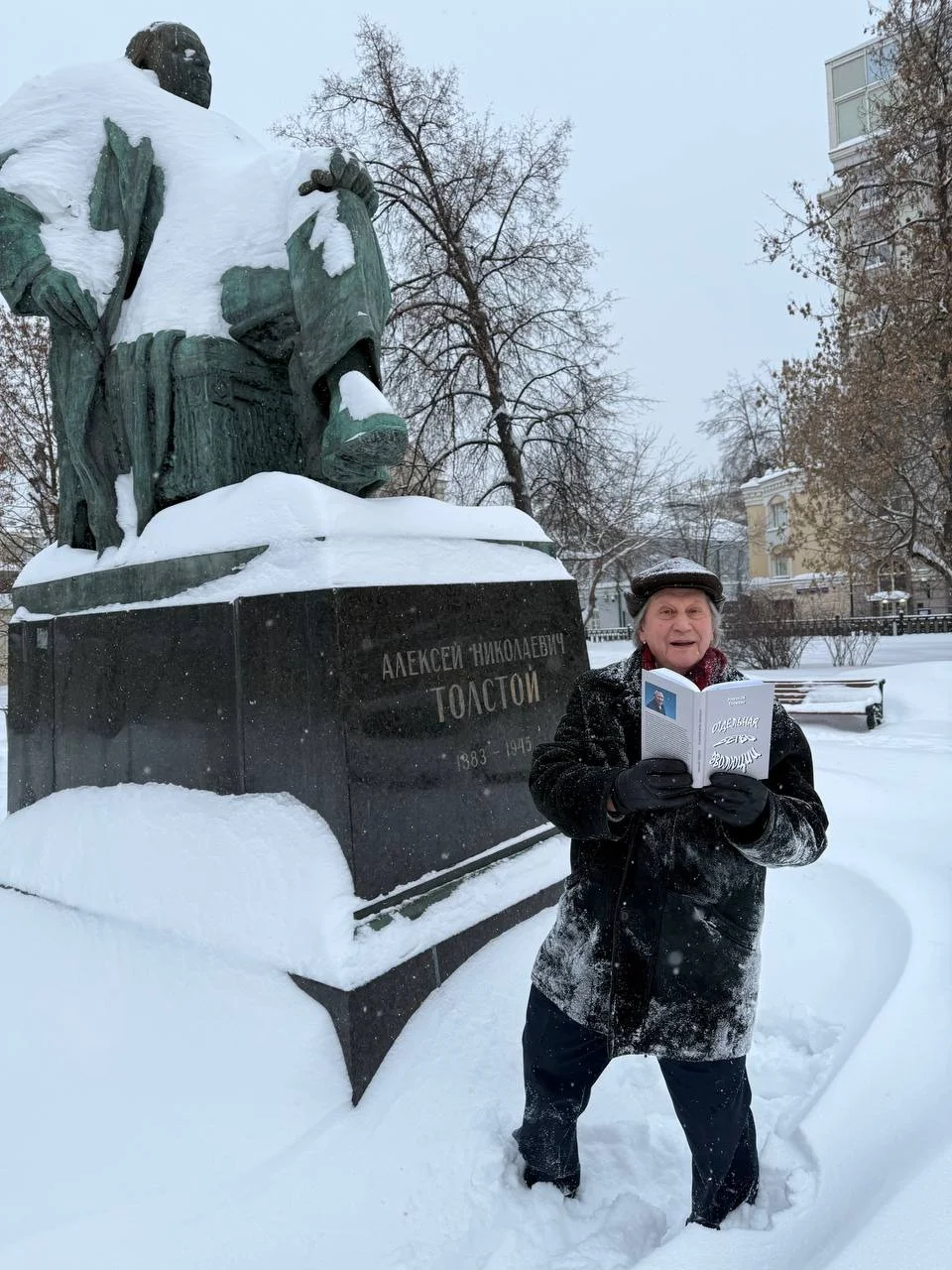
People's foreman, foreman of perestroika, Hero of Labor, three times deputy, minister without portfolio, personal pensioner of national importance and for many years a simple, unemployed blogger Nikolai Travkin released the book “A Separate Branch of Evolution,” built on the foundation of his sarcastic online notes on the topic of the day.
Since our daily anger tends to move from year to year (if not from century to century), this published collection is hardly in danger of losing its relevance. Take, for example, this statement: “The final phase of building socialism showed that they built the wrong thing.” Substitute “sovereign democracy”, “searching for your path” or “getting up off your knees” instead of socialism, and slightly change the end of the phrase without changing its meaning – it will come out just as sarcastic and just as timely.
And here are the author’s extrapolations: “The president is not elected—they live with him, as the poet said, and die!”, “Due to the intensification of the fight against gay propaganda*, we should expect the State Duma to introduce an amendment to the 10th commandment: after the words “Thou shalt not covet thy neighbor’s wife,” the following will be added: “and himself.”
There are also enough of Travkin’s own sayings, seasoned with humor that is peppered to blackness:
“If you are not being followed, it means you are not planning anything useful for the state,” “A post is not as scary as its comments,” “All nations have one country, but the Russians have two. One is on TV, and in the other we live”, “We have coalitions only if we need to steal something, but one cannot take it away.”
Although in the latter, Nikolai Ilyich slightly underestimated the domestic nonsense: with the height of their position on the vertical of power, their capabilities increase exponentially - or, in the language of school mathematics, in geometric progression. In a word, there are no such burdens that the United Russia Bolsheviks could not carry away!
By the way, about the language in which the author writes. Of course, in Russian, but there are a lot of Russian languages nowadays: official clericalism, television pathos, user-anglicized chatter, pseudo-scientific gibberish, esoteric crap. There is a foul-mouthed fenya that people talk about, there is a semi-urban, semi-rural vernacular, and in general, there is everything that is not found in the Russian expanses and in the no less Russian depths. Travkin flashes with simple words and expressions: “against”, “about her”, “not our thing”, “patamushta”, “whom you’ll get from anyone”, but this is not homespun simplicity, but an artistic and cosmetic device that gives speech a characteristic inter-personal, seemingly good-natured intonation and creates the image of a person in his own mind who knows what’s worth. That is, not a subject whose consciousness is saturated with state propaganda, but a citizen of his own country.
The main idea of the book, ironically reflected in its title, is connected with this civic position.
The idea that a separate branch of evolution, aka restored Russian individualism, calling itself patriotism, encouraged by the authorities and opposing itself to the civilized Western world, is a branch doomed to collapse or dry out.
A dead end path, a regression born of ressentiment. Import substitution: Lada cars instead of Mercedes, local khan instead of the Mongolian one. Yesterday, which will come tomorrow, ideology comes from the words “idol”, “alogy” and “paralogy”. Hopelessness? No, because the author sees hope and support in a layer of people who feel themselves Europeans and do not want, I quote almost verbatim, to be expendable material to support the arrogance of a state that imagines itself to be the only right thing in the world. And in this, I can assume that the peppered and peppered books will play their role in strengthening domestic nonconformism and civic consciousness.
Victor Matizen