
Translated material
Felix returns. Historian Rustam Alexander tells how the Soviet and Russian authorities used the image of Dzerzhinsky in different years
Last week, Vladimir Putin returned the name of Felix Dzerzhinsky, the founder and head of the All-Russian Extraordinary Commission (VChK) for the fight against counter-revolution and sabotage, created immediately after the October Revolution, to the FSB Academy, the main university where special services are trained. Almost simultaneously, the Stone of Sorrow and memorial stones to victims of political repression were dismantled in Tomsk. Historian Rustam Alexander recalls the biography of the first Soviet security officer and discusses why the state is returning to symbols that it once abandoned.
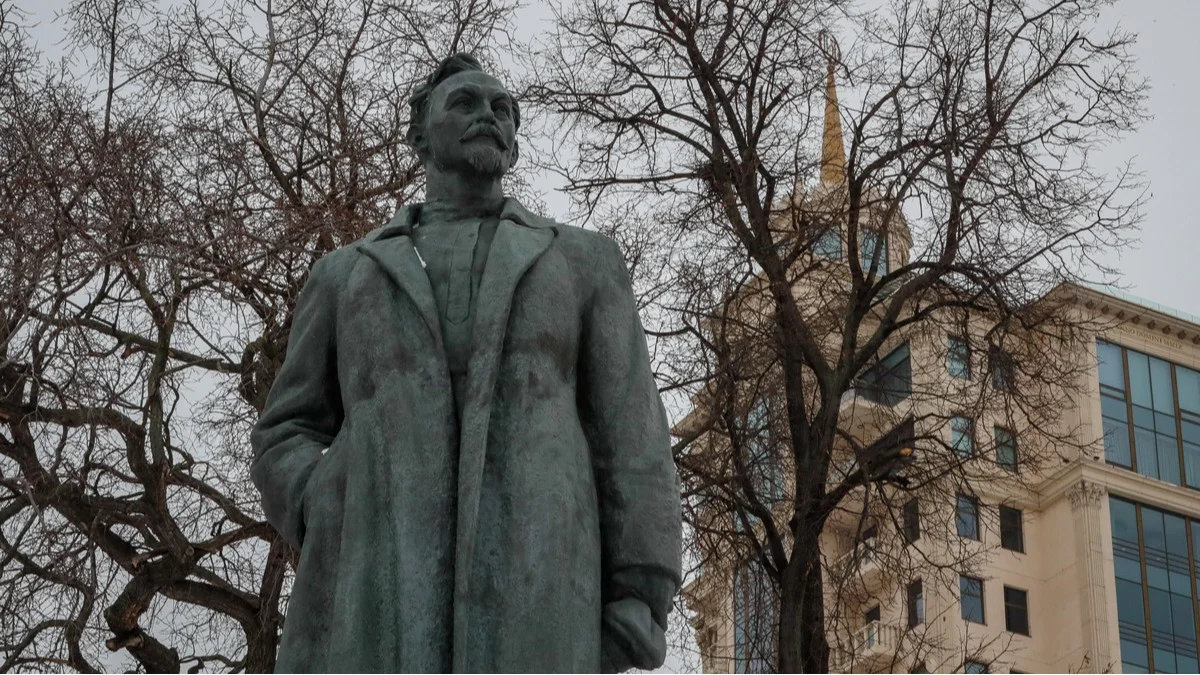
Historian Rustam Alexander tells how the Soviet and Russian authorities used the image of Dzerzhinsky in different years
Under the leadership of Dzerzhinsky, the Cheka very quickly turned into a huge repressive machine. If by March 1918 the new organization had only 120 employees (“Chekists,” that is, employees of the Cheka), then by the fall there were already 20,000, and by 1919 - 100,000. The Chekists had unprecedented powers and could pursue, detain, torture and execute thousands of people: alleged spies, supporters of the tsarist regime, counter-revolutionaries, kulaks, as well as other “enemies.” states." In terms of the scale of its activities and readiness to resort to extrajudicial killings, the Cheka very quickly surpassed the tsarist police.
To fight their enemies, the security officers used sophisticated torture and methods of psychological pressure. The security officers did not have a standard uniform, but many wore leather cloaks and were easily recognizable - all this instilled fear and reminded that security officers were everywhere.
In 1922, the organization was abolished, replaced by the OGPU and the NKVD, and Dzerzhinsky himself died in July 1926 from a heart attack.
Just two days after Dzerzhinsky’s death, the state publishing house Gosizdat published a small brochure about him - with obituaries, a short biography and some of his speeches. The Pravda newspaper recommended this brochure to every Soviet worker. In subsequent years, Dzerzhinsky became a real legend - an almost mystical and even sacred figure. The process of sacralization of his image intensified in the mid-1950s.
After Stalin's death in 1953, Khrushchev and his associates quickly eliminated Beria, the head of the NKVD, directly associated with mass repressions. Already in 1954, the KGB was created - a new state security agency with formally more limited powers. Khrushchev’s “thaw” opened up an uncomfortable conversation about Stalin’s crimes, and the authorities were forced to admit the arbitrariness of the intelligence services of the Beria era.
But instead of perpetuating the memory of the victims of Stalin’s terror, another solution was chosen - to return the “pure” image of the origins of the Soviet intelligence services through the figure of Felix Dzerzhinsky.
On December 20, 1958, a bronze statue of the Chairman of the Cheka was installed on Lubyanka, opposite the KGB building. The opening ceremony was covered in Pravda and Izvestia. Izvestia stated that dozens of Muscovites came to the opening of the monument: artists, teachers, doctors, students. At the ceremony, one of the Moscow teachers called Dzerzhinsky a “bright example” for all Soviet people, an “inspiring example” for Soviet youth, promising on behalf of the teachers to instill in them the “highly moral and political qualities” that he possessed. The statue of Dzerzhinsky was supposed to symbolize the purity of Lubyanka, “keep an eye on” the security officers, and also erase negative associations with the recent past of repressions.
Strengthening the continuity of the KGB and the Cheka was the main element of restoring the population's trust in the security agencies after Stalin's terror, and all the atrocities of the secret services of the Stalin era were attributed to the executed Beria. Indeed, Dzerzhinsky died in 1926, before the start of the Great Terror, and this made him a convenient historical figure: after all, he was not directly connected with the crimes that were still fresh in people's memory.
In parallel with the restoration of the image of the Soviet security officers (and the legal successor of the NKVD - the KGB), the state began to actively publish literature about Dzerzhinsky, in which various high moral qualities were attributed to him. So, in 1955, one of the books said that, while in prison and despite a serious illness, he several times carried his cellmate, barely able to move, into the prison yard (the fact that before the revolution Dzerzhinsky actually spent a lot of time in prison helped create the image of a sufferer). Another book from 1962 emphasized Dzerzhinsky's love of nature:
I recalled that, while collecting flowers, he carefully moved his feet in heavy boots so as not to “step on a beautiful plant or anthill.” And in January 1965, in the magazine “Border Guard”, Dzerzhinsky’s face was generally depicted floating in the clouds - with a clear hint of his “holiness”.
Despite the fact that the figure of Dzerzhinsky was also bloody, Khrushchev managed to use it to restore the reputation of the special services: the emphasis was placed on the virtue of the first head of the Cheka, but it did not come to talk about his “bloodiness” - de-Stalinization was quickly curtailed.
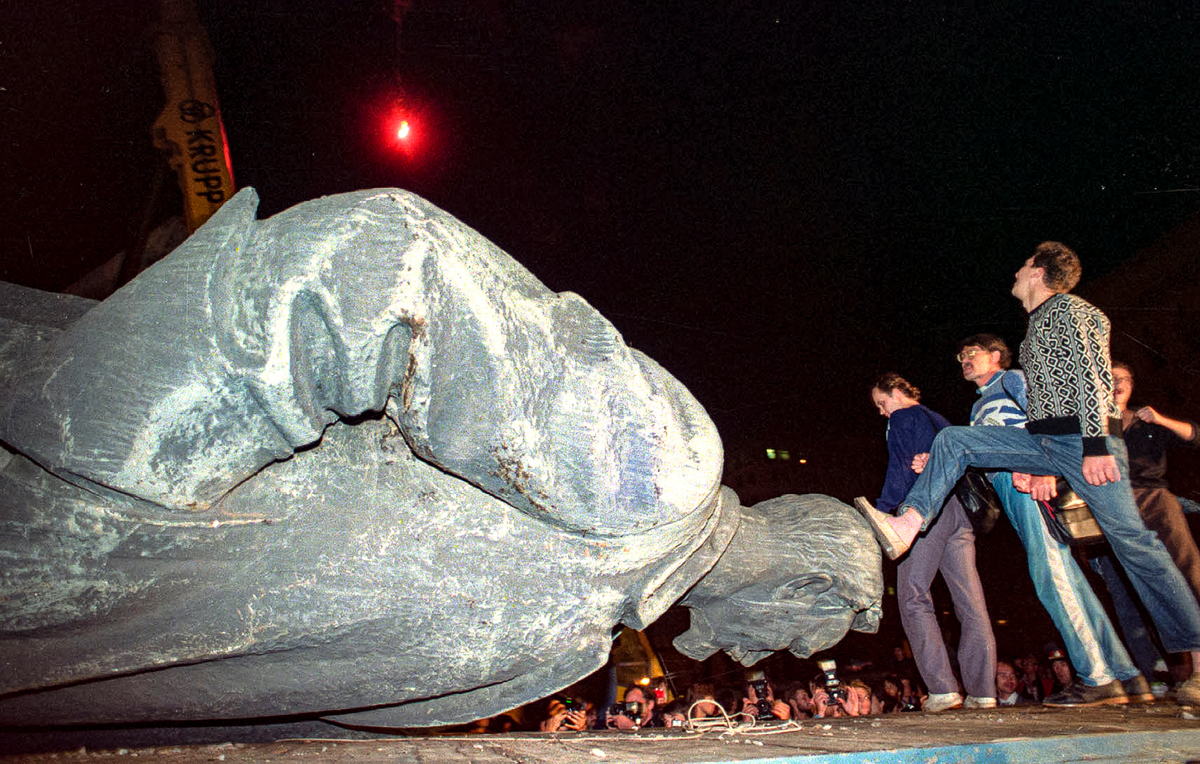
During the August 1991 putsch, the statue of Dzerzhinsky was toppled, a moment that symbolized the expulsion of the KGB from Russian symbolic space. The Soviet intelligence services were going through a difficult period - reorganizations, dismissals, etc. However, in 1995, the FSB was created, and the process of inventing new KGB traditions, as well as restoring the reputation of the Russian intelligence services, began. If Khrushchev did this through the figure of Dzerzhinsky, then Putin did it through the figure of Andropov, head of the KGB from 1967 to 1984. Thus, in December 1999, shortly before becoming president, Putin restored the Andropov memorial plaque on Lubyanka, which had been dismantled in August 1991. In June 2004, the FSB Andropov Scholarship was established. Television programs were created about Andropov and biographical books were written. In them, Andropov was presented as incorruptible and ascetic (the same way Dzerzhinsky was presented in the 1950s).
The figure of Andropov was much less bloody and more harmless than the figure of Dzerzhinsky. It was during his leadership that the KGB turned into one of the most influential intelligence agencies in the world - not an instrument of mass terror, but a complex and effective control apparatus.
And although the KGB remained a repressive body, it was fundamentally different from the Cheka, which operated practically without any legal restrictions. The appeal to the image of Andropov under Putin in the early 2000s was an attempt to restore respect for the intelligence services through an image of efficiency and professionalism.
However, today's return of the figure of Dzerzhinsky - including the naming of the FSB Academy after him - clearly signals something else. This is no longer about restoring respect, but rather about fear and arbitrariness as the basis of the activities of the Russian special services. And here a more troubling question arises: is this a symbolic warning about the future course of the FSB towards harsher repression, or an actual recognition that fear and repression have already become the norm in modern Russia, and the new generation of intelligence services will only intensify it?
Adapted from: Julie Fedor, Russia and the Cult of State Security: the Chekist Tradition, from Lenin to Putin (London: Routledge, 2013).