
Translated material
No Gender in Christ: Books of the Week
What to ask at bookstores
The history of church strife, a study of the architecture of Kemalist Turkey, lectures on trauma, a programmatic work by the chief economist of the Prague Spring, and Mark Lipovetsky on the tricksters of Soviet culture. As usually happens on Fridays, the editors of Gorky talk about the new products of the week that they liked.
All of us, since February 24, 2022, have found ourselves in the face of advancing barbarity, violence and lies. In this situation, it is extremely important to preserve at least the remnants of culture and support the values of humanism - including for the sake of the future of Russia. Therefore, the editors of Gorky will continue to talk about books, reminding our readers that there is still a place for thought and fiction in the world.
Zeynep Kezer. Geometry of power. Architecture, planning and ideology of the Turkish Republic. M.: KoLibri, 2026. Translation from English by Anastasia Nikolaeva. Content
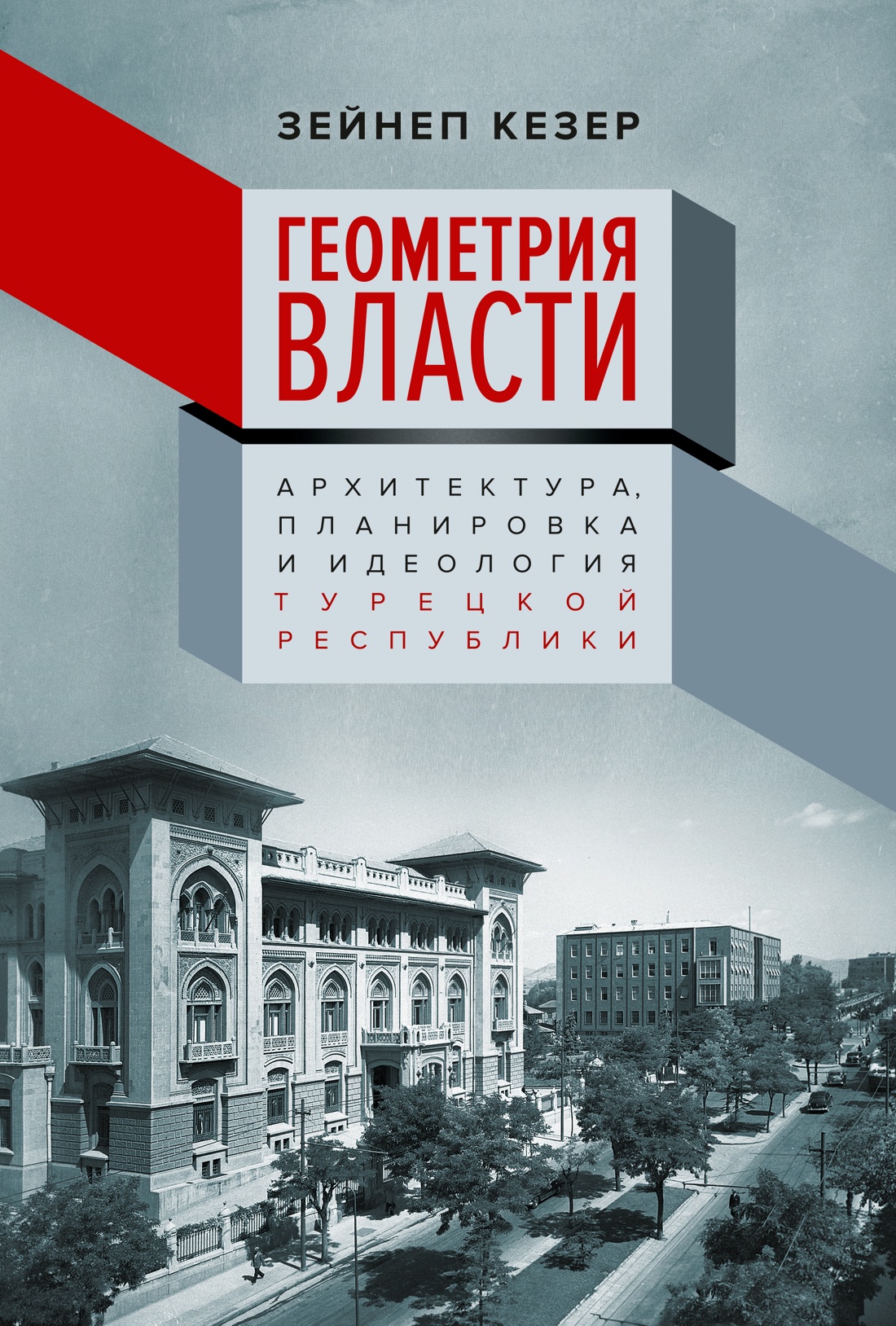
In 1931, Mustafa Kemal Atatürk began the project of writing a new history of the young Turkish Republic and bringing this very history to the broadest masses both at home and abroad. Its essence was simple and well known from other modern states: the Turks were declared to be the most ancient people who had lived on this land since the Neolithic, therefore the Kurds, Greeks, Armenians, and Arabs were excluded from the history of Asia Minor. The Ottoman Empire in the last century of its existence was presented as something dense, reactionary, backward, and unviable; The Republic of Turkey is a national, mono-ethnic, and most importantly secular state. And so on.
As happens in authoritarian and extreme authoritarian regimes, the most important tool in promoting the only true narrative has become the visual and monumental arts, the main one of which is architecture. The new capital Ankara turned into a huge construction site on which the old world was rapidly being destroyed and a new one was being built. The radical gentrification of the city, conceived and implemented as a spectacular peak of state propaganda, is just one of the plots of the book by Zeynep Keser, an architectural historian and professor at Newcastle University.
“The Geometry of Power” is, first of all, a remarkable study of how the urban environment itself can provoke conflicts and suppress them, if this is the will of officials who seem to have nothing to do with the power structures. But this is also an example of how you can take a critical approach to your native history, without demonizing it, but also without smoothing the corners.
“Few people lived in [Ankara's] Cankaya district and it was located further and higher than the densely populated old quarters. Obviously, building infrastructure would entail higher overall and per capita costs. But Republican leaders benefited from development further south and were not opposed to the excessive spending that such expansion would require. Consequently, water, electricity, gas and telephone lines appeared in the old areas several decades later than in the new ones. Moreover, the Ankara elite that came to power used political capital to disenfranchise local residents by resorting to procedures ostensibly aimed at better organizing projects to meet the immediate needs of the new capital.”
Sergei Khodnev. Heretics. How church divisions created the world we live in. M.: Alpina non-fiction, 2026. Contents . Fragment
You may not believe in God or the devil, but this will in no way relieve you or us from the need to exist in societies and states formed by religious, counter-religious and anti-religious doctrines with corresponding social, political and economic processes. The historian and art critic Sergei Khodnev offers to verify this in his cheerfully written and well-structured book about theological strife and church schisms.
Let’s make a reservation right away: “Heretics” is a work of popular science, addressed to the widest range of readers who are just beginning to dive into the fascinating, so confusing two-thousand-year history of Christian heresies. Therefore, Khodnev, limited by format, talks only in the most general terms and key facts about the most influential of the “schismatic” movements. But even in such a popular form, it took him two hundred book pages to introduce the reader to the images of thought that lived the religious “troublemakers” from the early Christian Gnostics, Docetes and Manichaeans to the Renovationists, Catacombs and ROCOR.
Khodnev devoted the second part of the book to the formation of the modern Christian world, which occurred during the era of the Reformation. From it the reader will learn, perhaps unexpected information about how phenomena emerged among various post-Reformation communities like the Quakers, without which the current political situation is unthinkable.
“The English Society of Friends, later called “Quakers,” is the product of the most unpeaceful time in the modern history of Britain: they appeared in the middle of the 17th century, under Cromwell, and suffered greatly both from the Cromwellian government and from the Stuarts who returned to the throne in their time. At the same time, one of the founders of Quakerism was a woman named Margaret Fell, and in the future women remained not just inspired supporters of the movement, but also leaders, preachers, and ministers of the Word.
And this was something new. There were plenty of prophetesses and “theotokos” leading sects in all centuries of Christianity all over the world, but the Quakers, firstly, did not have a gloomy, anguished apocalyptic streak at all, and secondly, the normative participation of women in the life of the community for them was not a spontaneous phenomenon, but a routine, and precisely because both sexes are equal and there is neither male nor female in Christ.”
Elizaveta Filippova. Big little injury. 6 lectures for the Master's project. M.: Rosebud Publishing, 2026. Contents
The concept of psychological trauma has long left the professional lexicon and is widely used in everyday speech, and this in itself, of course, is a traumatic experience for the mind. Psychologist Elizaveta Filippova returns some clarity to the term: she popularly explains how modern psychology understands trauma, what consequences trauma can have, and how you can help yourself, without even going as far as consulting with a specialist. Of particular value are observations about the connection between trauma and meaning, from which we can conclude that no personality without trauma is in principle possible.
Among the methods of self-help, Filippova focuses on various bodily practices, which in itself is good and correct, but it is still worth noting that the so-called method of desensitization and processing by eye movements, which the author actively uses, is pseudoscientific.
“Somatic therapists have a funny, even touching metaphor that we approach trauma as if we are feeding a child porridge, and we begin to eat this porridge on the edge because it is too hot inside. After all, trauma is something excessive, which means we cannot deal with it at once. Therefore, we gradually, carefully approach the content of the trauma, devoting significant attention to the preliminary work of expanding the client’s capacity to withstand.”
Ota Chic. Plan and market under socialism. M.: Directmedia, 2026. Translation from Czech by L. G. Roman. Content
The vice-president of the Czechoslovak Socialist Republic, Ota Sik, wrote a policy book in 1967 in which he substantiated the possibility of combining planning and a market approach in the economy. A year later, he moved from theory to practice, becoming one of the architects of the Prague Spring - an attempt to decentralize power and carry out economic reforms, which ended with the introduction of Soviet troops and decisive Moscow curses against Schick himself.
As the wise sociologist and Marxist Boris Kagarlitsky (included by the Russian authorities in the lists of foreign agents, terrorists and extremists), the author of the unsigned preface to the book, noted, Schick defended the extremely important idea that market relations can survive capitalism, i.e. in a non-capitalist society, market forms of exchange may well exist even if property is formally state-owned and nationalized. The fact is, Schick believed, that these conditions do not exclude the need to harmonize various interests in society - and this coordination can take place quite peacefully and democratically through a combination of spontaneous and consciously planned interactions. The book is published in Russian for the first time in full.
“Of course, criticism of the shortcomings of the administrative type of directive management does not mean denying the successes of the past development of the socialist economy. Only a metaphysician will insist that phenomena are either black or white, and wants every judgment to be unambiguously “good” or “bad.” In reality, every phenomenon has its own internal contradictions, and even the progressive development of a socialist economy cannot be free from them.”
Mark Lipovetsky. Soviet trickster. The cultural legacy of cynicism. M.: New Literary Review, 2026. Contents
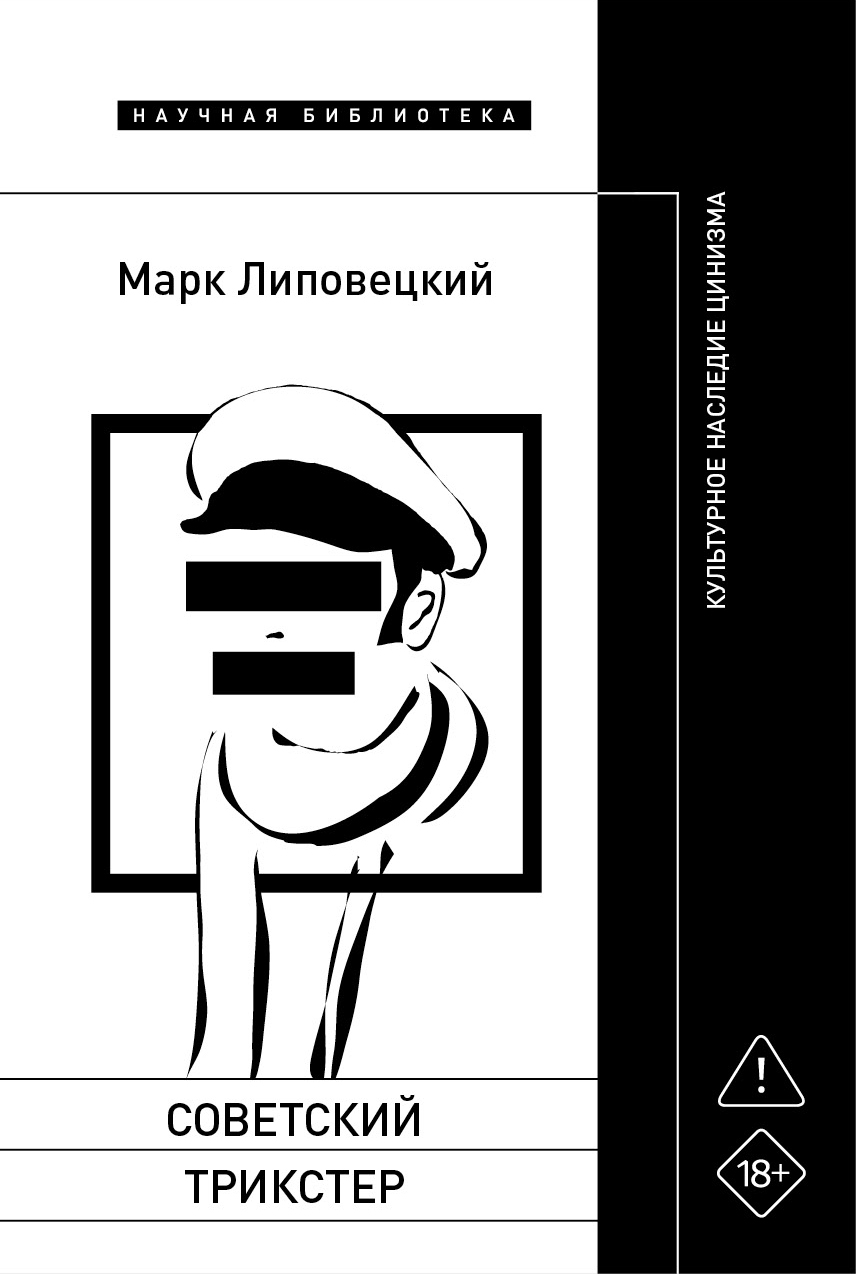
Trickster, we apologize for the expression, is an international and timeless archetype. Therefore, it is especially interesting to take a close look at all the diversity of figures who undermine the usual way of life in a state erected as a beacon of internationalism with the goal of ending dark times and the onset of a bright future, where demonic tricksters will be abolished as unnecessary.
The outstanding literary critic Mark Lipovetsky has written many times before about tricksters in early Soviet culture. For example, readers of Gorky could familiarize themselves with his article dedicated to two such heroes from “The Turbulent Life of Lazik Roytshvanets” by Ilya Ehrenburg and “The Doubting Makar” by Andrei Platonov. Now we have before us a weighty volume that examines not only the canonical and textbook “subversives” of Soviet literature and cinema like Ostap Bender or Gaidaev’s trinity, but also those whom we, admittedly, have forgotten to think about in the Soviet context: say, Dmitry Aleksandrovich Prigov or Vladislav Mamyshev-Monroe.
One of the most interesting and informative chapters is devoted to tricksterism in the most official layer of Soviet culture. For example, without outside help we would never have found such a truly fair way to watch “Lenin in October” by Mikhail Romm:
“Looking at the comic Lenin looking into the eyes of the wise Stalin, it is not difficult to see another variation of the “king - jester” ensemble. The subversive meaning of this double image becomes clear from a historical perspective: a leader who has lost power turns into a symbolic jester under the new ruler.
In this case, as in the case of the tyrant/clown couple, apparently, we should talk about a kind of “twin myth” of Soviet culture, where next to the cultural hero stands his sinister trickster double. This construction is often found in archaic cultures, and it, as E. M. Meletinsky shows, is based on the figure of the first ancestor, combining opposite characteristics:
“Such a dual character as a cultural hero (demiurge)-trickster combines in one person the pathos of ordering the emerging society and the expression of its disorganization and not yet ordered state.”