
Translated material
"Start"
The seventh story on Fridays, this time from the series “1973-2000. Volodya."
It’s a rare case when the grandfather gives up the microphone and only does a literary adaptation of the terrible, life stories that were told to him by the mechanic Vladimir Nefyodov, with whom he worked side by side and was friends for many years. If you are interested in oral or micro-history, or like to read “direct inclusions” in the events of big history, you will like it.
This is the first story from Nefyodov’s series of memoirs, and you literally have to immerse yourself in it - another narrator is hiding inside, and with each subsequent turn of the story you want to believe in it less and less.
This is the beginning of the Great Patriotic War, and there is no room for good news.
All the stories are in the collection, and the collection is on Litres .
Why did the grandfather undertake to tell his story?
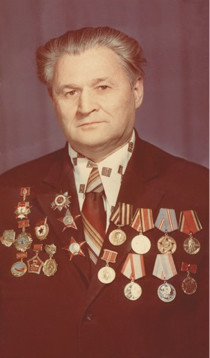
We were handing over the topic, there was a chronic shortage of people, so we sent the best mechanic from the workshop to help. He turned out to be so clever, but very uncontrollable, even somewhat willful. And the tests are important, you have to keep your eyes open, so I had to put them on rusty nails a couple of times. He became proud, but he quickly mastered our test business. Only sometimes he glanced sideways at me. A tall black handsome man, over fifty years old, fists like weights and wiry, sometimes he lifted such assemblies without a hoist onto the work table and didn’t even quack. And at that time the song “Front-line soldiers, put on your medals” became popular in the country, so before May 9 he appeared in the morning with a full iconostasis. What was not there? There are four orders alone, a bunch of medals, and all military awards, and not some kind of badges, which now, as a rule, some “veterans” are hung with. All the engineers came running, their mouths were open, and our boss, Pasha, invited him to the traditional evening drinking party on the occasion of the Victory Day, where entry was only his own. We talked to him quietly and were stunned by what he said. Later he brought “Battle Leaflets”, “Soldier’s Truth” and other front-line newspapers, where everything was written about his exploits and heroism. And after that I didn’t raise my hand to his art. I realized that this man had done SO much in his life that he could be forgiven for everything, and even more so for small production matters. We became friends in the end, and in one-on-one conversations he opened up to me as if in spirit. I listened as if spellbound and swore to myself that I would still make public the key moments in the life of this amazing man.
V.I. Nefyodov, “Beginning”
I was born into an ordinary working-class family, my dad worked hard at a factory, my mother worked as a housewife, and we, my brothers and sisters, lived a simple Soviet life: October soldiers, pioneers... the boys hung out together in the evenings, the girls spent their time talking and gossiping. In 1935 we moved to Uralmash, got a job studying a trade, graduated as a mechanic and, after working a little at a factory, got a job on urgent duty.
Thank God that there were still two years before the war, they quickly knocked the skin off me - they are sappers and sappers in Africa, in a word, jacks of all trades. And we were standing right on the border, so we got the first number from the very beginning.
Our dad was a good one, back in Finnish times, we fought competently, we’d beat the Germans and move on again, but we had no luck soon, they surrounded us at night and tied us up with warm clothes. They took everyone to the collective farm barn and didn’t give them anything to eat or drink for three days, the heat was terrible, it was stuffy, there was a stench, their throats were dry, and the people’s brains were slowly going askew. In the evening they opened the gates and ordered them to line up in two lines. And the evening is so cool, the birds are chirping, quietly.
A crowd of small women in caps walked past us, pointing a finger at the officer: “Yude? Communist?" - and take them out.
About twenty people were brought out and lined up twenty paces away, turning towards us, while they stood off to the side smoking and jabbering. I have a keen eye, I look, and two elderly Krauts are squatting to the side, they have adjusted a machine gun with holes, and they are sitting and smoking. One of the officers looked back at them and waved his glove - just like that. Then they began to fire: one was adjusting the tape, and the other was moving the muzzle from side to side.
In general, they finished everyone off, put a machine gun on their shoulder and left, smoking, and the officers walked around there and fired pistols at whoever was crawling.
Soon the cars were driven up and, twenty-five at a time, five in a row, they were driven into the backs onto their knees - and everyone had their hands behind their heads. I found myself on the edge, on the left side of the cockpit, a blond-haired Fritz leaned into me with his knee, he kept nagging and kicking me on the harmonica, he seemed to have fun sitting on board. We’re rolling, but in my gut I’m very groovy, I feel it, my throat is tight with anger, I move my right elbow, and the guy next to me has white eyes from rage, he pushes, he understands.
As soon as we entered the forest, I hit the Fritz in the mug, as soon as my boots sparkled, I jumped overboard and kicked him. Then they galloped some more, and the shooting began. The hare didn’t scamper through the bushes like I did.
On the right, on the left, people fell screaming, but they still made it to the forest and beyond.
Here we clashed with Petka, he’s such a good guy, but he’s very clueless in the forest. They dumped it together, and there was a sea of rubbish there, and food in cans, and all sorts of weapons, and clothes. Dressed up like a traveler, took a good knife, a knapsack with grub, and a pistol for ease.
On the second day, they almost got under the noses of two Krauts; they were dragging some kind of wire, chatting among themselves, smoking, and holding rifles over their shoulders. They looked at them for a long time, people were like people, and one thing was fascists, but not young ones. Oh, they're all bitches! They smashed them quietly, and put their coils into the shell crater, poured them on top and tore them up again. So they hid for days along the gullies, and in the evenings and at night they went east, towards the guns. Petro got used to it, he began to see in the dark no worse than me, and no longer vomited after the next Fritz. And we cut a lot of them along the way while we walked. But while we were lying in the bushes, he didn’t tell me how he got into the army, and how he ended up in captivity.
Petka's story:
“It’s the same thing every day. Get up before the roosters, have time to help your mother manage, the mangy male dog, whose drunken neighbor Sanka cut off half his tail, splash the evening leftovers, and go back to the collective farm fields, Stakhanovite, fuck your mother!
But it’s already sixteen years old, in the evenings you feel the girls on the rubble, and last May Day, after Vaska’s marriage, when Verka the neighbor tied her sundress over her head in a knot, the separated brothers fell out, I had to brush it off with a trash, the bumps on my head are still itching, but they threatened her that everything is one they will moan if I don’t send matchmakers, but I need it...
So my mother reached out to the village clerk with a half-liter of moonshine, he issued a certificate that I was already full eighteen, and they swept me into the Red Army. They gave me windings and tarpaulin boots, millet porridge - to eat, from morning to evening: “Get up! Lie down! If you hit me, hit me!”, the political instructor told about Marx, the portrait said - he had a long beard, like the old man Semenych from the lower street. And our foreman, Frolych, who is an expert in our sapper business, taught me how to bale with an ax, and where to hit staples, in amusement, if I learned this from the cradle. And so he is not an angry man, he is such a pitiful man, but he hammered our brother hard, he remembered all the proverbs of some General Suvorov and talked about the imminent war. And what kind of war is it if they taught us to sing a song: “The Red Army is the strongest of all!” ...and finished singing!
When in the morning there was a gasp and half the barracks whistled at the hairdryer, and we flew out madly in our underwear...
The circle is still on fire, the political instructor is crawling around the parade ground with intestines in his fists, but Frolych has herded everyone into a heap and shouted that it has begun and it’s time to fight.
And he himself drags “Maksimka” along with him, gathered all the “old men” alive with guns, and immediately drove the “youngsters” into retreat: “Snot issho!”
So we gave it a try, and the machine gun that had been in use for a long time was still firing, and it stalled, however. In the morning they came across a captain with a revolver, he was so serious, he lined them all up, counted who didn’t have guns - he gave them and forced them to dig trenches, but it was all in vain. Suddenly everyone shouted: "Tanks! Tanks!" And again they pulled everything, right up to the river, beyond which our guns were firing and the tanks in the bushes were torn apart and the commanders were running around quickly and yelling obscenities. We sorted everyone into platoons and let’s dig again. She came at us lightly a couple of times, but to no avail, they only burned their tanks.
And in the evening we took off and stomped all night, and the next day the lieutenant called Kolyan and me back, gave us a cart with a cart and boxes with a tol, gave us a machine, wires and what’s his name, a fuse cord and showed us how to do everything. But things were ugh! It’s impossible to tear down the bridges when all of our people leave. And the heat is a passion, the bread is waist-deep and already falling, but it’s a pity. So Nikolka and I fought after everyone else, we’ll see that there’s no one left, and we’ll rush off, and we’ll go on a war horse.
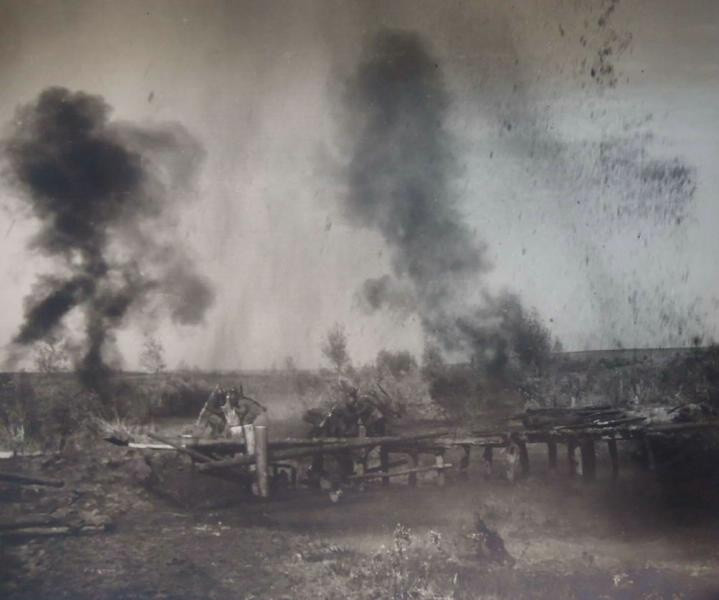
On the third day, they loaded another bridge, everyone waited for the last wounded to cross, and then they sat down in such and such hell. We came to our senses. Know, no one: “Well, shall we take off?” “Yeah,” I say. They turned the handle once, but the other time it didn’t want to. And then we hear - behind us, someone burst into a fist, looking, and there, near two motorcycles, three Fritz are laughing, they are already crouching with laughter, one shows that, they say, they cut the wires, and the other twirls his finger at his head, they say, you are a fucking fool, it’s a shame.
As soon as Kolka reached for the rifle, the red-haired one, well, the one in the blue faded T-shirt, he gasped from his stomach from such a tiny black machine gun and got hit right away. And me by the mikitki and into the cradle. They drive drunk, laughing all the way, babbling that “Rus is kaput,” and then they laugh again. They took me to an old collective farm barn, gave me a kick and slammed the door. The people in it are dark, they smell of piss, and all of them are not wounded. There’s nothing to eat, you can’t breathe, and there’s a lot of crap in the corner, everyone goes there... Well, then you know everything yourself.”
And two weeks later we went out to the river at night, rockets were firing here and there, we waited until the morning and through the fog and swam across. It’s just that we got lost at the filtration point, which is a pity. We got used to him, he turned out to be an iron guy. The special officers did not bother me for long, when they found out that I was a mechanic, and they sent me to become a tank crewman, to finish my studies right at the front as a driver, and away we go...
Photos – 1 , 2 – “Russia in photographs”
Dima Bezuglov Essay Person Prose Valery Timofeev Vladimir Nefedov Great Patriotic War WWII Ural oral history verbatim 1941 fascists partisans military history memoirs