
Translated material
No worse than Nice
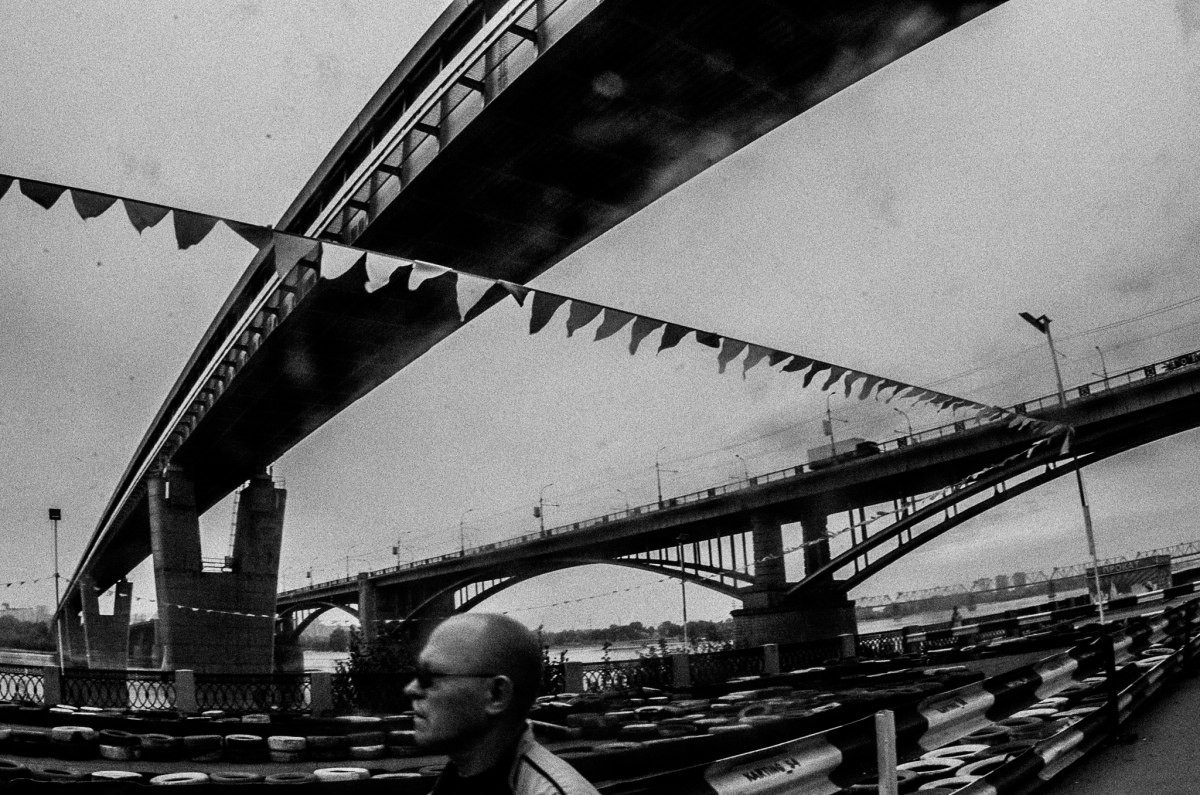
There are cities that are firmly entrenched in Russian literature: St. Petersburg, Moscow, Paris, Berlin, Kyiv, Venice. What's happening to Novosibirsk? Does the city text of Novosibirsk exist in Russian literature? And if it exists, how can it be described? On November 25, 2015, philologists and poets gathered together to discuss how our city is interpreted in modern poetry, through what details and spaces. The discussion marked the conclusion of the project “Projections of the City: Urban Imagination in Literature and Cinema,” within which philologists from the “Open Chair” gave lectures on cities and urban texts throughout the fall. Speechport publishes a transcript of this meeting. The “Open Department” philologists Natalya Laskina, Svetlana Kornienko, Natalya Muratova, Svetlana Romashchenko and poets Boris Grinberg, Andrey Zhdanov, Ivan Poltoratsky, Mikhail Moiseev, Dmitry Korolev, Gleb Manzhaley took part in the discussion.
PART I
Natalya Laskina: I will first explain what was behind the idea of this evening. Firstly, we, philologists of the “Open Department” project, spent the entire month of October talking with everyone in a popular science aspect about how, in principle, cities appear in literature, how the city is projected into literary texts. But since we are all historians and literary theorists, and not literary critics, we naturally talked about how this happens in literature that is no longer alive, that does not continue to live in any other way except in the mind of the reader, about how it happened a long time ago, in texts read many times. Secondly, all this is connected with the strange question of what philologists should do with modern literature, how to be face to face with poets and talk. With poets, half of whom are philologists themselves. Mikhail Nemtsev, who was virtually present here, personally demanded from me very persistently the presence of philologists in this life, asking: “Why don’t you ever talk to us? Why don’t you talk about modern poetry?” And all our explanations that a literary historian can do little in this conversation, and we ourselves don’t know how it should be... After these conversations, I changed my mind. I started to think that maybe this is necessary. But we don't know how to do this. We are not here to analyze your texts, not to predict anything based on them, but to talk together about what we have read and heard.
So, when we thought and talked about cities together, we understood, it seems to me, one thing: in order for a city to exist in literature, for a city to be read, for readers of the city as a text to be born, and not just a collection of people who walk the streets of the city, it is not necessary for the city to be loved. Not at all necessary. It does not need to be admired and easy to admire. It doesn't matter. There is no need for it to be great and for it to have some kind of super-relevant cultural life. What we really need are texts and people who read them. And such meetings are absolutely necessary. And since everyone here is a thinking and reading person, there is no need to talk for long, and it’s clear, because everyone heard the same thing: Novosibirsk is a city that does not exist. And on the other hand, it is a city that is inhabited by city people. This, it seems to me, is what everyone was talking about, especially Evgeny Miniyarov and Boris Grinberg, who spell it out in plain text.
***
Garlands of stars in the station sky,
County town with the first letter “N”,
If you can't get to your feet, you should get up from your knees,
Like Frankenstein is huge and ridiculous,
The provincial center of the state is gloomy,
Faceless, like dozens of cities,
There is no stamp of past centuries here,
There are buildings here, no architecture,
There are figures here, but there is no culture,
There is no culture here, but there is snobbery,
Worthy of St. Petersburg and Paris,
But this is not Paris... From the heavenly liquid
The moon looks down without regret.
Boris Grinberg
Laskina: You can’t call us anything other than townspeople. Here we have an empty place, lost in the snow, invented by others, because “Siberia was not invented by us.” And everyone heard, it seems to me, in the poems spoken today, fragments of texts simply about Siberia - with snow, with trains. It is clear that all this was written not here, not now, but a very long time ago. And we have to live with it, we still live with it. But for some reason, in this empty space, purely urban texts exist. All that remains in them is that you can’t write from outside the city, as if all this had already been written by people who have no non-city experience at all. All life is like this: walk the streets, go to the supermarket, just that. All the time there are names, signs, tablets, all these usual signs of a modern city, behind which there seems to be no subtext, no more ancient place where it grew up, a place where there used to be a small settlement. I don't think this has been heard, and that's interesting.
Andrey Zhdanov : I didn’t read about the city, but about truckers, about the highway.
Laskina: But all the same, transport and roads are part of a purely urban infrastructure. There is no point in having truck drivers if they are not on the roads that connect big cities. All these trucks and trains appeared only recently. This city, which has not yet been born, is written in a language that, perhaps, has not yet been born.
Zhdanov: Stop, let’s talk about the fact that the city was born quite a long time ago, but what is being born in it now is completely different... (shouts from the seats: “How long ago is this?”) Now there is a surge of some kind of poetry or whatever it’s called. Have you noticed?
Boris Grinberg: This is another surge, you know how many of them there have already been, these surges.
Laskina: That’s where I started, with the question of why our view is different. For the history of literature, a hundred years is generally the shortest period. Everything that is under a hundred years old is recent and new. After all, for a text to be meaningful, for it to go through the entire cycle of basic readings, it takes about a century. That is why Novosibirsk is not just a young city, but a city that in this sense has not yet been born. It's not there yet, it hasn't been read yet. Everything that is within the framework of one human life is obviously recent; none of those present could write anything for a long time, because for literature a long time ago is beyond the boundaries of life.
Zhdanov: Everyone needs to die...?
Laskina: Yes. I think this has already been said. Death has already been mentioned here. Yes, perhaps after this death (the death of Viktor Ivaniv - editor's note) something like this happened in your mind. At least what I heard from Ivan Poltoratsky and Mikhail Nemtsev...
***
in the city of dead poets all the streets are made of rain
the inverted thick ones slap you in the face
Harvest expected in the year of literature
swollen rivers full of fat frogs
and everyone who is exposed to daily risk here
have the opportunity to win a free registration
in a city where there is not a single living poet
but all open water bodies are filled with the dead
when summer begins they rise from their slumber
and frantically clean up after themselves
and gradually rush away
the librarian flew upside down
slightly zakemaril woke up, and all around there was only rhyme Egypt
there’s a doctor standing there and they can’t drink alcohol
the lead beak does not fit into the glass bottle
a nice view of this city will open if you go for a walk on the balcony
with openwork railings and multi-colored glass
and under the water with an underwater bell
and this city, or rather this pit
expands with every careless effort
moves the spreading edges
worms crawl in circles
crawling on each other's backs
bursting from its meat abundance
you don't want to look at it
and cover your face with someone else's hands
right, right, don't increase death
forget about it and be done with it
but there is a small secret will
associated with the most important things in the world
who rush after the coffins
take my passport from the woman with iron teeth
under the broken leg of an old harpsichord
find the metal medallion where the jagged sun is
put it on my chest and run without looking back
throwing a match into your eye
slightly opened colors
cloudy kerosene
and don’t forget to put a T-shirt on me
in which I played football since childhood
I don’t want to walk around disfigured and naked
on the road
until the infection starts
pull the tendon out of your hand
twist it into a good thread
and sew up this hole on yourself
sew up this hole on yourself
I tell him this: think through the gate
I mumble to him through the gate
that nothing happens in such a flight
that sometimes it's time to swallow the last flashlight
and fumble with your hands along the bottom of the reservoir
hoping to find something like this secretly
what makes you feel restless
and everything turns over
and institutions are built around
and all the living walk in radiance
here you and me and them
start screaming and waving their arms
because there is a plane with black football players flying in the sky
capable of throwing a ball higher than the sun
taller than Yegor
But this.
Will.
More.
Not soon.
Ivan Poltoratsky
PART II
Svetlana Kornienko: I wanted to say a little about the rather interesting relationships that always exist in culture, between the concept of the poet’s inner city and the external, geographical city. The inner city is, as you know, the concept of Nikolai Antsiferov, who once said that every poet carries within himself his own inner city, and this inner city often does not coincide with the city in which the poet literally lives. This inner city of Novosibirsk, it seems to me, sounded quite interesting here. And there are some very interesting areas of discrepancy with the real image of the city that is formed in addition to literature. I will name one obvious locus of Novosibirsk, which I have not heard in any poem - this is the Zoo. Zoo, menagerie. Please note that it is not in the verses. There is a bridge across the river, there is the Ob Sea...
Boris Grinberg: This is because the zoo was moved from the city center...
Kornienko: Yes, but the zoo has been in this completely different space for ten years now.
Greenberg: He's far away. When he was behind the Central Market, he appeared in poetry.
Zhdanov: Novosibirsk itself is a human zoo!
Ivan Poltoratsky: Yes, we left the zoo a long time ago.
Kornienko: Yes, this is understandable, the fact is that the menagerie is such a hyper-literary, hyper-semiotized space. I encountered the same discrepancies when I was working with texts from the 1920s in connection with my own literary theme and leafing through the emigrant magazine “The Will of Russia.” Let me remind you that it was published by the Social Revolutionaries in Prague. In the selection of issues for 1928, a very interesting text by Gleb Gontsov was published. It was published for a year, it was a secret illegal trip of the Socialist Revolutionary throughout Russia. Many people made such trips: Shulgin, Boris Savinkov, who was eventually caught... And here is a certain Gleb Gontsov (most likely this is a pseudonym, I don’t yet know who it could be). And in this text a large essay is dedicated to Novosibirsk, it’s simply huge. This is very unexpected, because our city was just beginning then. And there I saw very interesting things. Besides the station, of course—most of the essay is devoted to it—the Chinese theme appears there quite unexpectedly. It turns out that in the 20s there were a huge number of Chinese in Novosibirsk; they were most likely brought to our huge construction sites. Every second resident of Novosibirsk whom the author of the essay sees is Chinese. And he describes Novosibirsk as “the city of the Chinese.” Igor Evgenievich Loschilov, my colleague, unlike me, studies Russian literature of the 20s, and specifically Siberian literature of that time. And I asked him: are there any Chinese in the literature of that time? And he replied that they appear in newspaper essays all the time, but the Chinese have not mastered literature at all. It’s just that there are no Chinese.
Another interesting phenomenon in Novosibirsk in the 20s was the so-called “living church”. Its center, as you know, was the current Alexander Nevsky Cathedral. It was such a renovation movement. And Gleb Gontsov describes various strange “movements” that happen around this space. Again, literature does not react to this; its image of Novosibirsk in those days was constructed completely differently. Therefore, it seems to me that there are some strange patterns that we are also observing now: some loci are dropped out. After all, in principle, the zoo is a brand of Novosibirsk.
Zhdanov: Why strange? We live in Asia. Novosibirsk is Asia. The fact that there is some influence from China here is completely normal.
Laskina: Asia is Asia, but the texts you write are not even close to Asian, they are absolutely European. It doesn't look like Chinese poetry.
Zhdanov: I consider myself an Asian, because I am probably already in the third generation.
Laskina: But your language is European.
Zhdanov: The language is European, but the mentality is Asian. Thoughts are Asian.
Dmitry Korolev: And poems about Marlene Dietrich !
Zhdanov: Marlene Dietrich for me is some kind of thing that flashed in Europe in some years, I don’t even remember which ones. If you’ve read this work... it’s not clear what we’re talking about: is it about Marlene Dietrich or about Edith Piaf in general (laughter) .
Mikhail Moiseev: Let’s just raise this question: how different is the poet’s sense of self, which he expresses publicly, from what we see in his poems. “Pushkin is not Alexander Sergeevich,” Andrei Zhdanov in poetry and Andrei Zhdanov, who is speaking now, can be quite different.
PART III
Poltoratsky: I’m generally Asian, I came from Kazakhstan and was born there. But at the same time, I am aware that the reception of Chinese texts does not occur here. We are very far from China. I am more interested in whether there is a Novosibirsk text as such, what motifs it consists of, what specific topoi and loci. That is, judging by the texts that we have just heard, it seems to me that they often contain specific names of some streets, the literal localization of a person in the space between Ordzhonikidze and Krasny Prospekt. I, of course, aimed at a very narrow range. Yes, there is localization, we don’t particularly write about train stations now, there is sedentarization within a very limited framework. Second: we don’t write about the zoo either, the zoo is far away, we don’t go to it, and just like the Chinese, we haven’t mastered the animals of the Novosibirsk zoo. But we can get busy: Andrey (Zhdanov) and I will go to the zoo and master all the animals there. And we will have a completely unique Novosibirsk text. And third: where is the forest anyway? Where is the taiga? Where exactly did the forest text go?
Korolev: Regarding Asia: I remembered that Viktor Ivaniv has a long poem called Song of Asia . It would be very interesting to analyze it for its “Novosibirsk” nature. I immediately remember that there is an episode where the hero is walking with the philosopher Nemtsev, and the philosopher Nemtsev shows him and tells him that Baron Ungern was shot, they say, not here, but there. What else I wanted to say: about train stations. Firstly, we all remember the poem by Vitaly Krasny, where “ Novosibirsk-Glavny Station is / this is one continuous plural / cigarette butt - cigarette butts / homeless person - homeless people / shit - shit ” and so on. Secondly, Anton Metelkov has a poem dedicated to Anatoly Makovsky, a major Russian poet who lived in this city, it also begins with the road, it literally begins with the fact that Novosibirsk is the place from which people leave.
you will go to the city of Kyiv
where is the green cloth
and these lanterns
like graduation at an orphanage
there's a burnt out tramp
means to burn out
in your foot wraps
hundreds of watts hidden
hurt by the rays of the sun
legs in a frantic walk
say goodbye to society
I'm going from A to B
Anton Metelkov
Korolev: As for the forest: there is a suspicion that the text of Novosibirsk is very urban, industrial, and everything connected with the forest, with magic, can arise when you write about Akademgorodok. It is very important for Akademgorodok that it appears in the forest, but for Novosibirsk it is not.
Poltoratsky: Where is Akademgorodok poetry then? Where is the academic text? This is a place full of power and various discoveries, but there is no text.
Greenberg: This is such a bad Peter. Roughly speaking, Novosibirsk is such a bad... well, how bad... such a Siberian Moscow, and Akademgorodok is a Siberian St. Petersburg. I'm not talking about the place, but about the people who squeak. Read David Potashinsky, now an American poet, Dorogov, and so on. They always looked down on Moscow, like St. Petersburg residents, that’s what I’m talking about. But in reality, what can you demand from a city where not a single generation has changed? It is 50 percent made up of people who arrived in 1945 and their descendants. This is one or two generations. Of course, this city does not exist. He is not on the poetic map and cannot be. And maybe there never will be. The only thing that amazes me about the city of Novosibirsk is the people. I love the people here, but the city itself is disgusting.
Gleb Manzhaley: At the level of sensations from the texts that I was familiar with and that I heard here today, Novosibirsk seems to me to be a city freely suspended in space, a kind of ghost town, the Flying Dutchman. This is a city that is blown by winds from all four sides, and not a single wind lingers in it. Therefore, the entire essence, the entire maintenance of the city falls on the shoulders of those people who live in it. And therefore, not some iconic places come to the fore, but people, people and their will, their relationships.
PART IV
Natalya Muratova: It seems to me that we are now trying to talk about texts in two senses: firstly, about the texts that we heard. Maybe the selection was such and the poets gathered here were such that I got the intuitive impression that Novosibirsk in poetry appears as a hard, brutal, masculine space, which is directly screwed in, screwed in, a little nervously, there is little tenderness in it... Only Dima (Severov) is always gentle, maybe this is my perception, maybe there are no girls here among the poets...
Greenberg: You should have listened to Klimakova! With her everything is much tougher.
Muratova: Yes, probably, in some women’s poems everything can be even tougher, even more brutal than in men’s poems. Regarding the texts we hear, we can build some of our own philological statistics of techniques, poetic possibilities that grow into perspective and somehow call what we call “Novosibirsk”. And we are also talking about the text in the broad sense of the word, about the text as semiotics, as signs. This is a more universal thing: the city appears as a space that can be read like a book. When we walk through the city and leaf through the streets like the pages of a book. And it seems to me very important that the city of Novosibirsk appears as an individual, perhaps still pre-sign space. A forest, a bridge, and also a steppe, because in Novosibirsk there is a kind of steppe blizzard blowing, and stiff steppe grass... In order for something to arise in mental, intuitive experience that designates this place as such, we have too few texts. Much more texts are needed for the image of Novosibirsk to arise not at the level of words, individual images or semiotic details, but at the level of mental experience, in which, whatever you call it, it would be Novosibirsk.
Svetlana Romashchenko: As far as I understand, today we did not gather to listen to lectures or build theories, but came to see poets. We philologists, who love mostly dead poets, saw living poets.
Greenberg: They're easier to love.
Romashchenko: Moreover, they are easier to love, they coincide with so many moments, which for me are an indicator of great poetry. It seems to me that poetry begins with intonation. I read your poems in advance, and it was very interesting for me to look and listen to you. Because, in addition to being a philologist, I am also a former teacher with very long experience, I had one principle: I never criticized children for the essays they wrote, I did not read them out loud. I talked about those that amazed me. Today, in line with our conversation, I want to note two texts that coincided intonationally with my feeling of Novosibirsk and with my own feeling of the present moment. This is a text by Ivan Poltoratsky, those same “stupid” winter postmen , and a text by Sergei Shuba. I just want to quote so you understand what I mean. I mean the place where it talks about Sodom and Gomorrah.
***
Tower crane or lifting,
Is the wall an industrial zone, garages? –
I'm ignorant on the way
You tell me
About where the sea flows from
Where do we pour our life?
In Sodom and Gomorrah too
They swore.
And I look into blank glass
Seedlings on the windowsills
Under the lamps, she got wet
From the sea pouring nearby.
And the crane waved its spoke,
Red Avenue lights up
And I keep looking at faces
Like lighthouses.
Sergey Shuba
Romashchenko: You understand what the matter is: it is very important to talk about those texts that are imprinted in your consciousness. We talked a lot about cities, and today’s image of Novosibirsk for me turned out to be marked by such an intonation that, among other things, it is also connected with the mythological image of Sodom as a city that you always look back at. I mean what you (Boris Grinberg) said - about an unloved city and about beloved people. By the way, your poem about the station, which is “Main”, also seemed very close to me, intonationally very lively. But the text (by Ivan Poltoratsky) about “winter postmen” is not a Novosibirsk text, not an urban one, it’s generally a text that deserves a lot of attention, because intonationally you can feel the three-syllables in it, which I always lack in poems that approach beautiful and harmonious prose. I want to thank the poets for inviting us, philologists, to discuss together the very space in which we crossed paths.
PART V
Poltoratsky: I thought a lot in general about the relationship between the poet and the text, both as a poet, and as a philologist, and as a resident of a city. And first I want to say that the Novosibirsk text is not represented on the map of Russian literature by as many names as we would like. But now, probably, the most striking of the phenomena is the prose and poetry of Viktor Ivaniv, which, it seems to me, needs to be comprehended and explored. Novosibirsk, called "the city of Vinograd". We still have a lot to understand, to understand how the city is constructed there, because in this prose, in modern great Russian prose, which received the Andrei Bely Prize (if that means anything), there is a reflection of what we can cling to here. Unfortunately, we do not have the opportunity now to talk with Victor himself, to find out his point of view on the Novosibirsk text. Nevertheless, these texts are worth considering and exploring. I recently published an article in the journal “Criticism and Semiotics” about Victor’s Novosibirsk text, and I think that this work should be continued.
But you see, I myself am a “sent Cossack”, I am from Almaty and I feel like an Almaty poet. I just recently returned from a large literary festival, and, you know, I realized that there is a very strong impact from the place - in the voice, in the language, in the text. And when I listen to myself, to what kind of feedback is coming from Novosibirsk, from Akademgorodok and from the surrounding spaces, what kind of metaphysics is at work here, it becomes quite scary. Victor and I also talked about this and came to the conclusion that there is some kind of big hole here that sucks everything into itself. And we build our lives around the edges of this hole, we build houses, but we must take into account that there is something here that is worth overcoming. For Novosibirsk, the motive of overcoming is very important: both overcoming difficult temperature and weather conditions, and internal struggle, political or some kind of cultural, or generally metaphysical struggle with death. Here is a Russian field of experiments, and very serious things are happening in this field that require a strong, stable word. Not all words germinate here. Because the pressure is very high. And the stakes, in my opinion, are also very high: will Novosibirsk be a cultural city, will there be a cultural environment here at all, or will we, the people living here, simply disappear or be thrown out, you can look for different verbs.
If we talk about the Almaty text, the main motive in it is friendliness. Not Kazakh, but specifically Almaty text. It so happened that the philologists, poets and writers who worked there began to build an environment in the 90s. And the result of this was that Almaty literature acquired many names, many authors who received wide recognition. Dmitry Kuzmin, for example, said that Almaty literature is not regional Russian literature, but an independent foreign poetic tradition. A school appeared there. People in the barren land - the 90s, Kazakhstan - simply put a lot of effort. And here, too, the land is rather unfavorable. But we can put effort into it. Now our conversation here will create an environment, a very interesting environment of tension. I would like the Speechport project, our texts, names - everything to leave its mark here. Not out of a desire to leave a mark at all, but because it is generally interesting to explore the space. And now I’m thinking about what Novosibirsk joy is. Or Siberian, as part of the Siberian text, what is joy here. What here allows a person not to fall into a state of some kind of permanent war, but, on the contrary, to go out into life. And the text “about postmen” is deliberately written so laxly in order to create the feeling of a drunken person in the cold, who experiences the presence of some great inspiration and joy from this. In Novosibirsk, this feeling also visits me from time to time. Vitaly Krasny, whom we, unfortunately, do not see here, is the embodiment of Novosibirsk joy, a big healthy man with a beard who reads funny and smart poems about the Novosibirsk-Glavny station and about doshirak, about love and about shit. He reads a lot about other things, and we really miss him here.
***
Novosibirsk-Glavny train station —
it's one continuous plural
cigarette butt - cigarette butts
bum - bums
shit-shit
you can continue ad infinitum
but it won't add people to the crowd
and a little bit of humanity.
Not a cosmic Aquarius,
A
lie
and self-interest
patronize Russia
but I send everything to hell
i will live here
and I won’t go to any Bahrain,
Germany or
States.
Horseradish.
horseradish!
NO
MONEY
for a ticket!!!
Vitaly Krasny
***
You walk along Frunze past Central Park
And the stadium
Do you remember that you sent three poems?
Dmitry Kuzmin - suddenly he’ll take it
Do you remember how someone advised you
Read Heinrich Mann
You're standing at a traffic light
Heinrich Mann is such a story...
He is not for our age
High speeds
That is, you will need to switch off from all this
What kind of Heinrich Mann? - I have Twitter, Facebook, eight dialogues in contact
I need
So much to do
Do you remember what else is on the closet?
Two Translit numbers
And there too: Roland Barthes
And some others
Literature researchers
But who is Roland Barthes?
He's a storyteller
An era will pass
And we'll all run on all fours again
era
in the normal sense of the word
not postmodernism or classicism
So he crossed the street
People are approaching some cars
Eleventh of March
But it's winter
Again in Siberia there is snow plus one wind
For some reason everyone you meet is talking on the phone
Weekday afternoons
Everyone has a lot to do
Also ask them about Marjorie Perloff and Hans Fallada
They will answer
Dude why do you need this
After work I go to the store or bar
And on weekends to Auchan or Aura
There is also Lenta where you can buy it cheap
And also Ikea
What are you talking about
We go to 3D films and watch videos on YouTube
This is our safety concept
Our historical place
Okay you say you nod
Everything is clear
Over there on the left hand houses are being built for such
(two women close to each other because it’s slippery:
- I tell her, what should I do while she’s doing this?)
Look, we haven’t forgotten how to talk to each other yet
Smoking can still be considered a gesture of self-affirmation
Possibly despair
After all, everything
For a healthy lifestyle
Pedestrians have not yet been hit when turning green
And so I move on
And this is not a poem by any means, no seventeen thirty-five on
scoreboard minus one degree Celsius seven hundred forty-six pressure lending certificate-invoice lawyer ninth floor office nine hundred six Myrtle LLC hinged ventilated facades whoever lives in Novosibirsk will guess where I am
Let's move on
Let's see, try free calls and unlimited SMS, happiness is visible right away, stop University of Economics
Passed again
Man with phone
The snow melted on the sidewalk and was well cleared
It's easy to go further
There are no passers-by
Because it's close to the Hippodrome
It's inconvenient to walk there
There are places where it is not very convenient to walk
That's where I go
Not for self-affirmation
Just to be
Here are many of my friends
They say we make it happen
They can't explain it any other way
They probably also haven’t read any McCaffrey Derrida
Other major and minor philosophers of the twentieth century
Perhaps even Sartre and Cocteau passed them by
What can such people do?
But when you talk to them
You look into their already aging faces
Do you remember how you met seven years ago?
And they answer you, I make it so that it is
Do you see any clarity in this?
You feel the core
Maybe this is life
Without any speculation and ultra-precise conclusions from psychological tweezers
Maybe
It's worth sticking to
Tell yourself to take a wider step
or I'll take a walk here
or I’ll stay in this place a little longer.
Sergey Shuba