
Translated material
Pecunia olet
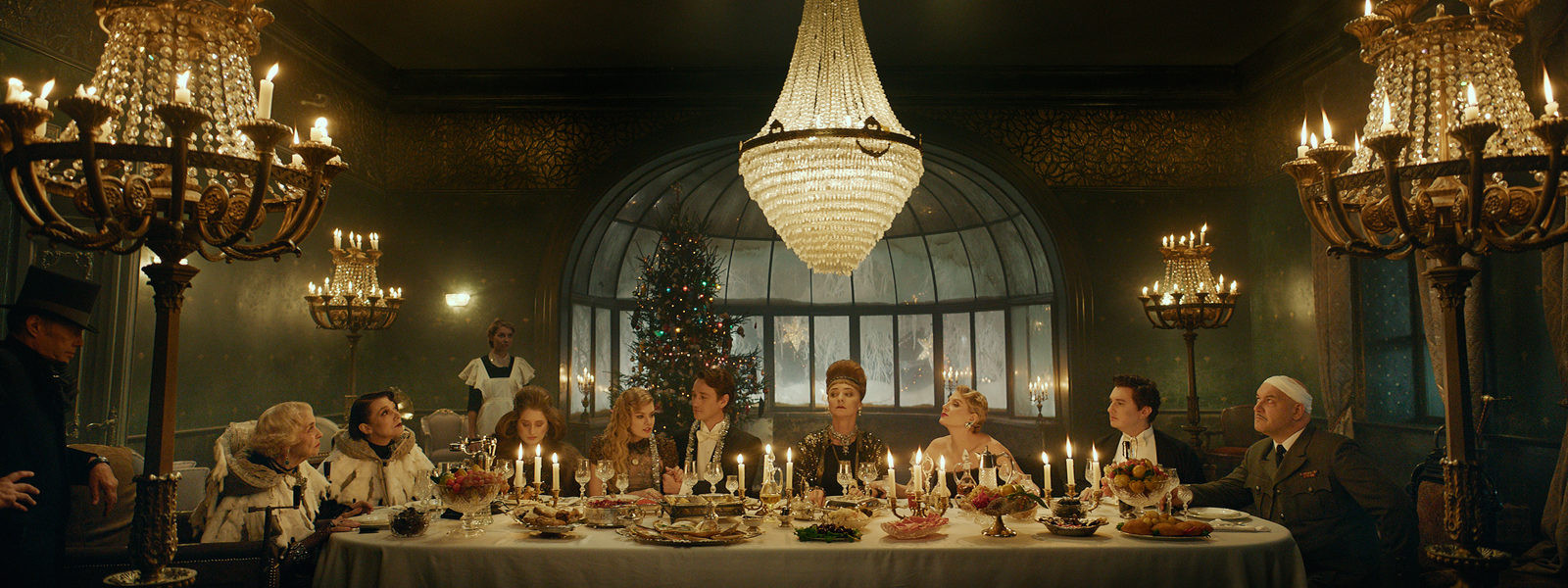
Renata Litvinova returned to the screens as a director with the Halloween tale of eternal return.
“It was a fabulous time when a great matriarchy reigned. The women of our northern clan ruled in the absence of men and lived in anticipation of them, strong and loved,” they invite us in the trailer for the film-homunculus, which grew out of a theatrical production.
But the expectations of the family clan (and towards the end of the film, one might say, almost of the mafia) are not destined to come true. The beautiful stewardess Fanny (who, due to the protectorate of nepotism, is played by Litvinova’s daughter Ulyana Dobrovskaya), the bride of Benedict (the son of the head of the Margarita clan, embodied by Litvinova), dies in a plane crash, and in a mystical way the machine of total rot is started: literally somatic and ethical.
Who is Fanny and why was the diaphthora mechanism triggered by her death? A celestial legate who perishes in the skies, and with him the transcendental structures perish, dooming the survivors to a hypochthonic existence? Mythologically, this plot can be interpreted as nemesis, but who is to blame and for what? Fanny herself, by leaving the house instead of staying with her newfound family on a special day? Or a family that recklessly gave the right to sacred logos, intensified during the celebration, to the bride - that is, who knows who, unknown? In any case, Fanny, with her ominous toast ( “so that you, Benedict, love me to the grave and after the grave” ), takes love with her into the grave (non-)existence. We will not find more love in the film, and without its blessed light, the existence of the heroes is finally plunged into the abyss of darkness.
Philosopher Natella Speranskaya views the film as an interpretation of the myth of Persephone, captured by Hades in her abode, which leads to the slow agony of the living on earth. And indeed, the twilight of the mansion resembles an underground, dim kingdom, which, without the male Apollonian light, without refreshing air, languishes and is filled with a poisonous, rotten smell.
Before us is matriarchy under the banner of the Cybelian logos, but this is not a state of masculinoid Amazons, this is a fading kingdom of women yearning for men. Litvinova criticizes men, but not in a feminist way, but aesthetically, as Anna Filippova astutely notes in the magazine “Iskusstvo Kino” [1]. Probably, Litvinova’s flirtation with the LGBT community (of which Renata is a champion and protector) in the film serves as a symptom of the disappearance of the conventional, stereotypical “real” man.
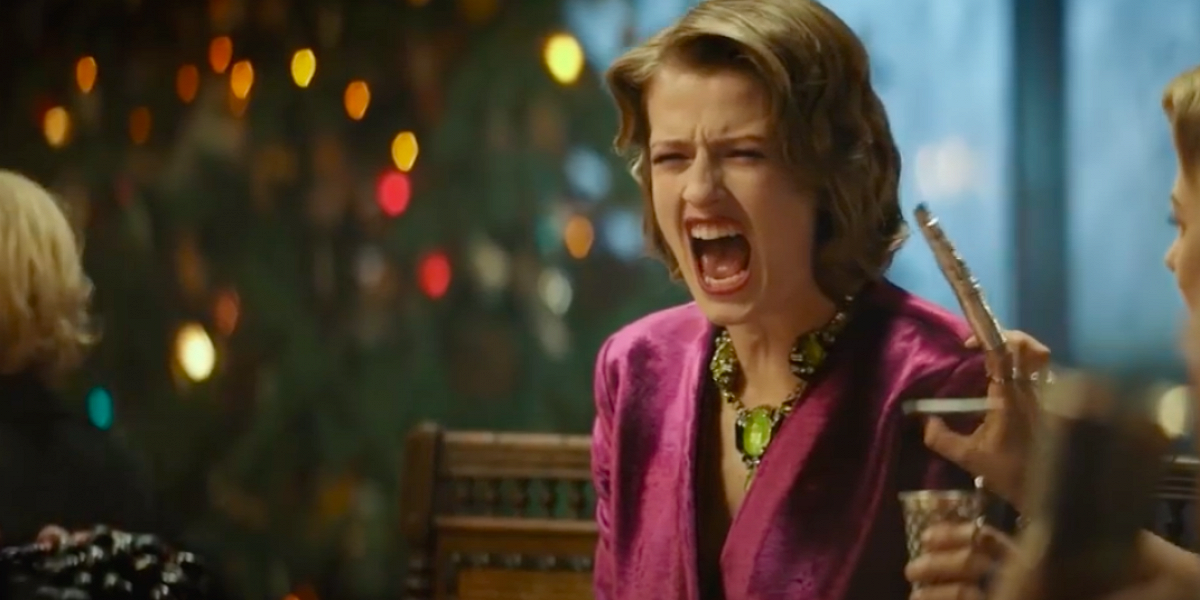
All members of the northern family, according to legend, have an extra thirteenth (or twenty-fifth) hour, which turns out to be not at all happy; this is time in reserve, which turns life into a permanent draft, depriving its owner of authentic existence.
Litvinova is nostalgic for the retro-aesthetics of decadent fin de siècle modernism [2]. But in what time do the heroes live (or rather, do they survive in a foppish way, drowning in alcohol and tobacco smoke)? The answer is simple: the action takes place nowhere and never.
There is no time in the kingdom of the titans (or rather, titans); the point hic et nunc [3] is annihilated, only the alienated “noch nicht” and “not yet” [4] remain: a real man has not yet come to the house, it’s too late to do anything. There is no real soteriological event coming from outside to break the vicious circle.
And only the point of implosion in the form of a sacrifice of lost time, which Margarita-Renata makes in the finale, is a step towards humanity, too humanity, in the acceptance of mortality through the rejection of such a Trojan gift of time. For those human races that are doomed to a hundred years of solitude are not destined to appear on earth twice.
In a sense, the film is an homage to Kira Muratova, whose muse was Renata Muratovna and to whom she dedicated her opus: the scene in the circus is a nod to “Hobbies,” and the final scene is a replica of “Asthenic Syndrome.” Is it worth talking about the obviousness of Kira’s creative testament with her last film, which determined the temporal peculiarity of the film - “Eternal Return”?
But this turns out to be only a travesty, copying some external features, such as a communicative failure in the form of mutual deafness of the participants in the dialogue, illogicality of speech, endless repetitions (= returns); Renata did not bring into the film that piercing depth that was invariably present in Muratova (and which is probably impossible to repeat). In “The North Wind,” lulled by the lullaby of Boreas, we glide along a snow-covered Deleuzian plane, but if the snow thaws, we will see that there is nothing underneath, the transcendental volume is eliminated, and two-dimensional existence is the lot of shadows, eidolons. Is it not for nothing that one of the heroines is called Shadow? Aren't all the heroes such Jungian shadows - a scent instead of a soul - who cannot step into the sunlight without fear of being incinerated by its stern gaze?
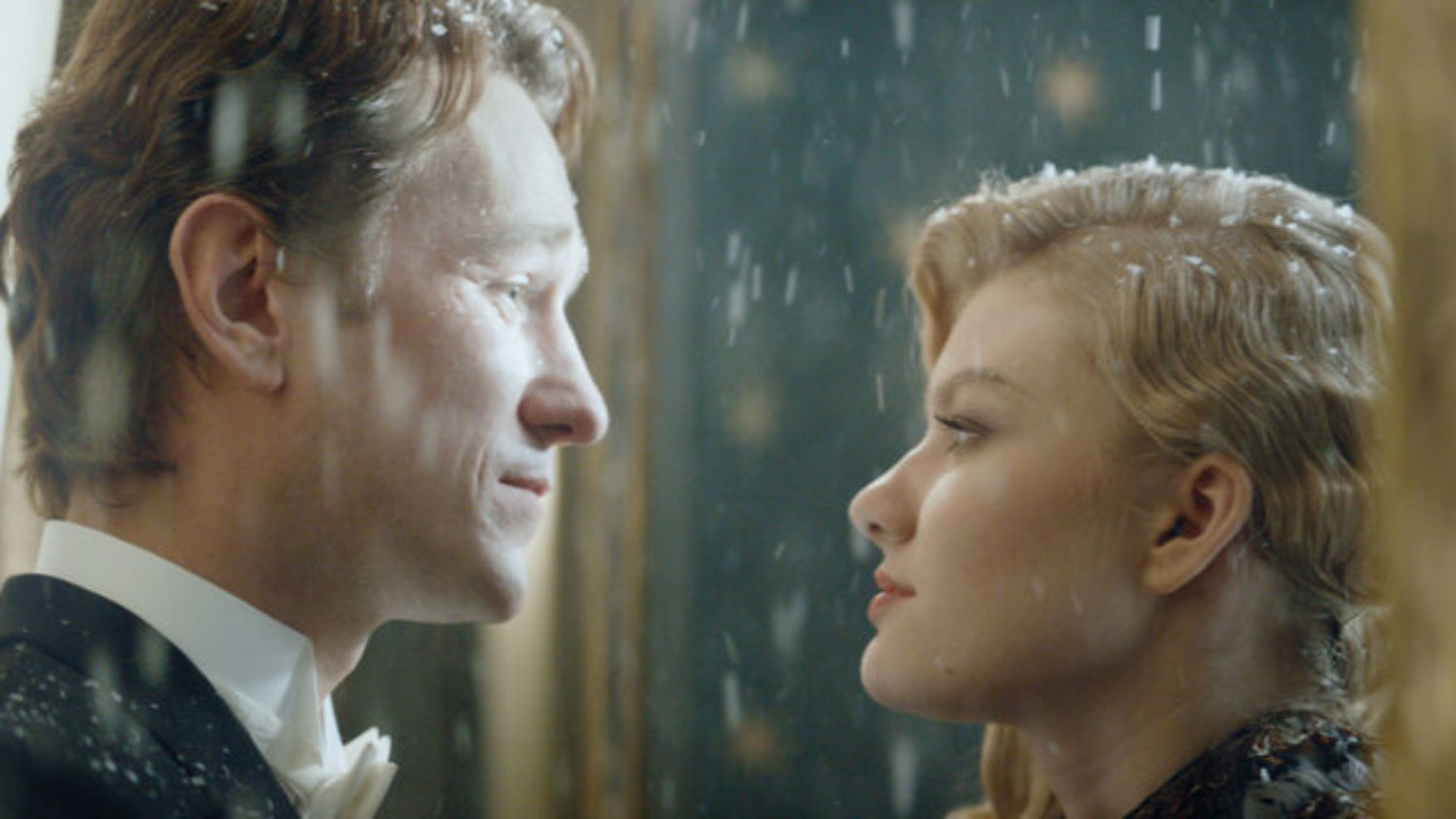
Vignettes, lace, furs, candlesticks - all this is decorative and applied art, a rebellion of things and matter, beauty, but not beauty, trying to camouflage, like wrinkle cream, a rather weak and reluctantly decipherable (not due to enigmatism, but due to vulgar fatuism) storyline (this despite the fact that Litvinova is a screenwriter by training!)
So, after all, money smells. They rot: in boxes hidden underground, because banks cannot be trusted, but deprived of free, and most importantly, fair circulation, they rot. The costume fairy saga turns out to be a realistic work, an exposure of the cacoodorological, cryocoproolfactory [5] present of Russia. But how many green ones died during the production of this film? Sometimes a big budget oppresses with its monstrosity; Henri-Georges Clouzot's Inferno suffered a similar fate, where the unlimited funds for the implementation of the director's ambitious kinetic experiments did a disservice to rationality and pragmatism. The trap of the eschatologically predicted kingdom of quantity by Rene Guenon. Litvinova’s modest budget goes much further, as was the case, for example, in her “Rita’s Last Fairy Tale.” Still, we hope that this was not Renata’s last fairy tale for us, whose charm and charisma make it possible to forgive her characteristic pretentiousness.
Notes
[0] Pecunia olet - money smells (lat.)
[1] Indulgence for vulgarity. The art of cinema. Anna Filippova
[2] end of the century (French)
[3] here and now (lat.)
[4] not yet (German), no longer (English)
[5] κακός - bad, bad (Old Greek), odor - smell (Latin), κρύος - ice, icy (Old Greek), κόπρος - manure, feces (Old Greek), olfactorius - fragrant, fragrant (Latin)