
Translated material
Run! Hide! Fight!
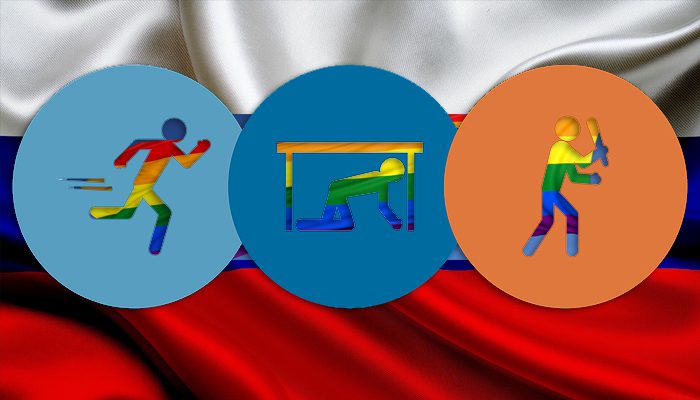
We will analyze the survival strategies of LGBT people in Russia, and also answer the most important questions from readers
After the text “The Choice of a Russian Gay” was published, we received about a thousand letters and comments. Some agreed with our conclusions, others argued and presented their own arguments. Of course, it’s nice to see the optimism of readers, but only when it is based on a common understanding of what is happening, and not on infantile hopes that everything will resolve itself.
We did not get involved in a heated debate between supporters of emigration and those who are determined to remain with the main argument that “this is my country.” But they followed its progress with interest. At the same time, over the past few days, we have had to fend off attacks from fascist shkolota,, together with other LGBT resources, survive the blocking, stop its consequences and develop a strategy for further actions.
But it’s impossible to leave questions unanswered, so we’ll try to get to the bottom of what’s happening
"This is my country"
This argument was heard from a variety of readers. There were LGBT activists who decided to continue the fight for their rights, understanding all the risks. There were also jingoistic patriots who insisted that “while our boys are dying at the fronts,” they should provide them with all possible help from the rear, and in general Russia is wonderful and is on the right course. Yes, there are such people among the rainbow community.
We will not convince the latter. Regime officials, propagandists and direct Russian participants in hostilities have already said everything for us.
Veteran factor
Well, now about these same “boys”. No matter how this war ends, hundreds of thousands of its soldiers will return to Russia. Some were crippled physically and almost all were crippled mentally. We also know from the example of veterans of the Afghan, Chechen, Vietnam and other wars what neglected PTSD (post-traumatic stress disorder) leads to for large masses of former soldiers who find themselves in civilian life.
As always, their homeland will abandon them and will not provide adequate assistance (and regardless of what kind of regime there will be on Russian territory). And they themselves, in conditions of inevitable economic decline, will become the basis for the explosive growth of banditry. Multiple times worse than it was in the 1990s. And they will retain their fierce hatred of LGBT people and try to spread it as much as possible. It was not in vain that they fought, these boys of yours?
Survival as an end in itself
Russia in the coming decades, despite its full range of possibilities, will be a territory dangerous to life. First of all, for anyone who is in some way different from the majority. The rights of LGBT people and communities are being asserted in rich and stable countries and in the rise of society. The current generation, even those who are now 20 years old, will not see any rise. What lies ahead of us is only a tightening of repression, then some form of catastrophe, and then a long and painful crawl out of it. Perhaps already within other borders and forms of statehood.
No matter what happens, LGBT people in Russia over the past years and over the next few decades have become a category of particular risk. We are threatened by the state, a significant part of society, crime, veterans, and numerous neo-fascist structures. In these conditions, the main thing is to survive. Both physically and as people with their own value system.
Survival Strategies
There is a deeply developed theoretical and practical basis on this topic. And it wouldn’t hurt for all of us to get to know her. We mentioned its basic principles in general terms, but, judging by the discussion, not clearly enough.
There are exactly three survival strategies, which are included in the title of this text: “Run! Hide! Fight!”, that is, “Run! Hide! Fight!" To one degree or another, they can be combined, but one thing always dominates. When fleeing, you sometimes have to hide, and, less likely, fight. The one who is hiding is forced, one way or another, to leave the shelter to replenish supplies, and then depending on his luck. And brave warriors often sit in trenches and are sometimes forced to retreat.
"Run! Hide! Fight!" most often used in American schools in the context of jokes. Russia is such a historically collapsing school, populated mainly by infantile people. And it was captured by armed terrorists who decided to take revenge on someone.
Run!
If you find yourself in a city affected by a natural disaster, or in a country where the value of your life tends to zero, then the most logical step is to leave this territory. But in words it is good, but in practice it is not accessible to everyone. And a poorly organized escape often creates more problems than it solves. We saw this in the example of many of those who hastily left Russia last year.
If you decide to emigrate, do it wisely. In this regard, survivalists advise to always have an emergency backpack with everything you need and a car with a full tank on hand. In our case, this means having money, documents with an apostille (with the exception of a foreign passport and, partly, a driver’s license; all your Russian documents without this stamp turn into a pumpkin as soon as you cross the border), and ideally, knowledge of languages, established acquaintances in the place of planned relocation and knowledge of a profession in demand there.
For those who have decided to leave, but cannot yet (for example, have debts, dependent relatives, lack of resources), the optimal strategy is “Hide!” But not as an end in itself, but as a way to solve problems and competently prepare for escape. Writer Dmitry Bykov, for example, remained in Russia while his already deeply ill mother was alive. Despite the fact that the regime persecuted him not only figuratively, but also literally, he accepted all the risks, lived here with the person he loved most until the inevitable end, and only then left for a safe country.
Hide!
This is the strategy for most and the most natural reaction to a threat. We are not all runners and fighters, most of us are ordinary people. The threat is infinitely stronger than each of us individually. That's why many people prefer to hide.
In the conditions of modern Russia, this strategy can take different forms. In particular, you should remove yourself from domestic social networks (namely, destroy your accounts and terminate the agreement, and not just stop logging in), anonymize your accounts in foreign ones, and narrow your circle of contacts to really close people. If the job is public and makes compromises with conscience inevitable (journalist, official, defense company employee, teacher, etc.), it is better to quit and find something less noticeable, even with a decrease in income.
There is a hybrid version of these strategies, which involves moving within the country, but to a safer area. For example, from Moscow to a medium-sized city, from front-line territories to the interior, and sometimes from the city to grandma’s village. Each case is individual, but you should always take into account the prospects of the collapse of the country (if you are not a representative of the titular nation in your region), economic collapse (if you live in regions that cannot feed themselves), a digital concentration camp (in Moscow there are cameras with facial recognition at every step, and in a poor province such systems are unlikely to be installed) and so on.
Fight!
We do not recommend this strategy, although we share it . By deciding to fight for your rights, you give a chance not only to the LGBT community, but to all people in Russia. Because there are no separate rights for us, there are universal human rights. If a beautiful Russia of the future is possible (or at least something not cannibalistic in this territory), it will be thanks to those who will fight for it.
The problem is that we often don't match our resources to our circumstances or take into account the risks. Russia is a country where every one of the several million LGBT people is in danger. And for activists this danger increases by orders of magnitude. Anyone can be wrongfully sentenced to insane terms, fined for insane terms. Unpunished reprisals can develop from isolated cases into mass forms.
When choosing a strategy of struggle, you need to build it rationally and ethically. How effective will the method you choose be? Does your choice pose risks for your loved ones, and if so, are they ready to share these risks?
Ideally, each wrestler should have backup options related to the previous two strategies. Because we're talking about survival. Unlike the Putin regime, we do not need victims. Moreover, they are certainly not effective, because cannibals do not perceive us as anything other than meat.
In a word, don't let yourself down. The experience of the entire Russian LGBT movement suggests that education, legal, media and psychological assistance, the creation of quality content and saving people from dangerous situations have had an unconditional positive effect. And street protests only led to casualties. But this is worth talking about separately and in detail.
The most important thing
Whatever strategy you choose, the most important thing right now is you. Survival is a way to preserve yourself. Not just physically. Our identity, our principles, our now completely forbidden families, our communities, our basic rights - Russia is waging an open war against all this.
This regime is doomed to defeat, but is still capable of doing a lot of evil. To defeat him, a lot will have to be done, and the consequences of what he has done will be raked over by the grandchildren of today’s children. He really wants us to disappear one way or another. Therefore, you should not sympathize with him and certainly do not need to help him. Every day you survive is the day of your victory and ours.
Text: Antony Spyros.