
Translated material
Mediapsychosis
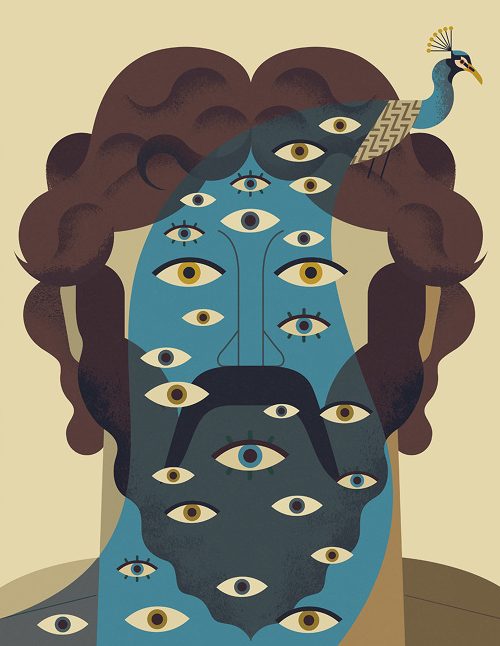
The recently loudly discussed case of the murder of a student and the subsequent suicide of her student killer and roommate has raised another wave of speculation in the media space. Some talk sedately about who is “really” to blame and how to fix it in the future. Others post semi-nude photos of themselves to show that “there is no reason to kill” people – and where the important message is, where is cynical capitalism, and where is socially acceptable exhibitionism, is completely unclear. Still others argue to the point of frenzy with each other on social networks about who has a worse life - women under a certain patriarchy of modern society or men, and it is unclear whether under the same patriarchy, under a different one, or still a matriarchy. What both sides absolutely agree on is that it is always possible to simplify a complex system of social relationships into a set of simple rules, and to have an external locus of control. Someone shifts all responsibility in the situation to the victim, and is ready to defend criminals to the end - it’s just a pity that the number of criminals does not decrease from this. Others are ready to deny absolutely any role of the victim, including her knowledge of the serious problems and jealousy of her partner, and almost her deliberate bullying of him. Any attempt to hint at the role of the victim is called “victim blaming” and is destroyed with the fanaticism of the Inquisition, although responsibility and role are completely different concepts. Someone decided to shift the burden of blame onto mental disorders, readily labeling all patients as “non-human” and further increasing the stigmatization of psychiatric problems in our society. With all this, people discussing the identities of the dead have no idea what it’s like for the loved ones and acquaintances of the deceased to read all these endless comments, hashtags and “opinions.” And it’s unlikely that commentators are very worried about this, especially given the full support of the media for the sake of likes and views. In addition, absolutely everyone puts their own meaning into the concepts they use - the same patriarchy easily changes its definition depending on the ideologies of the speaker, his opponent and the specific situation. Agents of opposing ideologies do not see at all how their words and actions contradict their own declared values.
In such a situation, for some reason it is difficult for people to escape kindergarten-level reasoning “killing is bad” or “you can’t post nudity,” no matter how complex concepts they try to hide behind. This may be logical, assuming that the goal is not to change the social order, if there is any goal at all. I think that the nature of such discussions - aggressive throwing of opinions and reluctance to find a common language - is a symptom of much deeper processes. In fact, we have all gone crazy for a long time and live in a kind of collective psychosis, which is associated with the work of the media and the existence of the media space in general. And our attempts to discuss a socially significant event are a desperate attempt to escape from this media psychosis - an attempt that leads us into an even more depressing state than the one from which we escaped.
In Moscow in 2017, 315 murders were registered. Of these, I can remember at most three or four, because either children or women were killed there, and all this was covered in the media. Using media tactics, we can say that if every night before going to bed you think that another person was killed in Moscow today, then you will rarely be mistaken.
Of course, no one cares about this - because the media doesn’t write about it, and because people have adult mental defenses like repression. More precisely, they are still working.
Today's man lives in two conditional worlds - in the directly experienced world around him and the image of the world in the media space, which is created by the media and other media such as social networks. The center of consciousness - the Ego - connects information from both worlds, processes it and integrates it into the stories about reality and the Self that a person tells himself. With their help, a person forms his own identity and understanding of reality. This is where the roots of media psychosis are located, which is associated with three factors: inconsistency of information, constant impact and sensationalism.
Imagine that you are a child and sitting at the dacha of your second cousin on the paternal side, second stepmother. After another hearty lunch, you are full, but they tell you “no, you’re not hungry yet” and force you to eat. This sophisticated torture continues for a couple of months until your parents take you away from this nightmare, which is surprisingly common in clinical practice. What meaning does a person take away from such an interaction? That he cannot trust his own signals from the body and the unconscious, his own experience. The foundation of his entire personality is subjected to destructive criticism when the developing ability to recognize his needs and the influence of an external authoritarian figure come into conflict.
A roughly similar situation occurs with the media - while experiencing one thing in his daily life, a person is constantly faced with the persistent assertion that his life in reality is completely different. “Life is getting better” - especially in a dirty, broken yard with the same alcoholics for twenty years, or in the form of a decrease in real wages, which is difficult not to notice. “We fight for equality and freedom of expression” - when “progressive” corporations sanction internal bullying of employees with unpopular views or skin tones, and the media either remains silent about it or outright lies. “Women have no role in business/science” - when you work in a predominantly female team in a world-class company or scientific laboratory. “Migrants don't cause problems” - but in the Swedish city of Malmö, which has a high migrant population, grenade attacks regularly occur. “Proved at last: Men really are idiots” - thanks for the compliment. It does not matter that statistics may critically disagree with experience and common sense. It does not matter that different degrees of abstraction and generalization are possible. Human perception of information is important. A categorical presentation of information is important, constantly introducing a person into an internal conflict, because information from the media and even gadgets have long been part of the internal, not the external world - unless the reverse process occurs, when our internal world ceases to be a private space and becomes part of the general external world. Frida Sofia did not exist in reality, but there was an attitude towards Frida. What if media reality claims that Frida is not there, but she is standing nearby? How can a person trust the media after one or two such cases? People forget about the unreliability of the media, misleading themselves, because they are too deeply immersed in the process of media psychosis and need it.
The second factor—constant exposure to contradictory information—increases doubts about one’s own experience, forces one to remember the transmitted way of thinking and displace one’s own. The constant information pressure leaves no opportunity to take a break from messages from the media and come to one’s senses and reflect on one’s own experience. In addition, it is impossible to give compensatory feedback to the media - the media are as eternal as gods and as inexorable as fate. A like or dislike by one person cannot disrupt the flow of information, and a person feels this very well deep down. The futility of trying to influence the virtual world increases the feeling of persecution.
And finally, sensationalism, in which the media deliberately enhances or reduces the significance of events. As a result, this destroys our ability to evaluate the importance of events for ourselves. At best, the importance of events in the media is structured to serve propaganda purposes, with some news not shown at all and some given very limited time and space. A person is forced to break and remake his mechanism for assessing importance, especially in places that contradict his experience and values. At worst, it is complete chaos, destroying the very possibility of evaluation. This makes it possible to further increase the dependence on media, and therefore it is clear which direction of development is being chosen by an increasing number of media outlets. Look at Buzzfeed, Wonderzine or Salon. They are the media of the near future, where news about murder, rape and Trump are located next to the victories of feminism, announcements of new series with famous Hollywood actors, advertising of clothes and tests like “Choose a vegetable and we will tell you what the size of your boyfriend’s penis.” This is practically an established norm. And it will remain so until the system collapses under its complexity due to hyperdiversity and structural contradictions, and we return to small local islands of information.
The result is a completely unbearable situation where the ego's responsibility becomes the constant integration of contradictory events, and the importance of these events is perceived as random and not in accordance with the intuitive assessment. This is a constant attack on the Ego - and the Ego begins to gradually disintegrate, since in a situation of constant information pressure and contradictory signals it is almost impossible to maintain its functionality and, in general, the integrity of the Self. As the Ego disintegrates, more and more signs of psychosis will appear - loss of the ability to distinguish between reality (one's own experience) and fantasy (the image of the world that is broadcast through the media), inability to distinguish between the Self and the object (ideology replaces human thinking - people begin to think exactly as the media tells them), loss of ability to reflection and differentiation of affect (when a person does not distinguish the subtle shades of affects, for example, he always only “loves” or “hates” everyone), instability of identity, the use of primitive mental defenses (such as projection, when an object is attributed to what is in the subject itself), loss of the ability to control oneself (when one cannot help but write an angry comment), increased fragility of the sense of self-worth (people are greatly offended by the slightest discrepancy of opinions or intentions).
The natural reaction to the process of destruction of the Ego is aggression, trying to restore the status quo and resist gross interference in mental mechanisms. At the same time, aggression cannot be directed at the source, because the media space is rather a seductive emptiness that we fill with our own fantasies, and not a specific enemy in the flesh. Like democracy, the media space implements anonymous authority instead of concrete authority. And then aggression will be directed at all at least somewhat living objects in the media space - be it criticism of specific media representatives, murder victims, criminals or commentators with “wrong” points of view, since they will be perceived as carriers of the force that destroys the Ego. Evil jokes and the destruction of “infidels” are attempts to express aggression and get rid of the obsessive whispers that tempt you again and again to dive into the void of an abundance of meaningless content, again and again to face the monsters of your personal myths. This is an escape that leads back - after all, you can express your desperate “NO” only in the same vacuum from which the primary signal came. A signal that we had long since lost the ability to ignore. If heroes in fairy tales reject the primary call of Fate, and then have difficulty accepting it, then today’s media hero cannot help but reject this call. The media hero does not live in a fairy tale and will never finish his adventure - the fairy tale lives on endlessly for him, throwing up empty adventures that lead to even worse initial conditions: the dragon has an increasing number of heads, crop failure lasts for an increasing number of years, and the army of enemies increases its power with each cycle.
We live in a reality that the media creates for us. We think about real goods in advertising, about corporations we think about brands, about society and individual groups of people we think about news, about our lives we think about pop psychological articles and horoscopes. We assert our identity and values through angry comments on the Internet. Following the consumption of goods, likes and reposts become the only objective level of self-esteem, and photographs are taken solely for the sake of uploading to Instagram. A person withdraws more and more into the media space, alienating himself from the world and himself. Media reality imperceptibly replaces a person’s direct experience of the world around him and strives to become the only support of his existence. Increasing alienation and further disintegration of the Ego leads to an even greater desire to escape into the media world, to become a mindless part of the simulation, to become a simulacrum of one’s own personality. At the same time, immersion in media psychosis is both a consequence and a way of escaping from compassion and grief - something that is necessary for psychological maturation. We are thrown further and further into the paranoid-schizoid position. We lose the opportunity to sympathize with others, grieve and sacrifice anything, because the individual and separated Self no longer exists. In such a situation, very soon it will become completely pointless for us to argue about who is to blame for the murders - after all, if there are no people making decisions, then there is neither the subject of the dispute, nor the dispute as such, and therefore there are no qualitative social changes. And until this finally happens, if the ideology of commentators puts living people first, then before discussing high-profile crimes it is worth stopping at least for a moment and thinking about the feelings of relatives and friends of the victims. Perhaps this is the last chance.
Telegram channel: https://t.me/reflexing_complexity We talk about the complexity of the world, people and meanings. Subscribe, it will be even more difficult.