
Translated material
Another Bruegel
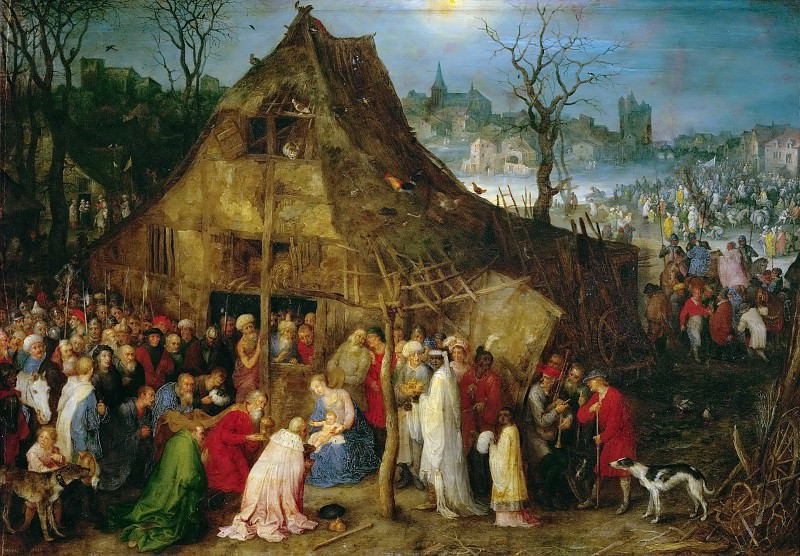
Jan Brueghel Velvet. Adoration of the Magi.
Jan Brueghel the Elder is one of the representatives of the famous southern Dutch family of artists. Jan, like his brother Pieter Bruegel the Younger, inherited talent from the famous father Pieter Bruegel the Elder (c. 1525-1569), one of the most important artists of the Renaissance in the Netherlands. But if Jan’s brother, like their father, was concentrated in his work on depicting the masses, ridiculing vices and human vanity, then Jan Bruegel preferred to depict the beauty of nature.
Jan Brueghel was born in 1586 in Brussels. From early childhood, Jan was surrounded by an atmosphere of creativity: in addition to his famous father, his grandmother, the artist and miniaturist M. Verhulst, was involved in raising the boy. Such an environment bore fruit; already while studying in Antwerp, Jan Brueghel decided to devote his life to art. His teachers Peter Gutkint and Gillis van Conninxloe highly appreciated the young man's talent and advised him to go to Italy to gain the necessary painting experience. So Jan Brueghel, like his father, worked in Naples in 1590, and from 1592 he mastered the culture of cities such as Rome and Milan, where he became friends with the famous landscape painter Paul Bril. Even then, the artist’s work was aimed at depicting landscapes, against which one can see the blurred outline of human bodies. Bruegel adopted a lot from the Italian masters: the whitish skin tone of the heroes of the paintings, plots with satyrs and nymphs. Perhaps the artist’s favorite type of landscape: pristine nature in its emerald green, rich colors is also inspired by the works of Italian painters. In 1596, Jan Brueghel the Elder returned to the Southern Netherlands, where he was accepted into the Antwerp guild of artists of St. Luke as the son of a master; a couple of years later he would take the position of dean of the guild. A large place in the artist’s biography was occupied by the couple of Archdukes Albert and Isabella, whose patronage ensured his recognition. Another important figure in the life of the artist is Peter Paul Rubens, with whom Jan Brueghel the Elder was a strong friend. In Rubens's paintings you can find a number of images of staff figures, flower garlands or landscape details painted by the hand of Jan Brueghel. In the biographies of the painters, there is a series of five paintings - allegories dedicated to the senses: “Smell”, “Hearing”, “Vision”, “Touch” and “Taste”. The artists had a close relationship until Bruegel’s death, which occurred on January 13, 1625.
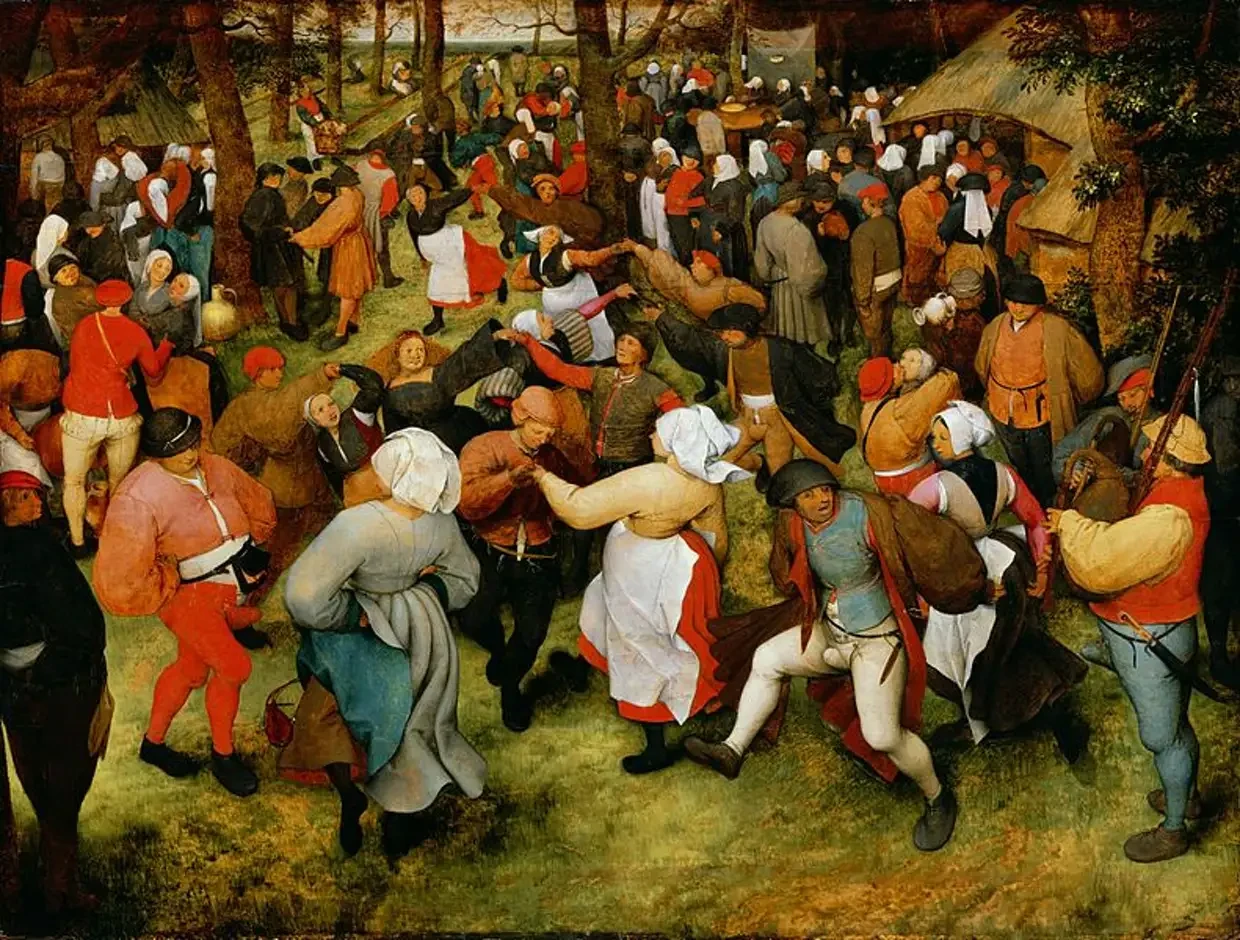
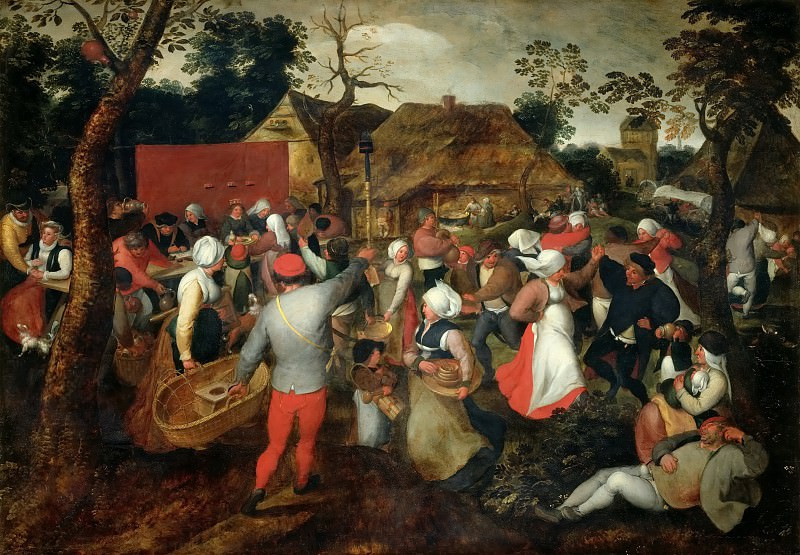
Jan Brueghel the Elder left behind a collection of works dominated by nature. The artist was absorbed in depicting the variety of shades and forms of forest painting and flower garlands. The landscape in Bruegel’s works never existed independently of people; it was always a significant part that supported the overall concept of the picture. The most recognizable works of Jan Brueghel are a still life with flowers, where bright spots of different shades are “scattered” on a dark background. In addition to still lifes and landscape paintings, Bruegel painted pictures of religious subjects, as well as allegories. But if his brother and father presented the plot in an epic manner, where the landscape is seen as a backdrop for the actions of people, then the style of Jan Brueghel is “a typical expression of the precision tendencies of late northern mannerism.” The difference in the artistic styles of representatives of the Bruegel family is emphasized by their prefixes to their names: if Pieter Bruegel the Elder was nicknamed “peasant” for his interest in depicting peasant life, then Jan Bruegel is characterized only as “Velvet” or “Flower”. It is interesting that both sons of Pieter Bruegel the Elder repeat his subjects. For example, the painting “Wedding Dance”. Jan Brueghel also demonstrates the fun and bustle of a peasant festival with separate micro-plots in different parts of the canvas. However, the main role is still given to nature, which sets the shape of the space within the boundaries of which human figures are placed.
The impression of the painting also makes the idea laid down by the artist clearer. In the canvas “Adoration of the Magi” in the upper part of the foreground you can see birds walking on the thatched roof of a stable. One of them is the rooster, which in the Christian tradition personifies spiritual rebirth, light victorious in the confrontation with darkness. The rooster can also be a symbol of the legend about the renunciation of the disciple of Christ. On the eve of Good Friday, Christ warned Peter that “the rooster will not crow until you have denied Me three times.” So the rooster became one of the attributes of the Apostle Peter. But in this case, the first meaning of the symbol is closer to the semantics of the picture: the rooster is here to notify the world of the birth of the Messiah and the beginning of spiritual rebirth. It is interesting that in the right corner of the foreground, the tools of everyday life of a farmer or artisan are depicted in quite detail, which creates a contrast with such a solemn and global fact of the fulfillment of the prophecy about the coming of the savior to the world. The feeling of duality of space is also emphasized by a sharp transition of light: to the left of Mary we see a dark forest, and to the right - a clear open space, below - old tools for human life, and above - the birth of the Star of Bethlehem, the eternal attribute of Christmas.
The background of Jan Brueghel's painting is full of miniature human figures, which, as they move away from the foreground, merge into one single mass. Most likely, the artist depicted the process of resettlement of city residents, this is noticeable in the intention of their movement: in the background we see figures descending to the city gates, as well as large animals (such as elephants and camels) being taken out of the city walls. In the background, all participants are immersed in the process of preparation and gathering. They hastily saddle their horses and gather their belongings. This gives reason to assume the idea put in by the artist. The painting is an allegory, one of the favorite genres of Jan Brueghel the Velvet. This is emphasized by a number of symbolic elements: it is worth noting that roosters (as already noted above, are a symbol of rebirth) walk only on the right side of the roof of the barn, under which the Madonna is located. To the left of the holy family is a forest where, if you look closely, people are walking.
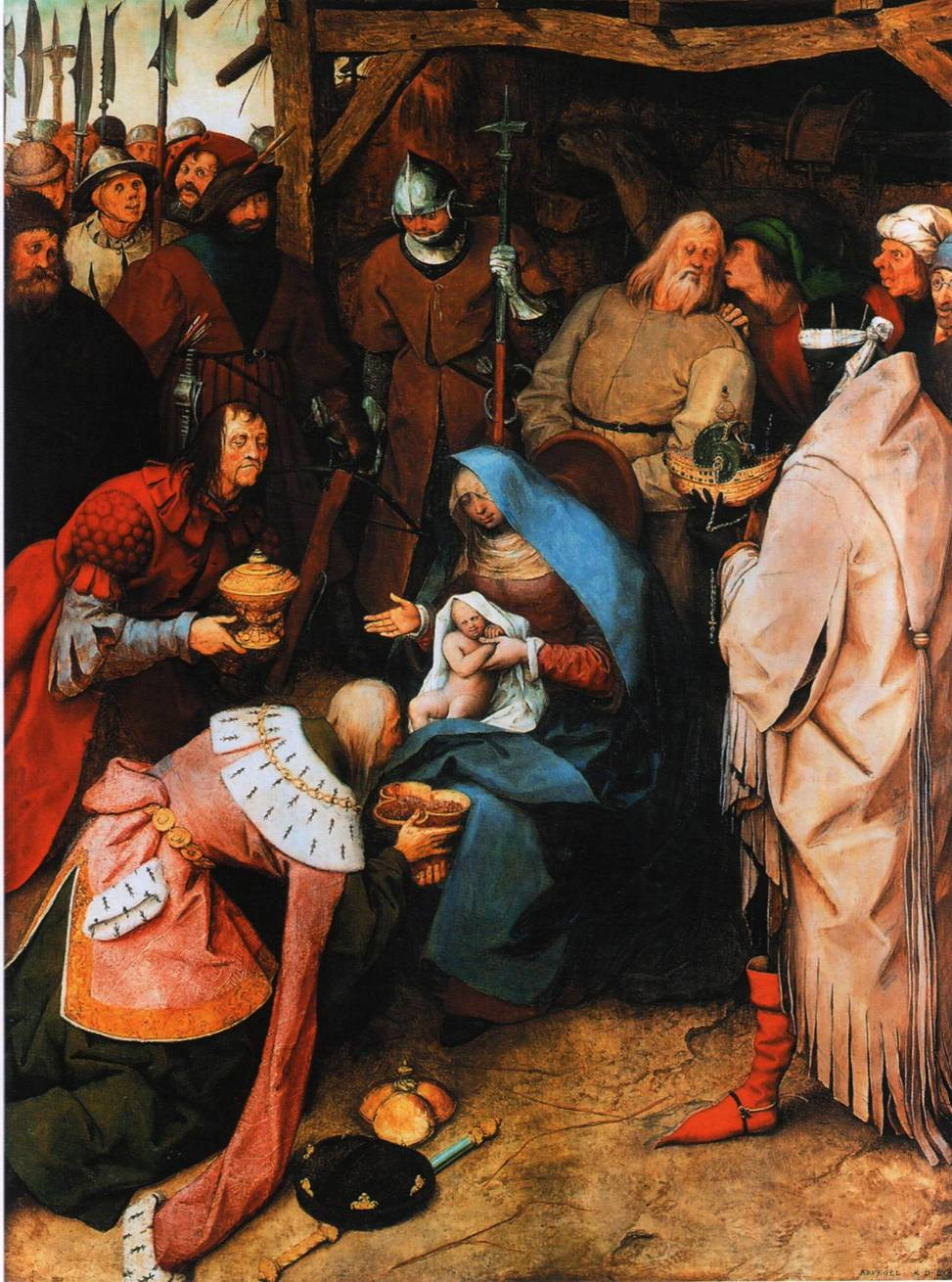
This part of the picture is the darkest in terms of the degree of illumination and the chosen color scheme, which gives reason to assume that the forest is the personification of “denseness”, spiritual illiteracy, and the only path to spiritual rebirth lies through the teachings of Christ. To the right of the house depicted in the foreground is the most sanctified part, which denotes the spiritual readiness of people to follow, in the literal sense of the word, biblical morals. People on the right side: warriors, ordinary townspeople and nobles - all of different classes are ready to renounce the familiar and material that the city can personify, and follow the savior who has come into the world. They are in a hurry, fussing, so the artist seems to be reminding of the imminent coming of the Messiah and God's judgment - one of the main ideas of biblical teachings. Thus, the work of Jan Brueghel the Elder is dedicated to a person’s readiness to make a choice in favor of Christianity and follow the teachings of the saints. Although, there is a great temptation to interpret the work as a contrast between two plans of human life: the material, which would be expressed in the bustle of people in the background, and the spiritual, indicated in the detachment of the foreground heroes from the main action. But this theory is incorrect, since the artistic language of Jan Brueghel the Velvet gives an important role to nature and light in shaping the meaning of the work.