
Translated material
Shit of modern art. "Form"-2015
Sometimes I will present and review frankly SHIT works of contemporary artists/performance artists, regardless of the status and degree of recognition of a particular artist.
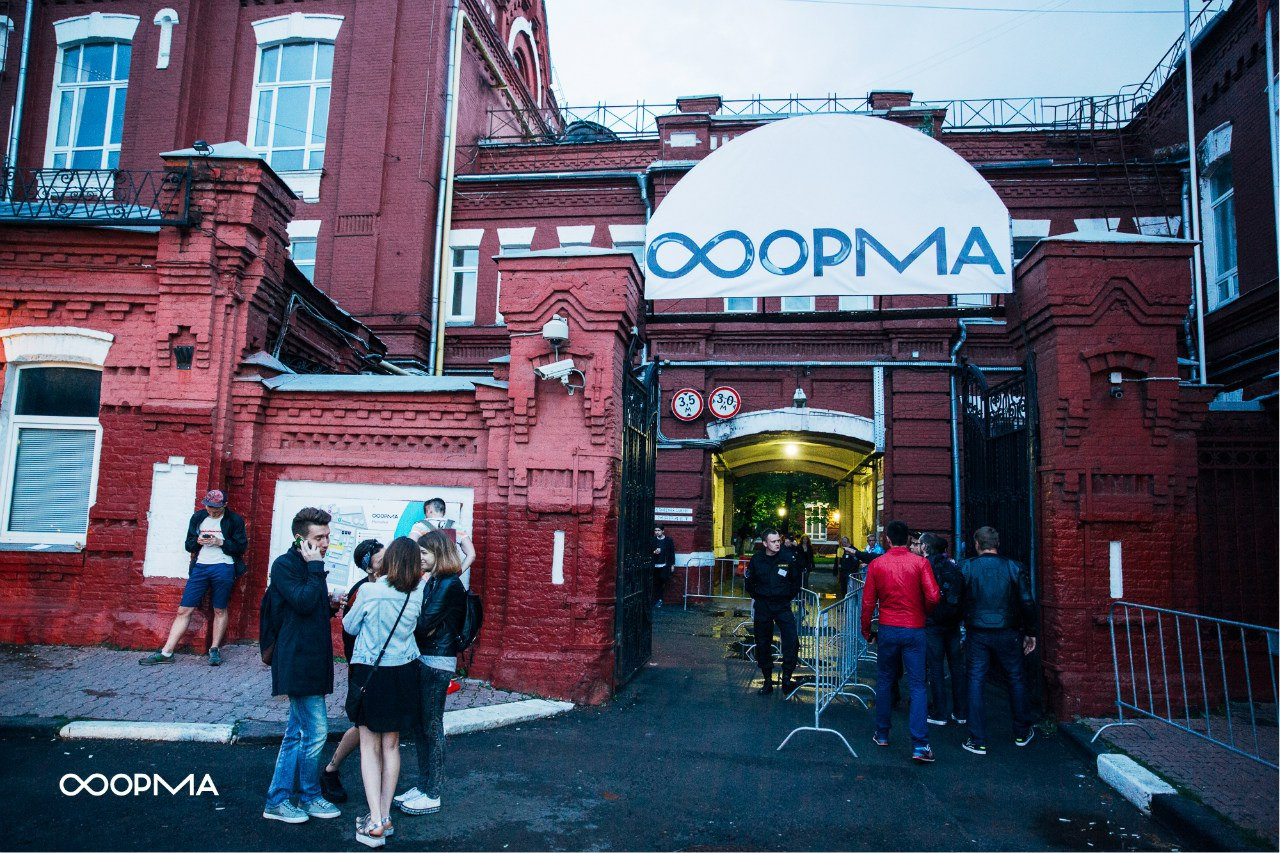
I would like to start with several works—they will be discussed separately—from participants in the “Forma” youth culture festival, which is held annually. Attention will be paid to “Form”-2015, since what was happening in the “art half” of the Crystal plant, where the fest took place, was well documented by “Furfur” and directly by the organizations .
“Form,” it would seem (!), can be praised for its attempt to make a “slice” of a certain moment in the development of Russian culture, to combine music and art within the framework of one event, as interconnected components of a single “cultural whole,” but in reality the praise is hardly appropriate.
As for music, the “slice” of Russian musical culture in 2015, more successful due to a more current selection of musicians and paying attention to the phenomenon of the so-called new Russian wave, was made by Styopa Kazaryan with his “Pain” , which was not entirely successful due to weather conditions. Taking this into account, the attempt of the “Forma” organization to document the “era” of development of the Russian underground music scene can be considered, if not a failure, then at least unnecessary.
As for the art component of the festival itself, one can hardly talk about any success here: wanting to present Sovrisk as something generally accessible (which is commendable), the organizers, and the artists themselves, firstly, for some reason, completely refused to pay attention to the quality of the work, and secondly, they lost sight of the fact that, in fact, contemporary art is not part of youth culture, although this is clear as day.
The latter, in particular, has the following consequence: “youth” who visited “Form” are faced with a language and the world of Sovriska that is incomprehensible to them and cannot critically evaluate what they are trying to sell to them, and sometimes simply understand. The root cause of this situation, however, is not the stupidity of the public, who do not know the language of contemporary art, but rather the incompetence of the organizers of the festival, just like the fact that artists sometimes become fixated on the discourse of contemporary art, speaking in the language of which becomes an end in itself.
For the public, the only thing that remains important is that—again, the audience themselves are not to blame for this—that this or that artist/performer participated here or there, became a laureate of such and such a prize, won in such and such a nomination. The list of exhibitions/victories becomes unprecedented proof of the artist’s worth and the viewer’s incompetence.
“Krasnodar art group, created in 2009. It includes Eldar Ganeev, Evgeny Rimkevich, Vasily and Stepan Subbotin. The authors of numerous actions and performances also work in the installation genre. Laureates of the All-Russian competition in the field of contemporary visual art “Innovation” for the best regional project (2013). They are collaborating with the XL gallery,” - thus, the “ZIP” group was announced in the “Forms” 2015 public. Such a presentation suggests either that the festival organizers understood that the average visitor to “Forma” understands little about contemporary art and will be pleased with the fact that he was given the opportunity to “cultivate himself” and look at those who “collaborate with the gallery (most likely unknown to him - U. Sh.) XL,” or about the incompetence of the organizers, who themselves, when selecting participants, looked only at their “track record.”
In particular, the mentioned ZIP group presented absolute shit at the festival. The “On the Road” project can be described as follows: having driven a Volkswagen through several cities from Armavir, which was the starting point of the journey, to Moscow, the Zipovites collected many photographs, notes, booklets, and cards, which became a kind of documentation of their “path.” In each of the cities, the guys organized “exhibitions” with the goal of “popularizing art” (from an interview with “Furfur” - U. Sh.) and “every time they made an attempt to show everyone that doing art is cool, fun, that, in principle, a large budget is not necessary and on your own you can do what you like, what interests you.” That's basically all. Cool, fun, and most importantly - interesting. Despite the laudable desire to “bring” sovrisk to the provinces, to decentralize it, such a “fun” approach to contemporary art is reminiscent - in a bad sense - of the approach of the editors of the Side (a publication about the underground domestic scene) to journalism. Initiative is always commendable, but the result of effort cannot be commendable just because of effort.
Speaking about why the work “On the Road” can be considered frankly bad and unsuccessful, you inevitably come to the question of what contemporary art is and why we – the artists, the “Forms” and “youth” organizations, whose culture it SEEMS TO represent – need it. Boris Groys, in an article about Pussy Riot, says that art “carries out the expansion of the non-normative and uncultural into the normative sphere of culture.” In other words, sovrisk is the destruction of foundations that are burdensome for a particular time, aggression towards culture in the sense of the result of human creation, erasing the boundaries “between the sacred and the profane, normative and non-normative, recognized and unrecognized, accepted by society or excluded from it.” Based on this understanding of art - which seems correct - Groys is quite justified in calling Pussy Riot sovriska. In the same way, Pavlensky - despite the disagreement of many - is nothing more than modern art. Based on the same understanding of what art is and what it should do, Zip’s project “On the Road” cannot be called a sovrisk. At the same time, one must understand that this means postmodern art, that is, art correlated with metamodern discourse cannot be viewed from the same angle.
“On the Road” is a project that vividly reflects the fixation of the art environment on its own language - the language of cards, pieces of paper, documentation, stands, which seem to explore the relationship “viewer - art object”, “public - artist” and much more. “On the Road” is a fun time spent by the Zipovites, documented according to the rules of the current Sovriska, but this does not make the work good. This makes it a typical art object, and its creators those “for whom art is not a gesture in social space, but the production of objects called “works of art” for the art market.” One could argue that, on the contrary, the guys tried to move away from the “art market”, that “On the Road” is a kind of “going to the people” in the 21st century. However, the art group “ZIP” is a creation of the art environment, existing for it; making people believe that modern art is paper, that it is “cool” and “fun”, and that “plays out” on the incompetence of the public.
Eh!