
Translated material
Visible water
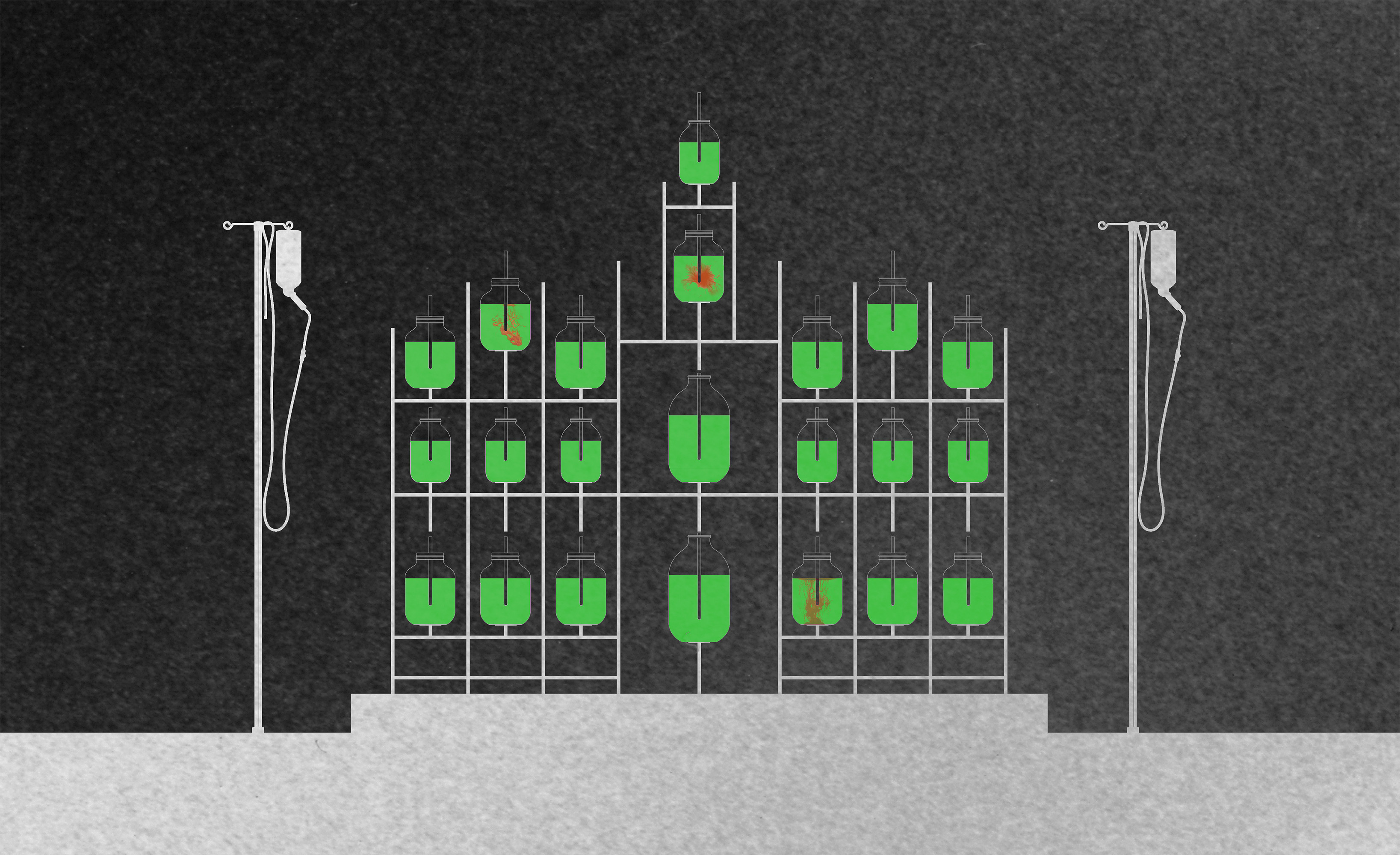
The statements that water is an important resource of the planet, it must be clean, there must be a lot of it, that it is the basis of life, do not cause doubts or disputes. But this understanding of water is historical and due to certain modern circumstances. This relativity, however, does not cancel the desire to fetishize water again, to attribute it to unchanging and eternal values - primary elements, as the ancients did. As you know, water is on the list of four elements (water, fire, wind, earth), the teaching of which underlies many cultural myths of our time, even if we do not suspect or remember it. Of the four, only water retained its substantial integrity - all the others disappeared in the descriptive procedures of the natural sciences or were decomposed into many heterogeneous components, which undermined their primary elemental indivisibility. An explanation of this turn requires a long and painstaking study; I can only add here that Thales would probably be happy with this balance of power, since water was again in the center and at the base of the world.
In the mid-20th century, Bachelard remembered water as an ontological category. In his five-volume “psychoanalysis of the elements,” he demonstrates the ability to see matter through oneiric experiences realized in poetic dreams and dreams. Water appears in 1942 in the text “Water and Dreams,” where the philosopher, turning mainly to poetry, analyzes “images of matter” (as opposed to mental images), which are formless and incomprehensible: “With these images, matter dreams substantially, intimately, alienating form, mortal form, vain images, the formation of surfaces”[1]. Bachelard describes the invisible matter of water with the help of poetic images, which, being non-relative, since only concretely formed can be relative, suddenly reveal the qualities of water and make it visible.
Florensky, reflecting on the visible and invisible in the text “Iconostasis,” like Bachelard, turns to dreams and dreams. Deep sleep, in his opinion, is not accompanied by dreams; only the boundary between sleep and wakefulness is the place for the emergence of dream images. Dreams indicate the existence of an invisible world of deep sleep. Florensky needs the analogy of a dream to describe the structure of the temple, where the building is a body, visible, this-worldly, and the altar is invisible, the soul, “not-of-the-world.” The function of dreams or the boundary between the visible and the invisible in the temple is performed by the iconostasis: “Heaven from earth, what is above from what is below, the altar from the temple can only be separated by visible witnesses of the invisible world - living symbols of the union of both, otherwise - holy creatures. The iconostasis is the border between the visible world and the invisible world, and this altar barrier is realized, made accessible to consciousness by a rallied number of saints, a cloud of witnesses surrounding the Throne of God, the sphere of heavenly glory, and proclaiming the mystery. The iconostasis is a vision”[2].
Dreams and reveries themselves are not invisible, they open the way to what is always hidden, indicate the place of looking, and are the affect of the repressed. But the invisible is not distant, transcendental, it is present here, in everyday life. Water also remains invisible, for the same reason why nearby things turn out to be impenetrable to sight and understanding. Heidegger, if he had thought about the instrumental existence of water, would have called this position of it “readiness at hand,” which does not allow water to appear in its “unconcealment.” Water, in order to become visible, must begin to act across the border of its use, its instrumentality.
The expansion of water into the visible world can only be achieved in the only way - it must become a political force. I do not mean here that it is necessary to organize a sea party or designate water as an exchange currency; it is quite enough to make a change in the visible world. Latour, in discussing the political power of Pasteur's laboratories and the revolution they brought about in society, speaks of a change in scale or transformation from the microscopic level of invisible microorganisms to the macroscopic level of the agriculture of an entire region. “If you declare microbes to be essential agents in all social relations, then you need to make room for them, and for people capable of recognizing and destroying them. Thus, the more you want to get rid of germs, the more space you should give to the followers of Pasteur."[3] Microbes gain political influence due to the fact that space in visible reality is freed up for what is discovered by the Institute of Statistics and laboratories.
It seems that we, resorting to reasoning from very different areas and sources, are describing two different appearances of water: the first is the ontological appearance of water-matter, appearing in the oneiric experiences of poetic texts and ecstatic states, the second is the political appearance of water capable of snatching a vacant place among the forces that transform the immediate reality. But following the Greeks, who were able not to distinguish between politics and poetics, we ask the question, are these two appearances of water so different?
Project Description
Project “Chlorella stasis. Visible water." Authors: Marat Nevlyutov, Alexey Piven, Nikita Maksimov.
Exhibition “Possible from the tap”.
Curator: Katya Krylova.
Organizer: Polytechnic Museum, Art-ravine.
Artists: Alexander Povzner, Natalya Zintsova, Ilya Fedotov-Fedorov, Ilya Dolgov, Maria Sakirko, Ivan Karpov, Alexey Alpatov, Maria Svarbova, Irina Petrakova, Rubezha Vekov, Olga Belova, Svetlana Grishina, Alexander Egorov, Marat Nevlyutov, Alexey Piven, Nikita Maximov.
Estate-industrial complex of the Batashevs, Vyksa, Russia, June 16 - August 20, 2017
The installation Chlorella Stasis makes visible the properties of water by demonstrating its effect on living organisms. Using water from various sources in the city and its environs (the Zheleznitsa River, Vyksa ponds, street pumps and water pipes), the artists created nutrient media of varying volume and quality for growing chlorella in the museum, ensuring that the jars received carbon dioxide, light and minerals for the algae to reproduce. To work on the Chlorella Stasis project, architects Marat Nevlyutov and Alexey Piven teamed up with plant physiologist Nikita Maksimov. The authors gave the experimental chlorella nursery the appearance of a hierarchical structure of Vyksa’s water resources, formally emphasizing the paramount, in its own way, sacred importance of water for the life and development of the city. (project description and all photographs: Katya Krylova)
[1] Bachelard G. Water and dreams. Experience about the imagination of matter / Transl. from French B.M. Skuratova. M: Publishing House of Humanitarian Literature, 1998.p. 18
[2] Florensky P.A., Iconostasis // Works in 4 volumes. M: Mysl, 1996.
[3] Latour Bruno. Give me a laboratory and I will change the world // Logos. 2002. No. 5-6(35).p. 16