
Translated material
Sharing personal experience of self-support
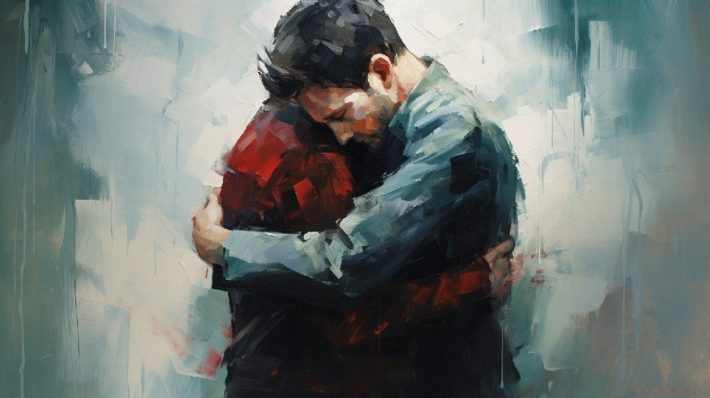
In difficult times, try not to die. If it doesn’t work out, at least don’t try to die. This advice from activist Itil Temnaya is increasingly relevant for LGBTQ+ people in Russia. But how can you support yourself at all when what is happening in Russia is happening? Our author Jurkki Mägräižed shares her personal experience of self-support.
I am forty years old. Currently, I am a person with a fairly mild and superficial generalized anxiety disorder and pre-depressive conditions, for the most part, stable remission of which is achieved by following routines of physical and mental hygiene, regular psychotherapy and, only occasionally, over-the-counter medications.
Since 1994, I have had the incomparable skill of driving myself into fairly deep depressive states with repeated approaches to suicide as a way to end this meaningless, aimless and painful state of life; and I have had the skill of devaluing all my dreams, desires, aspirations and body movements since 1998. Just because I don't use them doesn't mean they've gotten any rusty over time. My knives for cutting myself are always nearby. I don't use them. The scars they left on me and I will never remove them.
For the fact that I did not kill myself by 2007, I can only give careful thanks to my codependent relationship with my mother, whom I did not want to hurt. This is all I would like to say about my parent family. And that's enough.
Over the past 16 years, I have, consciously and unconsciously, developed self-support routines that help me continue to breathe and move, even if there is no inner meaning to it. I learned most of these routines from the recommendations of psychologists, psychotherapists, therapists and endocrinologists, and a smaller part I invented for myself.
I know that there are many such lists and mine will be just one of hundreds, if not thousands, but maybe the presentation will be more applicable for someone. I will try to give not only a description of the routine, but also the reason why it works in general (or specifically for me).
And keep in mind the most important thing. Routines are a support, they are not able to cope with what needs to be managed with medication or psychotherapy. They are like a life preserver and will often simply help you avoid going deeper.
For what?
I don't have a one-size-fits-all answer. Unfortunately, everyone must look for their own answer. I only have “Then” and culturally conditioned stubbornness, echoes of the never-eradicated Finno-Ugric sisu (perseverance).
If someone does everything to make me want to die, I will do everything to make me want to live. When someone wants me to feel bad, I will do everything to make me feel good. If someone wants me to become numb with fear and freeze, I will do what I think is necessary. This motivation is enough for me.
At the age of twelve, I was looking for excuses for my life and building dreams about how all the resources spent on me by my parents and the state were not in vain. At twenty-four years old, I knew for sure that everything was wasted and nothing could be returned. Now I know that such a formulation of the question in itself is a symptom of deep trouble.
I am convinced that a physically healthy organism, whose psyche does not suffer from social interactions (because there is support from people, and from activities, and from medications and therapy), is curious and will find something to do, and this will most likely be for the benefit of the world, society and in general.
Vitamins and medicinal self-support
A very important point. I know people whose vitamin D3 level was 9 ng/ml, when the norm is from 30 to 100. And this caused them a depressive state, which was very difficult to deal with. I know people who were severely deficient in vitamin B6 and, as a side effect, felt they were inferior and unworthy of living. A lack of vitamins and microelements in the body can occur for various reasons. But this lack makes you more fragile and vulnerable to the challenges of the world around you. And it can change the pattern of your psychological reactions, since the psyche is based on neurochemistry and neurophysiology, and does not exist in isolation from it.
Therefore, firstly, it makes sense to take a blood test for vitamins and microelements, determine the existing deficiency and drink vitamin and mineral complexes for support.
There is a popular opinion that a person gets enough vitamins from food, and vitamin complexes are useless.
But for me, the recommended intake of vitamins from food leads to a diet of 3000 kilocalories, and I don’t spend that much every day; and the various recommended “superfoods” are not so much beyond my means as they are simply not available in the part of the world where I live.
I consider vitamin and mineral supplements to be a necessary supplement to an inadequate diet. Be sure to consider drug compatibility. For example, you should not take calcium and iron supplements at the same time; the iron will not be absorbed.
After being examined by a doctor, you may be prescribed medications to support your quality of life. Undiagnosed diabetes is common. More people than with it live only with undiagnosed thyroiditis. Most of these chronic diseases are diagnosed during routine medical examination.
This also includes mental disorders. Antidepressants, antipsychotics, anti-anxiety and other drugs are needed in order to maintain a high quality of life. And you either already know what to use from these remedies, or you will find out after consulting with your doctor.
The problems and benefits of taking psychoactive substances are beyond my competence and I can only talk about personal choice. After a little experience with methamphetamine, I realized that for me this group of drugs is a loan of strength from the future, and that the interest that must be paid for the current ability to function is beyond my means. I don't use them and don't recommend them.
Creative self-support
The most ancient function of art is to designate and express one’s state, to give it an image, a name and a description. If you read “A Wizard of Earthsea” by Ursula Le Guin, then, in my opinion, in the image of the Shadow she encoded, among other things, a deep depressive disorder; and the way to deal with it is to give it a name and a form.
From 2003 to the present I have been writing poetry. I don’t publish all of them or show them to my loved ones. This is my way of coping, but any will do. Giger painted and made sculptures - and achieved heights in this, but art therapy is also suitable for those who cannot draw. King put his fears and anxieties into books and dealt with them that way—but a basic morning page, daily story, or situational pie poem can help you too.
And, for example, dancing will also provide physical self-support and communication support.
That which is named in words, which has a description and an appearance, can be defeated or turned to one’s advantage. Rumplestitskin won't let you lie.
Choose the method of creativity that you are most comfortable with. And resort to it in moments when you are oppressed by something that you cannot name in words or put into an image. Children's drawings on the margins and covers of notebooks serve precisely these purposes. This is how children cope with a burden of emotions and stress that is greater than themselves.
You don’t have to show all this to someone, but if you decide, make sure the quality of the feedback and the availability of support. Creativity that is used for these purposes reveals your weak points, and any criticism of the quality or content of this creativity can be painful.
Making fun of everything and everyone, not only in your head, is also creativity, and almost the most effective. If you can find the funny in a situation and express it in text or drawing, you can handle the situation.
Psychological self-support
Firstly, I can only recommend reflective introspection. After some dialogues, other interactions with living people or reading books, posts or articles, films or listening to music, you may feel worse; after others - better.
If you have time, you can create a simple form on Google Docs linked to a Google spreadsheet and fill it out from your smartphone whenever possible.
Form questions (simple text fields):
- Event
- My state before the event
- My state after the event
By filling out this table even three or four times a week, but for a long time, you can catch patterns and find people and situations that make you feel worse. And find what supports you and what you should devote more time to.
By filling out more often you can get it done faster. You can also fill it out in a notebook if that’s more convenient for you.
Secondly, if you know that something helps you feel better, and it does not hurt anyone, do it, recording your state before and after in a self-observation diary. In order not to get stuck in this you need only one thing: enjoy the action as fully, long and well as you can. The goal is not to escape from unpleasant experiences and a frightening world. The goal is to gain pleasure and support, and to stop the activity when it is no longer supportive. This can be difficult to remember during the process, but one day the question “Do I like what I’m doing now?” may begin to come from within.
Stickers with this question glued to the monitor help; or a tomato timer set for every forty-five minutes.
Favorite song on endless repeat; favorite book read for the tenth time; your favorite movie or favorite computer game - anything that makes you feel better is worthy of repetition and mention in personal notes about how it helped you.
Physical self-support
Contact with your own and your partner's body and with the world is an important part of self-support. High-quality sex, the need for which the publication Guys+ talks so much about, highlighting the nuances of the quality of this sex, is very important. But besides this, for example, walks in the park are important; timely baths and showers; caring for your face and body; careful attention to wardrobe and shoes.
And teenage masturbation, which was so much condemned during the nineteenth and twentieth centuries, was condemned precisely because it is a simple and accessible way to cope with stress and make yourself feel good - and, therefore, slightly weaken the control of educators, become less manageable.
Therefore, it is vital and necessary for good health:
- walk in the fresh air and touch the grass and leaves;
- dance alone;
- have physical contact with partners (if this does not cause rejection in you or them);
- choose clothes for yourself and wear them with pleasure;
- take a bath;
- shower regularly;
- take care of your body;
- periodically warm up;
- apply skincare cosmetics and light self-massage of the face and body;
- brush your teeth and use an irrigator;
- monitor how you move in space and which muscles get tired first;
- If you can afford the luxury of visiting a massage therapist, then visit him.
This is an important part of maintaining your quality of life. And these routines are often considered unimportant and are the first to fall off. What is the point of taking care of hygiene and the body if you are mentally ill? The point is to prevent it from getting worse.
Maybe you can't control the incoming circumstances. But you can, for example, wash your face and take a walk in the park. Or dance to your favorite music in privacy.
To strengthen contact with the body through contact with the world, during a walk you can try to name the trees, bushes and grasses encountered by birds by their real names using Google on your phone or Bianchi’s “Forest Newspaper”.
Or look at the architectural monuments available to you and clarify the names of the building components, as well as what they were used for.
Or create your own sightseeing tour of the part of the city accessible to you, specifying what historical events took place here or could happen.
Curiosity is a healthy behavior in a healthy body, and by maintaining curiosity you support yourself.
Diet as self-support
What you eat is very important. And it directly affects your well-being. It is clear that the extreme manifestation of this statement is allergies, but even without allergies there are many features of digestion that affect the condition of the skin, the hormonal balance of the body, and even cognitive abilities.
So a low-carb and gluten-free diet turned out to be suitable for me. Ovo-lacto vegetarianism helps some people. Some people feel good on the keto diet - and you will have to find a way of eating that suits you on your own. A well-being diary, which I mentioned earlier, or a diet diary, with which you simply start paying attention to what you eat and how you feel afterwards, can help with this.
And if you have a dish that makes you feel physically and emotionally better after eating it, then you can include it in your diet.
Even if it's a cake.
Information self-support
Modern man lives in an environment of abundance of information. Therefore, limiting the incoming flow of information is a vital skill. First of all, you should stop watching the news, secondly, from viewing comments in unmoderated or poorly moderated communities, and thirdly, write down any sources of information that cause you a lot of negative emotions as unusable, and refuse them.
By leaving yourself one news channel that you don’t dislike; By limiting the correspondence in which you are not obliged to participate, you will be able to do not what takes away your strength, but what supports you.
It's easier said than done, and the doomscrolling comes and goes, so I have to clean out my subscriptions every quarter.
But if you don’t do this, you can ruin all your other routines.
What definitely needs to be left is professional news (and if you work for someone or study for someone, then you will have quite a lot of professional news), subscriptions about your hobby, whatever it may be; and channels about what interests you, be it some stories from the past or stories about art.
Low resource trap
At some point, any self-support routine can begin to consume more energy than it brings. And it seems that there is no strength to fulfill it. To hell with dirty teeth, I won’t brush them, and I won’t sleep either, I’ll be stupid and doomscroll.
I know two ways to deal with this condition: switching up the routine and adding an intermediate step.
When switching up my routine, instead of brushing my teeth, I go to stretch. I didn’t want to brush my teeth - I don’t brush them, I strain my back. After warming up, you may have the strength to brush your teeth, but the resistance may disappear.
If the resistance is not gone, then I just go to the bathroom and stick my tongue out at my reflection in the mirror, and this also often helps.
If I don’t have the strength for either one or the other, then I just make myself as comfortable as possible and continue to doomscroll in warmth and comfort, with unbrushed teeth and a tight lower back. Because if you are going to engage in self-destruction, then at least it will be pleasant and convenient. And this approach can be applied to all routines.
Two books instead of total
Why you need to help yourself survive is your own business. What meanings you will find in the process - too. As well as which routines suit you and which ones don’t, and you will invent your own, to replace the ones I proposed.
Try to do what makes you feel good, even if it requires some effort and you are shamed for it (for example, voices in your head). Try not to do something that makes you feel bad, even if it is simple, understandable, generally accepted and approved by your parents, society and the president. A high quality of life will allow you to do more. Don't eat yourself - you'll be chewed on from different sides by everyone you let.
I can only recommend a couple of books.
Donn Karen “Why Do I Dress Like This?”: a book by a friendly author who actually created the direction of fashion psychology and a way to manage your psychological state with the help of clothes. And also the story of how exactly she coped without support with what was difficult to cope with - and the stories of her clients.
Robert Sapolsky, Who Are We? Genes, our body, society" : a book by one of the most media anthropologists about how society and our history influence us and why we can make certain decisions.
Jurkki Mägräizhed