
Translated material
Non-places and patterns of the post-Soviet
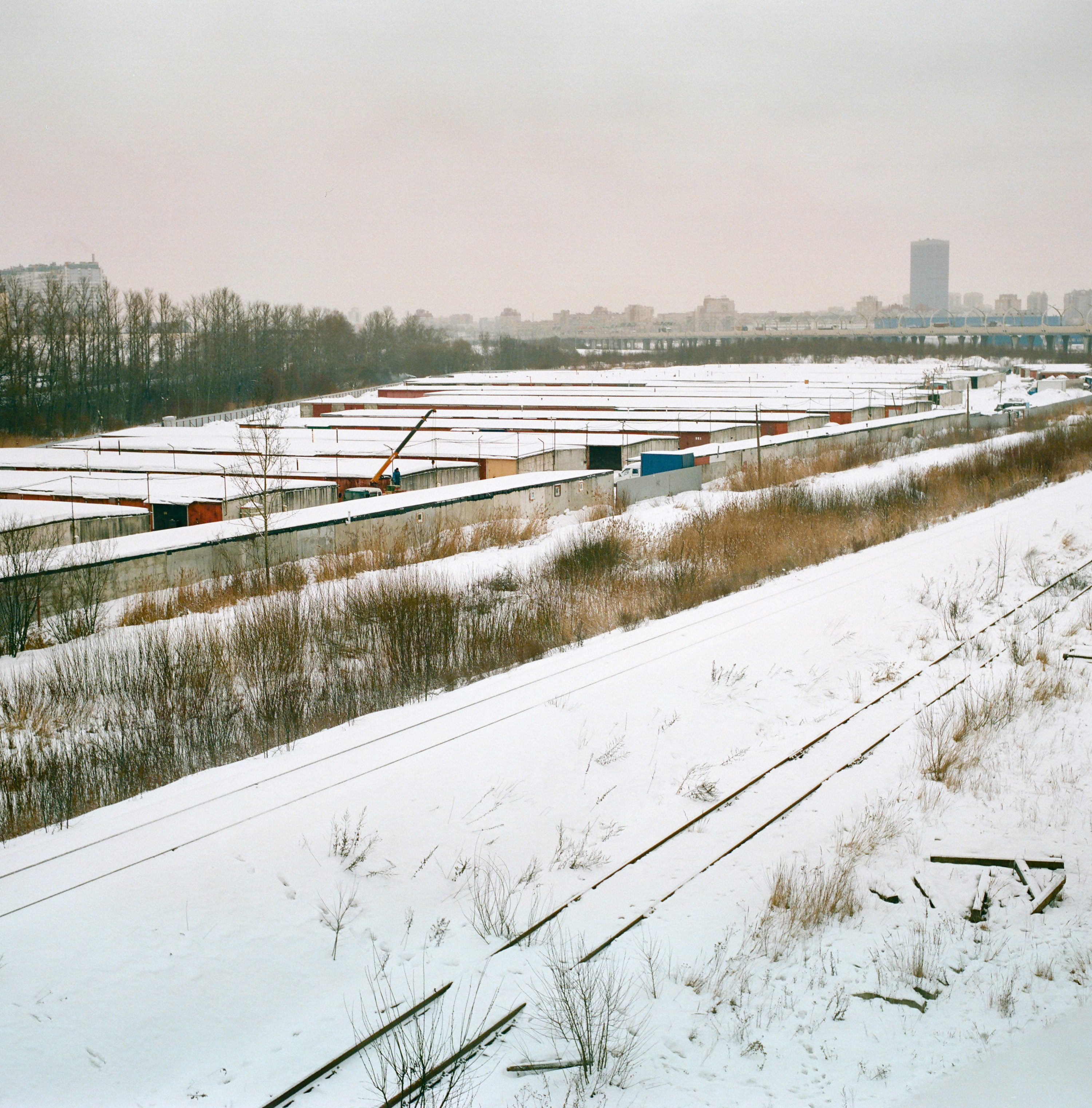
Old garages, rusty gates, rickety roofs and protruding pipes are one of the memorable patterns of the post-Soviet urban visual code, which we definitely feel, but do not describe seriously enough. A garage area is a concept full of stereotypes: something marginal, dirty, “it’s better not to go there,” drunk men stained with oil and gasoline live there, it smells bad, complete the list with your own associations. I am not going to refute these ideas or urge everyone to urgently go there on excursions. I was just going to demonstrate that even such locations, at first glance isolated from the civilized world, can attract attention and have the right to be shown and talked about. Simply because they exist, there are many of them, these territories occupy enough space in today’s cities so that they are not forgotten. And now, it seems, this is happening. Recently there was a scandal in one of the residential areas of St. Petersburg, local residents came out to a spontaneous rally to protect their property, garages that were going to be demolished for the sake of building new real estate - a school and a kindergarten.
My childhood was often associated with garages, firstly, because my grandfather and I regularly went there. Morning and evening, winter or summer, it was always there as in the stereotypes from the first paragraph, however, I was not afraid, but rather excited to look at the wide variety of rubbish that car owners take there. In our early years, with the kids, we ran on the roofs of garages, in our youth we smoked cigarettes behind them so that no one would see, we kissed, fought and drank cheap wine from bags. But my images are not about any particular garage or area. I'm somewhere nearby, above, at a distance. This is an indistinct flashback-remembering, a view from the outside, the place of a passerby, but curious, to whom these views bring mixed memories, nostalgia, sadness, anxiety and surprise. And each beholder will have his own unique optics of perception.
In our reality, high prices, cleanliness, shine, gold, and chic are respected and admired. I increasingly think that this is a false cover of what could actually be happening right before our eyes (or in another reality, read “The Matrix”). “Welcome to the desert of the real,” the stern Morpheus tells us. His name is Morpheus, a dream. He is trying to help us get out of a dream, a fantasy about reality. For Jacques Lacan, an encounter with the real generally occurs only at the stage of infancy, when the child cannot speak or think. Adult life is covered with categories of the symbolic, the imaginary, our thoughts, words, concepts. Construction sites, sewers, garages, parking lots, viaducts and other Non-Places, according to the term of the French anthropologist Marc Auger, differ from our typical topoi (ancient Greek τόπος - literally “place”). Why no-place? The word comes from the fact that it does not have clear characteristics and connections with human life; there cannot be life or precise associations in it. Certain historical events, meetings and achievements take place in places.
In non-places, nothing can ever happen at all; they are, as it were, outside of time or before time. They are utilitarian, they are made so that something else functions, because of this we do not feel their value. We like cars, but we don’t like them “at home”, we walk along the roads, but we forget that there are pipes under them, we go down to the subway, but we only care about the cars, but not about the tunnels. In these spaces, their objective essence changes, their sizes seem larger than they are, their sounds seem louder. In a beautiful historical center, our sensors are loaded with visual facts, such and such a house, such and such a style, such decor, such a height. In our heroes, garage arrays, there is some thinking, a subjective imposition of the subtext of this location, an image is created, not a given. The image can be non-specific, surreal, whatever, but you won’t say for sure what you like here, what’s beautiful here. It's deeper, darker, more mysterious. Maybe this is the same Japanese concept of aesthetics “mono-no-ware”: the sad charm of things, compassion for objects that are dilapidated, old, quiet, lonely, but special.
Text and photographs: Fedor Polyakov.