Translated material
Creatio Ex Materia
For Ulrike Buck’s exhibition “Bauhaus OctopusX” , which takes place at the Triumph Gallery, German art historian and architectural theorist Sanda Mayraz has prepared a text about the symbolism of the Bauhaus and the octopus, as well as the balance and mutual improvement of materials.
In the Bauhaus Manifesto, Walter Gropius wrote: “[a]chitects, sculptors, painters, […] must all return to craft! […] There is no fundamental difference between an artist and a craftsman. An artist is only the highest level of a craftsman. By the grace of God, in rare moments of enlightenment or under the pressure of will, unprecedented art can blossom, but the laws of mastery are mandatory for every artist.” This powerful quote demonstrates the mistrust of technology that arose in response to the immediate horrors of the First World War. Later, in The Bauhaus Principles of Production (Dessau, 1926), Gropius abandoned these ideas about art and craft, and began to advocate a close alliance with technology and industrial progress in the School's approach to design. As a result, the Bauhaus approach to democratic design was successfully exported and became part of world history. Under his influence, a large number of design schools arose, and transnational corporations began selling furniture all over the world that just needed to be assembled. A self-service hardware and construction store founded in 1960 was also named in his honor. All this happened in the early days of the digital revolution, which coincided with the emergence of DIY (Do It Yourself) culture in the West. Thus, certain utopian ideas of the early 20th century have successfully settled in the modern world.
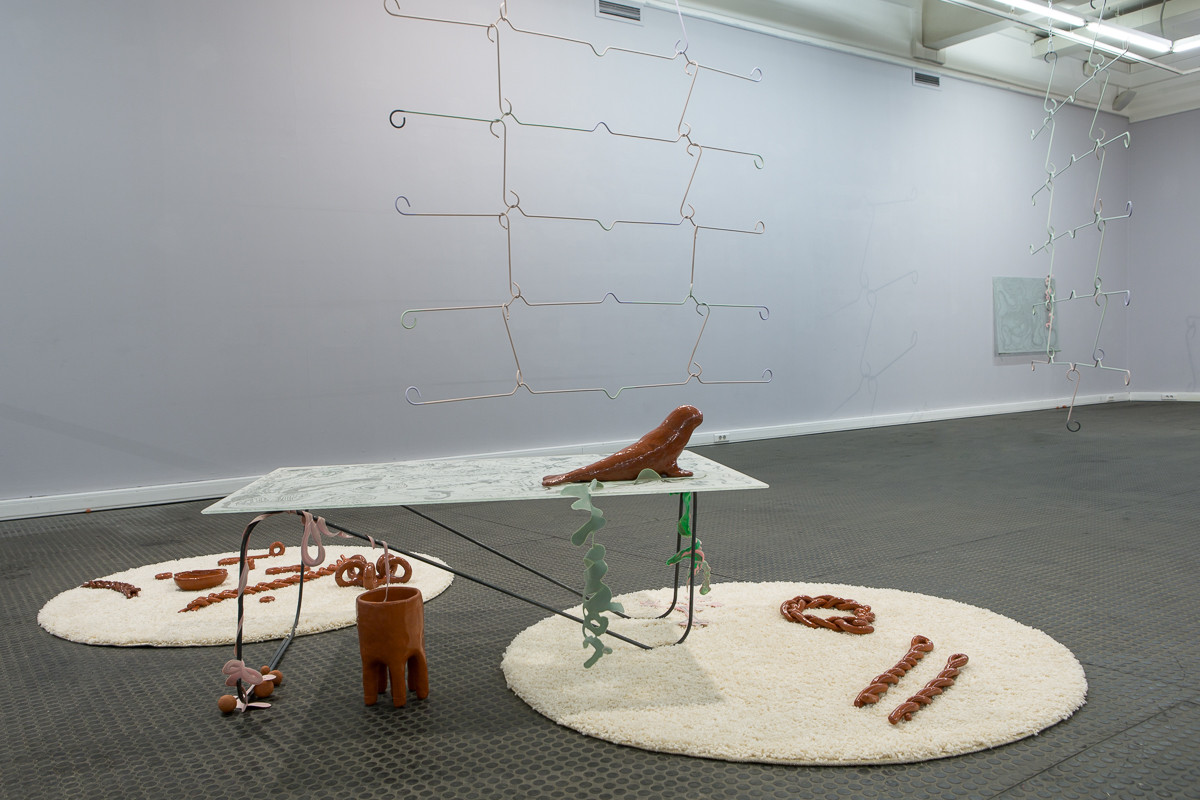
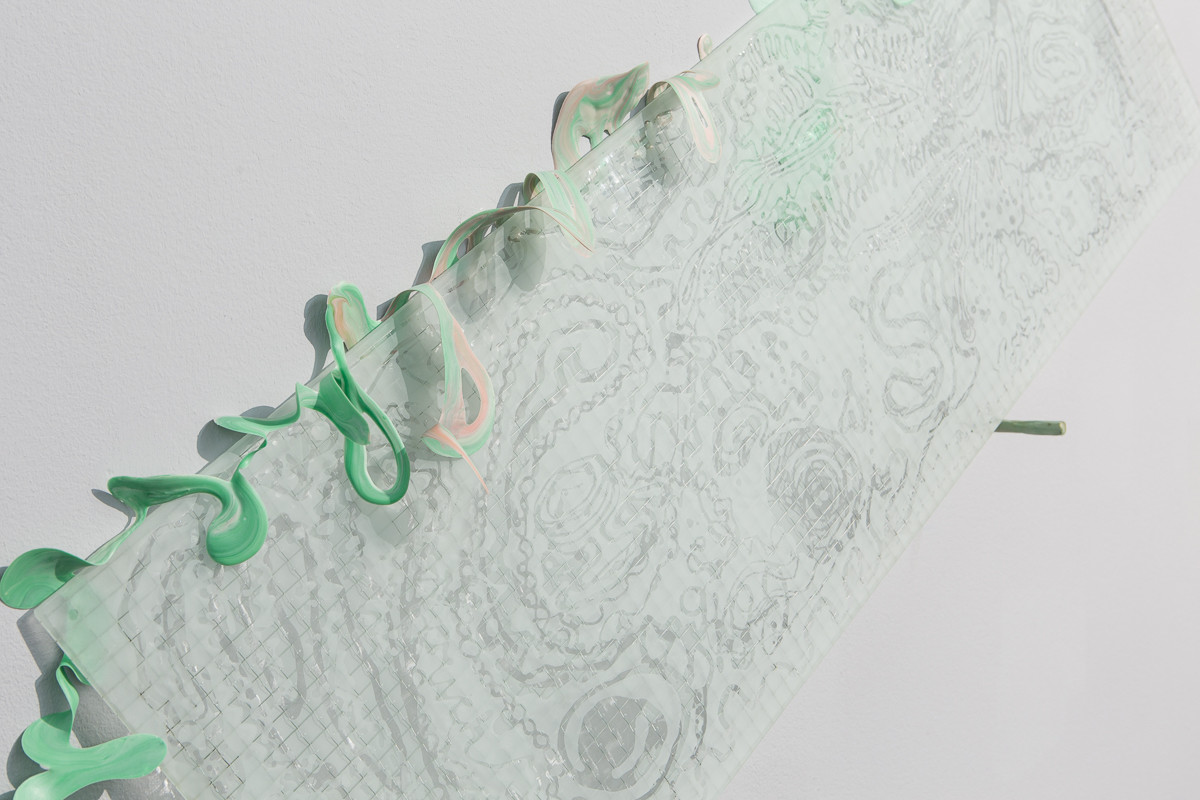
Thus, the use of classic building materials, such as ceramic tiles, reinforced glass (reinforced with metal mesh) and steel, predetermined the range of possibilities for the design and creation of new objects. The utopian nature of traditional crafts collides with the modern digital nomad lifestyle. Knowledge of materials is a prerequisite for thinking and creating objects with hands, perceived as a sensory extension of the artist's consciousness - this is a key anthropological constant throughout human history.
In addition, Octopus vulgaris (common octopus), one of the oldest living creatures, literally thinks with its hands: each of its eight tentacles is equipped with a cloud of neurons that form different areas of the brain. This soft-bodied sea creature of the cephalopod genus appeared in the history of evolution 550 million years ago, on the threshold of the Cambrian period. Since then, the octopus has been a mediator between worlds, connecting shallow waters with deep water - one of the most unexplored and untouched parts of the Earth, symbolizing the human subconscious. This lonely creature is a vagabond with three hearts, minds, memories and personalities. It can hide, changing not only skin color and texture, but also body shape and behavior. It is a complex organism in which there is no obvious boundary between brain and body. In his book Other Minds. The Octopus, the Sea and the Deep Origins of Consciousness (New York, 2016), an analysis of the intelligence of the octopus, Peter Godfrey-Smith compares immersion in the octopus's habitat to immersion in the story of our origins. His book calls for a reexamination of scientific understanding of the human brain. Octopuses have accordingly become the focus of research in recent robotics developments.
The symbolism of the octopus has many meanings. Its overall image, shape and nature are soft and streamlined. The continuous movements of intangible tentacles covered with countless suction cups captivate the viewer with their mystical, probably deadly beauty. In the history of art, the octopus has always been the source of countless erotic images: an example of this is the woodcut by the Japanese artist Hokusai “The Dream of the Fisherman's Wife” (1814). Thus, it can be interpreted as an allegory of a woman's dream and as an implementation of the stream of consciousness method - flexible, intuitive, associative and sensory-rational in nature. It is important that the image of the tentacles is believed to have inspired the creation of the ancient labyrinth of the Minotaur. As one of the most legendary architectural structures in Greek mythology, it contained the Minotaur within and represented Ariadne's resourcefulness.
The X symbol is universal. Although it is used to signify the negation, refusal, division or termination of something, it has much more power as a positive sign. First of all, it denotes the unity of two things, expresses their interaction or multiplication, and recently in Internet slang it is used to denote a kiss. It is a pointer, identifier, mark, or blank field that symbolizes the unknown, such as a point on a map where treasure is buried. In general, the X suggests crossing boundaries, as it is an ancient symbol of change and transformation. For the ancient Egyptians, X was a symbol of Osiris, the god of the afterlife, the underworld and resurrection. In pagan beliefs, witches crossed their fingers to concentrate and hold magical or demonic energy at the point of intersection. It was believed that this helped to concentrate good mood and allowed one to “hold” the dream until it came true. According to genetics, life is impossible without the X chromosome, and the presence of two such chromosomes indicates female cells. Just as important, X is used to represent the horizontal axis in a coordinate system.
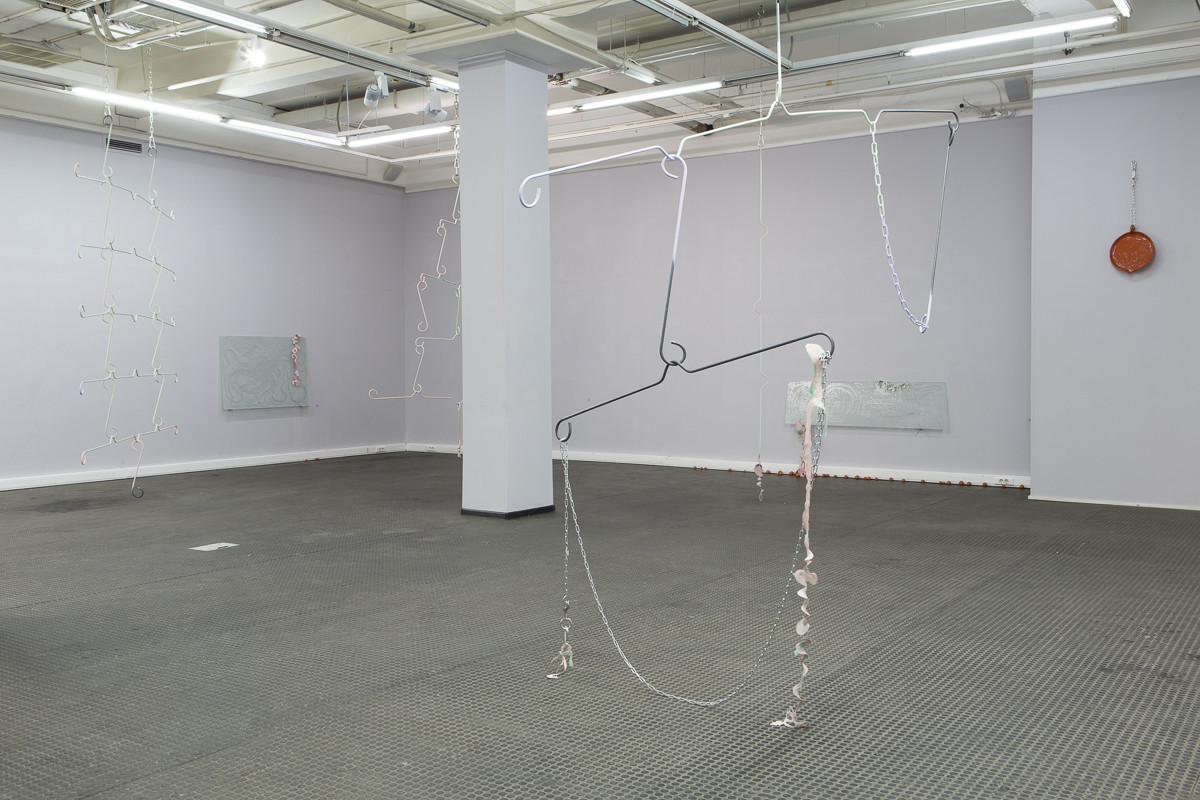
In Ulrike Buch's exhibition "Bauhaus OctopusX" this sign is also responsible for multiple relationships and mutual improvement of materials, combined with artistic energy. The objects in the exhibition are corpora delicti (Latin for “material evidence”) of the existence of a certain moment in historical and biographical time and a synthesis of the artist’s personal anthropological archive. From an aesthetic point of view, the objects embody the ascetic, functional style of the Bauhaus, complemented by the postmodernist idea of a networked world-organism. The technique used - sanding, iron bending and pottery firing - corresponds to the elements of earth, wind and fire, and therefore conveys an archaic understanding of the world, when sensations were a necessary condition for survival. Thus, in Plato’s dialogue “Timaeus” (360 BC), the creation of the soul of the Universe is designated by the letter X.
Sandra Myrise