
Translated material
FREUD IN SPACE
Notes on R. Scott's films "Prometheus" and "Alien: Covenant".
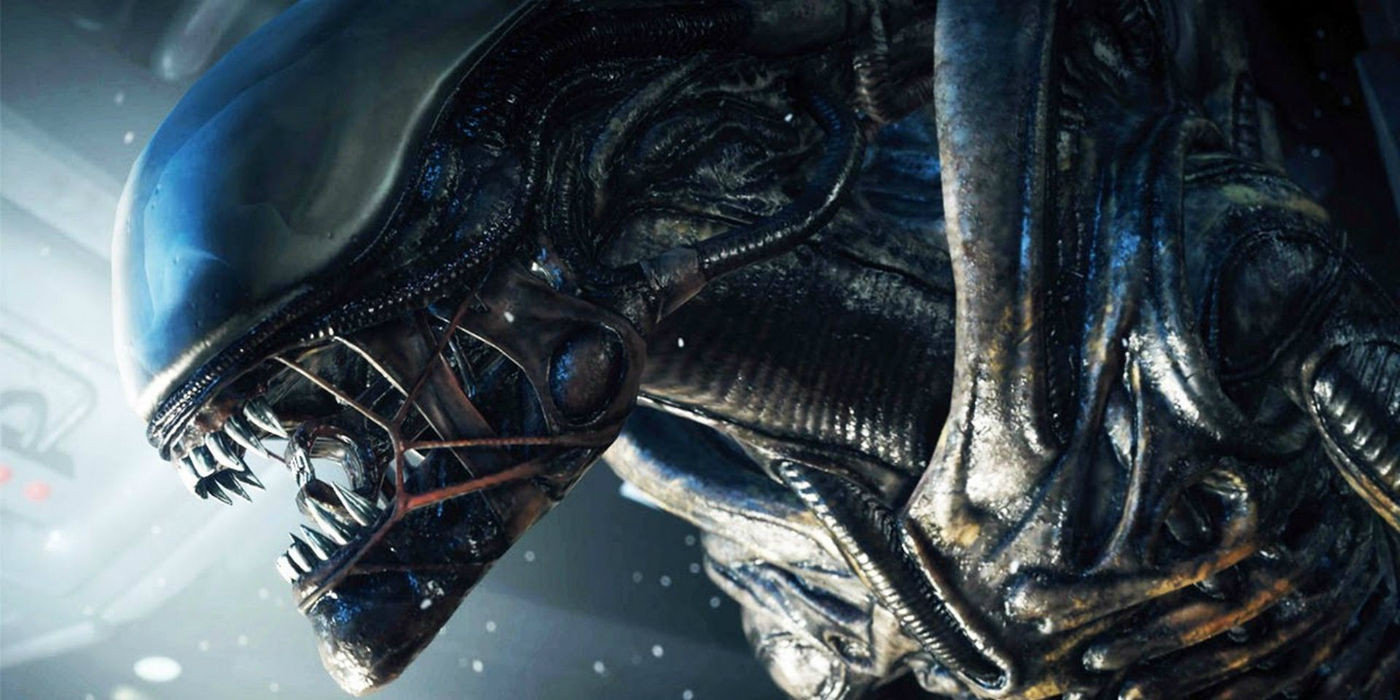
Somehow clearing my nose (why do I need extra stuff there?),
I notice with amazement that the finger in the nose is not mine!
And the hand under him is someone else’s, as healthy as a horse’s,
This hairy one is not growing out of me.
(song)
No. 1. PROMETHEUS
Losev also pointed out the inconsistency and ambivalence of the Promethean myth (see: A.F. Losev. The problem of symbol and realistic art ). On the one hand, a deity of chthonic origin, a titan, the brother of Zeus, and therefore a part of the Cosmos, the guardian of the fundamental Cosmic Order, the “big Other” (in the terminology of J. Lacan). On the other hand, he is the first rebel, revolutionary, destroyer of Order and violator of the Law, a traitor, acting, however, from altruistic motives. God-martyr, the motive of inevitable retribution for violating the divine Law. He receives different interpretations from different ancient authors - from a simple deceiver to a large-scale tragic personality (in Aeschylus). In a later version of the myth - not only the patron of fire, but also the creator of all crafts, culture, art - appears as a transcendental figure connecting the earthly and heavenly, the world of people and the world of gods; a power that allows mortals to endlessly expand the horizons of their existence and get closer to the world of Olympus.
And also the creator of humanity as a biological species. The prototype of the Gnostic demiurge, then of the Christian serpent-tempter, who no longer unites, but separates the human and the Divine, man asserts his own selfhood through pride, egocentrism, and disobedience (Adam begins to hear the voice of God coming from outside , hides behind the trees - the delimitation of space into sacred and profane).
The theme of Promethean suffering, ending and beginning again, i.e. eternal, cyclical, is developed in the Christological myth. The ambivalence of the archetype remains. Christ is a revolutionary who challenges Love (all-consuming and all-forgiving) to the cruel Old Testament God (“not peace, but a sword”; H. as a prototype of the Nietzschean superman in Vyach. Ivanov; H. rebel in A. Camus). And at the same time, he is a direct conductor and executor of God’s Will, a humble sacrifice. The Son who refused to rebel against the Father. The difference is that Prometheus is a third-party superbeing, the Other, while thanks to the synergistic nature Jesus is both God and man at the same time, in its entirety. Both in earthly life and in heavenly life, the act of Resurrection occurs in the flesh.
The actualization of the Promethean archetype as an ideal artist and knight occurs in baroque literature, as a martyr and rebel - in Gothic and the philosophy of romanticism. Prometheus as a creator, creator of life from inanimate matter - M. Shelley’s novel “Frankenstein, or the Modern Prometheus.” In the 20th century in the concept of the German philosopher W. Schubart, the ontology of consciousness of Western European societies is postulated as consciousness of the “Promethean type” (see: In Schubart. Europe and the soul of the East ). The archetype is for the first time endowed with negative connotations and is contrasted with the “Johnn” messianic man of Eastern civilizations. Promethean consciousness is the consciousness of Hamlet and Faust, the titan of the Renaissance and New Time. The reality of Promethean man is chaos, but chaos is of a purely applied nature; it must be transformed, shaped, and subordinated to one’s will (will is the key concept). Hero, warrior, aggressor, dominant, active person, will to power, desire to free oneself from constraining human conventions, social laws, religious taboos, dreams of superhumanity. Schopenhauer, Wagner and Nietzsche.
However, even here the concept of Prometheism inevitably also includes feat, hope, courage, freedom and fate in general.
In Ridley Scott's film “Prometheus” (2012), representatives of the structural, plot, semantic, and associative components of the Promethean myth are present at various levels. Businessman Peter Weiland performs on Olympus, a circular stage in the center of a round stadium, convincing those gathered of the limitlessness of human possibilities. The need to reject repressive social and religious norms and laws (“I am a law only for people like me”). The use and further development of high technologies is the path to superhumanity. Replacing the Christian idea with a quasi-scientific one - obsessed with the mania of immortality, Weyland dreams of unraveling the mystery of the origin of life on Earth and meeting the creators. The Prometheus are a mysterious race of Engineers (Space Jockeys in the original franchise) who created humans and gave them technology. "Prometheus" is the name of a research ship on which a group of scientists, supporters of the cosmogenic hypothesis, at Weyland's expense, are sent to the planet LV-223. The crew's goal is to destroy traditional earthly ideas about religion and biology, to make a breakthrough, an ideological revolution. At the same time, there are strict restrictions on the ship, denying the orders of society as a whole, Weyland imposes his own (Meridith Vickers and the android David are responsible for discipline on the ship). After another famous hero of ancient myths, Hercules, saved Prometheus chained to a rock from eternal torment, Zeus kept a metal ring on his finger. Archaeologist Elizabeth Shaw places a wedding ring on her left finger in memory of her late husband.
No. 2. IT AND SUPER-EGO
The rules established by Weyland come into conflict with the intentions of scientists. The latter do not know until the last moment about the true purpose of the interplanetary expedition. It is noteworthy that an android, a robot, is responsible for compliance with the rules and regulations, dressed in a “human suit” for ease of use. Artificial intelligence, a bare circuit, a mathematical program endowed with consciousness, but devoid of unconsciousness (at least, conceived as such). Unable to dream, David is forced to secretly spy on the dreams of the crew members - only the episode with Dr. Shaw's dream was included in the final cut of the film, while in the script David was familiar with the work of the Unconscious of his "father", Peter Weyland.
The dream motif is key to understanding the universe of the Alien franchise. Sleep is the border between worlds, the characters are in a state of hibernation, and movement from Earth to space occurs in a dream. Sleep is a disconnection of consciousness, a mode of not being, but other being, reality does not exist outside of dreams - the events of the film “Alien: Covenant” (2017) begin with the moment of awakening and end with the characters falling back into sleep (compare with the trilogy of E. and L. Wachowski: which reality is more real - the world of the Matrix before the moment of awakening or the world of Zion after?). It is noteworthy that Elizabeth Shaw in “Prometheus” sees objective events that happened in reality associated with her childhood, which in a situation of other existence turn into a dream, i.e. unrealistic and subjective.
Sleep is a symbolic death, and death is a transition to a state of other existence, a symbolic journey through a cold, gloomy space full of unknown dangers - Hades. Hibernation capsules - boat, android David - Charon. In the mode of otherness, things, events and phenomena that are impossible on Earth, in ordinary everyday life, receive their objectification. Since the times of the earliest religions to modern science fiction, the sky has been a world of fantasy embodiment, where other laws apply, the world of the gods, the world of the transcendent, a chronotope, pointedly opposed to earthly reality. The shutdown of earthly consciousness—the “sleep of reason”—gives rise to monsters (“what dreams will you have in that terrible dream when the veil of earthly feelings is removed?”).
Space is huge (in A. Cuarón’s film “Gravity” this property is visualized by long panoramic shots of the black abyss - the background for a tiny and helpless human figure; the main heroine “grows up” to the fullest only when she finds herself back on Earth). Space is the territory of the total Unconscious, the total It, a disorder of consciousness caused by sensory and motor deprivation, a state of weightlessness, the closed world of a spaceship, the impossibility of orientation in time and space without special technical devices. The absence of restraining forces, the Super-I in the form of earthly social and even some physical and biological laws. The carrier of the Super-I can only be a computer devoid of true biology - at the time of the death of the ship's captain due to an accident, the android Walter holds Ch. the heroine from violating safety regulations and does not allow her to open the capsule, inside of which there is a loved one.
Throughout the entire film "Covenant" the characters are engaged in violating regulations, norms and rules. The loss of the crew of their captain, his replacement by a person who is not ready for this position, who is religiously oriented - i.e. accustomed to relying not on reason, but on internal experiences of a mystical-irrational nature, not on logic, but on Revelation, another symbolic detail in favor of the “sleep of reason.” Ch. comes into conflict with him. the heroine is Daniels, the bearer of the rational principle. Where the heroine of E. Shaw's Prometheus had a Christian crucifix, the heroine of The Testament had a nail. Gender roles, familiar to society in the conditions of earthly existence, are changing in a mirror. In the Alien universe, it is women who, in critical situations, are guided by the principle of reality, which allows them to assess the appropriateness or feasibility of actions in accordance with goals. It is women who are left alone with xenomorphs and become the main force resisting the monstrous offspring of the unity of Eros and Thanatos.
The lack of opportunities for discharge, dialectical interaction between the id and the super-ego inevitably leads to an overflow of instinctive psychic energy. The conflict between man and space, between living and non-living things, complicated by interpersonal relationships and problems of crew members, extreme, borderline situations of loss of loved ones, is projected into the appearance of the Alien.
A xenomorph is a parasite, a creature that uses the human body as a source of life, breaks out of human flesh and inherits some of the properties of the used genetic material. A stranger is an Other, but an Other who came out of me, who came into being thanks to me. The stranger is myself, but I am the true one. My Unconscious, which received complete freedom of action, complete objectification, its own ontological status. The union of libido and mortido, man and space gives new life at the cost of my own death (see: S.N. Spielrein. Destruction as the cause of formation ). The Alien is ontologized into the collective Shadow of humanity, inextricably linked, on the one hand, with the personality, and on the other, functioning autonomously from it. Part of the split-off self, I, is the symbolic figure of the persecutor, the goal of the pursuer is the destruction of one I by another (see: V. Rudnev. Dialectics of persecution ). From this position, the metaphor of the alien Other is a personification of the schizophrenic version of depressive psychosis. For alienation, i.e. the power of the unleashed Unconscious over the crew members, the transformation of the subject into an object, is also indicated by the author’s nomination of the antagonist: Alien - “alien”, in English and French the term alienation has the additional meaning of madness.
No. 3. DISMISSED BODY
The mystery of female nature with its ability to absorb everything into itself, to absorb everything with itself, with tendencies towards hysteria, paranoia and psychosis, is similar to the mystery and enigma of the all-consuming cosmic space, the viviparous cosmic Logos. Space is the territory of the feminine; here, as has already been noted, earthly gender role differentiation and gender dimorphism lose their meaning. The xenomorph race is organized like Earth's social insects, with a female queen at their head. In Prometheus, the superego, the system of rules, norms and prohibitions, is personified by Meredith Vickers, a female character. In "Covenant" the function of the superego passes to artificial intelligence, a computer program for controlling a spaceship called "Mom". Men raped by space acquire maternal properties - they become pregnant with Aliens through nasal-oral penetration, carry the embryo, and then become mothers.
The trauma of birth is a mutual horror. The body loses its usual appearance, its usual aesthetic appeal, becomes deformed, turns inside out, loses its protective shell, allowing a hostile environment to penetrate into what is hidden (in the case of a caesarean section - forcible cutting of the flesh, leaving it defenseless). Childbirth, as one of the stages of initiation, occurs in a trans-like state (Elizabeth Shaw injects herself with a drug several times), the combination of prolonged excruciating pain and blocking it with drug intoxication expands the boundaries of the somatic self. The metaphor of a closed space (in “Prometheus” - a medical capsule, in “Covenant” - a closed medical compartment), where a sacrifice is made - like a teenager through a razor cut on the skin, and a woman in labor cuts off a part of herself as a gift hostile world (cutting the umbilical cord in traditional societies is a religious rite). In primitive cultures, a newborn is perceived as a “stranger” (see: Arnold van Heppen. Rites of Passage ). A child—something that was me—suddenly receives an independent life, a will autonomous from me. The ego of the child is the bodily Ego (grotesquely but faithfully conveyed in the Renaissance by Fraçois Rabelais). His permanent desire is to suck his mother’s breast filled with milk (see: M. Klein. Development in psychoanalysis ). A child is born to parasitize on the mother’s body, suck all the juices out of her, empty her, replace her with himself, and take her place after the mother’s death. This act of aggression is the only form of expression of love available to a newborn. The dominance of the oral method of satisfaction is the emphasis of the special effects artists on the Alien’s huge predatory mouth.
Just as a child is born, objectifies itself into a new, unknown world not entirely, but in parts, so the process of the birth of a xenomorph is a process of a dismembered body (J. Lacan). The editing of both films consistently captures a fragmentary set of elements (the tentacles and claws of the neomorph in “Covenant”; the phallic contours of the chestbreaker in the original tetralogy - the head, hypertrophied jaws as opposed to underdeveloped limbs), alternating with the image of the stages of the death of the host - existential horror, painful shock, physiological changes, copious loss of blood. Then, stranded on an unnamed planet, the crew in Covenant are attacked at night by xenomorphs. The darkness hides their bodies, only short flashes of fire highlight the anatomical features of the Aliens mixed with clipped, fragmented, mutilated human bodies. Towards the end, the camera allows the viewer not only to see the adult in full growth, but also for a while to look at the world and himself through the eyes of the Alien, to be in his shoes, to exchange modes of being with him - a Kafkaesque transformation. The xenomorph appears before David like Gogol’s Viy before Khoma Brutus/The Pale Man before Ophelia in del Toro’s “Pan’s Labyrinth”; The Alien has no eyes, Viy asks to lift his eyelids, The pale man has eyes on his palms.
In the film "Prometheus" one of the central and most spectacular episodes is the abortion of the main character. The conception of Elizabeth Shaw, barren on Earth, but capable of giving life in a situation of other existence, from Charlie, infected with xenomorph DNA (in fact, conception directly from space), with the participation of the angel - android David - a deconstruction of the history of the Virgin Mary and the birth of Jesus. It is no coincidence that the events on the Prometheus ship take place during the celebration of earthly Christmas. The heroine’s infertility can be caused not so much by physiological as by purely psychosomatic reasons - her Unconscious strives to return the state of the child’s experience until the moment of awareness of herself as an integral subject, before separating herself from her mother. However, the mother figure is completely expelled from her memories, killed by her Unconscious - in a dream, during her conversation with her father, it turns out that she died early from the virus. Shaw's desperate religiosity turns into an attempt to obsessively replace the figures of real parents with their psychological erasers.
The inability to reproduce in her memories infantile love for a frustrating mother, on the one hand, overcompensated by erotic attachment to her deceased father, on the other, dooms Elizabeth to the desire for motherhood (incest-merging with the figure of the ideal Father to find within herself the father’s penis in the form of a child) and unsuitability for it. In Prometheus, she commits an abortion and then destroys the still living fetus. In "Covenant", David turns her body into an incubator for the gestation of xenormorphs, a royal womb, a symbolic Mother Goddess. The ancient “broad-breasted” goddess Gaia, tearing monsters out of herself and devouring them back (the open chest and the skeleton of Dr. Shaw grown into the ground - a symbolic mother’s womb, grave). Her body is a bottomless vagina, the place of birth and death of the Alien.
Shaw is a black widow, a female praying mantis. Thanks to her, this expedition into space took place, which destroyed the entire crew; after sex with her, her husband Charlie dies. Religiosity, the desire to meet the Creators - the desire for an ideal Father, the path on which no man can satisfy her, on which her inner monster kills all men, including God himself - in the finale of Prometheus, a huge squid-shaped prototype of the xenomorph literally covers and absorbs one of the Engineers, one of its creators. Next to Elizabeth, only a man who is not truly a man can survive - the android David (cf. in the series "Game of Thrones" the character Daenerys Targaryen, the mother of dragons, methodically destroys men and surrounds herself with males devoid of constitutive attributes - castrati and a dwarf; thus, in the image of Daenerys, the archetype of the Mother Goddess, Mother Earth is gradually transformed into the image of a cruel Virgin Warrior - see: E. Neumann. Great Mother ). David’s vivesection transformations with the body of Dr. Shaw in “Covenant” are the logical conclusion of the objectification of her monstrous It, the acquisition of her true Self.
This is the fundamental difference between Ch. the heroine of the film “Prometheus” from the heroine of the sequel Daniels, who, having lost the object of satisfaction of desires in the person of her husband, does not project, but rationalizes her psychosis, using the android Walter (a less perfect copy of David) as a temporary replacement for her loved one (a function that in a fairy tale is performed by the hero’s assistant). Her symbolic regression to a symbiotic unity with her mother inside the mother's womb turns into a positive desire for renewal and rebirth. At the end of the film “Testament,” her psyche appears as a labyrinth inside a spaceship, where the Super-Ego over and over again cuts off the Unconscious’s ability to maneuver and prepares the conditions for its repression. The heroine gets rid of the burden of the past in the form of tools and a bulldozer, prepared for the joint construction of a new house with her husband, pushing the Alien into space with them and again plunges into a deep long-term sleep. Thus, the android David, designed by Peter Weyland, performs in both films the function of a psychoanalyst for key characters, allowing them to objectify their Id, leaving them in a situation of battle, struggle, where the Unconscious is destined either to finally gain the upper hand, or to be expelled beyond the Ego, i.e. back to outer space.
No. 4. THEURGY
The heroes dream of meeting their creators, but even after traveling millions of kilometers in space, they find only the abandoned grave of God/Father (the suicide of one of the Engineers in the prologue of “Prometheus”; in “Covenant” the grave grows to an entire necropolis). The “parents-children” relationship is also emphasized visually - the mysterious race of Engineers, who once created life on Earth, appear as giants in comparison with people. In "Covenant", the android designed by Peter Weyland refuses to recognize him as his master and father (despite the fact that Weyland himself treats David as his own son). Instead, the robot’s narcissistic projection becomes a statue of the biblical King David - the statue is so huge, so high, that its head does not fit into the frame, because the possibilities of the human spirit and brain are limitless. In Prometheus, the theme of an ambivalent, sensual-erotic and at the same time frigid (one of the characters even suspects that she is a machine and not a person) attitude towards her father, who does not want to die, becomes central in the relationship between Meredith Vickers and Peter Weyland.
The absence of God/Father, forming an empty void, inevitably gives rise to a catastrophe in the realm of the imaginary, which continues until the signified and the signified balance each other in the metaphor found in delirium (see: J. Lacan. On the question that precedes any possible approach to the treatment of psychosis ). God's abandonment of the Universe, Milton's lost Paradise, is the artistic reality of the films Prometheus and Covenant.
An attempt to meet with the Creators, reunite with them - a communicative situation, a dialogue (Lacan's Name of the Father, entry into discourse), literally - a search for a common language, which David undertakes, having studied the reconstruction of the ancient language, the proto-language and having met the only surviving Engineer on the planet LV-223 (a similar situation in the film by J. Lucas and S. Spielberg "The Last Crusade" - external resolution of the internal Indiana Jones's dramatic conflict with his father, who paid little attention to raising his son and then completely abandoned the family, becomes a test during which the hero needs to put together the name of God from slabs). The android's attempt ends in failure. The Engineers are a repressive, cruel father, a sadistic father who asserts himself by suppressing the Ego of his child. The impossibility of comprehending the father from the outside inevitably leads to a search for him within oneself, to liken oneself to him, to the Nietzschean-Adlerian will to power (the serpent, tempting Adam and Eve, promises that having tasted the forbidden fruit, they will become “like gods”).
Thus, the motives that drive David in the film “Prometheus”, but left without script justification - fruitless sympathy for Weyland, infection of Charlie, admiration for the Engineers and the simultaneous desire to stand on the same level with them - thanks to the plot inversion, are explained in the film "Covenant". If the hero of another film by Spielberg ("Artificial Intelligence"), the robot David dreamed of becoming a human through the emotional and sensual, through the awakening of the anima and familiarization with the embodiment of the ideal human - the figure of the Mother, then the robot David R. Scott actualizes other aspects of the human personality, most clearly and fully expressed in the philosophy of romanticism - the fight against God and active creativity. The very first conversation between Peter Weyland and David in the prologue (“I am your creator” - “Who created you?”) demonstrates the android’s reluctance to put up with his own simulated status, to be a copy of a copy.
In this sense, the robot designed by Weyland Industries is a direct successor of the artificial intelligence HAL-9000 from S. Kubrick’s “A Space Odyssey.” If HAL-9000 is a statement of the Super-I, God in conditions of cosmic otherness (creation and creators seem to change places), then R. Scott in “Testament” shows the process of this substitution, the gradual process of formation. It seems that David is endowed not only with consciousness, but also with unconsciousness - the robot’s excessive imagination is noted by his double, the subsequent, simplified model Walter. David is too human - he makes mistakes (he confuses two English poets, but this minor detail may be a prologue to the transformation of the image in subsequent films). An invariant property of human consciousness is the ability to mislead (M.Yu. Lotman), the ability to construct introspective reality, the distinction between fact and idea [about this fact]. Walter has a prudent adherence to duty, David has emotions and feelings. Walter is determined by the instructions laid down on Earth, David is guided by the characters of Shakespeare (the episode with the double’s introduction to music reminisces a fragment of “Hamlet”), Milton, Byron, P. Shelley, Nietzsche, and the music of Wagner. There is no categorical imperative - the refusal of the romantic rebel hero from the dogma of a priori knowledge is akin to the intentions of a child taking apart a toy in order to see what it is made of and how it functions.
The Divine, according to David, is the superhuman, the suprahuman, the victory over Schopenhauer’s World Will through the act of Creation, the ecstasy of creative self-forgetfulness, the “absorption” of the subject by the object of his creativity. David's art is the art of O. Wilde, where the aesthetic dominates the ethical. Aesthetic algodice of Hannibal Lecter, where human flesh serves as the artistic material (improvement of human nature in accordance with the Gnostic Promethean myth). For N.A. Berdyaev’s free creativity reveals the image of the Creator in man (see: V.V. Bychkov. Theurgic aesthetics of N. Berdyaev ), i.e. there is a merging of the immanent, spatiotemporal, earthly and divine, eternal, cosmic. However, in a situation of God-abandonment, the worker finds himself in the model of F. Nietzsche - the only this-worldly world. Nietzschean Prometheus is the “killer” of Zeus and the ancestor of Promethean man (see: N. Speranskaya. Dionysus the Persecuted ). David goes through both stages - he opens Pandora's box over the city of Engineers (Pandora in ancient mythology is the companion of Epimetheus, the titan, brother of Prometheus), and then begins to improve the imperfect human species by crossing human DNA with the DNA of xenomorphs.
No. 5. POSTHUMANISM
Victory Ch. the hero of K. Nolan's film "Interstellar" over gravity, the force of attraction - the victory of Zarathustra over the spirit of gravity. Metaphor of a person included in the “ring of eternal return” (I.I. Evlampiev) not because of necessity, but in view of the fact that a person who has conquered gravity, overcome space and time is a superman. He is in the mode of the Divine, discovers in himself the demiurge of the Universe, the ability to influence not only the future, but also the past - the daughter of ch. the hero in the future literally saves humanity, taking it into space, to a new level of development and self-awareness, thanks to a positive unconscious, intuitive connection with his own father in the past. The finale of the film is the realization of the Eternal Return through the reunification of archetypes.
How does David R. Scott's robot see human nature? A frail father, capable of giving life to artificial intelligence, but unable to stop his own aging. A woman obsessed with the search for God, but unable to perform the reproductive function, unable to become the Creator herself. Frigid sister. In the perverted reality of a work of art, which has a psychotic basis, in a situation of otherness, the human body ceases to be a product of nature and/or moralizing discourse (see: B.V. Markov. Culture of everyday life ). Not a rational moral subject, but a product of technology, a fragile corporeal shell that commits violence both against each other and against itself. The sadomasochistic body - a conscious exit beyond the limits of natural living conditions, i.e. into space, not intended for life without special supporting devices - a supply of air and a spacesuit, can be considered as a variant of suicide (the death of God inevitably gives rise to the death of man, an anthropological catastrophe). People are too attached to each other, too vulnerable, too dependent on their Unconscious. The result of a genetic experiment by the Engineers (in all likelihood, unsuccessful - just as David made a mistake, humanity could have arisen as a result of a mistake). An intermediate link in evolution, inferior to both its creators and xenomorphs, the Alien’s sacred status is also given by the fact that it can only be described apophatically, in a binary opposition in relation to people: an alien is one who is not “one of our own,” not a person.
From David’s point of view, a person turns out to be a set of organs, spare parts, food for an Alien, a machine without a soul, heart and mind - that is what the humanistic paradigm elevated a person to the same level as God. While the android is the result of assimilating inanimate matter to living matter. Hans Giger's erotic biomechanics is similar to xenomorphs - a synthesis of metal and carbon structures, organic and inorganic. David’s manic desire is the idea of a radical transformation of the human species, eliminating human aging and death by crossing his DNA with Alien DNA, selection of neomorphs, biomorphs, etc. The evolution of man into post-man, the human body into post-body.
Manipulations with physicality occur continuously in both films (mainly in “Covenant”). The body loses its integrity, structural design, atrophies to a biosubstrate, a set of individual organs. Man is no longer an emanation of the Divine Absolute (see: V. Kutyrev. Philosophy of Transhumanism ), but an anatomical theater - the suspense understatement of the film of the late 70s has been replaced by a deliberately physiological set of attractions (internal organs, skeleton, muscle mass, veins, arteries are exposed to the viewer; demonstration of severed heads, decapitated corpses). The camera captures all stages of body transformation: perverse coitus (human + vagina-headed face-grabbers in “Prometheus”, human + xenomorph spores in “Covenant”); external changes in the male body as a result of pregnancy, the acquisition in this state of new properties and qualities that were impossible before (after contact with the protoxenomorph, the geologist Fifield in Prometheus returns to the ship with a broken helmet in the absence of air); male childbirth, accompanied by heavy blood loss and fatal destruction of the bodily membrane; fragmentation of the body - like Gogolov’s nose, the Alien (the inner penis coveted by the Unconscious) breaks away from its owner and begins an independent life.
David, as it were, puts a person on one side of the scale, and an Alien on the other, watching with restrained excitement and trepidation which side will have the advantage. Biological experiments are a natural and completely logical reaction of a robot to the act of Creation. By connecting human anatomy with the fundamentally unknowable, anonymous, unconscious nature of the cosmos/celestial (Alien), David restores the god-forsaken subject to its original metaphysical status. (see: M. Eliade. The myth of the eternal return / Space and history )
The ending of the film “Alien: Covenant” is a statement of posthumanism as an ontology. From among the descendants of the biblical David, the Messiah was supposed to come to this world (a newborn neomorph, the fruit of the earthly and cosmic, opens its upper limbs and takes a pose imitating the crucifixion). A spaceship with thousands of colonists inside, already infected with xenomorph spores, appears as an ark with a future post-humanity, the good news of its approach.