Translated material
post scriptum Maxim Spivakov. 1/2
Review-commentary on the exhibition “Maxim Spivakov. ½", which took place at the Vadim Sidur Museum in February-March 2018.
Curators: Yaroslav Aleshin, Egor Sofronov
The persistent desire to understand the image still haunts artists. This is, for example, the project “Mechanical Beetle” (December 12, 2017–February 11, 2018, Osnova) by Masha Kalina and Ian Ginzburg, where the author’s focus was on the images of Ilya Kabakov and the question of the origin of their artistic power. In this case, the opposite effect worked - the reminder of the original source only strengthened its meaning. Borrowing the language of Soviet propaganda and cultural diplomacy, Vladislav Shapovalov in “Image Diplomacy” (November 17 - January 25, 2017, MMOMA/VAC Foundation) tried to reveal the internal mechanisms of the influence of the image on mass consciousness. And Maxim Spivakov in the project “Maxim Spivakov. ½”, which opened in early February of this year, together with curators Yaroslav Aleshin and Yegor Sofronov, speaks about the image from the standpoint of iconoclasm. Touching upon a wide range of issues - from representation to complete reduction, the artist takes the path of free interpretation of images. The images in the exhibition are interpreted through a curatorial text, whose task is to explain the artistic associations between them. With the help of skillfully constructed heaps - heavy theoretical blocks, the artist deftly manipulates images, giving them his own meanings. Thus, he provokes a situation of lack of visuality, which finds itself pressed under a conceptual block (the curatorial text). With such an optical deficit, the live speech of the curators begins to explicate an independent theory of the image.
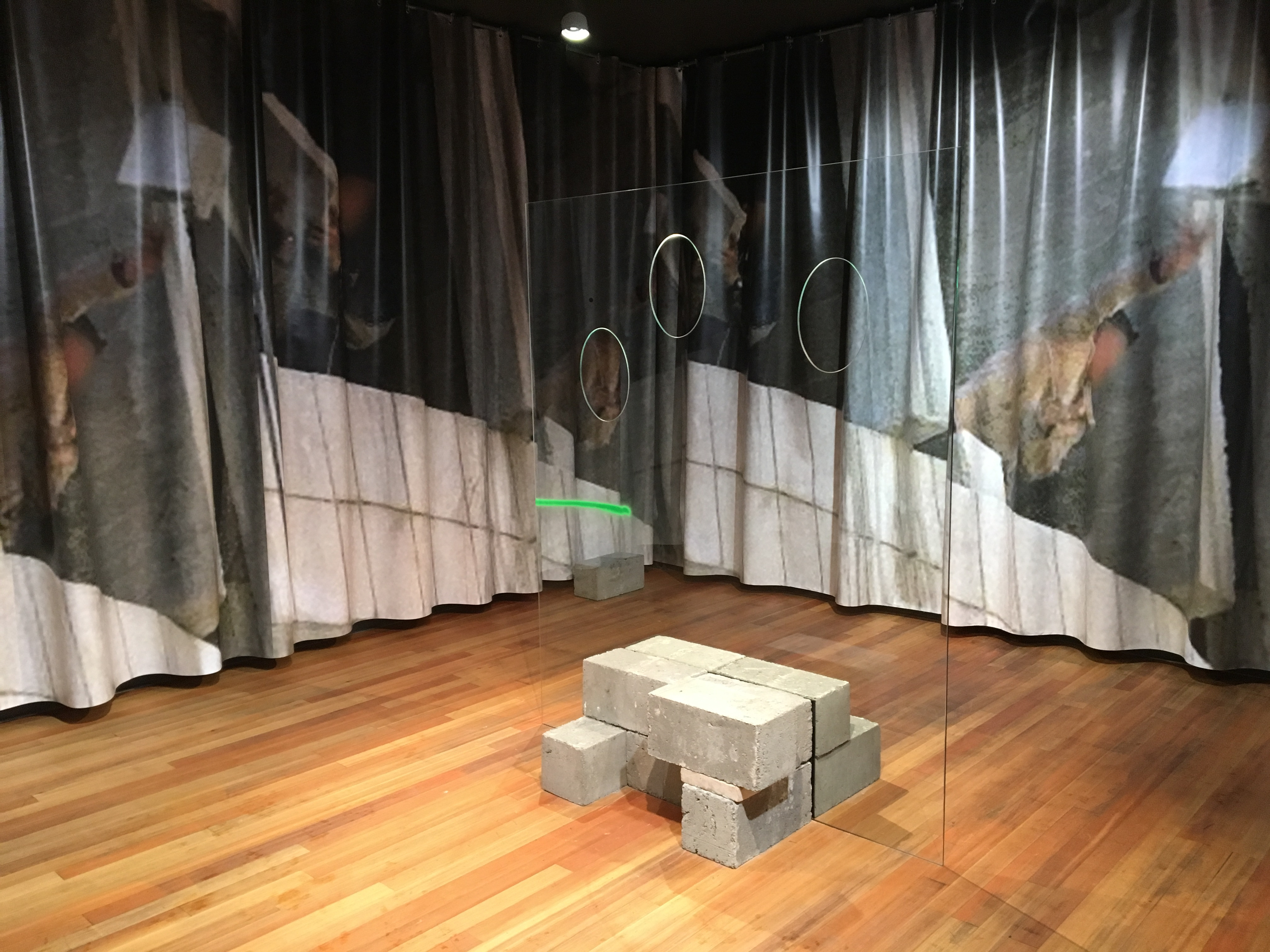
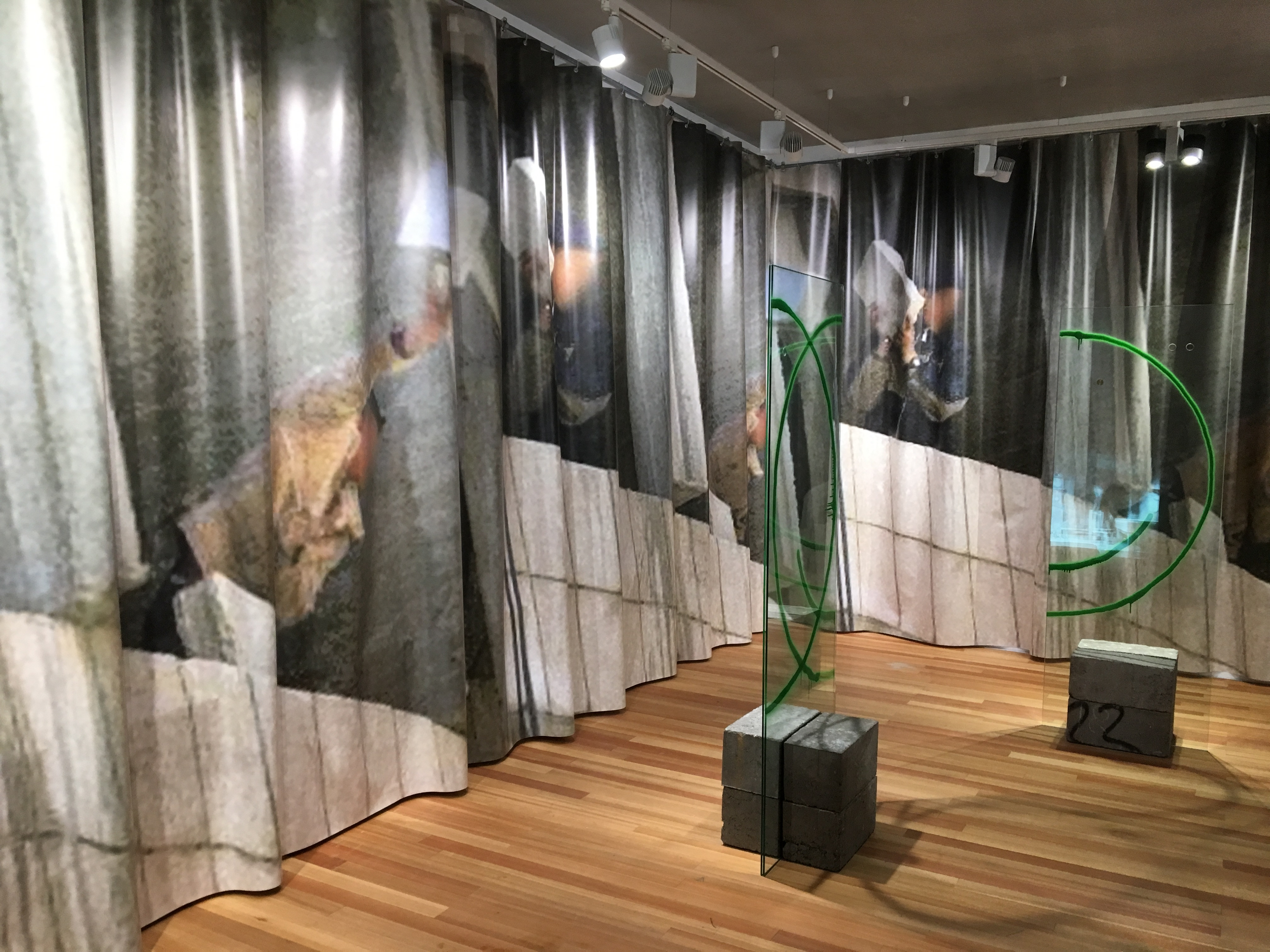
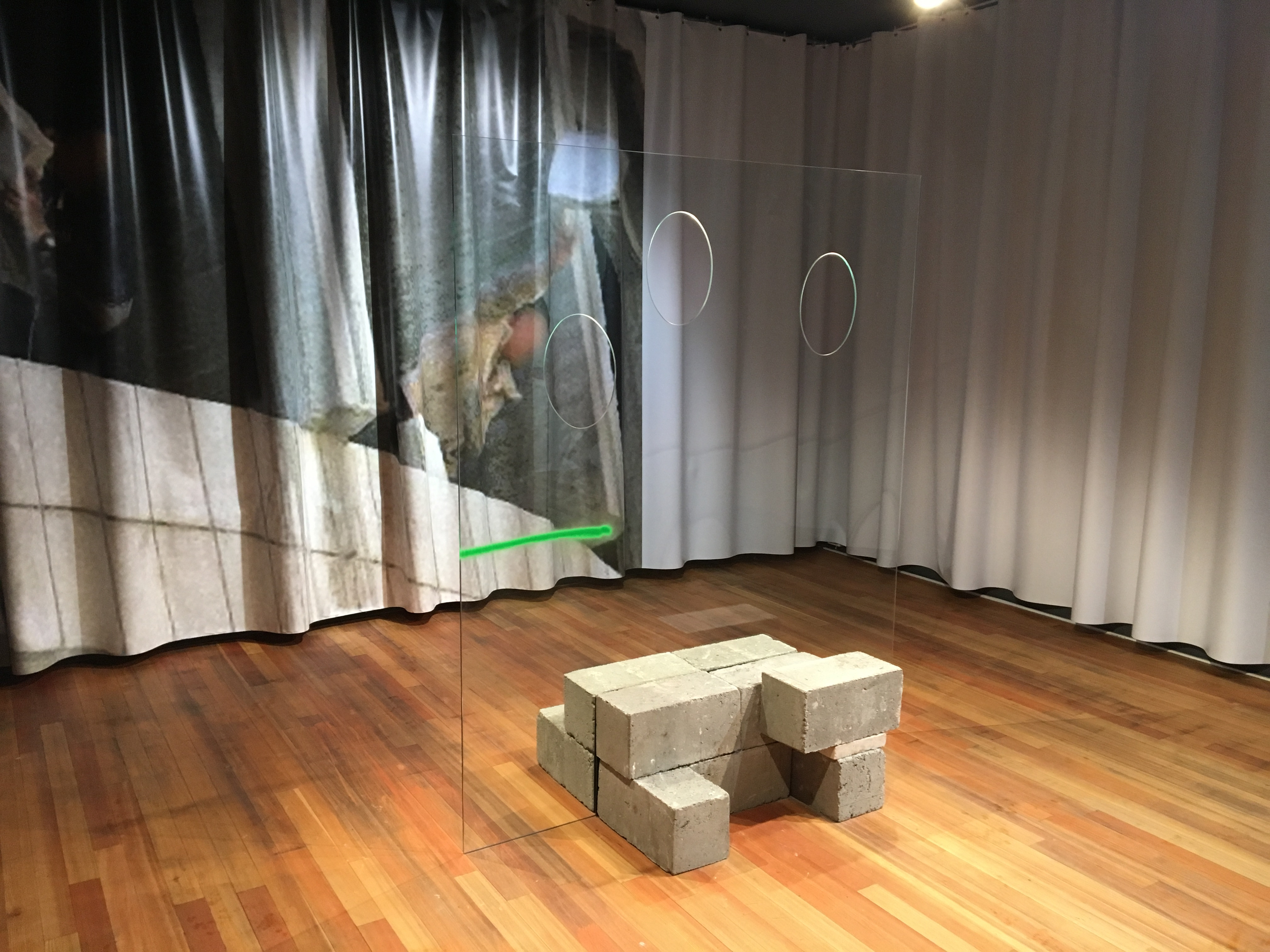
The exhibition narrative is built around Lenin’s quote about “the bifurcation of the whole and the knowledge of its contradictory parts”; the title of the exhibition refers to it, which introduces dialectics into the space of meaning. How does dialectics apply to the visual aspect of an exhibition? How do images come into conflict with each other (if the conversation takes place within the framework of dialectics), and what then is the punctum of their disagreement with each other? The artist avoids direct answers and in practice ignores the dialectical method; instead, he turns to the method of free association. This well-worn, well-known postmodernist technique allows us to establish any connections. Thus, found images of Palestinian resistance members throwing construction concrete blocks are presented at the exhibition in the form of “Tablets” printed on banner curtains. Spivakov connects them with the Old Testament story about the Tablets of the Testament. This plot introduces the reader to the story of God's commandments given to Moses on Mount Sinai. For the first time, they establish a ban on images. Does the Tablets of the Covenant talk about imposing a taboo on the production of images as such? Or does it still refer to images with sacred meaning? The Old Testament commandment warns about the danger of creating an idol, and does not prohibit the image itself.
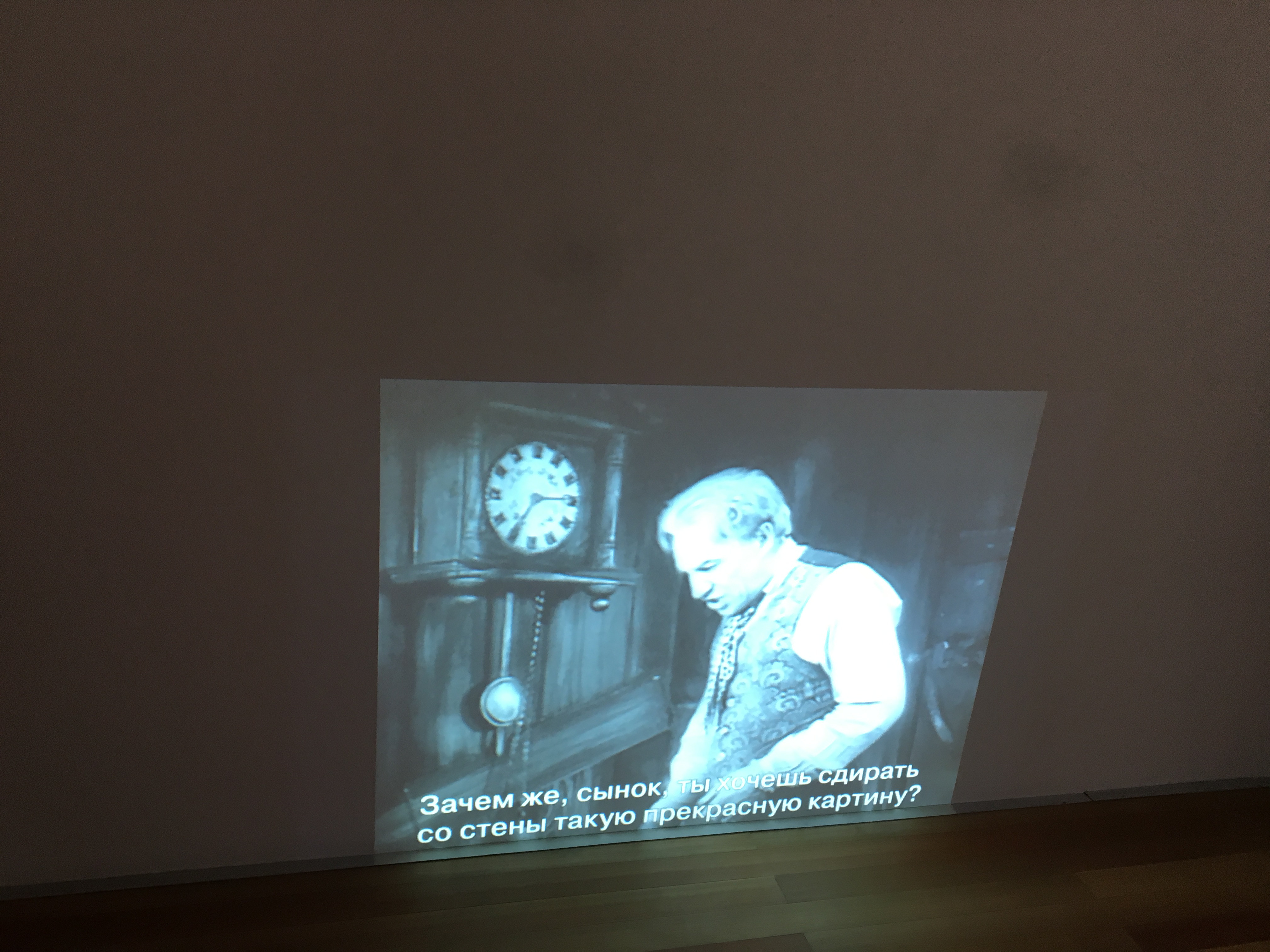
The next rhyme between the artistic imagination and the object at the exhibition consists of a comparison of works made of glass (“Glass 1”, “Glass 2”, “Glass 3”) and Tantamaresque (“Tantamaresque”) with the theory of reduction of form in the avant-garde. With their help, the artist demonstrates the manipulative power of images, which we learn about in the curated text. This connotation is too literal: glass is equated with the zero of form and insignificant holes for faces are assigned the main role of critics in violence against the image. Finally, the third plot establishes a correspondence between Soviet anti-clerical rhetoric and film fragments from The Golden Key and The Taking of Winter, directed by Nikolai Evreinov. And again we have a simple analogy: this time between the painted curtain (the fireplace above Papa Carlo’s fireplace) and the state of insight that occurs at the moment of clarification of the “real reality” (without God). As a result: the veil falls like scales from the eyes. Why are these two passages intended to reveal the complex dichotomy of the image in a time when God is long gone? It turns out that the images presented by the artist constantly jump along the scale of meanings - from sacred to profane (when the Tablets of the Testament take the form of concrete blocks propping up the “Tablets” and “Tantamaresque”), from history to modernity (Old Testament history is intertwined with politics), from reduction to exaggeration (from zero image to Tantamaresque, as the main symbol of iconoclasm).
Neither the artist nor the curators provide the “golden key” to the door leading to an understanding of their intention and choice of themes and connections between objects. The position remains unclear, encompassing everything and nothing at the same time. Viewers are invited to look at an illegible postmodern image that faded several years ago. In this case, it can be viewed historically, since the history of the image from the creation of the world to the present day flashes before us, packed in two small halls of the museum. Despite the claim of modernity, it has been taken out of the equation - the media space, the main place for the accumulation of images, will not be found here. The exhibition shows the defenselessness and weakness of the image in the face of skillful juggling with free interpretations and the fire-breathing power of the outdated method of free association. Maxim Spivakov’s illustrative approach, which unambiguously connects images with each other according to the formula x corresponds to y, deprives them of artistic value and opens up the possibility of personal manipulation. Paradoxically, the project fulfilled its task - the image is really missing, its place is taken by the unshakable Kurato text. Thus, the artist turns out to be material for the realization of intellectual curatorial pleasure.