
Translated material
Scrolling frames. Masters of Soviet scrolls
In one of the previous materials, we turned to the history of the appearance of works of Japanese children's and teenage literature in the USSR. We continue this marathon and today we are moving further into the field of filmstrips and cartoons based on Japanese fairy tales, made by Soviet artists and animation directors.
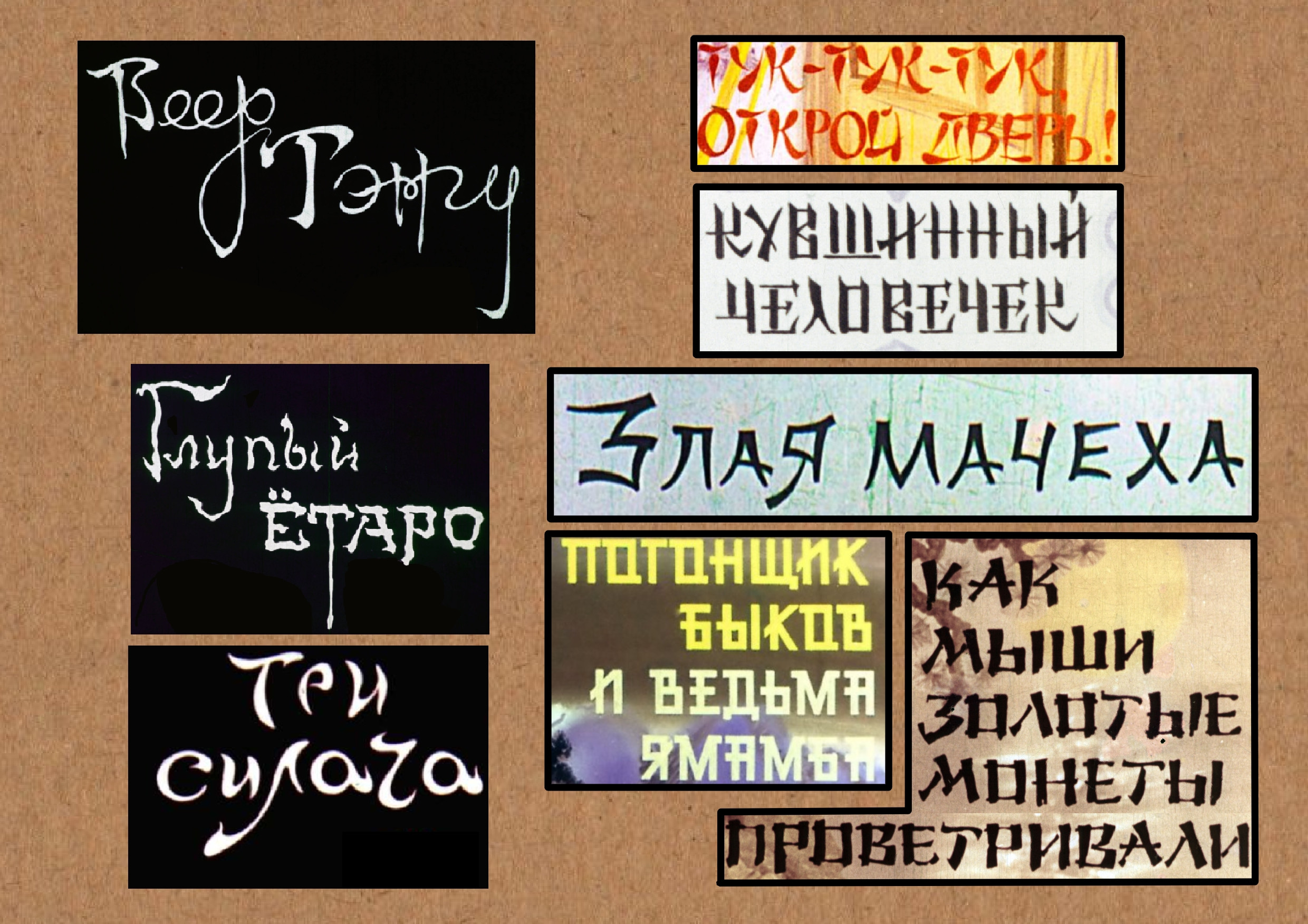
The culture of watching filmstrips, which began in the mid-1950s and died out in the early 1990s, seems very expressive from the height of time. Skillfully combining text and image, in his static form he was able to convey entire stories in a couple of dozen frames. The filmstrip is surprisingly similar to a scroll, the same dependence on its physical movement and narrative dynamics; if you want a story, it’s in the next frame. Soviet artists, as in the case of their fellow illustrators, needed not only to reproduce history, but also to convey national specifics and make them recognizable. Japanese realities are different for all authors; in some cases, focusing on engraving culture, they reproduce it with minor changes; in other cases, an author’s Japan emerges, similar and dissimilar at the same time. A universal case is to imagine a capacious East instead of Japan, just sharpen all the roofs and make the desired eye shape.
The animation section is a little smaller; we managed to find only a couple of works where Soviet authors were involved in the film adaptation of Japanese material. The nature of a dynamic image also changes the rules for transferring a literary source to screens; it is necessary to observe not only textual/visual features, but also musical ones, to set an action/gesture that would equally reflect the national identity of the characters. In both cases, I would like to passionately draw attention to the fantastic tradition of stop-motion animation, which, in my opinion, has achieved the perfect balance between the expressiveness of the form and its ability to convey what is recognizable in a foreign culture.
14 filmstrips and 4 animation works - it's time to make a run into history.
Filmstrips
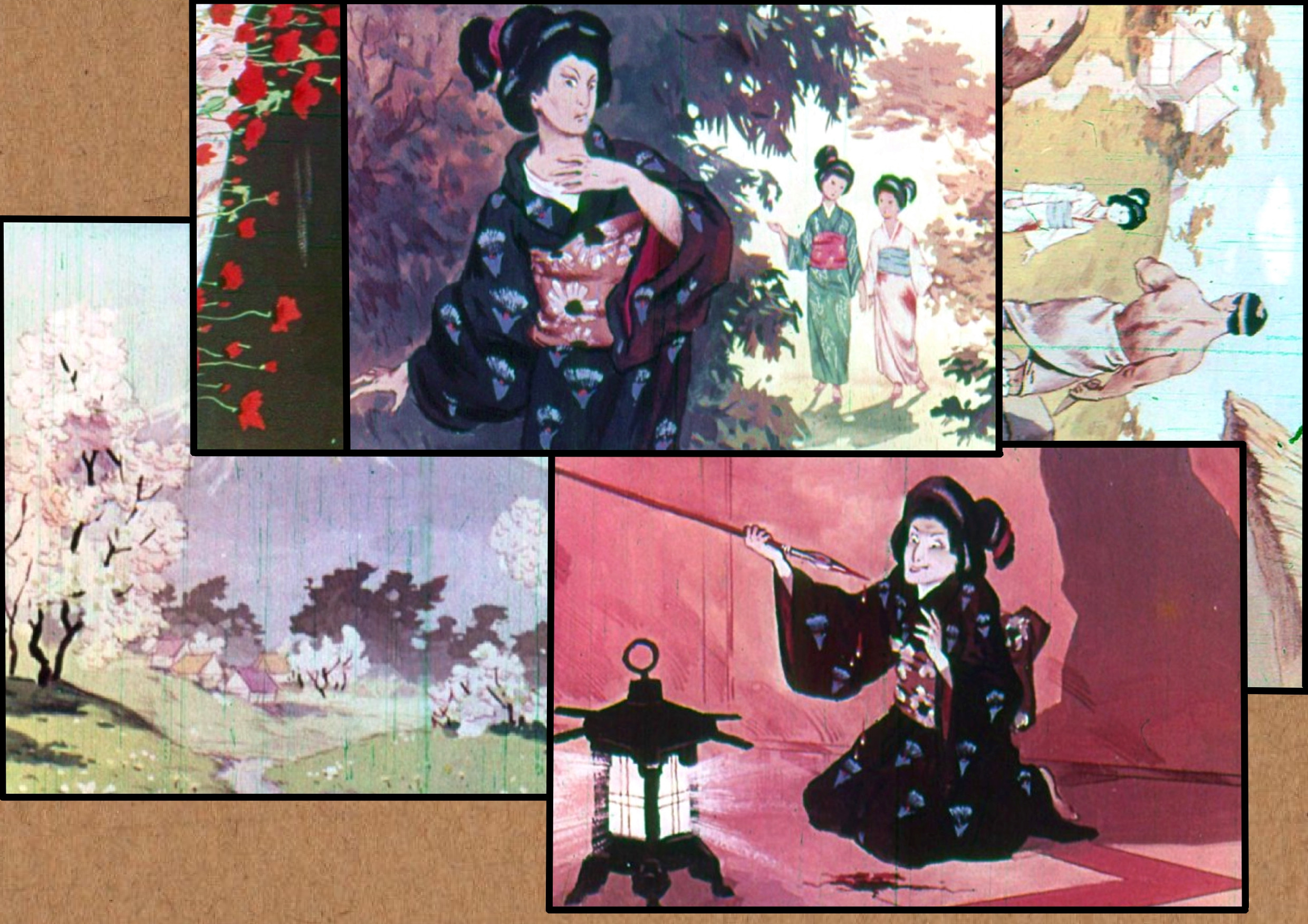
" Evil Stepmother " . Hood. editor: A. Morozov. Editor: L. Gurevich. Artists: A. Vinokurov, I. Shvartsman. Translation and processing: S. Surovtsev. 1958
Sisters O Tsuki and O Hoshi confront an evil stepmother who improvises ways to kill her stepdaughter. The victims will soon find salvation, a father, and an eternal stay in heaven in the form of natural sources of light (due to natural causes). Here everything is reproduced according to the canons: stone lanterns, pointed roofs, mighty mountains in the fog, kimonos and home decorations. It’s funny that the rice cakes with poison that the stepmother bakes so diligently look more like rosy whites; they are a long way from onigiri.
" Three Strong Men " . Translation and processing: S. Surovtseva. Editor: L. Gurevich. Hood. editor: A. Morozov. Hood. L. Sychev. 1961
A boy, after lying in bed for fifteen years (for technical reasons), suddenly gains superpowers and goes on a journey, because new abilities must be tested on all living things. The traditional motif of a short journey of making friends through trials, rescuing princesses and fighting demonic spawn. Some scenes here are pretty much captured from engravings, with talent and cuteness.
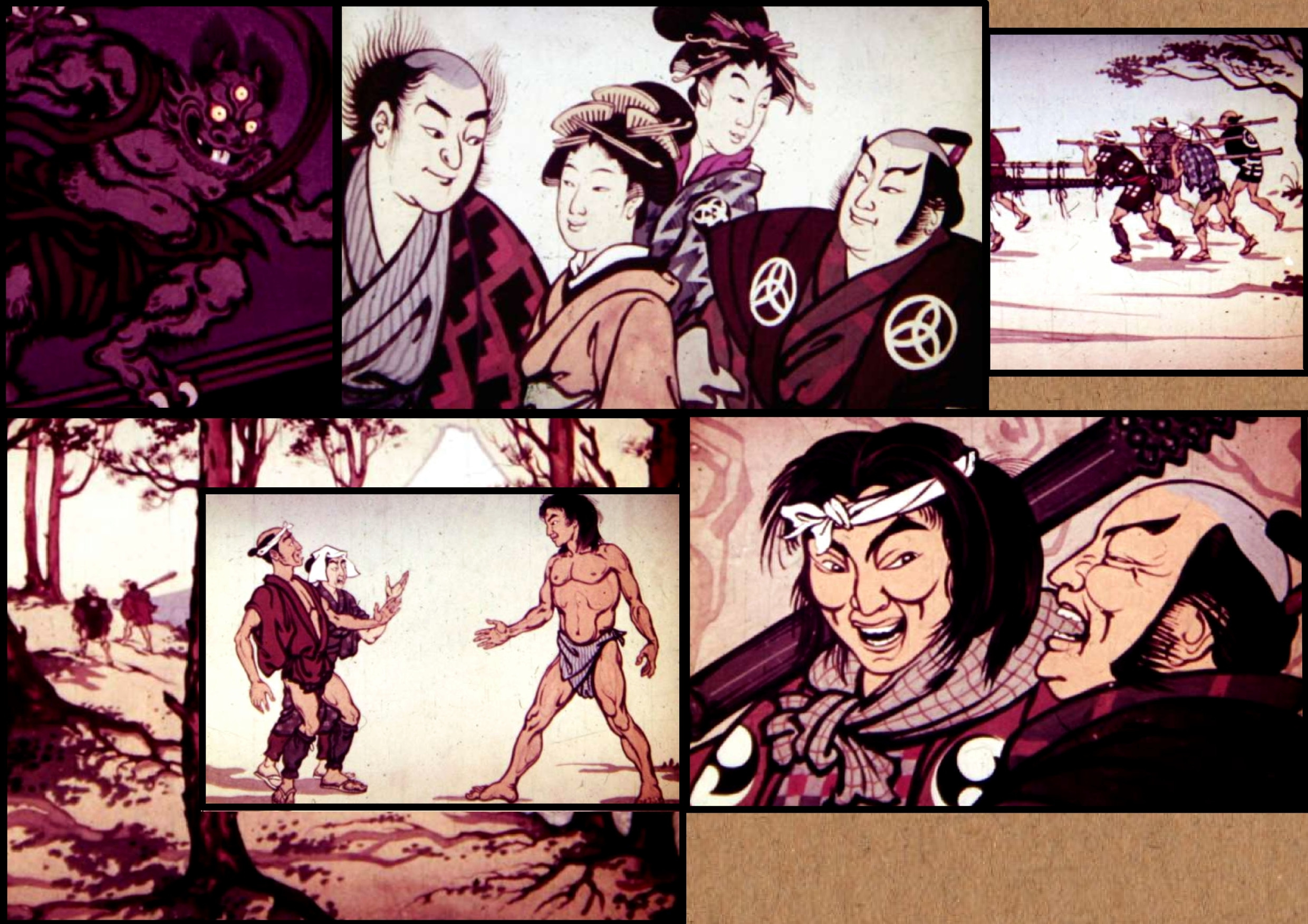
" Tengu Fan " . Rice. L. Sychev. Japanese folk tale. Hood. editor: A. Morozov. Editor: G. Kalashnikova. 1967
We continue to get closer to the Japanese bestiary, now here is the cunning Tengu, twisting a short-sighted peasant into his intrigues. A story about a growing nose and boundless curiosity with stupidity, even the presence of a princess is not a happy outcome. Here there is a very picturesque Raijin (god of thunder), otherwise, since the author is the same Sychev, it is similar to “The Three Strong Men”.
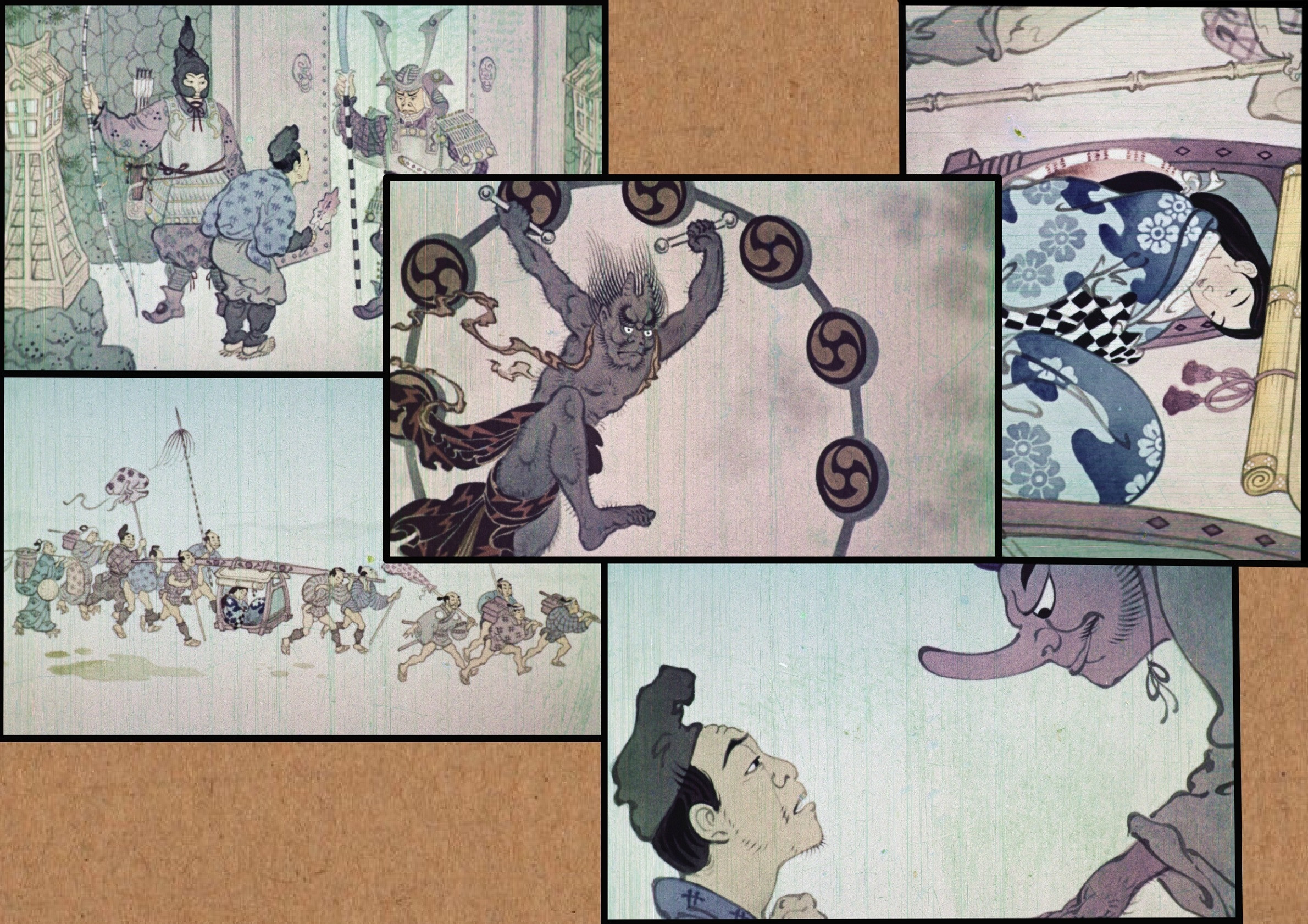
" Stupid Yotaro " . Rice. L. Sychev. Hood. editor: A. Morozov. Editor: L. Belaya. 1968
Yotaro has a hard time getting along with life; the young man perceives reality too literally, which is why he is doomed to constant misunderstandings, suffering and oddities. Usually one would hope that in fairy tales such characters will improve in the end, but Yotaro is doomed; this good news will be brought to him by his own mother at the end of the story. A visual aid on the topic of the wrong course of education and assessment of what is happening.
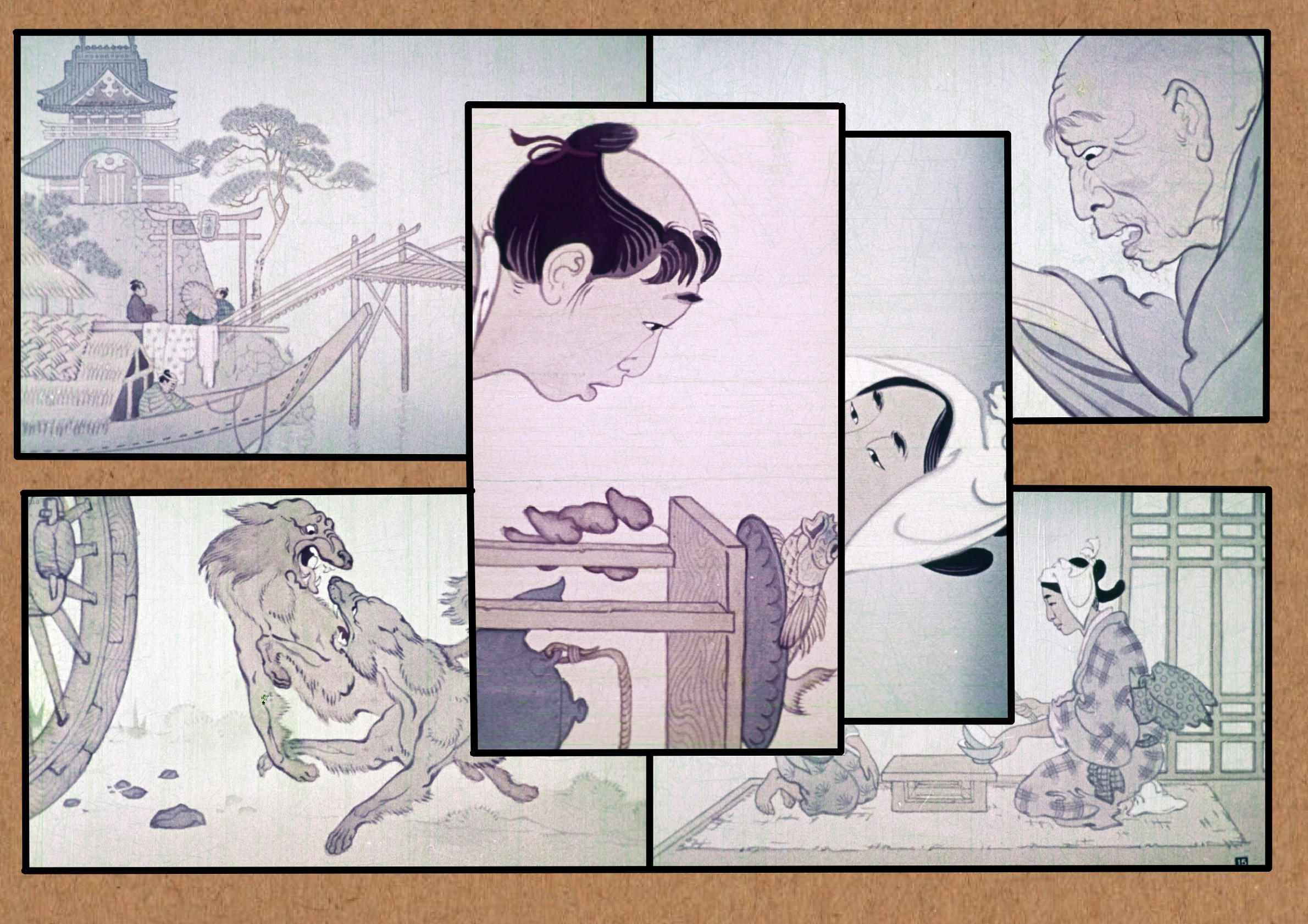
" The Long, Long Tale " . Rice. L. Sychev. Hood. editor: A. Morozov. Editor: N. Martynova. Arranged and scripted by V. Markova. 1971
A story about stories. Another escape from reality and responsibilities, a ruler who loved listening to fables rather than understanding the problems of his citizens. He will be taught a lesson by one of the elderly mothers of the injured party, charging him with a tedious fairy tale about frogs for 7 days. Unlike previous works, there is no main background here, it is replaced by an all-consuming darkness and it’s amazing.
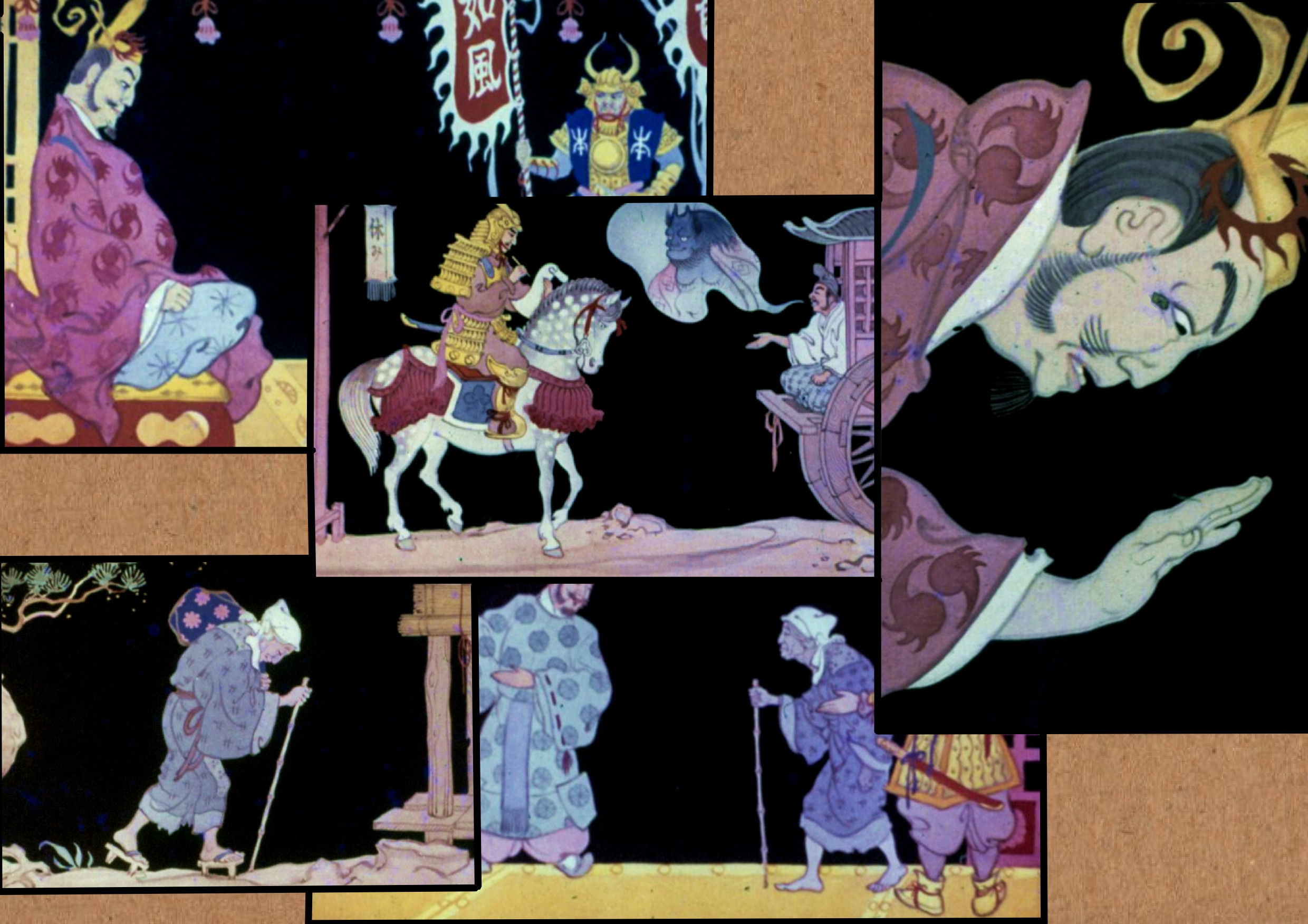
Miyoko Matsutani. " The Adventures of Tarot in the Land of Mountains (in 2 parts) " . Artists: V. Ignatov. Script and translation: G. Ronskaya. Editor: T. Semibratova. Hood. editor: V. Ivanov. 1977
Miyoko Matsutani is the number one author of Japanese fairy tales in the USSR. It is not surprising that her books were published in large numbers, reprinted and were accompanied by good information coverage. A two-part filmstrip for one story is also an indicator. Her Tarot stories show a journey from point A to point B, where natural phenomena always play a role in the breaks, unprecedented creatures appear, and chance saves from death and guarantees a happy ending. This interpretation is distinguished by a special rendering of color and form; I believe that the brightest filmstrip among those listed; the characters, although they have some unsightliness, are ready to visually break you out of any gray everyday life due to enhanced color rendering.
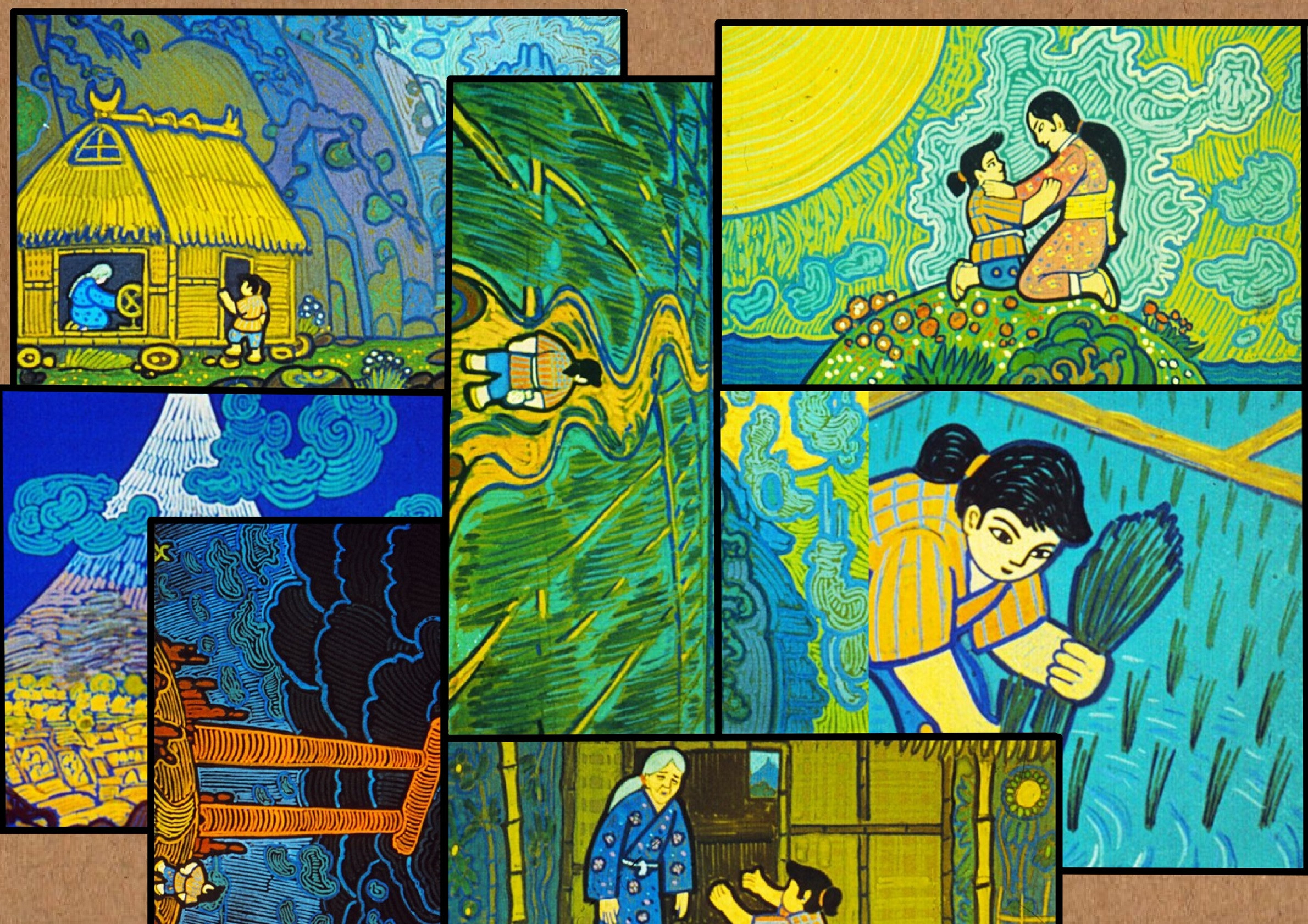
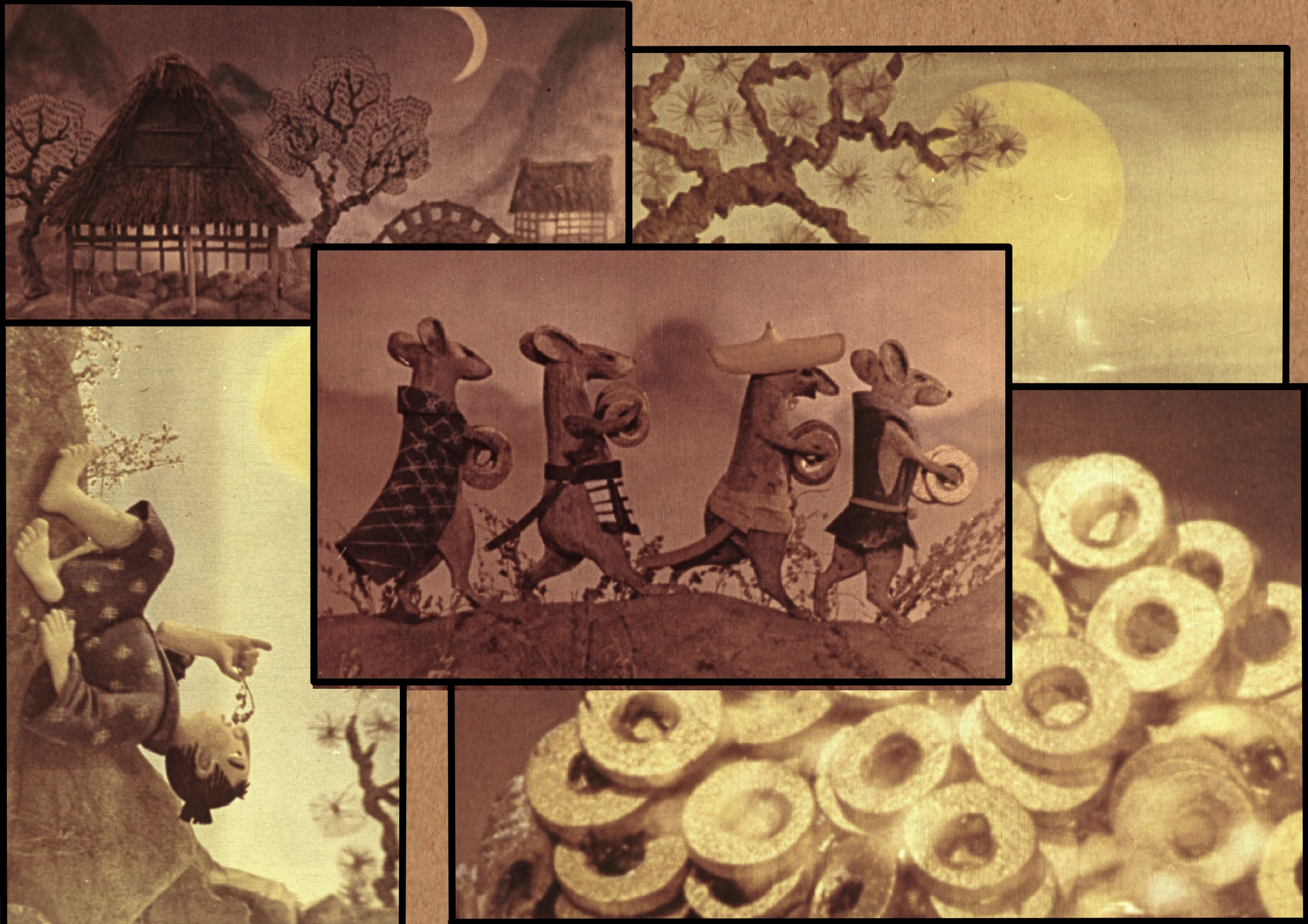
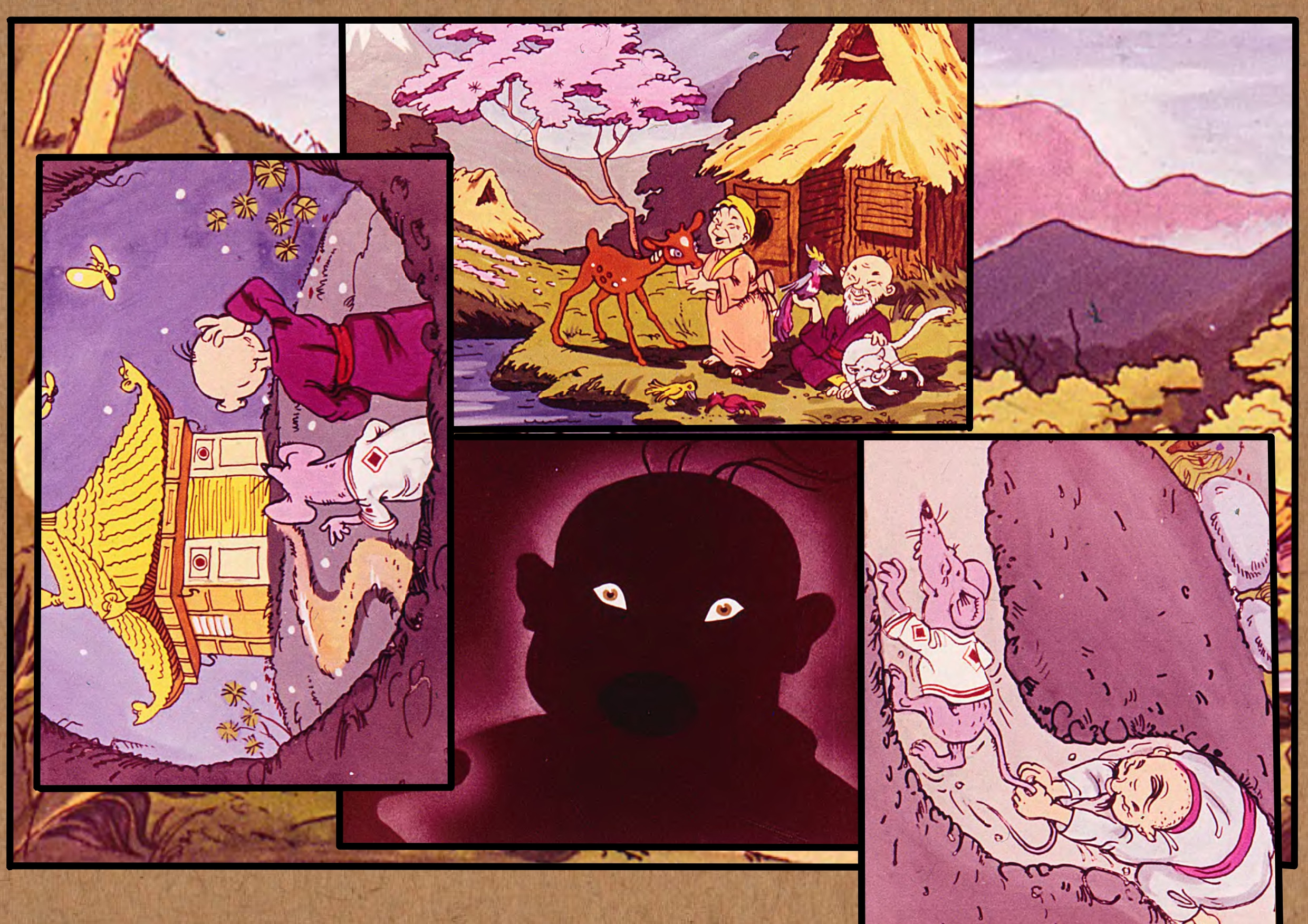
" How mice aired gold coins . " Script and translation: G. Ronskaya. Artist: G. Ravinskaya. Operator: M. Kamenetsky. Puppeteer: E. Cherkasova. Editor: L. Sevostyanova. Hood. editor: V. Ivanov. The dolls were made by graphic designers: N. Voydinova, G. Golovanova, T. Maksimova, E. Cherkasova. 1978
Tarot-Sloth, a burden to his parents, a carefree proto-millennial, in search of himself and work. Circumstances lead him to meet the employer mice, who offer him to guard their goods; the coins need airing. Tarot restrains himself from bad thoughts and greedy hands, copes with his responsibilities and pleases his family. The trip to earn money was a success. Another puppet masterpiece, the mice deserve special praise, something Wes Anderson never dreamed of.
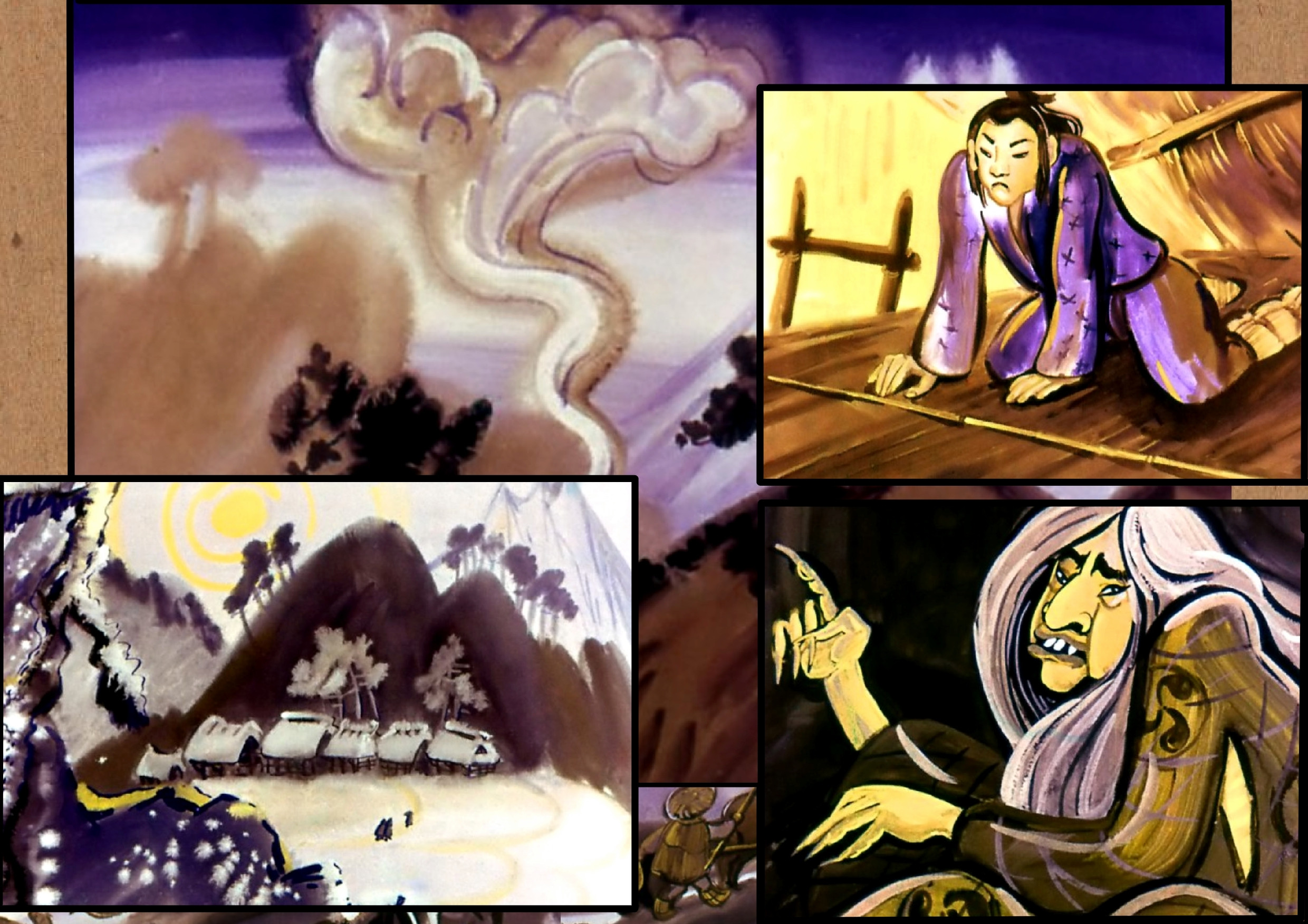
Miyoko Matsutani. " The Bull Driver and the Witch of Yamamba " . Artist: T. Sorokina. Script: G. Ronskaya. Editor: L. Sevostyanova. Hood. editor: V. Ivanov. 1979 ( Filmstrip Studio )
Comrade Sanjuro is transported on a horse-drawn cart through the mountains, but he is waylaid by the sinister witch Yamamba (with the appearance of Patti Smith), who is drawn to gastronomic perversions. Of course, she won’t be able to eat the hero, but the hero will provide her with the maximum degree of roasting. Death, cakes and extraordinary youth.
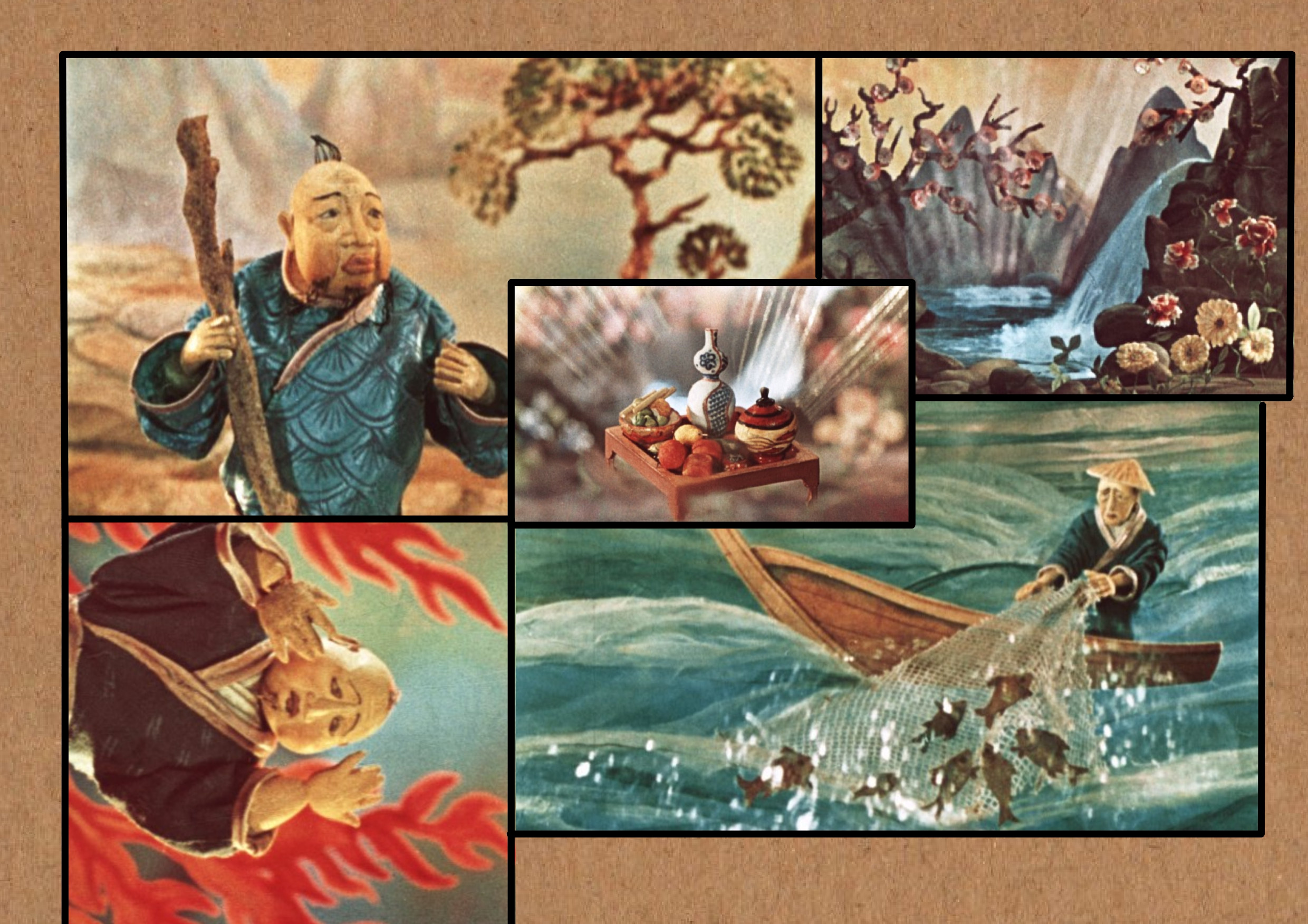
" Red Lacquer Cup " . Artist: G. Ravinskaya. Cameraman: R. Veseler. Retelling and script: N. Kolpakova. Editor: T. Semibratova. The dolls and decorations were made by graphic designers: N. Voydinova, G. Golovanova, T. Maksimova, E. Cherkasova. Puppeteer: E. Cherkasova. 1981
Excessive kindness of strangers (rescued carps) leads to exceptional laziness and greed. The fisherman gives up his life's work because of the promised delicacies, gets fat, his house deteriorates, and instead of a prosperous story in the “before and after” format, he decides to grab even greater benefits, but greed boomerangs back into his life, bringing fire and devastation to the life of the unlucky peasant. The effects of the elements: overflow of water and fire are a sight to behold.
" Monkey Kingdom " . Artist: T. Sorokina. Retelling from Japanese: V. Markova. Editor: I. Pogonina. Hood. editor: V. Dugin. 1983
The youngest son Saburo, and this is always the most painful position in a Japanese family of the recent past, tries to bring some benefit, but his pity for our smaller brothers empties his parents’ wallets, but leads to new friends and a trip to the monkey kingdom. Gifts from the monkey monarchy in the form of a coin that can grant wishes go to the boy, and he returns to his home in triumph. It will take a little more time to fight with the local outcasts, so newfound animal friends will come in handy.
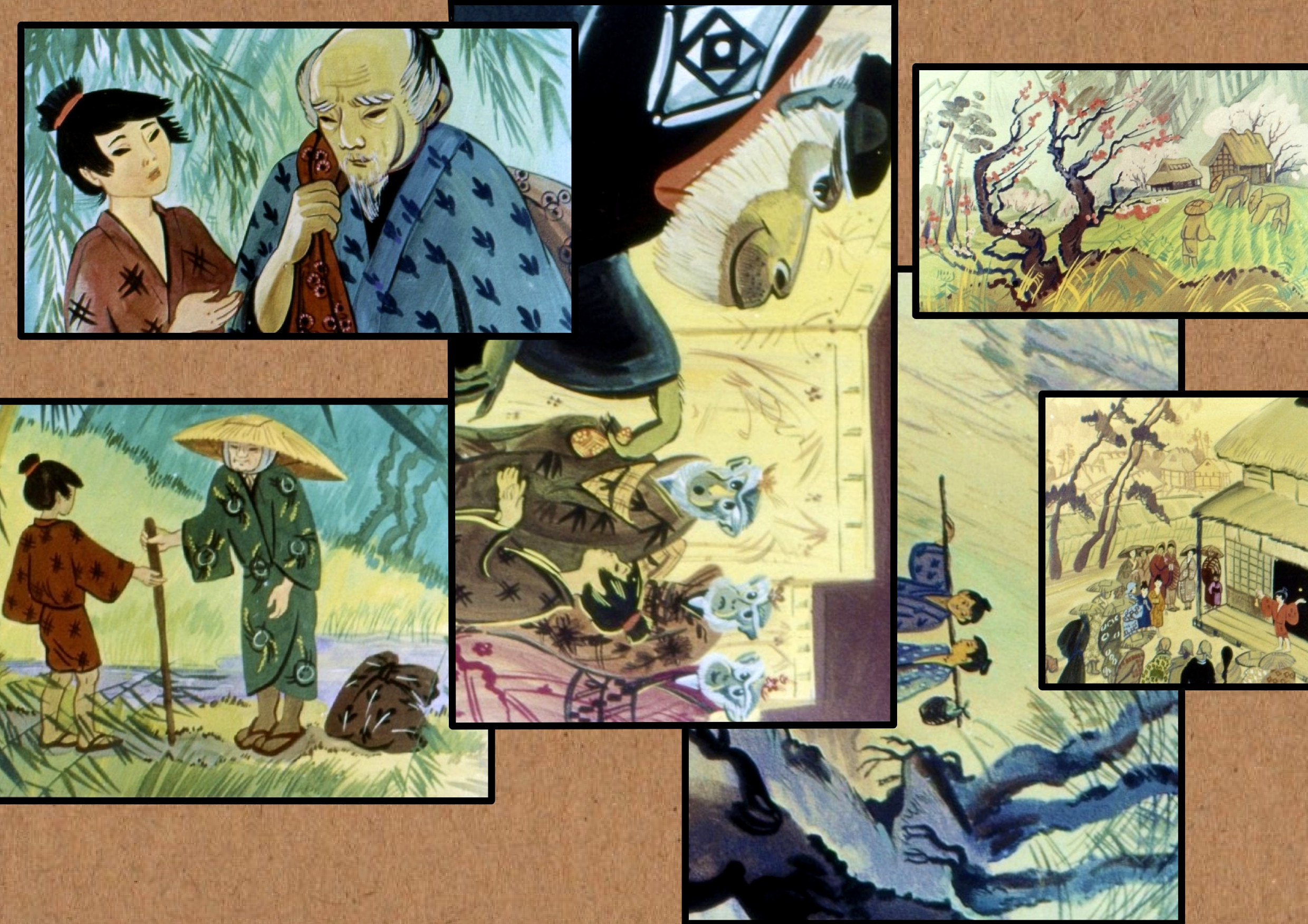
“ Knock-knock-knock, open the door!” " Artist: T. Sorokina. Retelling from Japanese: V. Markova. Hood. editor: V. Krasnovsky. Editor: G. Vitukhnovskaya. 1984 ( Filmstrip Studio )
A simple fairy tale for lovers of melons and the birth of newborns from them. The attempt of the old man and the old woman to raise Uriko-Himeko, the girl from the melon, would have been ideal and smooth if not for the demon Amanojaku, who, like any evil creature from the mountain depths, wanted to get the girl for his sinister purposes. To correspond to the status of a full-fledged villain, you still need to have a commensurate mind, this is what the demon lacks, so the murderous duo of Japanese old men will quickly set the temperature and save their girl. The filmstrip actually has a very melon color, and is quite pretty, even the demon is very plump and pleasant.
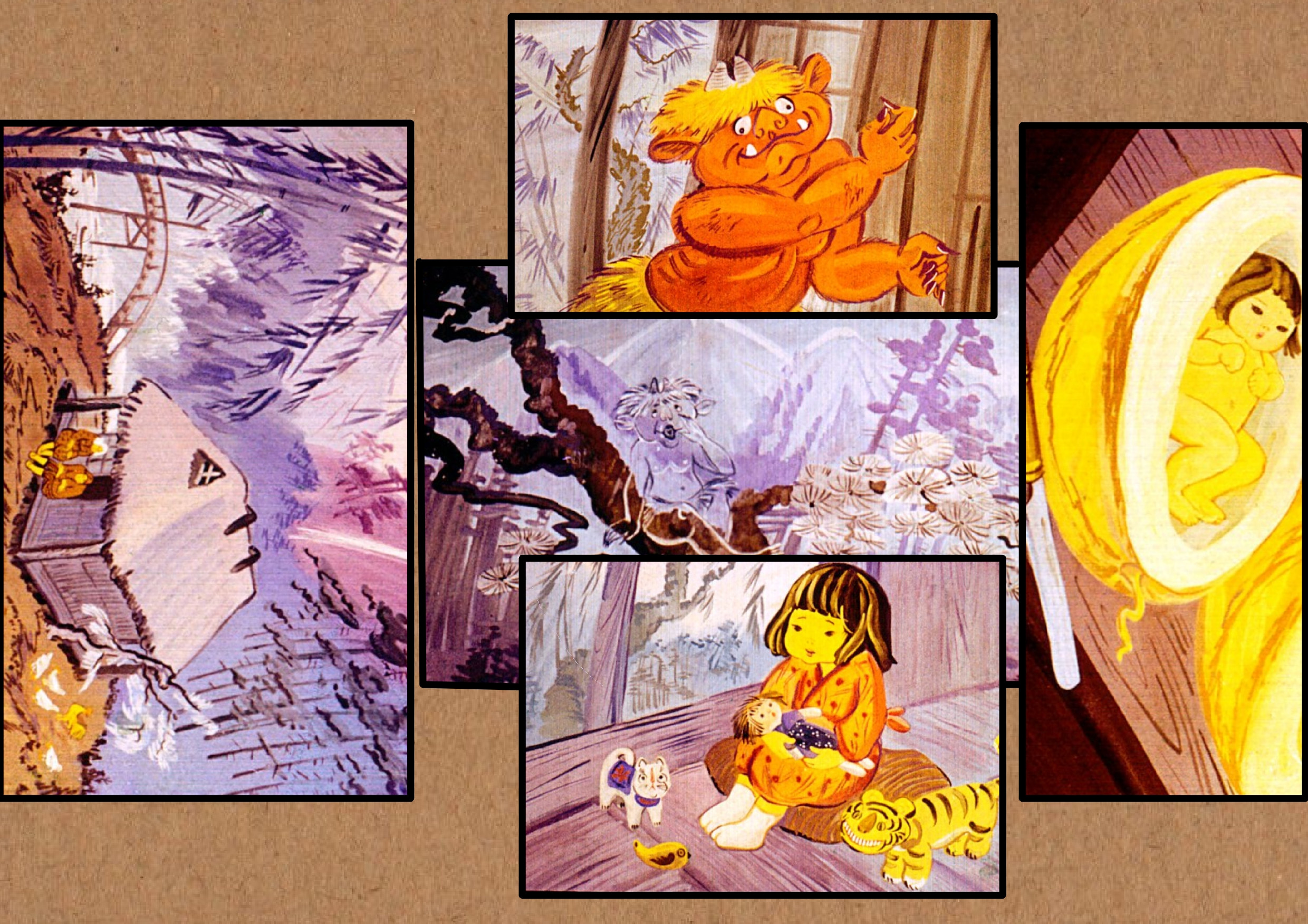
" Issumboshi " . Artist: G. Kislyakova. Editor: I. Rusanovsky. 1987
Another character familiar to everyone is the Japanese boy Thumb, who will also prove to the whole world that he is far from so small, and that he has enough strength for a fist. The game of scale here is interesting, especially against the backdrop of the city where the main character arrives from his home.
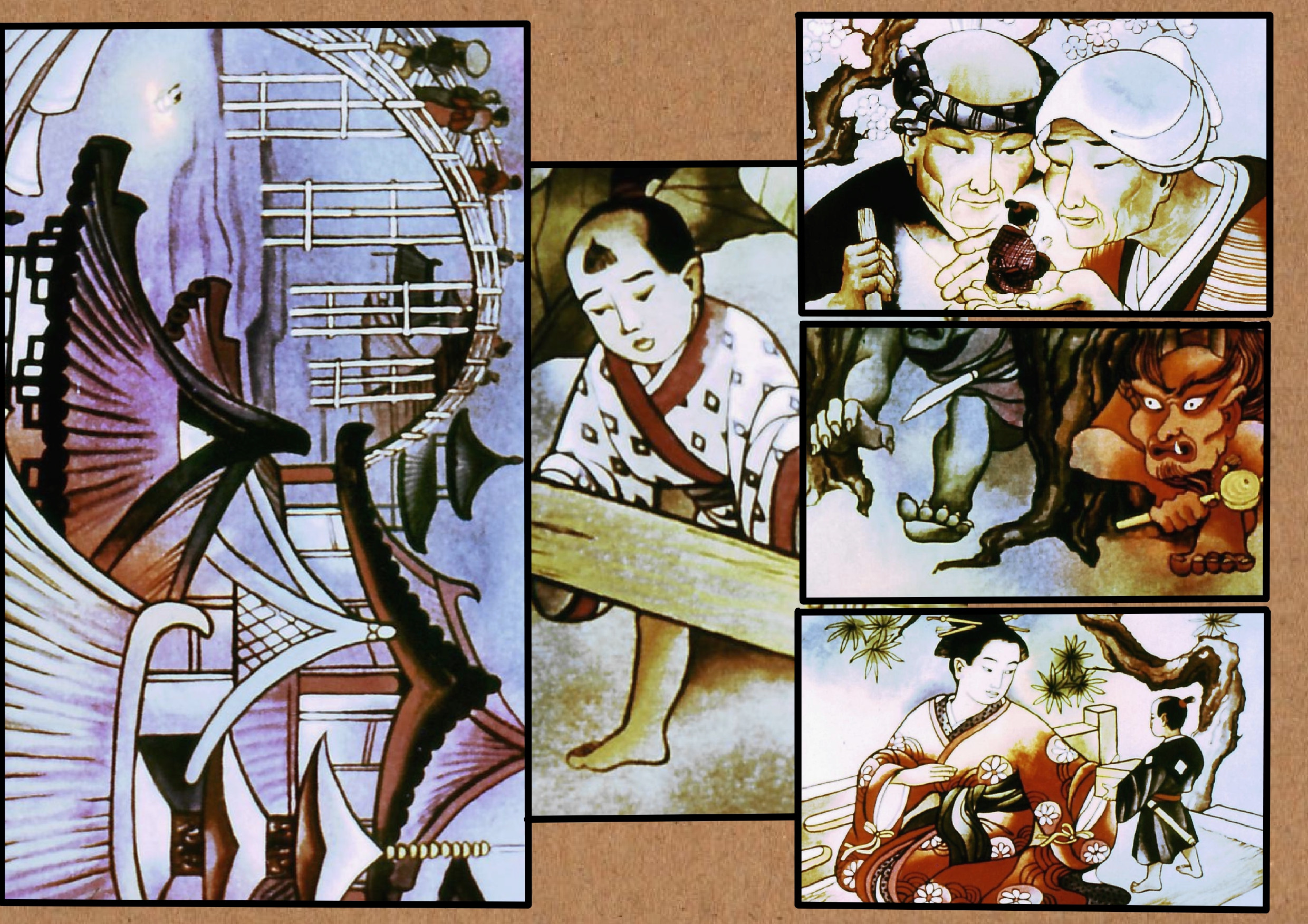
" The Jug Man " . Artist: L. Gladneva. Hood. editor: V. Plevin. Editor: L. Blinkova. 1990
If you are lazy, be sure to look around, if you catch yourself thinking that the pitcher man is somewhere nearby, beware. If you become even lazier, this means that you already live with a full-fledged roommate and you will have to pay his expenses. If you are already at the peak of laziness, then get ready for the fact that your uninvited guest will give you a forced redevelopment; the dimensions will take their toll. But work and labor will grind everything down, even the imaginary complex in the form of a man from a jug.
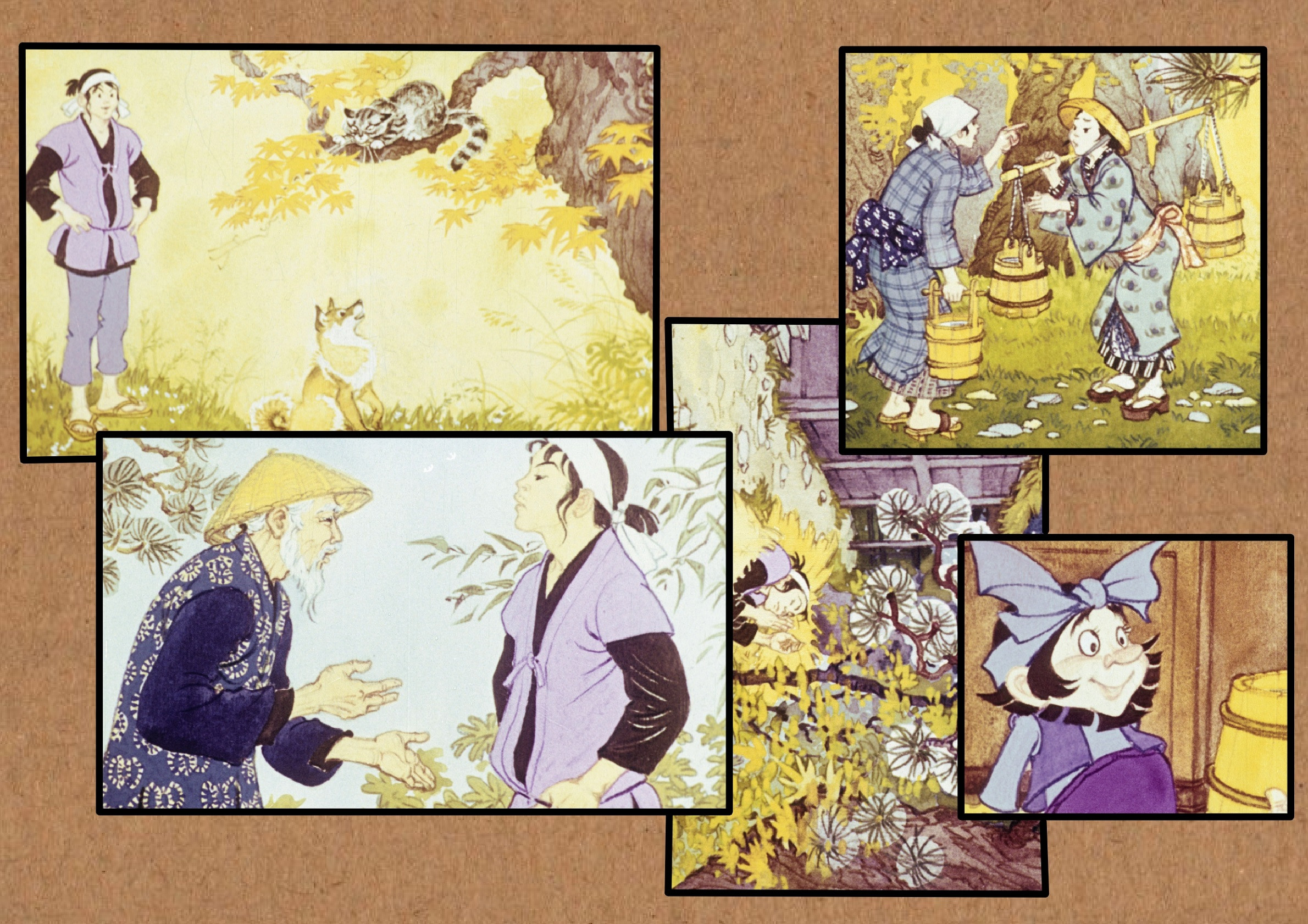
" In a mouse hole " . Artists and scriptwriters: N. Piskunova, V. Romanenko. Editor: V. Verbin. 1990
Evil stepmother? Despot father? Jealous sister? This time it’s simpler, just a greedy and domineering old woman, pushing her weak-willed husband to do ignoble acts. The story begins with another rice kolobok (apparently, by 1990 they decided to make it a domestic golden kolobok), rolling into a hole among the mice, who this time no longer air the coins, but reward them for kindness and generosity. There are never too many gifts, and greed knows no limits, so the old man and the old woman will still get theirs. At the end of the filmstrip culture, we can say that this interpretation is less successful when compared with those described above; nevertheless, there is already a touch of a little pretentious Asianism, the graphic culture is poorer and the feeling of some secondaryness does not go away.
Animation
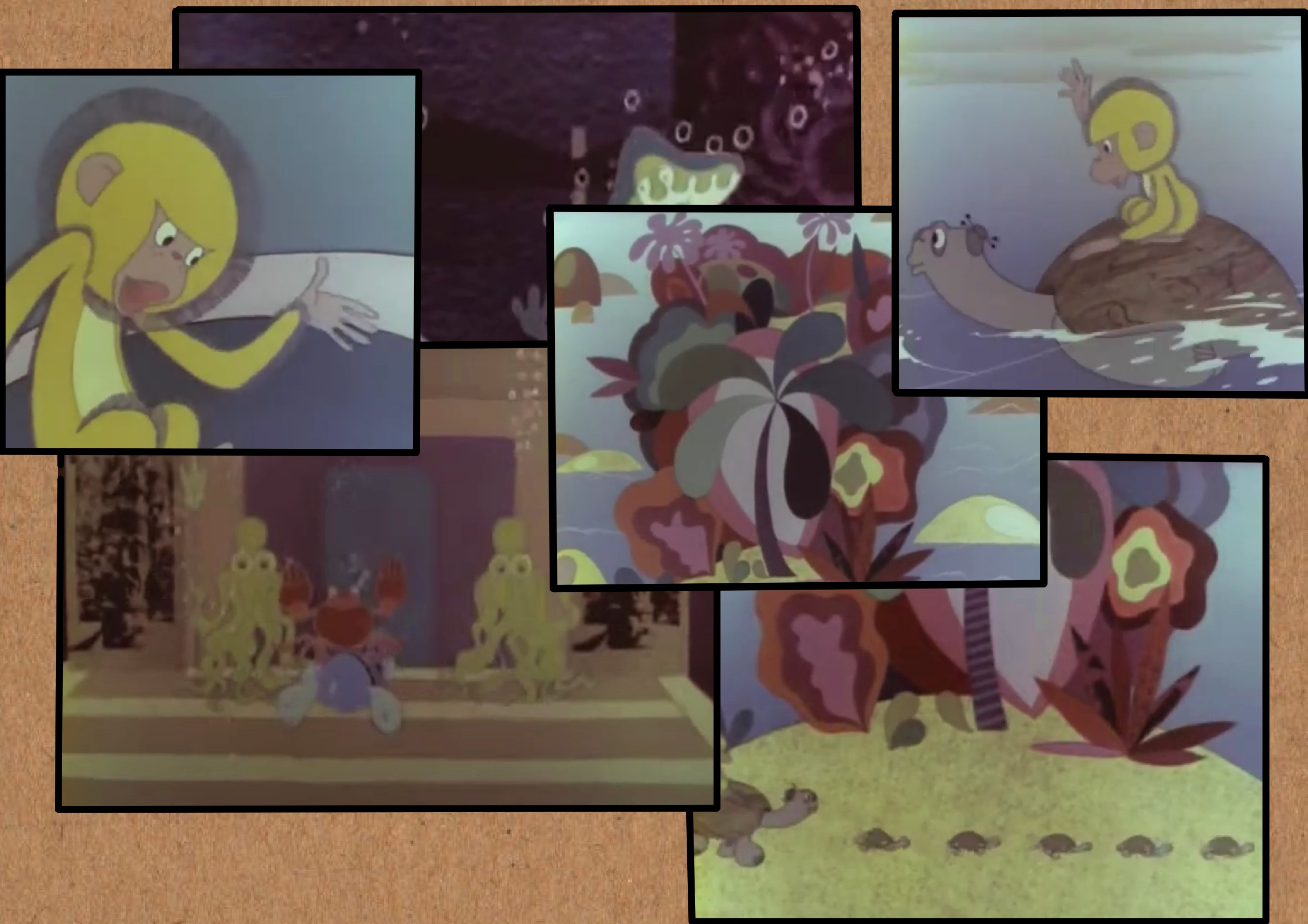
"Monkey from Sarugashima Island." Dir. Mikhail Bolotov. 1970
The story of the monkey from Sarugashima, whose liver the sea dragon wants to eat, is quite simple, even the region does not play a special role here, only the name is from Japanese. The main character saves his life with the help of a friendly dolphin and cuttlefish, and then allows the turtle to live on his island, saving it from inevitable death in the sea kingdom, because she never brought the monkey. Continuous counterbalances and contracts.
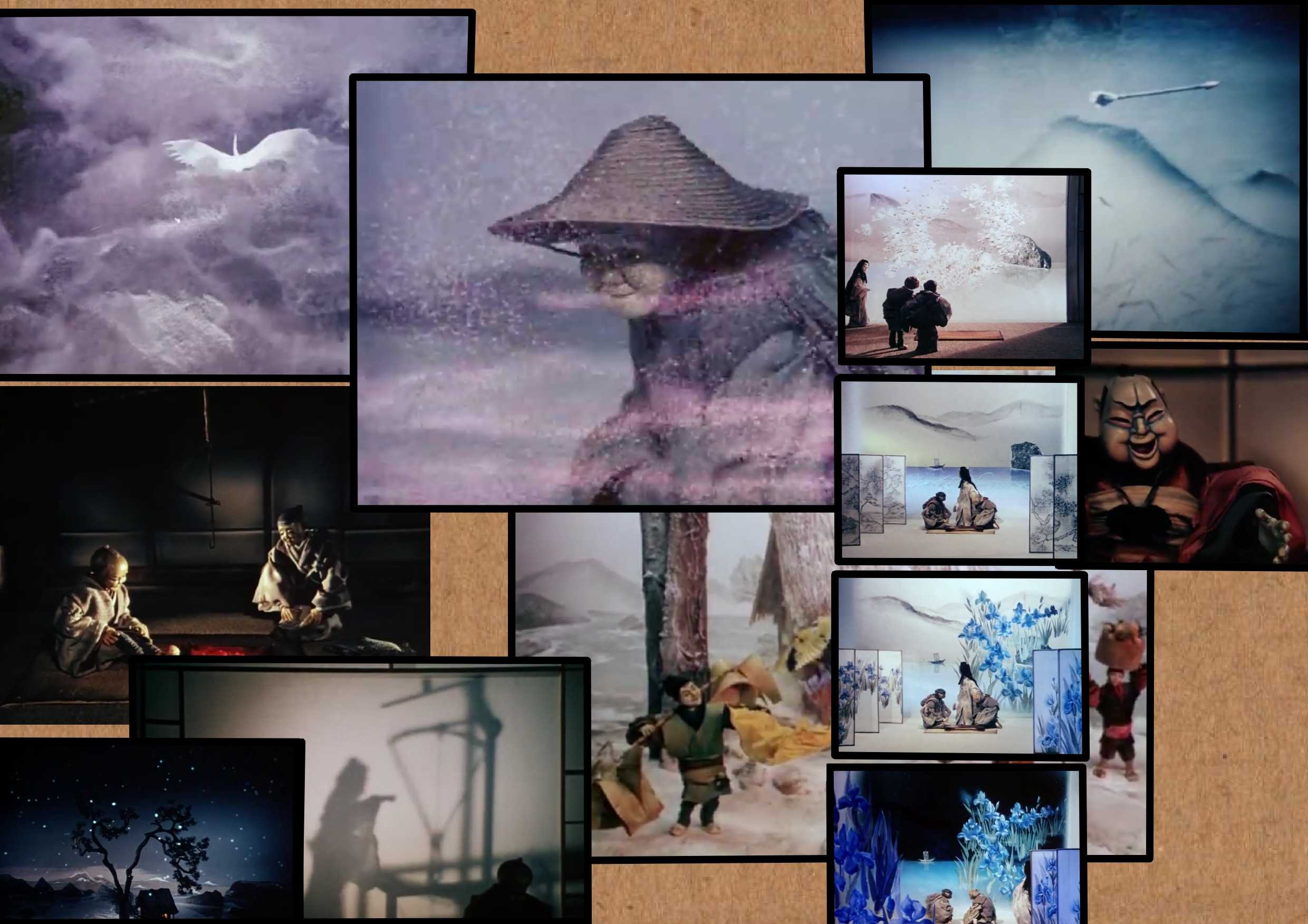
"Crane feathers." Dir. Garanin's idea. 1977 Composer: A. Rybnikov.
Garanina’s cartoon based on the fairy tale “Crane Feathers” is the best statement in the field of visualization of Japan. Garanina is an absolute and masterpiece director in the field of puppet cartoons, who manages not only to pull out all sorts of techniques from the animation arsenal in a short amount of time, but also to embody the story itself. A separate advantage of this film adaptation is the musical accompaniment; there is an ideal union of the auditory and visual, an exact hit (the puppets here are like a mixture of Bunraku theater and netsuke) in the heart of Japan. Without a single word, the story unfolds around the fabulous exploitation of a beautiful Japanese girl (zoomorph), who, out of the kindness of her soul, sacrifices everything for the sake of simple and humble peasants.
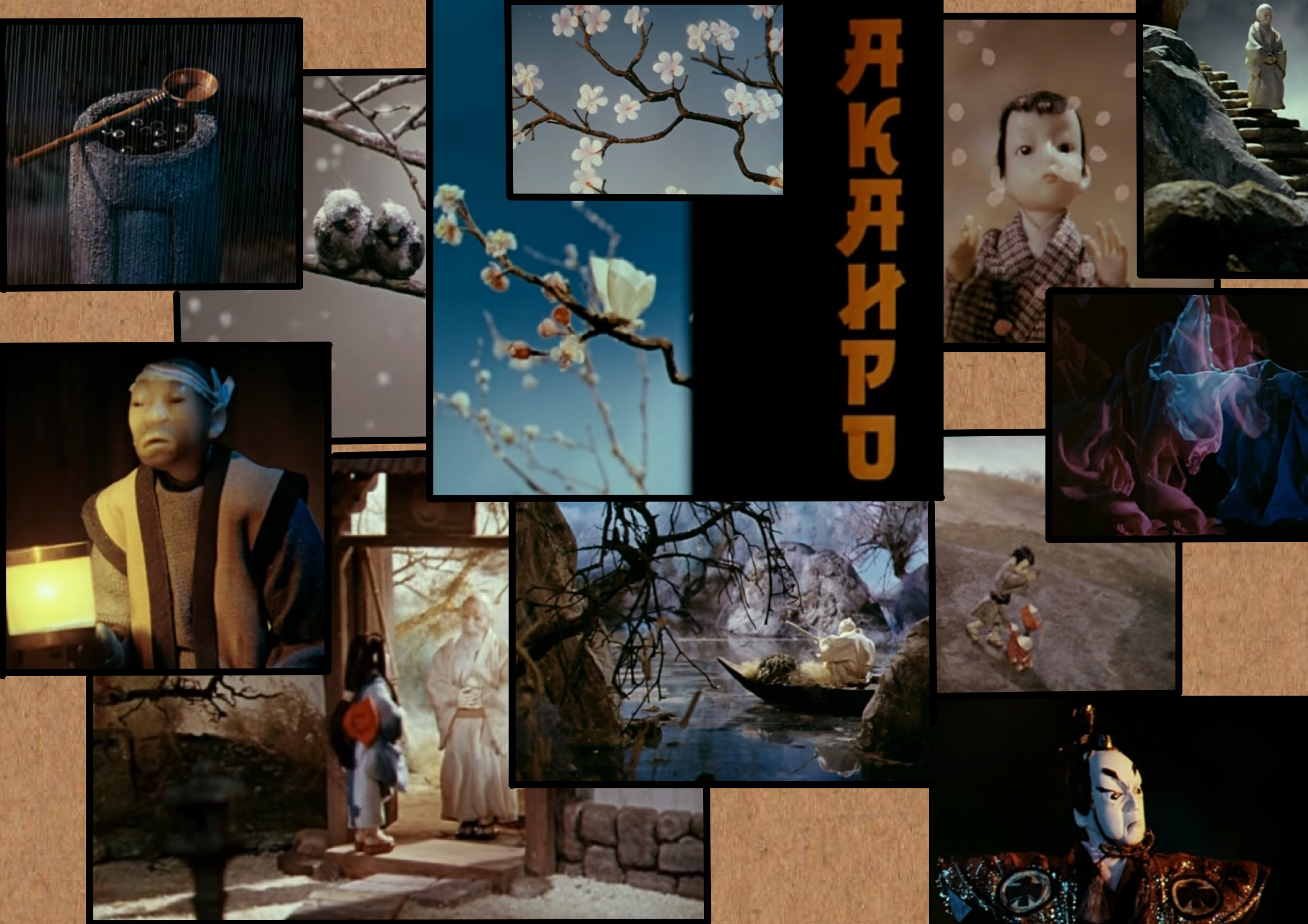
"Akairo." Dir. Aida Zyablikova. 1980
“Akairo” is also a puppet cartoon, telling the story of a sick boy who, with the help of a local doctor, gets back on his feet and finds friends, animated origami creatures. The tale is quite painful and dramatic, but with its share of lyricism and a mood similar to that of “Crane Feathers”. Aida Zyablikova is also a significant figure and commensurate with other domestic animators. A solid story with inventive work with light and decent camera solutions.
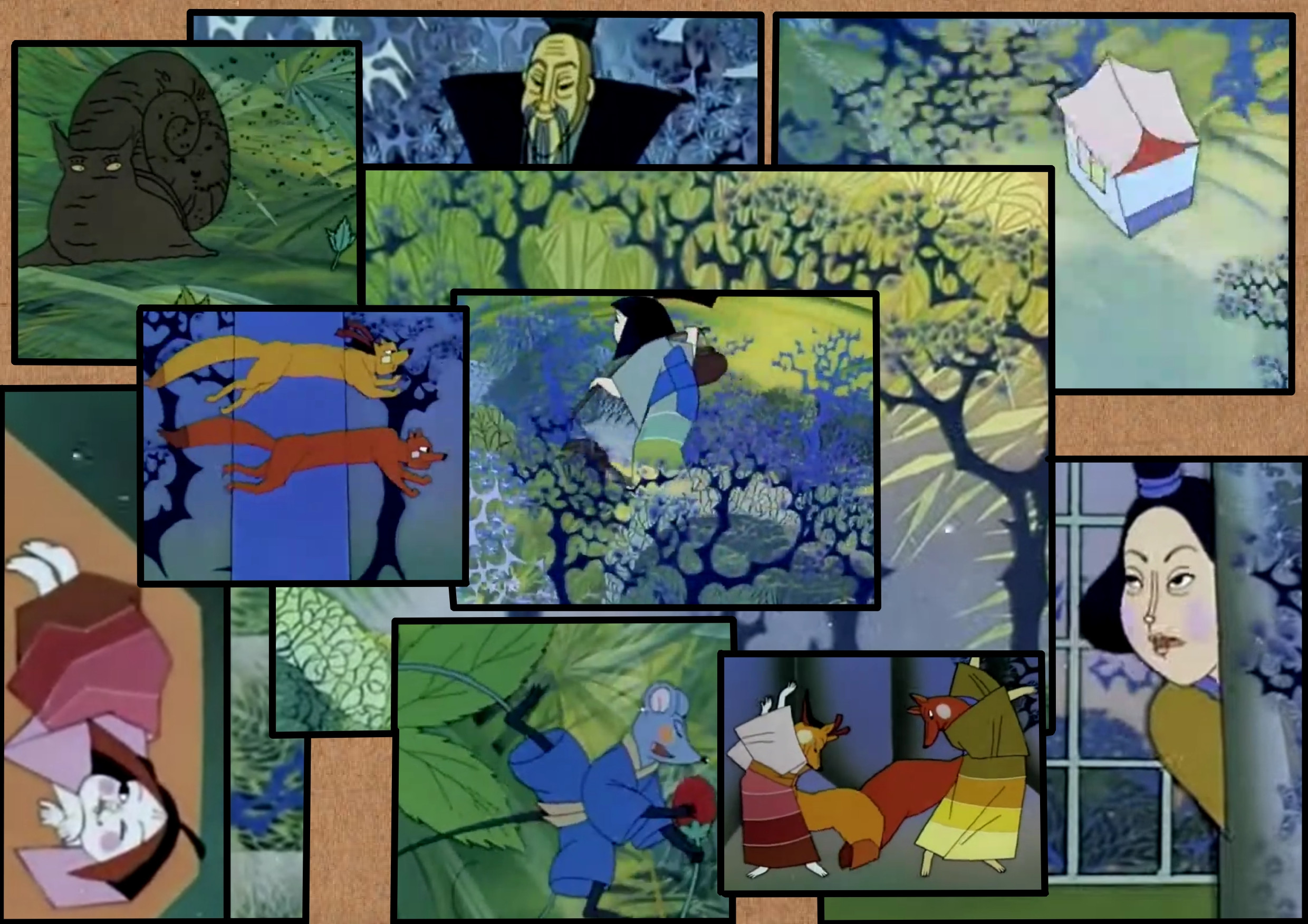
"Strawberries under the snow." Dir. Natalia Golovanova. 1994
A post-Soviet pictorial take on the classic fairy tale, which appeared in translation in the mid-1960s. Despite the rather monotonous color palette, although one can say that it is holistic, it has good stage transitions, which to some extent smooth out the presentation from yet another Japanese author. The characters here are more chinoiserie (more like representatives of a neighboring country), everything is mixed in a single animation vat. The plot is about an unfortunate turn in family relationships, an evil mother and a stupid daughter against a kind-hearted and innocent heroine - someone will go looking for strawberries in winter, and someone will stay in a warm house.
Other materials in the series:
Children in the wind
Honey, I'm shrinking the kids. About Japanese parts in the Soviet Union (3.0)