
Translated material
Apology for video games
As an epigraph:
"If Pac-Man had influenced us when we were kids, we'd all be spinning around in a darkened room, chewing magic pills and listening to repetitive electronic music."
(Marcus Brigstocke).
When I started publishing texts about video games, I learned a lot about myself. Almost every post brought together inadequate champions of all that is good, who considered it their duty to inform me of the horrific consequences of playing on the computer. And I myself regularly turned out to be a molester of minds and a justifier of the vile, who with a learned look and professional terminology talks about trifles. The fact that these mutually contradictory accusations were always side by side apparently confused me alone. Be that as it may, I continue to believe that open eyes to the reality of video games are more important than beautiful or scary fairy tales that appear behind closed eyelids.
I didn't set out to become a video game apologist. Moreover, unlike many optimists, I do not consider games to be a harmless thing. But for a number of reasons, I cannot get past the inappropriate and repeated accusations against gamers and computer games. Therefore, I am going to look at the main arguments and invective against games, as well as the reasons for their occurrence.
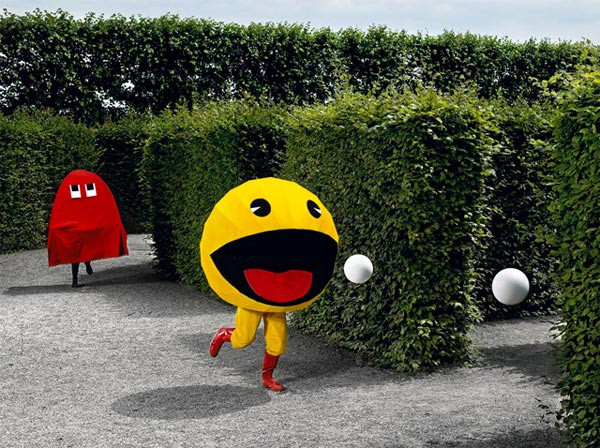
When it comes to video games, the discourse almost always moves without smooth turns to the sidelines of psychologism, and then finally fixates on the ethical aspect of the impact of games on the players. This shift is by no means accidental - this is the most advantageous position for those who intend to criticize games in advance, incl. for what is not in them. Questions along the lines of “ Do computer games make people socially dangerous or socially unsuccessful? “is actually not a question, but a statement. To pose the question this way means to recognize games as a form of threat that needs to be controlled and dosed. And examples that confirm the “worst expectations”, in such a perspective, instantly become “evidence”. It’s hard to argue with such an exaggerated position, because For a discussion, you must first stand on the level of your opponent (which in this case is equivalent to discarding intellect, logic, and even ethics, since the latter presupposes that people have freedom of choice).
Imagine a public discussion on the topic “ Can love for a mother make us criminals?” " You will be surprised, but in the biographies of famous criminals you will find so much evidence that excesses on the topic of cyber gambling simply fade away. Does this mean that we have actually discovered some kind of dependence? Should we limit our love for mothers, fight it (or the part that could potentially make us criminals)? Of course it sounds crazy. But the vicious logic of fears “what if it has a bad effect?” easily and naturally transfers to everything related to development, incl. books, children's toys, music, etc.
In general, the most frequent invective against computer games resembles contradictory accusations brewing in various forms of chauvinism and xenophobia. Likewise, games, on the one hand, make us aggressive, zombified-stupid, prone to forceful decisions. On the other hand, on the contrary, games are for weaklings, losers, and escapists. The same applies to assessing the affection of a gamer or gamer - this is both his fault, a moral sin, and at the same time, a misfortune, a deviation that has little dependence on his will.
Briefly, I identified three motifs intertwined in the speech of “game critics”.
The first is the banal observation that games have a lot of aggression, violence, military and “survivalist” themes. However, in order to move from a statement of fact to conclusions about the impact, at least some justification must be offered. This is exactly the bad thing. So some simply state/imply that any example teaches repetition. Such logic can only be ridiculed with an endless number of counterexamples; there is nothing to refute here. Others, in search of justification, fall into conspiracy theories, according to which video games are specifically designed to turn children/teenagers into fighting machines for a future war. Adults seriously argue that knowing about weapons in games and dehumanizing the enemy (in video games, opponents are often scoundrels, zombies, monsters) is part of a larger plan. It’s very strange to hear something like this from people who still lived in Soviet times. It was precisely the industrial model of society (“society is a conveyor belt”) that was much more focused on creating mass armies and therefore prepared for war from a young age. War games in the yard and toys (soldiers, pistols, etc.), military training, Kalashnikov assault rifle and shooting in high school, compulsory military service - all this apparently serves the cause of humanism, not like dehumanizing shooting at virtual monsters. In addition, it is interesting to understand what psychologists were trying to achieve when they discovered an increase in the level of aggression in users of any games (not only shooters, but even Tetris). On the one hand, any activity that involves competition and the possibility of losing increases aggression. On the other hand, are they aware that, together with casual games on smartphones and on social networks, the percentage of gamers among the population of developed countries is noticeably higher than 50%?
The second motive emphasizes the theme of the artificial world. Of course, fantasies on the theme that everything is easy in games and therefore distracts from reality (where, of course, there is only creativity and work) are spread by those who know about games only by hearsay. There is a more advanced version of the argument that video games take away time that should be spent on productive activities or development.
The logic of reasoning here is artificially borrowed from the discourse on drugs: they say, a person who acts as the savior of humanity in games begins to perceive non-virtual, simple joys as a dull pastime. And then a striking conclusion - gamers lose the ability to adapt to the environment; they do not need either creativity or family. This evil, terrible disease is nearby and extremely dangerous. The funny thing is that the traditional view of drug addiction is being reconsidered these days, while for gamers everything is just beginning.
In fact, there are three assumptions here, which in themselves are a dead end.
First, the idea that adaptation is a great good. Of course, a significant part of psychologists shares it, but in fact its value is questionable, if only because it significantly diminishes the role of the subject (his desires, will, his own guidelines and principles).
Secondly, the view according to which motivation is completely determined by action. Reasoning along the lines of “take a person who spends a lot of time playing games and look for a problem in the game” is like looking for lost keys under a street lamp. And you try to explain what exactly is happening to a person. Why isn't he looking for company? Why does he want to kill time or relieve melancholy? What is his benefit from choosing this behavior? Etc. Of course, coming up with a single scheme that explains everyone is much easier and more productive.
Third, the premise that “playing too much games leads to maladjustment” is just an unjustified generalization. Video games are often a reason for communication (a common interest) or even communication itself (there are many games that encourage interaction with others, making friends, learning diplomacy, etc.). So among those playing there are those who run away from communication, and those who find it in a more acceptable form. Games quite often encourage both cooperation and competition. What kind of loss of skills are we talking about here? About the loss of communication skills with a cashier or an auntie from housing and communal services? Well, let's add shyness to the ICD-10 classifier. There are dozens of people with communication problems, but they are shaped that way by their environment and personal choices. Games are something that comes out of nowhere - and sometimes restores communication, sometimes not. Games are only as influential as your positioning.
The third, most straightforward move is the accusation that games provoke excesses. In a sense, this is a combined argument, because... brings together the assumption about the suggestibility of gamers with the thesis about the loss of reality. This argument is quite popular, and the reasons for this are trivial: the combination “played on the computer - went crazy - did something abnormal” is favored by irresponsible media. Many journalists have never heard of the logical fallacy of post hoc ergo propter hoc , and if they have heard of it, they have long forgotten it in the course of the daily routine (finding and sucking out news leads).
In this sense, most people have extremely short memories. Only in the last 50 years has it been possible to see, time after time, something new is perceived with hostility by the masses and THEREFORE becomes a favorite object of defamation in the media. Look carefully at the news headlines about video games: someone was rude to their mother or stole money, someone behaved inappropriately or resisted the police, someone even killed someone - and all this for the sake of video games. Now replace video games with the Beatles, rock 'n' roll, heavy metal or gangsta rap and you've got the tabloid headlines of the past half century. Meanwhile, even at the beginning of the twentieth century, spending a lot of effort and time on sports in the eyes of the majority was eccentricity and stupidity, permissible either to aristocrats or students. However, in our time, people nod approvingly when they see how, for the sake of Olympic fantasies, parents force their children into sports sections. Among the crazes of modern teenagers, online communication and gadgets have long been generally accepted, only computer games are unlucky - because they have the weakest lobby.
Behind hasty conclusions about the influence of games, the question of what really causes excesses (and they do happen) is forgotten and discarded. Even if games are involved in this, it is only as an additional stress factor, and in addition to them, for example, a combination of unsolved psychosis and circumstances that contribute to the persistence of stress are needed. Understanding of how games work, incl. educational is a way to make games not only more interesting and better quality, but also safer. Moreover, without censorship or ethical codes imposed from above. But prohibitors prohibit not because they want to do good, but because they enjoy the process itself. That is why the self-evident distinction between a gamer and a gamer does not take root in the public consciousness. The gamer loves games, and the gamer depends on them. And the boundary between them is not at all time, money spent or the opinions of others. The difference is that the gamer understands that games are not everything. There is always something else you want. There are many options for this love of games. But how many game fanatics do you know who confirm in word and deed that the game gives everything they need? From experience communicating with practicing psychoanalysts and clinical psychologists, I can judge that these are rare cases. And behind each such case there is a very difficult situation in the family and in life. To blame everything on games means to justify any bullshit that parents, schools, peers, the media, and even the state do to children. I don't agree with this. Ask yourself the same thing.
Ultimately, getting rid of games that are considered incorrect is not a tricky matter. What then? Get rid of those who play or have played them? Send them to rehabilitation courses? Give deadlines to the creators? Teenagers always break the rules (be it sex, alcohol, drugs or other prohibitions) - in modern societies there is no other way of separation without initiation. I am for teenagers to become adults when they get into trouble. The prohibitionists apparently want to create endlessly lasting greenhouse conditions. What's the point?
______________________________________________________________
As can be understood from the above, a significant proportion of stereotypes and dubious accusations are directly contained or supported at the level of psychological theories. At the same time, much more interesting questions - for example, how the motivation, involvement and preferences of gamers are organized - are being developed by everyone except psychologists.
The most obvious reason is the assessment of gaming activities as deviant, infantile or even psychotic. The problem here is very narrowly defined and sometimes artificial ideas about the norm. And in fact, it doesn’t matter what a person plays, if he plays a lot, then this is suspicious, this is not the norm. This view, frankly, is reminiscent of narrow-minded and eternally dissatisfied old women who see lazy people and hooligans everywhere. The lack of theoretical developments in this case is easily replaced by analogies: games are uncritically compared with addictive behavior, paranoid delusions, alexithymia (difficulty in distinguishing and expressing emotions), social maladaptation, and the most “gifted” also like to talk about the formation of aggression, the destruction of intelligence and moral principles and the violation of the sense of reality. Apparently there is not enough experience or theoretical strength to create an original concept.
I think many people overestimate the element of infantility in games, and are completely wrong about their pathology. In its simplest form, the experience of a psychotic can be described as an experience that has no boundary between reality and what is desired, and therefore psychotic activity does not require the specially constructed space of a computer game. We need to be more precise in assessing a gamer's experience. Ultimately, reality and fantasy do not have a clear boundary, and each creates a very arbitrary distinction for himself, which can be considered an individual form of neurosis. In my opinion, in the game we come into contact with elements of delirium and perversion, but each time these are already censored elements. There is a big difference between indulging in kinks and fantasizing about them. Moreover, for a normal person, these are unconscious fantasies about the forbidden, and not some cunning plans.
Therefore, computer games are the same normal neurotic activity as most of what we do. The fact that some objects exist virtually cannot in any way devalue the sincerity and strength of emotions felt towards them. And in some cases, computer games are in no way inferior to cinema or literature in their ability to create living characters. However, many game creators do not risk too clearly delineating the character of the main character (the taciturn heroes of first-person shooters are especially distinguished), apparently fearing that this will interfere with the user’s identification with him.
By the way, it is quite typical that the hype around games is primarily focused on shooters - the type of games that, in my opinion, has the least impact on the user. Play has the power to restructure experience because a gaming experience is, to the brain, an experience like any other. In this sense, the most “scary” games are intellectual ones. For example, chess, which is a model of war that forces you to make purely rational decisions. What is automatic and weakly conscious shooting at cartoon characters (“if you don’t take them, then they will take you”) compared to the sober and cold-blooded sacrifice of a pawn?
Therefore, experimental studies by neurophysiologists miss the mark. They may show increased activity in areas (seemingly) associated with aggression, but this says nothing about the form of aggression. I, who now criticize psychologists, also show aggression, but in a socially acceptable (and even encouraged) form. IMHO, games can actually provoke the release of repressed emotions in some cases, but they cannot create enough displeasure or fear to be enough for anything more than verbal aggression. But if there are more serious problems in life, then they need to be solved. Incl. with a good psychotherapist.
You don’t need to have a high IQ or a special diploma to see that games are a means of experiencing - they make it possible to either feel what we are missing, or not to feel what is already boring in life. Feelings and emotions gained in games can both heal and cripple. In other words, the gamer has his own way of psycho-self-regulation, which, however, is not flawless. The collapse of such regulation may well end in a psychotic state or affect, but it depends little on the game itself - rather on personal problems and the nature of the traumatic factors. It is more reasonable to assume that the psychotic constitution of this type of breakaway arose much earlier. Otherwise, we will have to build a paranoid picture of the world in which madness can overtake anyone, thanks to a random insignificant factor from the outside (in general, no thanks). There are people who, being torn out of meditation, use foul language, shout and assault, but for some reason no one stops considering meditation as a way of self-regulation and does not plan to ban it.
Therefore, the only chance for a meaningful conversation about video games can only begin with the acceptance of a simple assumption. The assumption is that games change a person's experience, but not his consciousness or psyche. The game expands the boundaries of experience (mainly associated with imaginary objects), but cannot directly change the neurophysiology and psychology of the individual. Rather, on the contrary, this or that mental predisposition determines what kind of experience we get in the game and how it turns out - relaxation or accumulation of aggression, escapism or communication, etc. Однако и в этом случае нельзя снимать со счетов выбор, который делает сам человек. Ни выбор, ни опыт, ни личные склонности как-то этот опыт интерпретировать нельзя запретить или отменить. Именно поэтому игры имеют начало и конец, но сама игра никогда не уходит.
Иван Кудряшов Эссе Философия Психоанализ Поп-культура Человек Будущее Общество Видеоигры Компьютерные игры