Translated material
The "irreversible" theorem
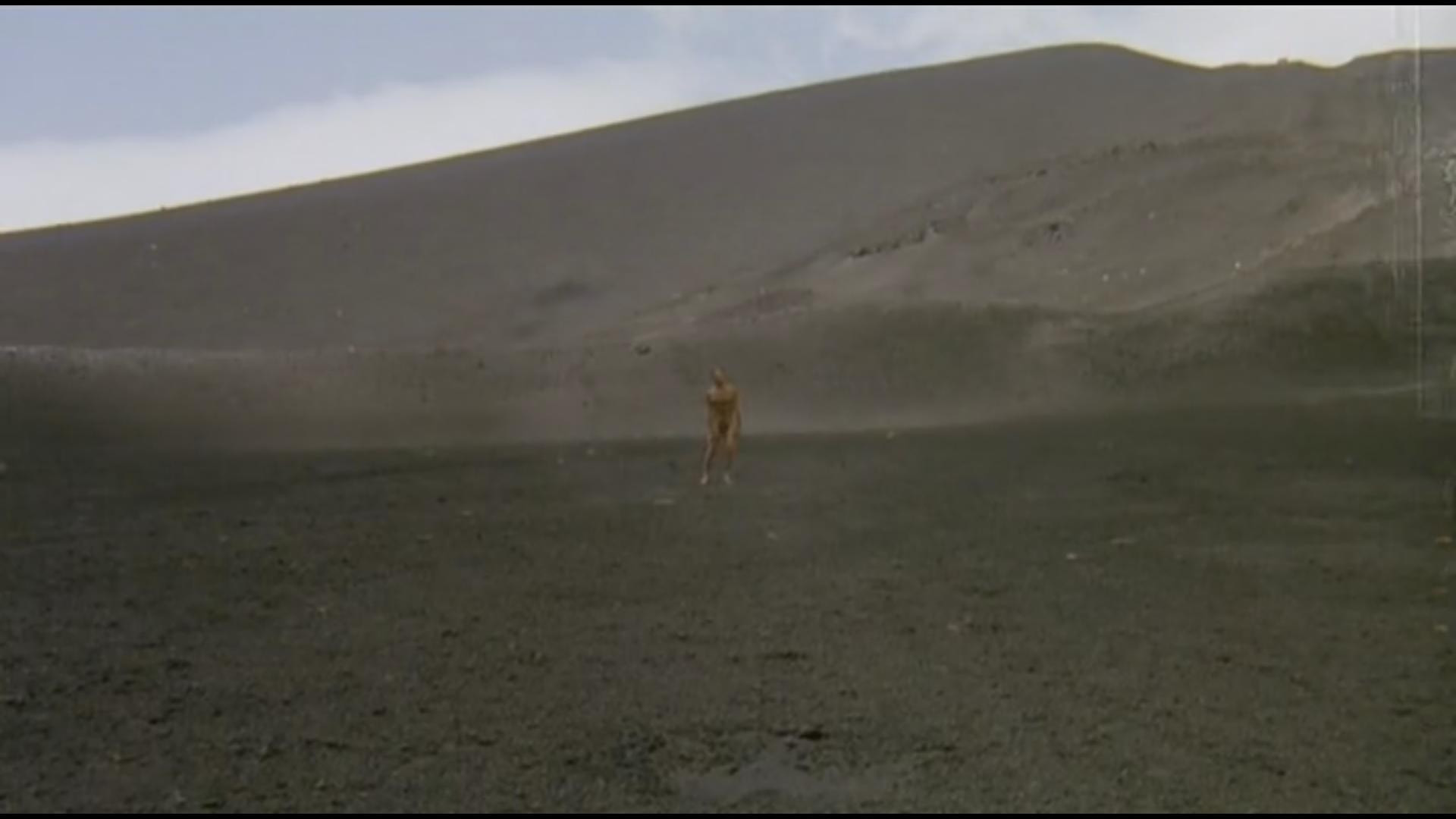
Pasolini's Theorem approaches abstract, geometric cinema similar to the early experiments of the avant-garde artists of the first quarter of the 20th century. However, apart from the obvious difference in using rather than literal geometric shapes of human bodies and psyches, the film is also distinguished by its orientation. Orientation is against the viewer. But “against” not in the sense of the political establishment of “friend-enemy” relations, but in the sense of the very confrontation between the cinematic desiring reality and the reality of the witness (spectator) as a being in search of meaning. Avant-garde artists (certainly not all) still sought to immerse the viewer in the illusion of unity. Experiences of encountering “Theorem,” although not entirely, but still often, remain experiences of turning away from the screen. Complete cessation of viewing, viewing intermittently, sleep. These effects arise when you try to view this film through an unusual lens - the lens of “comprehensibility”, that is, an attempt to think in terms of chronological causes and consequences. Or, in other words, think “reversibly.” It is as if the original text in the broadest sense of the word, and not just Pasolini's novel from which the film emerged, can be returned back to the text, to a clear formula.
This problem, of course, concerns not only the film “Theorem”, but also all films that rely on the “irreversible”. The logic of viewing needs to be perverted. At a minimum, to the rejection of psychological interpretation that grows from reason. Here it seems appropriate to give an example that Mikhail Yampolsky talks about in his lectures on the image. The example concerns the "Celtic pattern", which is organized in such a way that when looking at it, its topology, the topology of the plexuses of its knots, becomes unclear to the beholder. A glance is not able to unravel it. The Celts created these patterns in order to catch evil spirits in them, so that if they got entangled, they would not be able to get out of it.
What kind of evil spirits can we talk about when we are so distrustful of mysticism? What comes to mind is Deleuze's perversion of a saying attributed to Goya: "The sleep of reason gives birth to monsters." Deleuze writes differently: monsters are created by an overly vigilant mind. Reason, passion for clarity - this is our evil spirit.
A film organized like a Celtic pattern, ensuring “irretrievability,” serves as a trap for the vigilant mind and what follows is either that the spirit gets caught in it and the viewer, losing the desire to understand, is left with desires that already lie outside the boundaries of psychology, desires expressed by the “bare” structure, or the trap is poorly constructed and is not able to completely capture the spirit, which results in a complete turning away and cessation of viewing. Turning away can also be a fear of meeting those non-psychological desires that are revealed in the movement of lines, spots, and montage gluings.
Pasolini’s “theorem” is close to this topology, or at least it seems to be a theorem of this topology, although its straightness is more reminiscent not of a Celtic pattern with its twists and tangles, but rather of a labyrinth with right angles. But the labyrinth in ancient cultures also served a similar purpose - those who fall into it should not be able to return.
Remaining within the framework of narrative cinema, Pasolini retains some features of psychologism, but they seem to be what can be called bait - eroticism, art, politics, religion. But it can be assumed that the refusal to clarify these points is the key that opens the door to cinematic desire itself. The desire for gluing, cutting, light, color, sepia, movement.
The witness, whose evil spirit has been extracted by Pasolini, remains face to face only with “real” desires, calling into question the question of private property and rational meaning, without returning anything and without guaranteeing identity.
Answering the question of what kind of property is called into question by the “Theorem”, I would like to answer - the property of opinion. The film creates a certain appendix for possible interpretations, but when it is full, the razor of cinematic desire cuts it off, leaving the viewer without the opportunity to speak, but with the opportunity to desire. To desire “other.” True, it is worth saying that the appendixes of many spectators seem bottomless. Why, perhaps, the audience does not notice that they missed the opportunity to make a cut, and all that remains for them is a gap, with all that it entails...
The very neurotic need to speak out, and especially so that you are understood, has a pronounced “regressive” character, which can be observed in the example of a series of films, in our opinion, related to “The Theorem”. All of them, one way or another, relate to the issue of property.
However, their very existence and easily discernible dependence on the “Theorem,” although over time the evidence of this dependence becomes more blurred, indicates that for them the theorem turned out to be unproven.
The directors feel the need to create their own statement, which confirms that they did not extract the only clear “meaning” from the “Theorem”. But they actively fell for the narrative bait.
In this text there is no desire for an accurate analysis of all films arising from “Theorem” chronologically, but only highlighting a certain series that catches the eye. However, we do not consider this arbitrariness, but rather the highlighting of one, speaking constellation.
So, the next film turns out to be “Visitor Q” by Japanese director Takashi Mikke. The preservation of non-identity remains in it. The preservation of revolutionary cinematic desire, which carries within it splitting. This desire can be described as what is the beginning of cinema as such.
And the first thing that catches your eye is that talking about the beginning is never equal to what is meant by the beginning itself. The beginning as a kind of zero point of something always eludes, it is given only in those traces that we find in the present, that is, we can say that the beginning as something from which what we are dealing with in the present began, itself begins in the present. And moreover, if the present is the beginning of all beginnings, then the nature of the past itself becomes obvious. It happens after the present. And the marker of what this past will become will be what can be called desire. That is, it all starts with the words: “I want it this way.” But everything is not so simple, at least due to the fact that we do not know at all who this I is, who wants it this way, because when a stone falls, who is the one who wants it to fall? Stone. But is it customary for us to talk about the “I” of a stone? What about us? To those who are usually called people? Their movements, falls and thoughts are subject to desire, but again experience, namely disappointing experience, often evokes in the mind the assumption that you did not get what you wanted. Perhaps this is the basis of the logic where the world around us is separated from ourselves. This is the logic of the disappointed. In my opinion, the situation is such that a person involved in the imperative “I want it this way” is much less different from a stone than he would like. The me that wants is not the me that “acts.”
The logic of the disillusioned, when speaking about the beginning of cinema, often looks for this beginning in a material trace, for example, in a “magic lantern”, or in a photograph, or in an attempt to point to the very first film. And here I would like to point out the meaning that lies in the very word “disappointed”. The disillusioned is the one who has lost the power of charm, which in a sense means the end of cinema. After all, once we are no longer under the spell of the film, we either turn away from it or turn into a researcher, and the researcher is someone who is no longer a spectator. The spectator is the condition for the existence of cinema, even if it opposes it.
By looking for the beginning of cinema in the material trace, something important is overlooked, namely, that cinema is a state of consciousness. What condition is this? It is a state of difference or splitting. This is exactly what I said about the stone. In cinema there is one who wants (wishing) - the viewer and one who acts (desire) - the film. Although sometimes they change places.
Another fundamental property of cinema is that the past acts in it, however, the past is actualized in the present and is never equal to the past itself. This is a different past - one that begins in the present.
This state of consciousness can be described in the language of Jacques Lacan when he talks about the mirror stage. The child becomes a subject, and the subject is precisely the one who is split when faced with his reflection. When he sees himself, his gaze, as the gaze of another, directed at him, then he gets ready. Collected as a split subject. Like the one who looks and the one who is looked at. It is important to note that, in addition to the look in the mirror, he encounters the past, that is, the body. The body is the past, since in a disillusioned logic it cannot be so easily gotten rid of. And this is where, in my opinion, cinema begins.
It is worth mentioning why any fine art does not fall under this system of cleavage. For example, painting or photography. The fact is that when we encounter a static picture, we remain in a homogeneous world. In a world where there is only one time. When faced with cinema, that is, with movement, we are faced with two times existing and unfolding simultaneously. And here I want to say that although it is convenient and seemingly logical to say that a painting or photograph also gives us the past in the present, there is still a difference. The past of photography is the past as an object. In the case of cinema, the past is time. That is, we find ourselves in two actual current times. This situation is a situation of schism, perhaps reflecting the very structure of our existence.
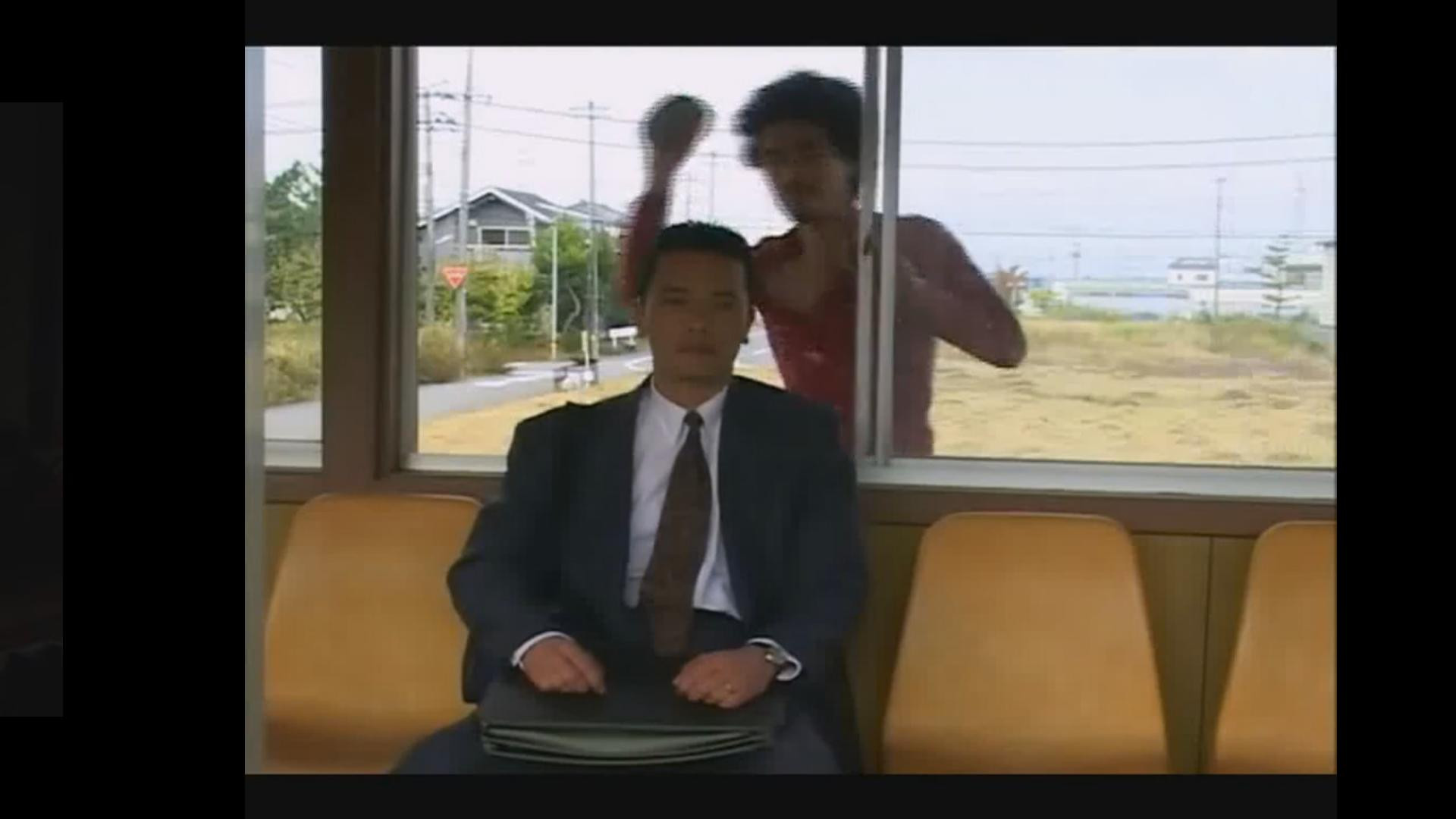
But let's return to The Visitor. By our time, the machine of identification has long integrated cinema into itself, and now, in order to bring splitting itself to the fore as content, more radical moves are required than before. If in Pasolini’s time it was enough to simply tie a knot “correctly”, then by the beginning of the 21st century we increasingly have to work with the material itself - the tape - the rope. Micke handles it. In The Visitor we are faced with a spontaneous jump from one convention to another, from one type of image to another, right up to the need for sound recording equipment to appear in the frame. But being carried away by these operations, Micke, although not completely, misses the primary importance of the “pattern”; in this sense, much in the film remains without the possibility of a clear understanding. He puts too much emphasis on the expressiveness of what is happening. Cinematic desire drowns under the waves of crude and obvious desires, so strongly characteristic of Japanese cinema, which still seems to have remained on the first approach to understanding Freud's thought. All possible and impossible actions that Pasolini leaves behind the scenes, not allowing them to engage our perception, Micke throws to the very foreground, which in a sense deprives the effectiveness of working with pattern and image. And in this oppressive foreground, the main thing is Micke's property. His own opinion, leading away from the proof of the theorem.
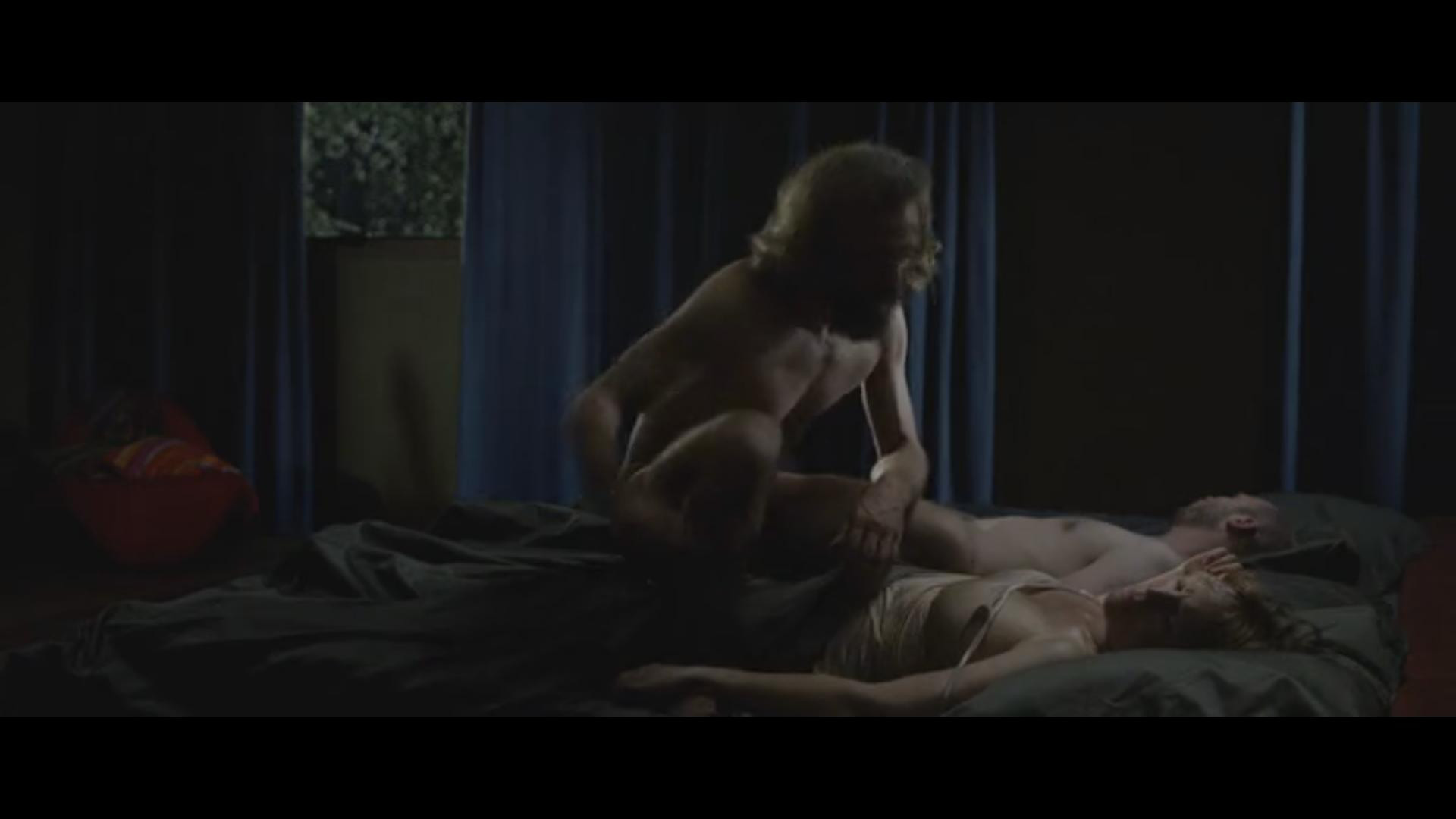
Next in our series is Alex van Warmerdam's film Borgman. Here, at the level of narrative, while remaining faithful to the idea of the “Theorem”, perhaps more than many, loyalty to the idea of “pattern” almost comes to naught, and it is precisely this that still seems to be the only significant one. The film is already becoming a monolith. It is homogeneous, even, consistent. He works more towards full involvement in what is happening, and his presence in our text is due precisely to his future, namely the last film in the series - “Parasite” directed by Bong Joon-ho. “Parasites” are precisely parasitizing on the revolutionary idea of undermining property, but their resolution turns out to be a complete surrender of cards to the game started by “Theorem.” And if in “Borgman” a certain community destroys the way of life of the “bourgeois” family for the sake of the most elemental community, for the sake of dogs, forests, “freedom” in the end, then “Parasite,” being the same monolith that has no breaks, also undermines property only in order to change the owner.
The whole situation described above speaks not only of a certain displacement of cinematic desire from modern cinema, but also confirms the idea that when dealing with cinema, we are dealing with two times operating simultaneously. Thus, I would like to believe that the most distant past is “Parasite,” and the future that we can still approach is “Theorem.”