
Translated material
Collection in the museum
We are publishing a transcript of Lera Kononchuk’s speech at the “Series of Surrounding Reports” conference * at Winzavod, dedicated to issues of visible and invisible labor in contemporary art, its institutions and communities.
In his report, the cultural scientist and critic analyzes the affective trend in museums and talks about how art institutions nurture “eternal, inevitable friendship” through the generation of safe emotions, as-if-meetings and uninterrupted friendliness, bypassing the potentially disturbing experience of a meeting of dissenters.
Lera Kononchuk is a cultural scientist, art critic, translator, curator of the Department of Practical Affectology. Lives in Moscow.
Material preparation: Nastya Dmitrievskaya
Why gather at an art institution? Museum professionals would be quick to respond: museums and major galleries today function as welcoming meeting places for diverse communities and populations, “opening up opportunities for public dialogue”[1]; By offering alternative modes of communication that are based on unusual forms of feeling (whether spatial, kinesthetic, tactile, auditory or synesthetic), they set themselves the task of forming a new “affective” collectivity and through this becoming places of exposure of forgotten political and social practices. Since direct communication and co-presence give the viewer a sense of authenticity, the non-alienation of the lived experience, personal encounters are believed to create an ecological niche within monetized “creativity”, where artists and spectators can work in solidarity as political, social and economic agents[2].
Projects organized by major Moscow institutions in recent years well illustrate the growing popularity of intra-museum communication and affective co-presence. At the VAC Foundation's "Dress Rehearsal" exhibition at the Moscow Museum of Modern Art, which lasted six months, from April to September 2018, events took place almost every day. Visitors were offered a variety of collective sensory-intellectual stimuli: noise concerts, audio-visual performances, a reading group about collecting, film screenings followed by discussion, workshops on screenwriting and subject animation, a director’s laboratory, poetry readings, and so on. Instead of excursions, visitors were treated to walks with a mediator - a person who had completed a special course, which was aimed at developing the skills of dialogic rather than monologue speech. In their “tours,” mediators did not start from the written text, but were guided by the sphere of interests, competencies and characteristics of visitors - their task was seen as making the viewer’s stay at the exhibition as meaningful and rich as possible. While we are glad that echoes of the educational and performative turns have reached us, the angry warrior of criticism Hito Steyerl has long branded the aura of presence as a capitalist ploy. “Authentic communication” - a master class or a live lecture instead of a text, a meeting with the artist, not with the works, mediation instead of a tour - is easily monetized, attracting visitors, reducing the museum’s costs (“live” events are much cheaper than organizing an exhibition) and legitimizing the museum’s activities through conditional “asses on chairs”[3]. According to Steyerl, the museum uses affective (often little or simply unpaid) labor in order to increase attendance rates and increase visitor loyalty.
“Emotions as commodities” was brilliantly analyzed by Israeli sociologist and theorist Eva Illuz. She argues that the development of modern capitalism coincided with the development of an emotional culture, within which “emotional and economic discourses and practices complement each other”[4]. Following Illouz, the cultural consumption of events is primarily the consumption of emmodities, or emotional commodities, the main commodity of today's leisure industry. The public is in search of pleasant emotions, which they find in the institution: the latter entertains, provides new information, and develops new skills. All this leads to three feelings fundamentally necessary for “selfhood”: 1) emotional authenticity and “liberation” associated with expanded experience; 2) emotional self-knowledge, leading to self-control and self-improvement and, as a result, mental health; 3) friendship, collegiality, feeling of closeness. I proceed from the fact that in modern art institutions, as well as in the so-called “leisure” sphere in general, today it is the first two groups of feelings that are pedaled, which are most closely associated with individualistic consumption and produce a “self-controlling”, socially “improved” self, while the third, aimed at unification, comes in the form of a palliative. Sometimes people come to performative events for “authentic communication,” namely for the opportunity to step over the barriers constructed by society. In rare but extremely interesting cases, these barriers are actually overcome, as happened with Tanya Bruguera’s “Museum of Useful Art” at the Van Abbemuseum. More often, it happens that event-based practices work in the direction of “self-knowledge”, “expansion of feeling” and are focused primarily on the uniqueness of individual experience and the therapeutic nurturing of the self.
Let me give you a paradigmatic example of this kind of event. In 2018, at the Garage Museum, the exhibition “Limitless Hearing” organized an individual and group mediation, “A Guide to (Mis)understanding,” developed by artists Lendl Barcelos, Valentina Desideri and Miriam Lefkowitz. “Unusual means of communication” were used - “tuning forks, pieces of textiles, tarot cards, dried herbs and even one’s own body”[5], sound massage based on vibration and non-auditory techniques, “deep listening” and other flirtations with the sensory. Under the guidance of performers, participants embarked on an individual sound or tactile journey. Of course, the practices themselves, associated with the peculiarities of perception and focusing attention on the marginalized, can be an interesting, enriching experience; however, when “contact” and “participation” in art spaces are monopolized by “feeling practices”, it is suspect. In the performance “Sense of Sound” by the art association “Museum of Feeling Practices”, organized as part of the exhibition “Becoming Unconscious”, visitors explored the sonic space of the HSE Art Gallery with masks on their eyes. The spectators moved first in a chain, timidly holding each other by the shoulders, and later individually, immersed in the “unconscious”[6], froze in place or still stretched out their arms in front of them, so as not to inadvertently knock someone over from the depths of their unconscious[7].
These cautious movements, it seems to me, do not so much express the helplessness of the sighted person, deprived of his main navigational tool, as illustrate the cult of self-obsession that is fostered by performative events. The image of a blindfolded person, carefully listening to the unusual resonances of ordinary objects, while marking time or moving along the wall, bumps into another and politely touches him (which is seen as a mandatory procedure in the free from embarrassment, liberated atmosphere of an art exhibition) - embodies the request for sociability and emotional literacy of precarious subjectivity, which is already squeezed in the vice of “eternal, inevitable friendship,” that is, forced goodwill without the possibility of sincere interaction[8]. Without a proper critical approach, the art institution meets the demands of the market to produce a balanced, responsive, emotionally intelligent subject who conveys cool affability rather than real collegiality and camaraderie.
Performance researcher Boyana Kunst draws parallels between participatory practices and precarity in artistic institutions [9]: in her opinion, socialized isolation is the internal affective dynamics of many participatory artistic projects: we are “social” to the extent that we constitute ourselves not simply as a social subject, but as an emotional and communicative self, freed from unpleasant antagonisms and dilemmas of political positioning. Modern art institutions produce, in Kunst’s words, a “comfortable” type of sociality: one in which existence with another is possible only through the protection of one’s self. Participatory projects provide a visible aesthetic form of community whose random participants are independent of each other, a form that allows people to be together without any consequences for themselves. In a situation in which life becomes precarious - fragile in the political and economic sense, and a person is left to his own devices and is forced to take care of himself - ontological dependence on others disappears, that is, the existential understanding of our dependence on social structures and regimes of sociality that are important for survival. Instead of opening a fragile life to another, to the public, performative projects sometimes rehearse the constant fencing of one’s own life from other fragile individual monads (with the help of the same fascinating sensory extensions - why do I need others if I’m happy with new auditory hallucinations). It is the art institution, in Kunst’s opinion, that promotes constant immunization from each other. When people flock to the museum as a space of “participation,” they are practicing “cruel optimism” [10]—a compromised condition of possibility, the persistent pursuit of a goal that is unlikely to be achieved.
Kunst concludes that the museum space must be liberated from commodified “comfortable” affects and instead become a place for potential anxiety, hope, aggression, clarity, inertia, solidarity and determination. She does not specify what kind of projects can become centers of potential anxiety and aggression, but only does not quite intelligibly and rightly criticizes Tate Modern for its desire to make exhibitions non-traumatic (in the literal sense of the word). But if we continue her line of thought, then such a format could be a meeting, understood politically - as a space of intense but contingent sociality, full of accidents, idealized and hated at the same time.
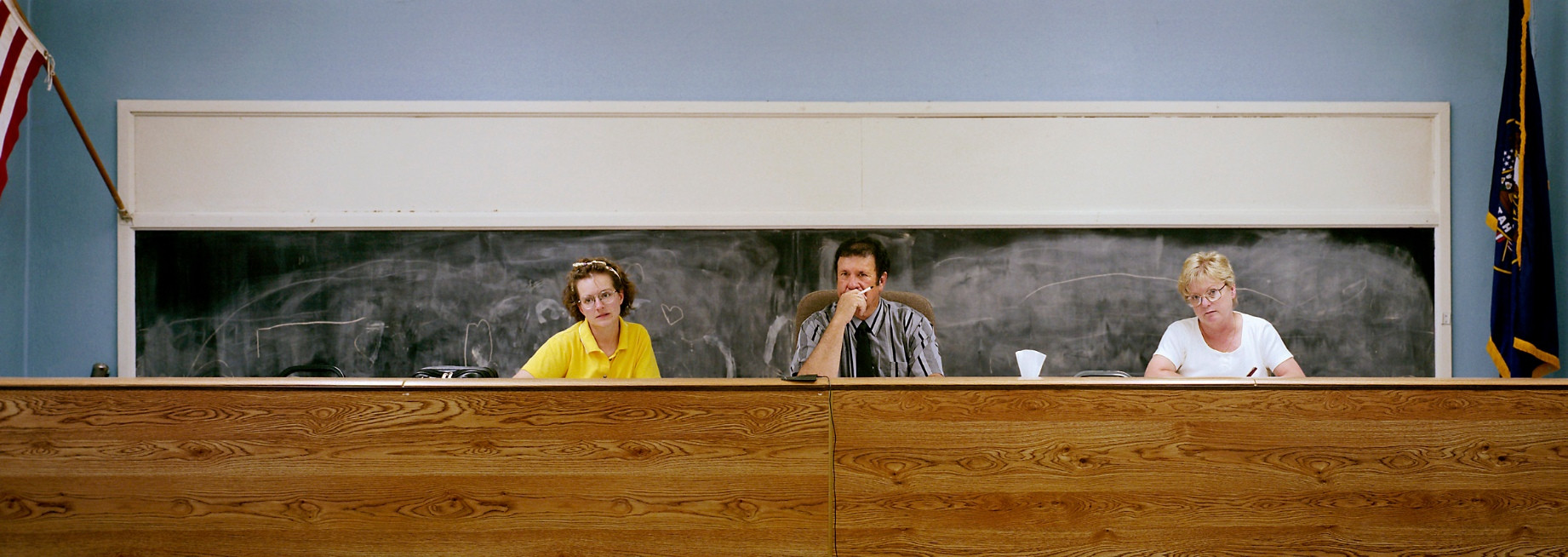
According to researcher of post-democratic organizations Simon Bailey, meeting is always a pain[11]. In any gathering, the initial euphoria often gives way to disappointment and apathy; meetings provoke a combination of incompatible thoughts and affects that are perceived as mentally unbearable. What can art and its institutions do to expand, and not normalize, already narrow comfort zones - that is, to be sites of non-conformity, agents of alternative affective production, focused not so much on “individual self-knowledge” and “emotional literacy” (these roads are important, but well-trodden), but more towards contingency, the unpredictability of coexistence, which should be seen as the norm, and not as an annoying drawback from which one can hide within the walls of galleries?
Perhaps it is possible for art institutions to rethink their role as sites and points of assembly production, in which they can emphasize both agreement and disagreement; generate debate, allowing for the development of a meaningful position in relation to the structural and infrastructural conditions of social life and communication. This would require not only remarkable tenacity, audacity and a willingness to consistently practice disobedience, but also secrecy (if understood etymologically, as the Latin con + spiro) - “breathing together” and conspiratorial interweaving with a heterogeneous, vulnerable, rebellious and unyielding social fabric.
Notes
[1] Website of the Garage Museum, see: https://garagemca.org/ru/about
[2] Bayley S. (2015) We Can't Go On Meeting Like This. Performance Research, 20:4, pp. 39-48.
[3] Steyerl H. (2017) Duty Free Art. Art in the Age of Planetary Civil War. London, New York: Verso.
[4] Illouz E. (2007) Cold Intimacies: The Making of Emotional Capitalism. Cambridge: Polity Press. The theorization of the connections between affect and capitalism is often associated with the Italian autonomist movement of the 1960s, especially with the concepts of the refusal of labor (Mario Tronti), immaterial labor (Maurizio Lazzarato) and affective labor (Michael Hardt, Antonio Negri), and many modern theories, including Illouz's research, draw strength from this tradition. In an information-based, knowledge-based economy, workers use not only their bodies, but also their intellectual and emotional abilities to create intangible products such as knowledge, information, communication, relationships, or emotional responses. In a broad sense, affective labor becomes a widespread (and required) accompaniment of any immaterial production. Tony Negri also writes that labor itself becomes affect, finds its value in affect, if affect is understood as the Spinozist “ability to influence.” Affect is reintegrated within the fold of capitalism itself, producing added value.
[5] From Anya Kravchenko’s essay “Such strange experiences.” Available at: http://twa.ru.anyakravchenko.com/3/
[6] From the description of the performance. Video available at: https://www.youtube.com/watch?v=S8moBTYLghI
[7] Note the vocabulary chosen by the creators when describing: “The visitor experience begins with a blindfolded walk through the gallery space. The conductors offer them various scores for the perception of sound space. Each visitor becomes a composer by changing the focus of attention and fixing certain fragments in memory. As a result, everyone develops their own internal symphony. Visitors go through this experience in a group, but each receives the experience of loneliness and self-immersion. The perception of each visitor is unique, and it is the main tool of this work.” (Full text of the description is available at: https://design.hse.ru/news/778)
So: “the experience of loneliness”, “immersion in oneself”, “the perception is unique”. In the short excerpt below, the phrase “each visitor” is used four times, “group” - once (however, it is immediately followed by the qualification “but everyone”).
[8] Alan Lew's term. See Liu A. (2004) The Laws of Cool: Knowledge Work and the Culture of Information. Chicago: Chicago University Press.
[9] Kunst B. (2016) The Institution between Precarization and Participation. Performance Research, 20:4, 6-13.
[10] Berlant L. (2011) Cruel Optimism. Durham and London: Duke University Press.
[11] Bayley S. (2015) We Can't Go On Meeting Like This.
* A series of comprehensive reports (June 21-28, 2019, CCA Winzavod) is dedicated to all (still) invisible characters, assistants and assistants, girl managers, mediators and mediators, editors and proofreaders, assistants and assistants, as well as all those who recognize themselves in a symmetrical position.
Labor is a common place. It is through it that (often) the trajectory of oppression runs, stealing time, speech, and visibility. In parallel with this, there are activities that are not recognized as labor, and those who engage in them, accordingly, are not recognized as workers. And this is outrageous.
Curator: Nastya Dmitrievskaya
art institutions emotions affect labor affective labor collections emotions as goods criticism