
Translated material
Homophobia can be treated
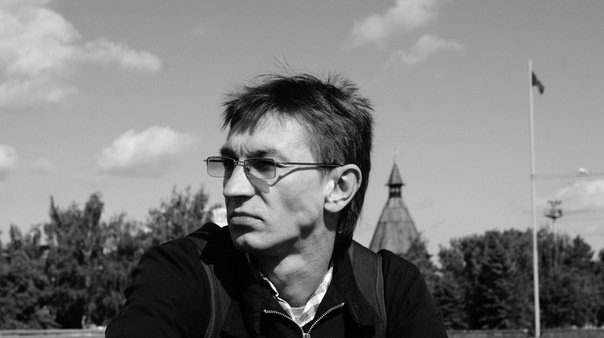
Gay men and their family members were the first to fight for the rights of HIV-positive people. In fact, they created the foundation of my life position
“For many years I did not consider homosexuals to be people. I saw them exclusively as criminals who violated the rules accepted in my world. I just didn’t realize that there were any “sexual orientations.” Moreover, I believed that such people should not even be touched. After all, in this way I can undermine my authority, and, as a result, my position.”
His name is Ilya. He is a representative of the HIV-positive community and an activist. He has experience interacting with the criminal world and using drugs.
Ilya lived a rather interesting life, in which there was a lot: the dashing nineties, the troubled noughties and the promising new century. He was a convicted criminal, a drug addict, a nationalist and a radical homophobe. Now he defends people's rights.
“I came to this in a rather difficult way. The fact is that when I was growing up and developing as a person, I was strongly influenced by social stereotypes. The criminal environment offered me the only development option - clear, unconditional adherence to criminal principles. In the world this is called “concepts”. And this suited me, since they very clearly regulated relations with society. Within the environment, we always knew who was who and who was worth what. At times it seemed that life in this format was freedom.
It is important to note that the criminal world divides people into certain castes, each of which has different levels of freedom, and homophobia and sexism in this world are considered the norm.
I’ll start with the attitude towards women: a woman is not a person, but only a means to satisfy men’s needs. Lover, maid, cook, but in no way equal to a man. This suited me for some time, because I learned to communicate with the opposite sex solely from the example of my older comrades, who treated girls exactly as I described. “Only a mother is worthy of love” - this concept clearly regulated our position towards women.
In relation to homosexuals, everything was even more serious. The fact is that in the criminal world there is a certain code, which, in addition to rights and incentives, has a sufficient number of sanctions and punishments. Most people believe that the death penalty is the ultimate punishment, but in the world in which I lived, everything is more complicated. Death is not the worst thing. That is why in the criminal environment, in prisons and camps, the practice of rape, the so-called “lowering,” is used. In fact, this is dooming a person to suffering and lack of rights. This is worse than death. It is important to understand that such punishment is applied if a person has committed an act that not only violates the rules accepted in crime, but also entailed the suffering of several people or the community as a whole. To put it simply, a person is deprived of human rights not because he used unconventional practices, but because of the mistake he made. And rape is just a ritual to transfer a person from one caste (suit) to another.
Guided by these principles, for many years I did not consider homosexuals to be people. I saw them exclusively as criminals who violated the rules accepted in my world. I just didn’t realize that there were any “sexual orientations.” Moreover, I believed that such people should not even be touched. After all, in this way I can undermine my authority, and, as a result, my position.
Now imagine how I, with all the baggage of such “concepts,” reacted to the fact that a gay man sat at my table at some regular work meeting?
This happened in 2003, when I was invited to a training for workers in harm reduction programs among drug users. I tore the tablecloth off the table, knocked a man off his chair, and demanded that the tablecloth and dishes be changed. At the same time, I sincerely did not understand why the judging glances were staring at me.
It was probably then that I first learned about the existence of such a term as “homophobia.”
For me, this word was not entirely clear, since “phobia” is fear. But I was not afraid of gays, and I still think that this term is not entirely correct. I simply did not consider this category of people to be people. And I didn’t think that they could have equal rights with me.
Over time, I realized that if I want to engage in human rights work, then I need to always be on the side of the minority. Regardless of which minority. Be it homosexuals, sex workers, migrants, drug users or HIV positive people.
At the same time, understanding alone was not enough. After all, showing pity and tolerance towards these people was simply unacceptable for people like me.
But gradually changes began to occur in me. What changed in me, and how exactly did it happen? What made me pull all (or almost all) prejudices out from under my skin?
First of all, I realized that I myself was a member of a small, rather closed community. I have been living with HIV for many years, and I am fighting for people like me to be considered equal. At some point I saw that I simply did not have the right to demand equal rights from society, while discriminating and stigmatizing others. Moreover, it was gays and members of their families who were the first to fight for the rights of HIV-positive people. In fact, they created the foundation of my life position. I met people, got acquainted, worked, and less and less often gritted my teeth when meeting representatives of the LGBT community. At the same time, I noticed that I was guided by double standards: I accepted lesbians as something normal, but at the same time I continued to clench my fists at the sight of gays. I don't know why, but I knew it wasn't right.
I have faced threats, accusations, and complaints addressed to me many times... Previously, this was due to my criminal path, then to the fact that I demand equal rights for HIV-positive people. I realized that people are not fair to people like me. But there are still many people with their own characteristics who have exactly the same right to life as I do. It was at such moments that I worked through my homophobia. But, as a rule, I was missing for a long time. And this was due to the fact that some representatives of the gay community did not react to me quite adequately.
I have been working in the field of human rights protection and HIV prevention for more than 12 years. And during this time he returned to the position of homophobe several times. As a rule, this happens according to the following scenario: I find myself in a company in which there are people with non-traditional (for me) orientation. Sooner or later their conversations become extremely frank. It is important to note that not all gays are public about their sexual practices. But there are also exceptions who begin to provoke people like me, specifically pestering me and making jokes of a sexual nature towards me. I understand that I must be tolerant. But alas, I’m not an angel, and I don’t always hold back at such moments.
I came to the conclusion that the behavior of individual representatives of this community is largely the reason for the widespread aggression towards LGBT people. At the same time, I understand that this does not justify me when I make homophobic or sexist jokes. No, I'm wrong in these moments. But I am who I am. I am ready to protect and help people, regardless of their characteristics. I don’t care who sleeps with their wives and in what positions, just as I don’t need to know how one gay man sleeps with another.
This is probably the only problem that I face to this day, and that haunts me. At the same time, today I can say that my homophobia is a thing of the past. And what I don’t like has nothing to do with her. There are idiots in every community, and it is simply criminal to label everyone simply based on the behavior of these units.
I will formulate the first and most important advice to homophobes as follows: “If you don’t like a person, just don’t communicate.” What I mean is that if for some reason you cannot understand or accept a person entirely, this does not mean that you have the right to limit his rights. Remember that someday you may remain in the minority. This can happen for various reasons: for religious reasons, for social reasons, for political reasons, or due to the characteristics of your physical condition. No one is immune from this. And how can you demand equality for yourself if you yourself have infringed on others?
Second piece of advice: “Everyone has skeletons in their closet and dirty laundry. If you start prying into someone else’s life, be prepared for someone to pry into yours.”
Third: “Living in peace with the whole world is easier and more productive. Don’t create hatred, there is already too much of it in the world.”
Author: Leila