
Translated material
Twin Peaks
In an electric dream in reality
Alexander Blok
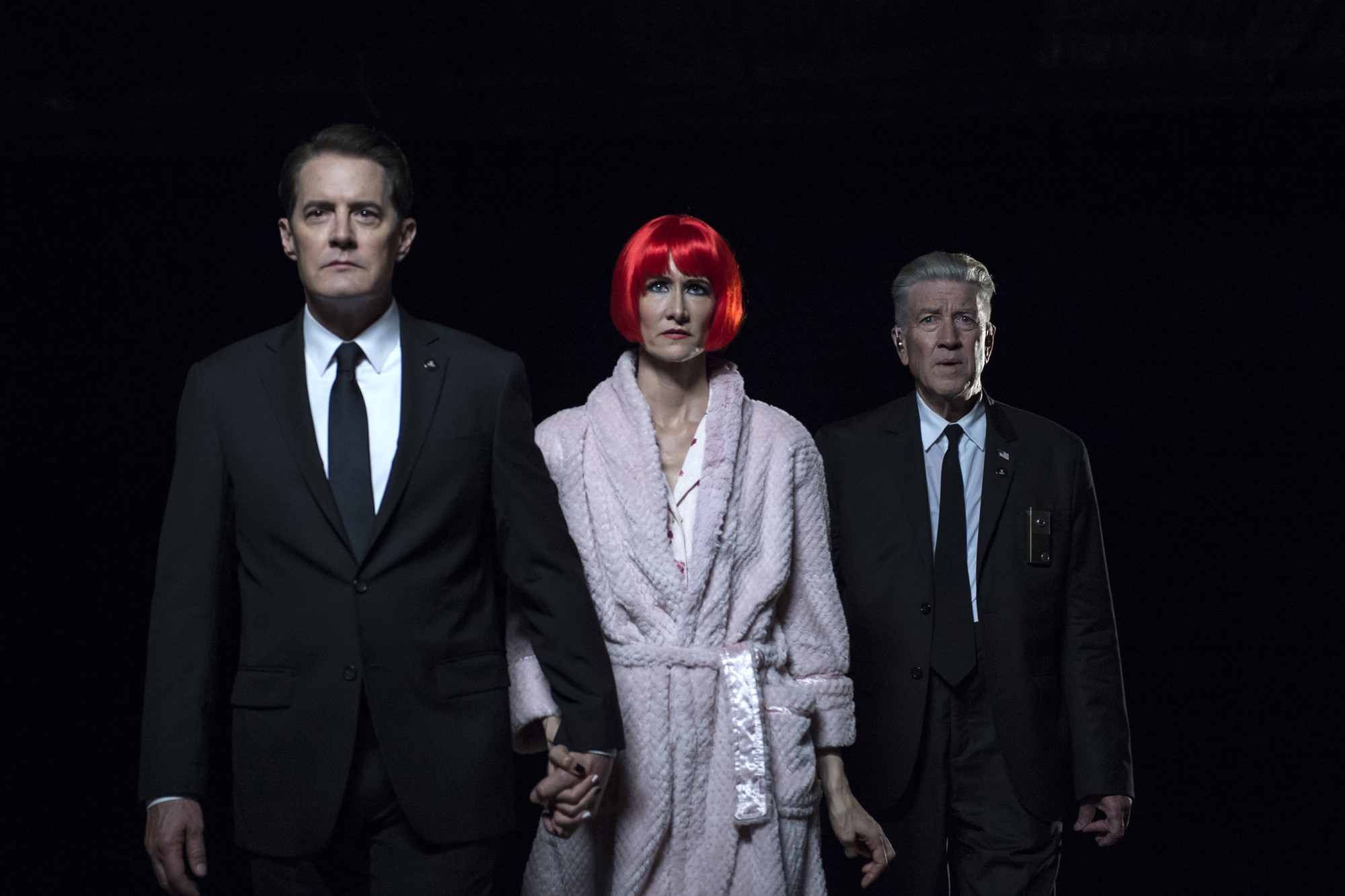
The new Twin Peaks is over. A paradoxical but accurate expression. And most likely there will be no continuation. David Lynch is not Woody Allen, who until recently baked two or three films a year. It’s scary to say, but during his entire more than forty-year film career, the creator of the immortal images of Agent Cooper and Laura Palmer made only ten full-length films, several experimental short films, clips (including advertising) and a TV series. However, all this is not important. If Lynch had remained the creator of only the image of not only the town of Twin Peaks, but only the Red Room, his name would have firmly entered the cultural history of the twentieth century.
It so happened that cinema, perhaps the main child of the twentieth century, turned out to be, in accordance with the legacy of Modernity (the author of this article shares the idea that Modernity did not end, and that what we horribly observed in the cultural mainstream of recent decades was only a natural episode of reaction), the most synthetic of the arts. Theatre, music, literature, painting - cinema has absorbed all this, playing with the gifts of all the Greek muses, like a child of Dionysus, in accordance with the behest of Nietzsche, this prophet of the twentieth century.
So, it is not too much to say that David Keith Lynch, a native of Missoula, American film director, musician, screenwriter, artist, photographer, is one of those who most clearly understands how this synthesis works. A brilliant - without any discounts - artist, original musician, creator of soundscapes, he, like no one else, knows how to weave, with the help of all available audiovisual threads, something that strikes the imagination, to create a picture that remains in our collective subconscious forever.
Who exactly is an artist? Creator (according to the philosopher Gilles Deleuze) of perceptions and affects. Let us allow ourselves a short quotation from the fundamental work “What is Philosophy?” Deleuze and Guattari:
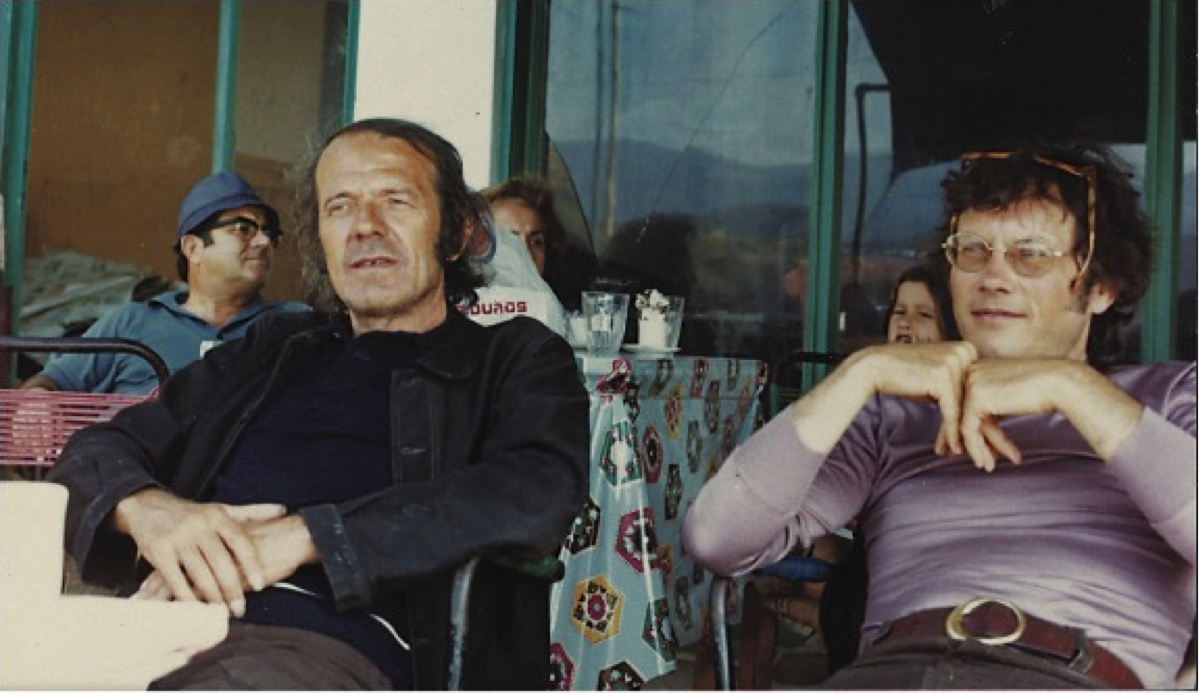
“The young man on the canvas will smile as long as the canvas itself is preserved. Blood is pulsating under the skin of this woman's face, the wind is shaking a branch, a group of people is preparing to set sail. In a novel or film, the young man will stop smiling, but will start again if you return to such and such a page or to such and such a frame. Art preserves, and this is the only thing in the world that is preserved. It preserves and is preserved in itself (quid juris?), although in fact it lives no longer than its material basis and means (quid facti?) - stone, canvas, chemical paint, etc. The girl maintains the same pose as five thousand years ago, and her gesture no longer depends on the one who made it. The same movement, breath of wind and light remain in the air as on such and such a day last year, and they no longer depend on who breathed this air that day. Art preserves - but not in the same way as industry, which, in order to make a thing more durable, adds a special substance to it. Here the thing from the very beginning became independent of its “model”, but it is also independent of other possible characters, who are the things themselves - artists, picturesque characters breathing this picturesque air. And it is just as independent of the present viewer or listener, who only retroactively experiences it for themselves, if they are able to do so. Well, what about the creator himself? It is also independent of the creator, due to the self-positing of the created, which is preserved in itself. What is preserved, a thing or a work of art, is a block of sensations, that is, a composite whole of perceptions and affects.
Percepts are no longer perceptions, they are independent of the state of those who experience them; affects are no longer feelings or experiences; they exceed the strength of those who go through them. Sensations, perceptions and affects are beings that are important in themselves, apart from any experience. They can be said to exist in the absence of man, because man, as he is depicted in stone, on canvas or in a chain of words, is himself a composite whole of perceptions and affects. A work of art is a being-sensation, and nothing more; it exists in itself.”
David Lynch is an unparalleled creator, ab ovo artist. His images, the heroes of his dreams burst into our reality (which, in fact, happened, in fact, in the third season of the series in question), live here, among us, with their own lives. And this is a great gift (the gift) quite in Nabokov’s sense. We are gifted with Twin Peaks from Lynch, but Lynch himself is a kind of gift to this world, an attempt by some higher powers (perhaps that same Giant with Major Briggs) to correct the state of affairs (the death of Laura, this sister of Laura Petrarch, but not only). And Lynch himself, of course, is well aware of this, although not without a healthy ironic detachment when speaking about it.
In general, David Lynch - both as an artist and as a person - is defiantly healthy and normal (like, by the way, any great artist, be it Pushkin, Nabokov or Fellini). There is not a trace of the notorious postmodernism, not a grain of schizophrenia in his crystalline works of art, like balls sent by the White Lodge to Earth. Lynch's picture of the world, like his Self, is striking in its integrity and completeness. Now, after the third act of the Twin Peaks drama, we can observe the total collapse of all those who stubbornly saw in Lynch only their chaos and their inner postmodernity. Lynch, with all his borrowings, wordplay, individual style and atmosphere, is undoubtedly an artist of the highest level, a child of High Modernity, a phenomenon equal in magnitude to Bergman and Fellini, thrown as a result of a monstrous temporary glitch (the artist also reflects on this in the series) into the microscopic fragmentary twenty-first century, into this monstrous cube from the first episodes of the season. However, the audience, as always, will be distracted by sex and popcorn, will miss Cooper, and will get what they deserve.
It is also undeniable that Lynch is Cooper from the season three finale. He sees that all his efforts as an artist to transform (quite alchemical) this reality have gone wrong (as they have gone wrong for all artists). He sees all the same signs of birthing evil, a certain atomic mother (dubbed Judy). The devil, as you know, is afraid to show his true face, which is why the theme of masks and false faces is so important in the season. David Lynch (by his own testimony in the form of agent Gordon Cole) understands little of what is happening, but he, this great American moralist, will try again and again (here one cannot help but recall the ending of “Orchestra Rehearsal” by Lynch’s favorite director, Fellini, where the conductor exclaims: from the beginning!).
The main problem with Twin Peaks Season 3 isn't Twin Peaks, or Bob, or even Judy. The main problem is in us, in our world, in which, as the actor who played Agent Cole’s partner (Lynch), Philip Jeffries, sang in his last lifetime song, David Bowie: something is very wrong.
Returning to the ancient Greek motif, to the art of cinema as the game of Dionysus, it should be noted that the third season of Twin Peaks is incredibly rich in mythological plots. Actually, Agent Cooper appeared to us in the tragic image of the poet Orpheus (according to the Greeks, the founder of the arts), who again and again descends to hell for his beloved nymph Eurydice. But according to David Lynch, hell is not the mythical Hades, but our modern world, reality. Hell is empty! All the devils have come here! - like Shakespeare in The Tempest.
The author of this article, like many newly minted Russians, watched the first seasons of Twin Peaks in 1993 on TV, as a twelve-year-old child. Almost a quarter of a century has passed since then, and everything that your humble servant lived for has mercilessly sunk into oblivion. For example, the school with its entire school curriculum has been erased from memory. Moreover, the very paradigm of the individual’s existence in the world has changed. Is it fictional? Is it fictional? — The town of Lynch in Washington state, on the contrary, is growing into reality more and more every year. The smoke after the explosion from the now legendary eighth episode is clearing, and the contours of the new reality are becoming more and more clearly visible. This is the magic of true art. Magic that, by the way, forces a young man, who received a box with discs of the first two seasons of the series for several days, to go spend the night with a friend and not sleep until the morning. And, while my friend and her parents are sleeping in another room, watch episode after episode on the computer in the living room, and during breaks, holding onto the belt attached to the radiator, smoke, leaning out of the window as much as possible. What does the young man remember from that era? The faces of fellow students, loved ones, and friends were forgotten and erased. And Cooper, Laura, Gordon Cole - here they are, more alive than all the living, again, like a quarter of a century ago, the main newsmakers of the year. And in this regard, despite the fact that the Twin Peaks series seems to end forever, the town of Twin Peaks and its inhabitants, without a doubt, will live forever. In our dreams. But not only that.