
Translated material
From the gray north
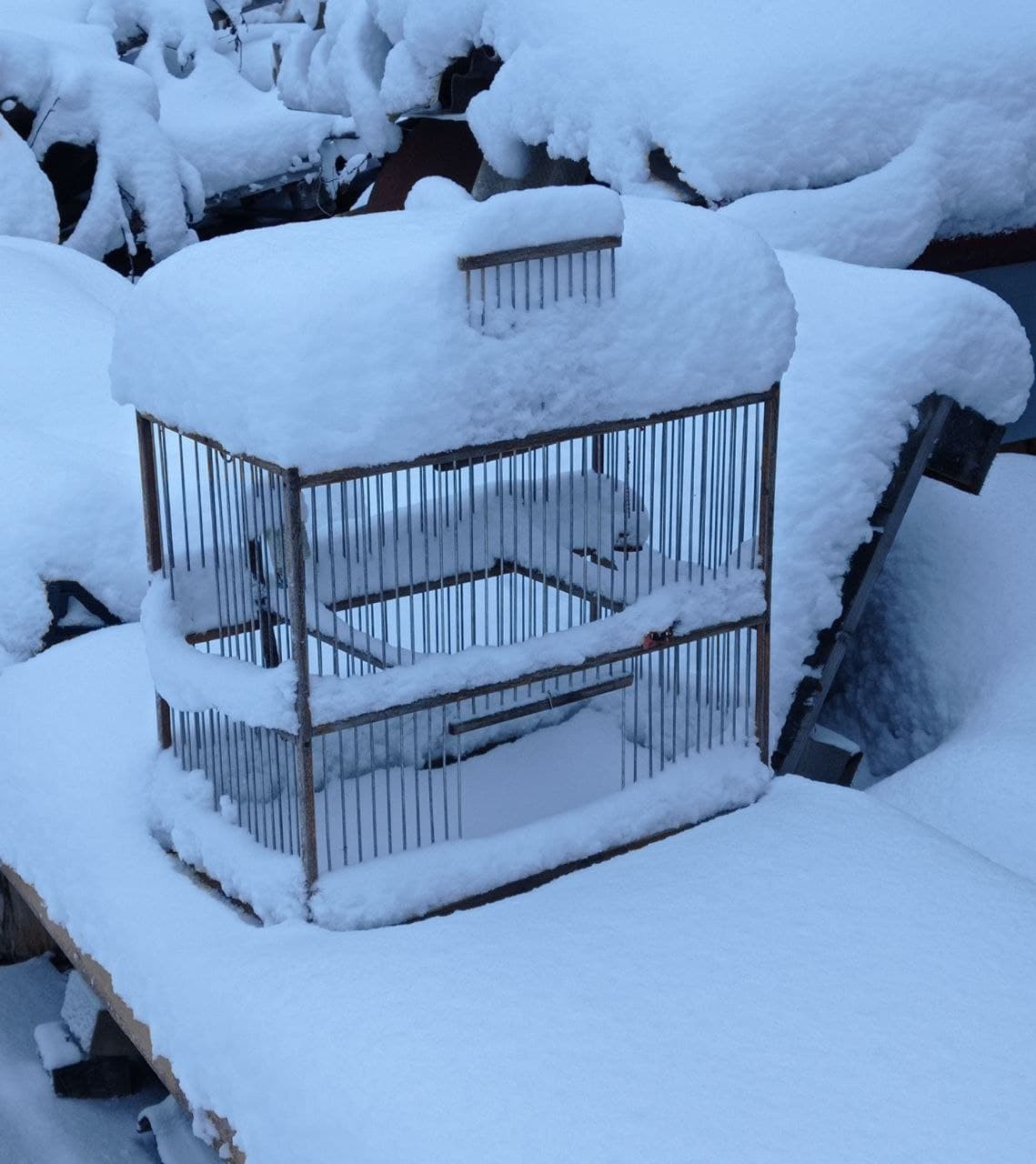
here I am driving, that is, I am not driving, but they are driving me, in a car, and it is very, very dark around me, there are lanterns shining in front, spruce trees are visible on the sides, onlookers stand on the side of the road and stand, looking, and what is behind them is not understandable, only, as someone wrote, beads of light, and you can also compare them to beads or bugles, small change has crammed into the velvet corners of the box and shines from there, and where from there, aren’t you going to nothing, going to nowhere? The fog crawls out in a rehearsed manner, hides the road in its bosom, and on the side, behind the trees, the wind carefully places it, like cotton wool under a Christmas tree. then everything is suddenly swept away by someone’s black hand; knights and pawns mixed up in a heap; they groaned and the boats fell - there, into the outlined squares of the waves, where some tugboat was also shining. we drove out onto the bridge, and my heart went not to my feet, but much lower, to sea level. In winter I'm already on the bus; leaving Arkhangelsk behind, the driver turns off the light, and again this whitish, blind darkness, where instead of fog there is snow, where I remember something very similar, yes, last summer, but I jump even further and see the greenish sands of the desert, and myself (the memory speaks in the third person), and my sleeping dad, but I look not at him, not at myself, but out the window, I look, having seen enough news about tourist accidents, I listen, Having heard a lot about the only traffic light in Hurghada, I seemed to be guarding our path, rushing like a spirit-son over the sandy waves.
someone is also known by the nickname of the Red Countess or Countess T.; the state in which she traveled from her rented house to college and back, and to this day stands on the shore of desert waves; she was not shot, like Pushkin’s colleague, and therefore she described everything: the irreparably early morning, the black skylessness, the songs of the grebenschikov (a hired watchman, a third party) that prevent you from falling asleep while driving, and also, although the narrator’s lips are closed and not a word is said about it, for some reason I imagine her wearing aviator glasses, thick, dense, rubberized at the edges. there is some kind of aloofness in them, in these glasses. suits for the eyes.
if the eyes can be scratched by branches (and no eyelids can save them), then why can’t the shadows of the branches scratch them? Here we are skiing, we are walking, and the snow lies, the bushes represent the hands of Renata Litvinova, and Sasha’s hands are tired, he sighs, languidly, like Renata Litvinova. ahead is a fragile bridge, arched like Renata Litvinova’s eyebrow, and, like Renata Litvinova, the pine trees stick out their sides. Renata Litvinova asks for a ski track and overtakes us, Renata Litvinova sits like a mermaid on the branches and sends her north wind from there. The wind disturbs the hands of Renata Litvinova, from which white snow, like Renata Litvinova’s smile, falls. and, falling, the snow rustles: Renata Renata Renata Renata Renata Renata Renata Renata Renata.
I open the window and listen, and I hear something humming for a long time. Drawing a geometric problem, the traveler crosses the courtyard diagonally. in black and white. from, a to b. he left. Headlights started shining from behind the house. and everything is buzzing there. from the almanac “Northern Flowers” for 1832: “the voice of nature is a drawn-out, dull sound, sometimes heard in deserts and wild forests, which, they say, no one could hear indifferently, and the reason for which has not yet been solved.” From another window I look at the shadows. the branches are swaying, as if it were written in the script: “the branches are swaying.” no, they play their roles nicely, but somewhat indifferently. Clouds of factory smoke hung in the distance. or is it frosty crowns. and here's what. I don't see. you can't see from here either. sorry.
I remember something else in the summer. how the heads of koloboks-dacha residents, severed from an angle, rolled in a roadside ravine. how the trees combed their hair. how Sasha and I swam out into the creek, and three dachas looked at us expectantly, raising their eaves of surprise. as a voiceless dog jumped to the shore. and how we swam back - the clouds run in the sky, float on the water, cling to the oars - again under the leaning mountain ash, scratching and bending, again picking off water lilies. They are rare, they say, it’s better not to pick them. When I was the age he is now, they stuck a lot of seaweed on me to make me look like a tiger. I'm the only one who remembers this now. water lilies are picked. By the way: on the way to the house, I picked berries by the road (sometimes it happens that both in and out), and a generous, thrifty branch, which had not slept the entire cornice night, dumped all its rain reserves on me at once.
submarines are still being built, missiles fly far. and rain through the open windows. you can hear: here are tin sheets, and here are sheets of tin. highlight main and dependent words. state how the phrases differ. what trope does the author use in the first case?
I say: the trees were standing, the lanterns were shining. and no, you didn’t imagine, but you’ll have to work hard, imagine: the lanterns were shining, you understand? I wrote this for some reason, it means it’s important. so let’s turn on our brains: the Christmas trees were up, the lanterns were shining. What? the author did not use any trope? Well, look (read that is), I’ll say: the Christmas trees stood like Christmas trees. a trifle, but the thought has already gone along the path, running. here I was walking; There was a single window in the middle of the elongated college, and I was surprised. and I even thought that no one would believe: only one thing and exactly in the middle. but I counted and no, there are seven windows on the left and eight on the other side. That's why I'm telling you, you will believe this.
but let’s go back to the lanterns, I’m offended. Why are you so stubbornly unwilling to introduce them? what did they do to you? stamp, you say. “You already told us about spruce trees and lanterns,” you say. Tell me please! first of all, what are you pointing at here? I'm not you, not even grammatically. and secondly... well, if they really were shining, what should I write?! again a metaphor for you? The lanterns shone dejectedly, like angler fish. the lanterns seemed to be stretching out their fists with caught fireflies: look, look. This is how the boy brings something in his fist. By the way, are you a fan of quotes? as if in a black aquarium, a blue aquarium. rattling lantern cretin. don't know? Well, then it’s night, street, street lamp, but there’s no pharmacy, don’t even try to persuade me - I won’t say what didn’t happen. dot. (It’s strange to write “period” and then follow it with this same dot. Here’s a dot again. And again.)
Christmas trees. lanterns college. Cars pass bluishly, headlights bouncing; my shadow bends, crawls through the snowdrifts and trees, steps on the entrance, so I have risen above the Severodvinsk pillar and the billboard fixed on it, here I am walking through the city like a plague, a revolution, like death with a scythe, the scythe moon hangs like a sickle (yes, that’s also a comparison for me, and that’s good, thank you, thank God, by the way, I can compare the month with a typographical bracket, do you think it’s similar? compare -), in general, I walked around the city like a giant. Yes. scary, right?
and I thought that I might, for example, think: my dick. but no, no, I couldn’t, I’m a decent person. Yes. I don’t even know these words, what are you, what are you!
prose observations notes north homeland night road trees forest transport